Detectors, jammers and cyber-attackers: the rise of anti-drone tech

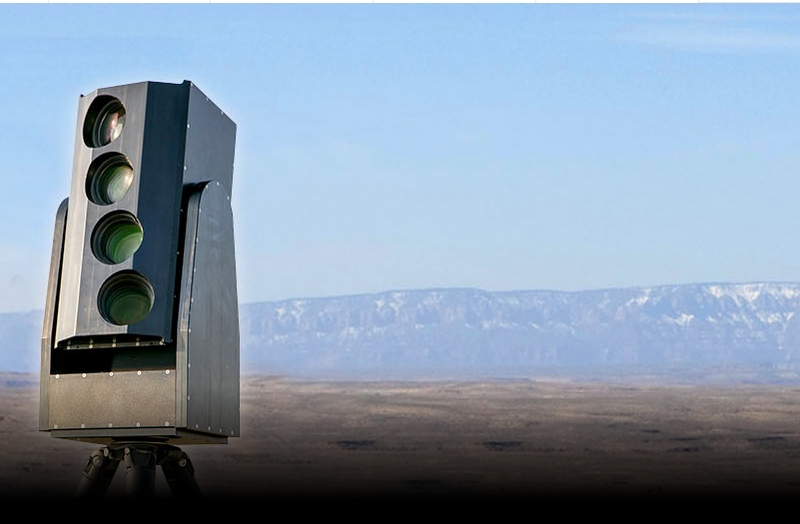
The popstar system; @www.iai.co.il/p/popstar

Powered by Guardian.co.ukThis article titled “Detectors, jammers and cyber-attackers: the rise of anti-drone tech” was written by Oliver Holmes in Tel Aviv, for The Guardian on Thursday 12th December 2019 12.10 UTC

One of the first drone deliveries was operated not by a tech giant from Silicon Valley but by small-time criminals who saw potential in the new technology.

In late 2013, days before Amazon announced its futuristic plan to operate a fleet of automated vehicles, four people were arrested for attempting to smuggle contraband into a Georgia state prison using a drone.

Guards had noticed a remote-controlled helicopter hovering above Calhoun prison. Later, they found the six-rotor drone in a nearby car alongside what appeared to be its cargo: pouches of tobacco and mobile phones.

Five years later, Amazon still hasn’t launched its sky delivery service, while the proliferation of cheap, commercially available drones worldwide has far outpaced the ability of authorities to control them.

In the past two years, non-military drones have shut down Gatwick airport for 36 hours, been used in an apparent assassination attempt against Venezuela’s president and even been flown by Isis fighters to drop grenades on their enemies.

Security personnel surround Venezuela’s president Nicolas Maduro
Security personnel surround Venezuela’s president, Nicolás Maduro, during an attempted drone attack in Caracas in August 2018. Photograph: Xinhua/AP

Responding to the threat, a host of companies – from state-run defence contractors to startups – have developed products that can detect, track, jam, destroy or even commandeer rogue drones.

These services comprise a market that is expected to grow by between 20% and 30% in the next few years and could be worth £4bn by the middle of the next decade.

“It’s a very, very big issue,” said Alex Riahi, who works for Israel Aerospace Industries (IAI), Israel’s major aerospace and defence manufacturer. In September IAI released its Popstar system, which can detect and track drones up to 4km away in day or night.

The POPSTAR system is a 360 degree Automatic Target Detection System - technology system developed for detecting, handling and tracking small threats.
The Popstar system was developed for detecting, handling and tracking drones. Photograph: Israeli Aerospace Industries

IAI sells drone defence to foreign governments to place along their borders or around sensitive sites such as army bases or power plants to avoid spying or air attacks, and also provides equipment to shoot down military drones. But it is increasingly finding interest from other clients – airports, for example – who want to protect against shop-bought drones.

Although coy about pricing, Riahi said the cost of these systems was less than the expense to a major airport of shutting down for an hour.

Israel, with its history of drone warfare, has become a key producer of anti-drone products, especially as members of the military intelligence services often transfer their knowledge to start hi-tech companies after they leave the army. The booming industry has also sprung up in the US, Europe and China.

A host of smaller firms are entering the market. Vorpal, another Israeli company, has compiled a database of signals emitted by 95% of drones that are available to buy, giving its clients the ability to detect most drones buzzing overhead.

“There is no civil technology today that gives you 100%, bulletproof, all-cases, all-drone-types solution,” said Avner Turniansky, Vorpal’s vice-president of strategy. His VigilAir product has been tailored to work in dense urban environments where high buildings and radio “noise” often hide drone signals.

During this year’s Eurovision song contest held in Tel Aviv, Israeli police bought his system and caught more than 20 people who were operating drones in no-fly zones over venues. Authorities wanted to clear the air to prevent any potential attacks, but also to make sure drones did not accidentally fall over large crowds.

Turniansky said none of the perpetrators had apparent nefarious aims and in most cases they were completely clueless that they were flying illegally.

An anti-drone system on display at exhibition in Israel in November.
An anti-drone system on display at an exhibition in Israel in November. Photograph: Jack Guez/AFP via Getty Images

Drones often have internal safeguards such as software that prevents them from flying over sensitive sites, meaning the drone will stop in midair as if it has hit a virtual wall. But Turniansky said at least one confiscated drone at Eurovision had been tampered with to block its GPS, allowing it to fly freely.

Once detected, drones can be taken control of with a remote cyber-attack or, more straightforwardly, shot out the air with net guns. Radiofrequency jammers are also used, although not in airports where they could affect safety systems. “In an airport, nobody wants to jam,” Turniansky said.

He said Vorpal’s system not only tracks drones but also allows users to locate the people flying them. This information is often more crucial than the location of the drone, as taking down one drone disrupting an airport is useless if the operator has more to hand. “In such cases, the ability to tell you where the operator is very valuable,” Turniansky said.

Nimo Shkedy is also Israeli but his drone defence company, ApolloShield, is headquartered in New York. He sells counter-drone technology, including jamming “guns” that block drones with radio waves. In the US, these types of systems can only be sold to government agencies or with official authorisation, but the list of potential clients is growing.

“We started with stadiums and public events,” said Shkedy. “But now this technology and these requirements are all over the place – airports, VIPs, prisons, borders, power plants, oil refineries, nuclear power plants, seaports, yachts,” he said.

Shkedy and his business partner started the firm in 2016 after hearing that the Israeli supermodel Bar Refaeli had unsuccessfully attempted to shut down the airspace above her wedding to prevent paparazzi from using drones. If she and her billionaire fiancé, Adi Ezra, had anti-drone products, they could have blocked off their area themselves.

“We realised it was a big problem and it’s on the rise,” Shkedy said. “And it’s been on the rise ever since.”

guardian.co.uk © Guardian News & Media Limited 2010

Published via the Guardian News Feed plugin for WordPress.

What will the luxury “must have” requirements be 10 years into the future?

  From digital detox to trips into space, Americans’ notions of luxury are ever-evolving, says new Future of Luxury Report for the New Decade. Not long ago, electric lighting was considered a luxury. For that matter, so were mobile phones. But, notions of luxury often change with technological advancements and cultural shifts. With the start … Read more

Gen.G x Benefit Cosmetics blend the worlds of beauty and gaming


Putting on your ‘Game Face’ means getting ready to own your day.
Global esports organization Gen.G and Benefit Cosmetics Partnership Encourages Women to Put on Their Game Face.

Gen.G x Benefit Cosmetics blend the worlds of beauty and gaming; @benefitcosmetics.com

LVMH-owned Benefit Cosmetics, the San Francisco-based makeup brand, and Gen.G, one of the leading esports organizations connecting the U.S. and Asia, announce one of the first cross-industry campaigns between beauty and gaming. Gen.G and Benefit Cosmetics campaign focuses on women’s empowerment across the gaming landscape.

Ranked #6 in the inaugural Forbes list of the world’s most valuable esports companies, Gen.G is the only major organization that owns and operates top teams in the world’s leading esports markets — China, South Korea, and the United States. Its unique portfolio of teams, winners of 7 global championships to date, includes the Seoul Dynasty franchise of the Overwatch League; 2014 & 2017 League of Legends world champion team in South Korea; the world’s top all-female Fortnite team, based in Los Angeles; and the NBA 2K League’s historic expansion franchise in Shanghai.

Gen.G x Benefit Cosmetics digital partnership will include a weekly video series capturing the beauty routines and real stories of four professional female gamers and streamers on Benefit’s Instagram and YouTube channels.

The five women featured for this campaign are: Eleanor Barnes, @Snitchery (host), Kristen Valnicek, @KittyPlays, Gina Darling, @MissGinaDarling, Nicki Taylor,@nickitaylor, Jayden Diaz, @Your Princess.

These videos offer an in-depth look at the day-to-day realities of being a female online, both in the gaming and beauty communities.

The series host is Eleanor Barnes, the influencer known as Snitchery who blends the worlds of beauty and gaming. In each episode, Barnes and the gamer guests will open up about what it’s like to be a woman sharing their lives online, and teach each other more about their daily trials and triumphs. Barnes will create a customized makeup look for each of the women based on their individuality and what makes them feel empowered, AKA: their “Game Face.”

“After serving women for more than 40 years in the beauty business, we at Benefit know how empowering makeup can be when women use it as a tool for expression, creativity, and self-love,” said Lisa Li, Director Global Digital Marketing, Benefit Cosmetics. “Women make up almost half of the audience watching and playing games.”

Kicking off the series’ first episode will feature one of the world’s most popular players, Kristen Valnicek also known as “KittyPlays.” Valnicek was also named Gen.G’s Head of New Gaming Initiatives in 2019.

“I’m thrilled that Gen.G and Benefit are working together to bring a sense of belonging and community within gaming for women,” said Valnicek. “There are so many amazing women in the gaming community, and I am excited that through partnerships like this, women can take the spotlight and feel confident about their gameplay.”

“We want all players to feel like they belong in the gaming community regardless of gender,” said Gina Chung, Gen.G’s VP of Brand, Activation & Apparel . “Our vision is to create an inclusive environment for all, which is why we prioritize initiatives focused on equality and fairness. Working with Benefit is a great example of how the gaming audience is vastly growing and how esports organizations can step up to create positive communities for female gamers. ”

With more than 2,700 BrowBars and 85 boutiques worldwide, Benefit has become the brow destination for both product and service. The prestige beauty brand is part of the world’s leading luxury products group, Louis Vuitton Moet Hennessy.

@benefitcosmetics.com

Experience Ai Weiwei’s first virtual reality artwork, Omni

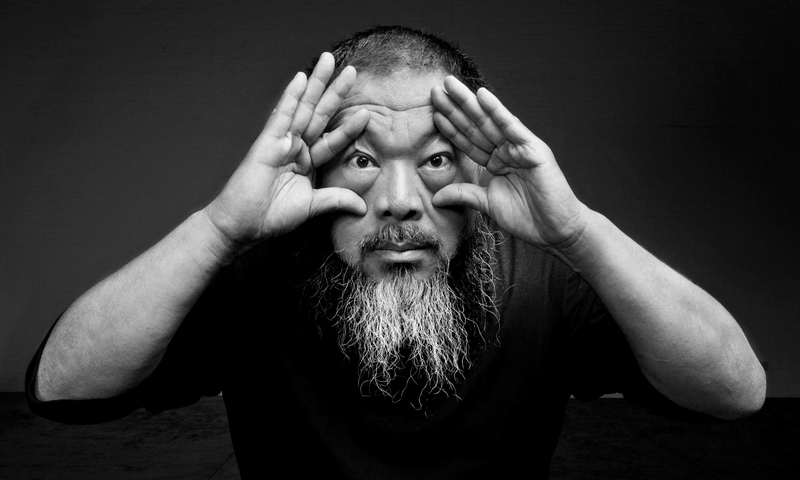
Ai Weiwei. Photograph: Gao Yuan. Ai Weiwei Studio

Powered by Guardian.co.ukThis article titled “Experience Ai Weiwei’s first virtual reality artwork, Omni” was written by Alex Needham and Simon Hattenstone, for theguardian.com on Tuesday 21st January 2020 13.30 UTC

Ai Weiwei’s first virtual reality video, which you can see here, is called Omni. It fuses together two films the artist has made focusing on the migrant crisis, immersing viewers in the upheaval of displacement and exile for both animals and humans.

The first part of Omni focuses on the elephants of Myanmar. Once, they worked with their trainers, mahouts, dragging logs from the jungle. Now the government has placed severe restrictions on their jobs and the animals are redundant. Lost and confused by the destruction of their natural environment, the elephants attempt to return to the wild, sometimes coming across the refugees whose camps have been erected on their long-lost migratory routes.

“I relate to the elephants,” Ai says. “There are lot of small ones who have lost their parents. Elephants are like humans. Without parents they cannot survive. They have to stay with them until they are seven years old.”

The second part of Omni drops the viewer into the centre of a migrant camp known as Cox’s Bazaar, in Bangladesh just over the border from the refugees’ home in Myanmar’s Rakhine state, where they have fled persecution, ethnic cleansing and a military crackdown. The work provides a migrants’-eye view of daily activities, such as queuing for supplies, and takes the viewer through the camp, from its tents to its markets and playgrounds.

As well as the harshness of life in the camp, it shows solidarity, sharing and teaching. “I feel a lot of positive things about humanity even in the worst conditions,” Ai said. “I don’t want to show that there is just sadness. Happiness and sadness always coexist. That’s a reason to protect that happiness.”

  • Omni was produced with Acute Art, who work with artists to make virtual and augmented reality videos. On 30 January, Ai Weiwei will show the project to an audience at a Guardian event at Conway Hall, London.
  • Viewers on mobile should have the YouTube app already pre-installed. You must click on the title in the embedded video, and will then be taken to the video in-app where you can actually experience the video in 360 degrees.

guardian.co.uk © Guardian News & Media Limited 2010

Published via the Guardian News Feed plugin for WordPress.

4 smart beauty products: Perso, MakeON Flexible LED Patch, HiMirror Slide, and Opte at-home precise skincare solutions

  HiMirror, pioneering beauty tech brand, revealed the HiMirror Slide at Consumer Electronics Show 2020 in Las Vegas. In 2017, pioneering beauty tech brand HiMirror introduced the world’s first voice-interactive smart mirror and continues to revolutionize the tech category with their latest launch, HiMirror Slide, as well as their compatible accessories and professional models. HiMirror … Read more