Michael Kors steers cozy towards chic with equestrian collection

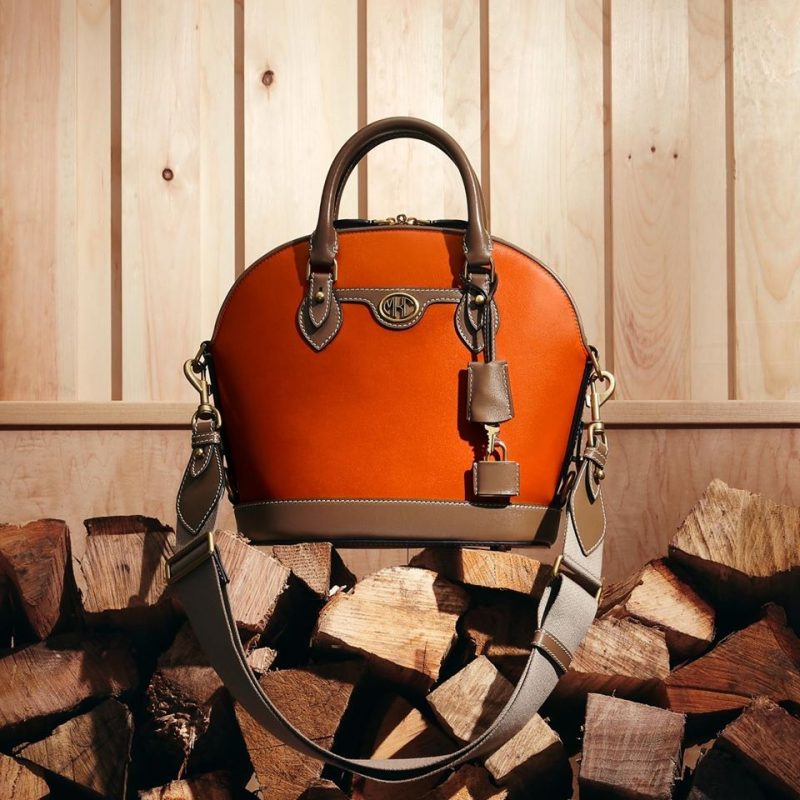
Michael Kors MKC Monogramme bowler bag make its debut. @Michael Kors


Powered by Guardian.co.ukThis article titled “Michael Kors steers cozy towards chic with equestrian collection” was written by Jess Cartner-Morley in New York, for theguardian.com on Wednesday 12th February 2020 18.04 UTC

“Don’t get me wrong, I am all for comfort, but I like a little polish too. These days I see women on the city streets wearing jogging bras,” lamented Michael Kors before his New York fashion week show. “I’m thinking of getting ‘chic is not a dirty word’ printed on a T-shirt.”

If he did, it would undoubtedly sell. Michael Kors is the man who brought the It bag to the masses, inventing a new category of “affordable luxury”, and his success has made billionaires of Kors and two of his early business partners. His commercial mindset was evident in the audience for his latest catwalk show – staged, appropriately, at the former American Stock Exchange headquarters in Manhattan’s financial district – where 10% of invitations were reserved for his biggest spending clients.

Next season, Kors wants to sell women a chic alternative to athleisure. “The best clothes make you feel like you are in a chic security blanket,” he said. “You should feel cosy, you should feel relaxed. And you know what always works, when you want to be chic but also be comfortable? Equestrian!”

Expensive-looking and erotic-adjacent, equestrian chic has long been a go-to for Michael Kors. This time around, he revisited looks from a 1999 collection. “That season, Naomi Campbell wore a stripe blanket cape on the runway, and the next day I got a phone call from Joan Didion, and Joan loved that cape, so of course we got her a cape. I’ve got a great photo of Joan in that cape.” A new version of the cape walked the catwalk on Wednesday morning, in camel with wide bands of clementine and chocolate brown at the hem, worn over a sweater dress with flat riding boots in rich suede. Other equestrian-tilted looks included a quilted grey cashmere half-zip hoodie, layered over a chunky polo neck and midi-length skirt. Like most outfits in the show, they were accessorised with a handbag. “Every bag in this collection can be carried hands-free”, Kors noted. “That’s just how we live now.”

As Kors approaches his 40th anniversary in business next year, he has been attempting to retroactively build up his archive. “When I started I didn’t keep archives. I was young, I didn’t think about it. So I often contact vintage stores and ask that if they get any of my clothes come in from the 1980s or early 1990s to let me know so that I can buy them. But they always tell me they don’t have anything – because women don’t get rid of my clothes. My clothes last, and women wear them for ever. Isn’t that great?” Now he is keen to teach “my new 22-year-old customers, who grew up with fast fashion, about the pride of owning something that lasts”.

Model Bella Hadid shows off an evening gown made of sustainably manufactured sequins at Michael Kors show.
Model Bella Hadid shows off an evening gown made of sustainably manufactured sequins at Michael Kors show. Photograph: WWD/Rex/Shutterstock

Top of Kors’ personal best-dressed list right now is Billie Eilish, the 18-year-old singer currently disrupting the norms of red carpet fashion by wearing voluminous, baggy clothes rather than bare, form-fitting dresses. At the Oscars on Sunday, Eilish’s custom-made Chanel look was an oversized trousersuit with a high collar. “I love what Billie Eilish is doing,” said Kors. “She’s sending a fabulous message. She’s saying, ‘This is about my talent, not my body.’ I’ve always loved knitwear for night. You shouldn’t have to be naked and miserably uncomfortable in eveningwear.”

Next season’s comfortable evening dresses come, naturally, with a generous dash of glamour: an ebony gown was entirely covered in sequins, sustainably manufactured from recycled plastic bottles.

Lisane and Jeanine Basquiat, younger sisters of the late Jean-Michel Basquiat, were guests of honour at the Coach catwalk show, which featured the artist’s niece Jessica among the models. The collection was inspired by Basquiat, who “has always been a hero of mine, for his work and his style and as the ultimate icon of the unorthodox creativity of New York”, said Stuart Vevers, the British designer of Coach. Basquiat’s artwork appeared on several pieces in the collection.

The Coach show was a celebration of New York, in a fashion week which has been left threadbare by several marquee-name defections. Tom Ford staged his show in LA this season, Tommy Hilfiger will present his in London and Ralph Lauren is sitting out fashion week in favour of a stand-alone show in April.

As well as the Basquiat family, the show featured a live performance by New York icon Debbie Harry. “In the seven years I’ve been at Coach, I don’t think I’ve ever put together a mood board that didn’t have a photo of Debbie Harry on it,” said Vevers. “When I found this venue, which is such a classic New York industrial loft, and started visualising how it would all come together, I had the idea of having her sing so I thought – well, I might as well ask. And amazingly, she said yes.”

guardian.co.uk © Guardian News & Media Limited 2010

Published via the Guardian News Feed plugin for WordPress.

Burberry says impact of coronavirus worse than Hong Kong rallies

British brand closes 24 of its 64 stores in mainland China as shopper numbers plummet

Lawrence Stroll: the F1 boss and fashion tycoon rescuing Aston Martin

Canadian billionaire is leading a consortium pumping £182m into the luxury car marque

Makeover: Copenhagen fashion week announces ‘radical’ sustainability goals

The chief executive of Danish fashion week hopes to transform it into a ‘platform for advocacy’ with tough new environmental requirements for participating brands

Detectors, jammers and cyber-attackers: the rise of anti-drone tech

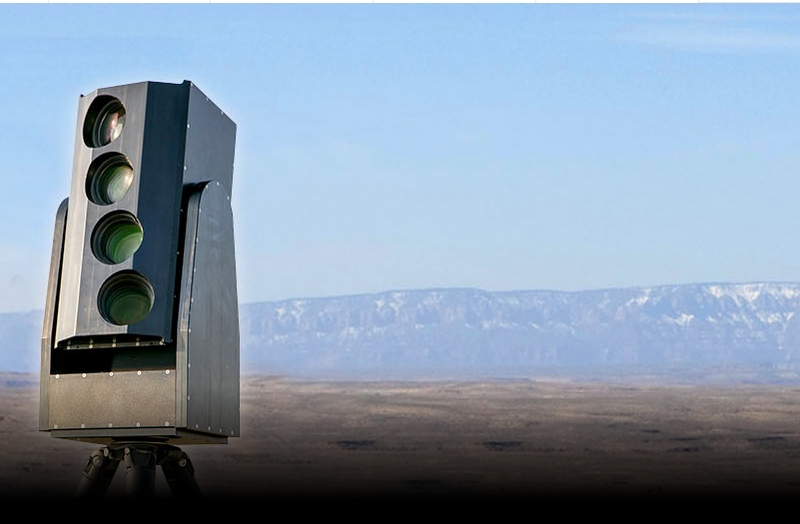
The popstar system; @www.iai.co.il/p/popstar

Powered by Guardian.co.ukThis article titled “Detectors, jammers and cyber-attackers: the rise of anti-drone tech” was written by Oliver Holmes in Tel Aviv, for The Guardian on Thursday 12th December 2019 12.10 UTC

One of the first drone deliveries was operated not by a tech giant from Silicon Valley but by small-time criminals who saw potential in the new technology.

In late 2013, days before Amazon announced its futuristic plan to operate a fleet of automated vehicles, four people were arrested for attempting to smuggle contraband into a Georgia state prison using a drone.

Guards had noticed a remote-controlled helicopter hovering above Calhoun prison. Later, they found the six-rotor drone in a nearby car alongside what appeared to be its cargo: pouches of tobacco and mobile phones.

Five years later, Amazon still hasn’t launched its sky delivery service, while the proliferation of cheap, commercially available drones worldwide has far outpaced the ability of authorities to control them.

In the past two years, non-military drones have shut down Gatwick airport for 36 hours, been used in an apparent assassination attempt against Venezuela’s president and even been flown by Isis fighters to drop grenades on their enemies.

Security personnel surround Venezuela’s president Nicolas Maduro
Security personnel surround Venezuela’s president, Nicolás Maduro, during an attempted drone attack in Caracas in August 2018. Photograph: Xinhua/AP

Responding to the threat, a host of companies – from state-run defence contractors to startups – have developed products that can detect, track, jam, destroy or even commandeer rogue drones.

These services comprise a market that is expected to grow by between 20% and 30% in the next few years and could be worth £4bn by the middle of the next decade.

“It’s a very, very big issue,” said Alex Riahi, who works for Israel Aerospace Industries (IAI), Israel’s major aerospace and defence manufacturer. In September IAI released its Popstar system, which can detect and track drones up to 4km away in day or night.

The POPSTAR system is a 360 degree Automatic Target Detection System - technology system developed for detecting, handling and tracking small threats.
The Popstar system was developed for detecting, handling and tracking drones. Photograph: Israeli Aerospace Industries

IAI sells drone defence to foreign governments to place along their borders or around sensitive sites such as army bases or power plants to avoid spying or air attacks, and also provides equipment to shoot down military drones. But it is increasingly finding interest from other clients – airports, for example – who want to protect against shop-bought drones.

Although coy about pricing, Riahi said the cost of these systems was less than the expense to a major airport of shutting down for an hour.

Israel, with its history of drone warfare, has become a key producer of anti-drone products, especially as members of the military intelligence services often transfer their knowledge to start hi-tech companies after they leave the army. The booming industry has also sprung up in the US, Europe and China.

A host of smaller firms are entering the market. Vorpal, another Israeli company, has compiled a database of signals emitted by 95% of drones that are available to buy, giving its clients the ability to detect most drones buzzing overhead.

“There is no civil technology today that gives you 100%, bulletproof, all-cases, all-drone-types solution,” said Avner Turniansky, Vorpal’s vice-president of strategy. His VigilAir product has been tailored to work in dense urban environments where high buildings and radio “noise” often hide drone signals.

During this year’s Eurovision song contest held in Tel Aviv, Israeli police bought his system and caught more than 20 people who were operating drones in no-fly zones over venues. Authorities wanted to clear the air to prevent any potential attacks, but also to make sure drones did not accidentally fall over large crowds.

Turniansky said none of the perpetrators had apparent nefarious aims and in most cases they were completely clueless that they were flying illegally.

An anti-drone system on display at exhibition in Israel in November.
An anti-drone system on display at an exhibition in Israel in November. Photograph: Jack Guez/AFP via Getty Images

Drones often have internal safeguards such as software that prevents them from flying over sensitive sites, meaning the drone will stop in midair as if it has hit a virtual wall. But Turniansky said at least one confiscated drone at Eurovision had been tampered with to block its GPS, allowing it to fly freely.

Once detected, drones can be taken control of with a remote cyber-attack or, more straightforwardly, shot out the air with net guns. Radiofrequency jammers are also used, although not in airports where they could affect safety systems. “In an airport, nobody wants to jam,” Turniansky said.

He said Vorpal’s system not only tracks drones but also allows users to locate the people flying them. This information is often more crucial than the location of the drone, as taking down one drone disrupting an airport is useless if the operator has more to hand. “In such cases, the ability to tell you where the operator is very valuable,” Turniansky said.

Nimo Shkedy is also Israeli but his drone defence company, ApolloShield, is headquartered in New York. He sells counter-drone technology, including jamming “guns” that block drones with radio waves. In the US, these types of systems can only be sold to government agencies or with official authorisation, but the list of potential clients is growing.

“We started with stadiums and public events,” said Shkedy. “But now this technology and these requirements are all over the place – airports, VIPs, prisons, borders, power plants, oil refineries, nuclear power plants, seaports, yachts,” he said.

Shkedy and his business partner started the firm in 2016 after hearing that the Israeli supermodel Bar Refaeli had unsuccessfully attempted to shut down the airspace above her wedding to prevent paparazzi from using drones. If she and her billionaire fiancé, Adi Ezra, had anti-drone products, they could have blocked off their area themselves.

“We realised it was a big problem and it’s on the rise,” Shkedy said. “And it’s been on the rise ever since.”

guardian.co.uk © Guardian News & Media Limited 2010

Published via the Guardian News Feed plugin for WordPress.

Michelin launches 2020 guide amid controversy over Bocuse downgrade

Head of guide defends stripping late chef’s Auberge du Pont de Collonges of coveted third star