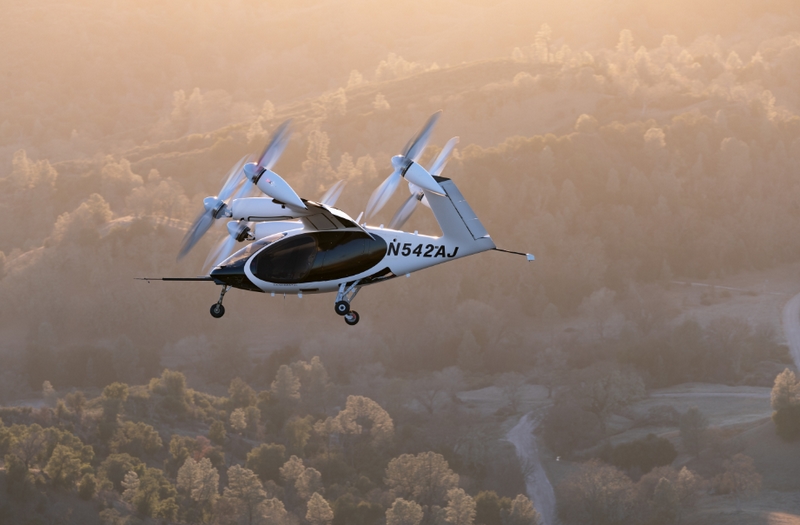

What it’s like to fly a revolutionary eVTOL first-hand

  Joby Aero, a California-based company developing all-electric aircraft for commercial passenger service, is opening a new office in Washington, DC to support the collaborative work it is doing with the aviation community and policymakers to bring quiet, zero-emissions aviation to life. Equipped with a state-of-the-art flight simulator, visitors to the new office are able … Read more

Tap a place on the map and Next iFly one-Person eVTOL will go there


@Next iFLY eVTOL Personal Air Vehicle

This One-Person eVTOL is ready to take you anywhere.

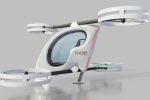
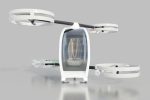
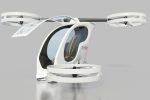
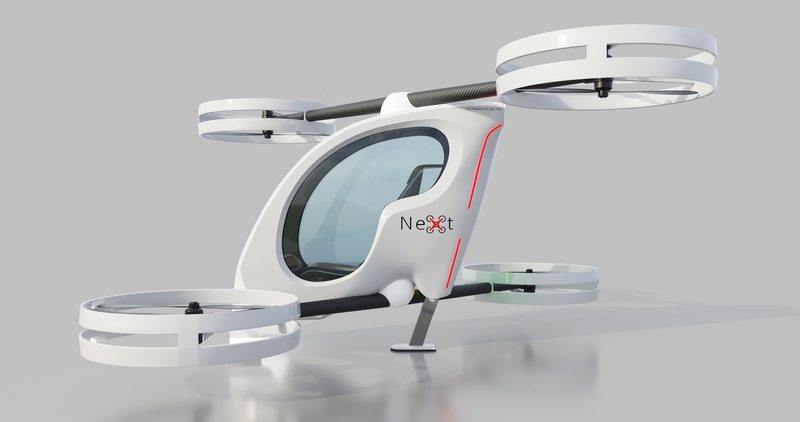
Advanced air mobility start-up NeXt has introduced an all-electric vertical take-off and landing (evTOL) personal air vehicle. NeXt is seeking an investment partner for funding iFLY which has undergone extensive successful proof-of-concept flight testing and has recently been awarded a United States Patent.

NeXt Unveils iFLY eVTOL Personal Air Vehicle

If you ask anyone what superpower they wish they had, the ability to fly ranks right up there at the top of the list and it’s one of the oldest and most enduring human aspirations. iFLY takes flying to new heights by making it simple and safe for everyone.
@Next iFLY eVTOL Personal Air Vehicle

The flying vehicle engages users with a powerful and intuitive mobile companion app. Users simply tap a map to select a destination landing site using the touchscreen on their iOS or Android mobile device which provides instructions to iFLY for a seamless and enjoyable autonomous flight experience to a destination without the need for pilot interaction in the traditional sense of conventional airplanes.

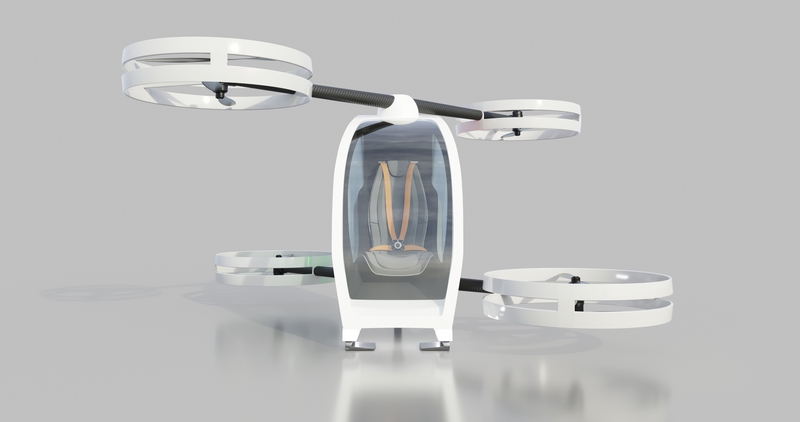
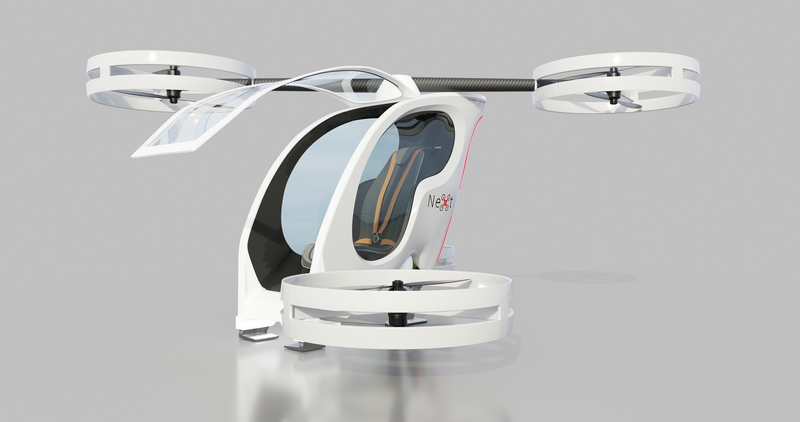
iFLY has eight propellers guarded in protective safety enclosures, eight electric motors that run on batteries and a comfortable passenger compartment. NeXt is currently exploring the possibility to qualify iFLY initially as a Powered Ultralight by the FAA so that no pilot’s license will be required to fly.
@Next iFLY eVTOL Personal Air Vehicle

iFLY provides a unique combination of high stability, high agility and destination flexibility with a powerful set of integrated safety features including advanced redundant flight control systems which control the speed of the electric motors to change the overall speed and direction of flight.

The new vehicle calculates wind speed, altitude and the energy required to safely fly to and from a destination and automatically returns home or lands in a safe area, if necessary, in the event the battery approaches a minimum acceptable safe power level.

The VTOL will also be provided with a ballistic parachute that automatically deploys in the event of an emergency.

In not so distant future iFly will become reality, if the company manages to find investors.
@Next iFLY eVTOL Personal Air Vehicle

Jetoptera flying car’s unique propulsion system is turning the air around the craft into powerful thrust


@Jetoptera

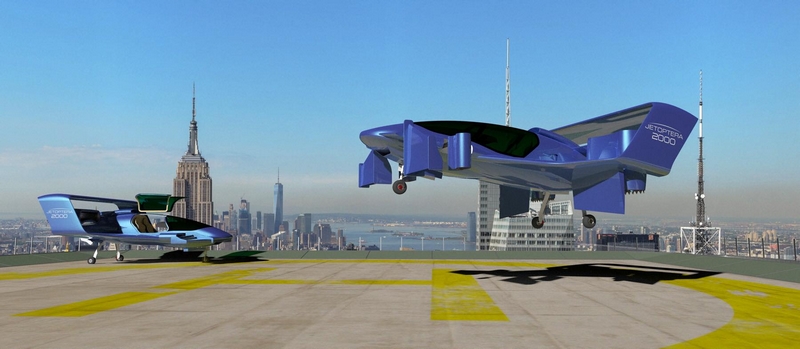
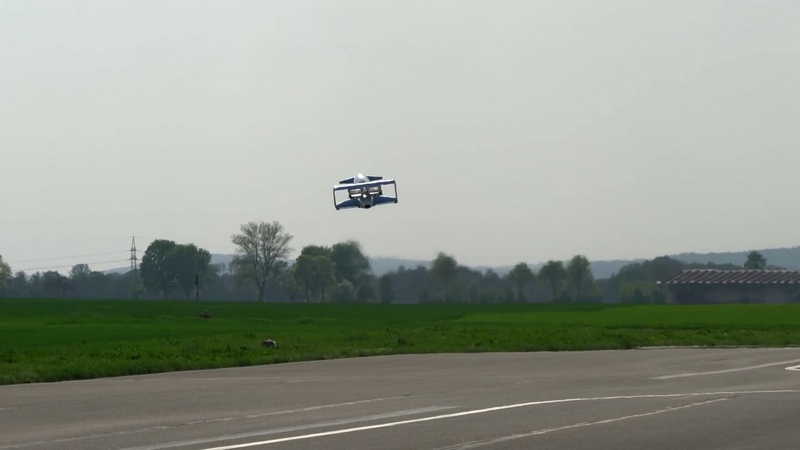
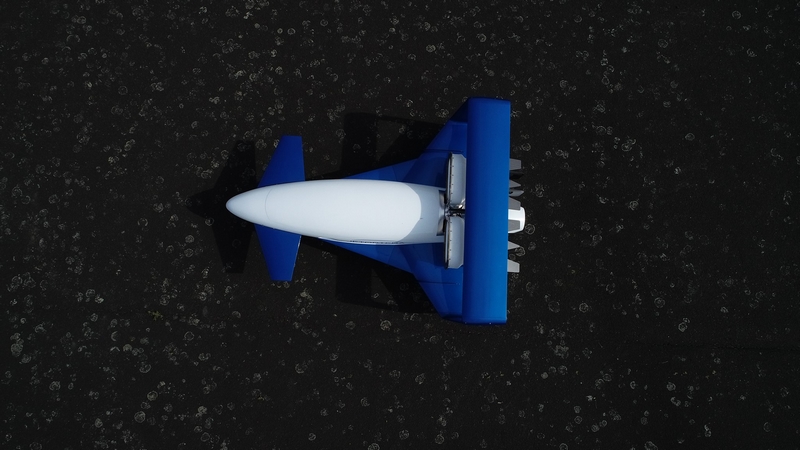
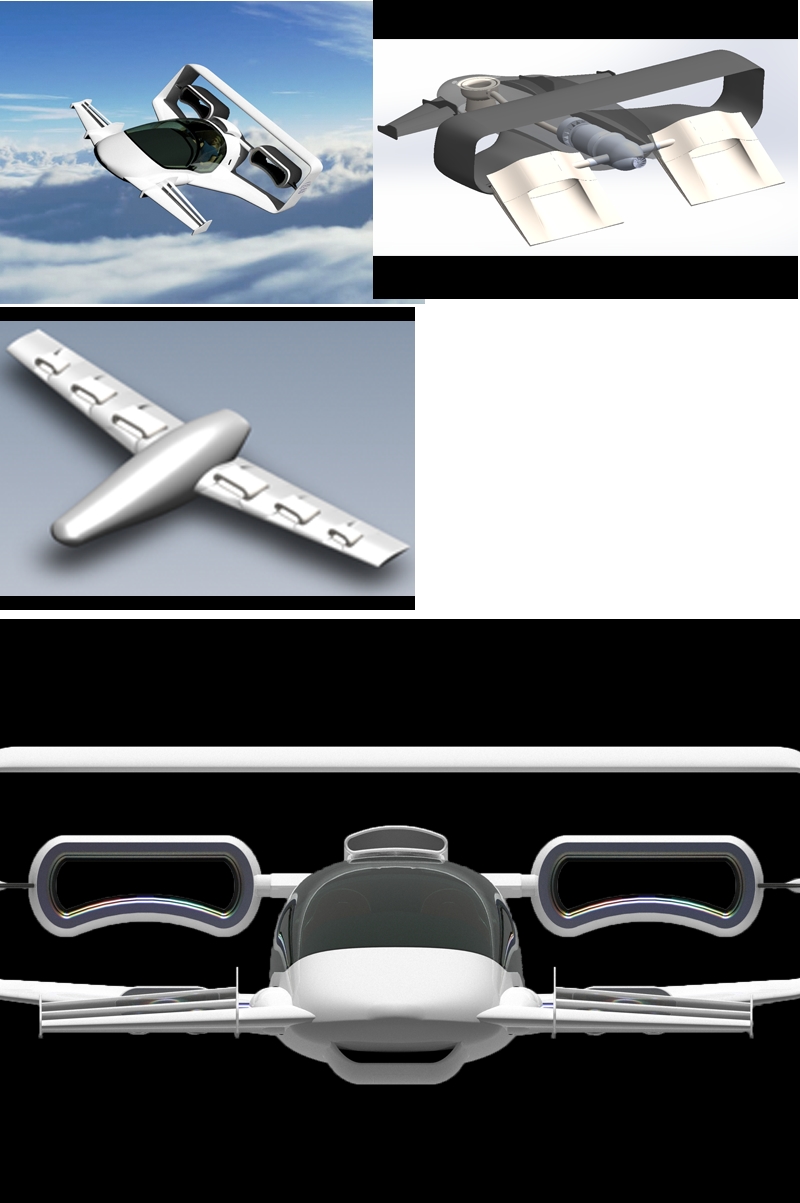
Jetoptera’s vision is to create a world where aerial mobility is commonplace for both cargo and people. Jetoptera J-2000 is powered by a new system called fluidic propulsion system (FPS).

The Seattle startup has developed a unique propulsion system integrated with a novel bladeless airframe. This
allows Jetoptera to create lighter, more efficient, and less complex aircraft. This innovative technology enables vertical and short takeoff and landing (V/STOL), high speeds, sizable payloads and range, and maneuverability.

“Our planes can take off from and land almost anywhere without the fear of a rotor strike and fly like a real plane! A scalable solution for unmanned and manned aerial vehicles up to 4 passengers.” – Jetoptera.

@Jetoptera / @jetoptera.com

Jetoptera design

Jetoptera’s design is a true distributed propulsion that is integrated into a novel airframe. It improves propulsive
efficiency by more than 10% while lowering fuel consumption by more than 50% compared to small turbojets. The
propulsion system saves approximately 30% in weight compared to turbofans or turboprops and also significantly
reduces complexity. The integrated aircraft is capable of hovering and VTOL.

The complete propulsion system is a unique combination of a gas turbine and fluidic thrust augmentation that can
distribute thrust across the airframe. It can be implemented in various geometric shapes, can be embedded with the airframe, and has no propellers or rotating parts. The system is used in all phases of flight.

The combination of VTOL and high speed has proven elusive, especially in a compact, quiet, efficient, and safe
aircraft. The Fluidic Propulsive System enables all that and 200 mph speeds, say Jeloptera’s founders.

Direct turbofan through Fluidic Propulsive System for hover/low speed and transition to turbofan for high speed,
folding thrusters into the wing, resulting in 400+ mph cruise / 400 mi range. If the concept will come into production, Jetoptera will be the fastest commercial VTOL aircraft in the world.

The ability to give thrusters non-round shapes allows conformal integration with upper wing resulting in doubling of lift coefficient. This new design enables takeoff and landing over a 50 ft obstacle within 150 ft.

@Jetoptera

Jetoptera Gas Generator

Pairing the simple architecture of a gas generator with the advanced augmentation system results in significantly
superior efficiency versus typical small turbojets. It also guarantees great operability and low fuel burn at all stages of flight.

Thrust augmentation

Output of the gas generator is channeled through specially designed augmentation components. The exhaust gasses
entrain and accelerate ambient air. Augmentation and low exhaust temperatures enable VTOL and high
maneuverability.

In March, Jetoptera was awarded two 2021 Small Business Technology Transfer (STTR) contracts from the USAF
(United States Air Force) to further characterize the noise of its patented Fluidic Propulsive System (FPS™) in an anechoic chamber wind tunnel and to prove that the FPS™ used with an Upper Surface Blown Wing (USB)
configuration will produce specific lift force levels similar to those of a rotor-wing aircraft, yet without moving parts.

@Jetoptera

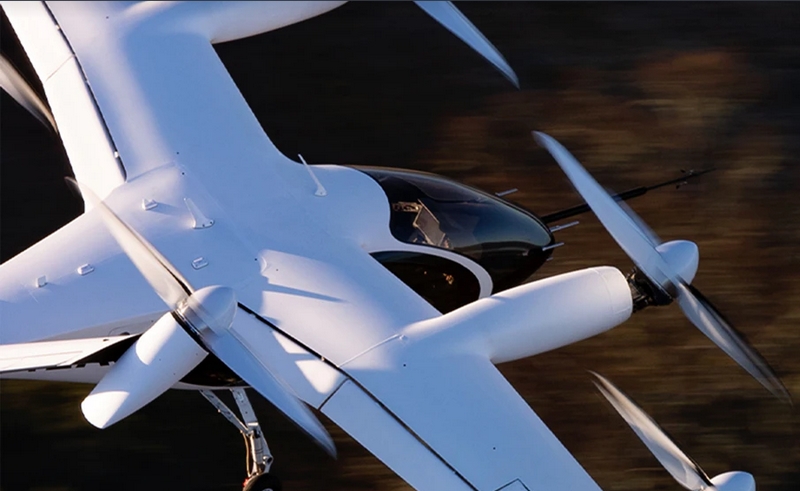
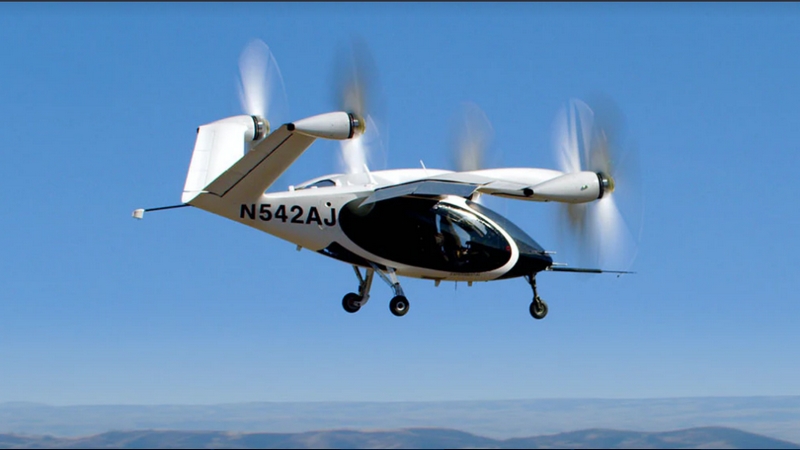
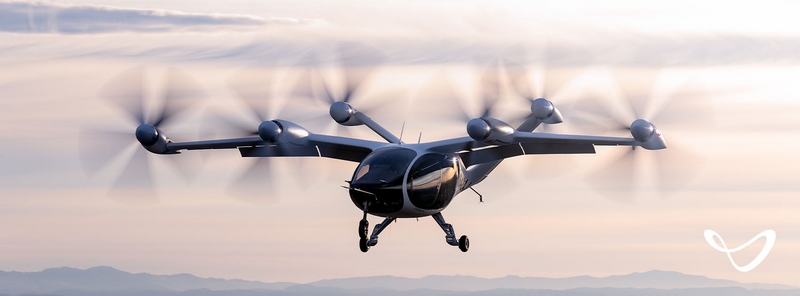
Joby Aviation released first footage of its revolutionary all-electric VTOL aircraft in flight


Joby Aviation’s pioneering electric aircraft is making air taxi service a reality in 2024.

@Joby Aviation released the first footage of its revolutionary all-electric VTOL aircraft in flight; @jobyaviation.com/

With more than 1,000 test flights completed over the last 10 years, Joby Aviation, the American venture-backed
aerospace company and developer of VTOL personal air vehicles designed for air taxi services, intends to use its
piloted, four-passenger aircraft to launch a commercial passenger service beginning in 2024.

Joby Aviation released the first footage of its revolutionary all-electric, vertical take-off and landing aircraft in flight. The company is also celebrating an important milestone on its journey to making its air taxi service a reality.

The company expects to revolutionize how people move by unlocking the possibility to leapfrog over the gridlock
below in its emissions-free vehicle, which can travel up to 150 miles at speeds up to 200 miles per hour. The aircraft is quiet in take-off and near silent when flying overhead.

@Joby Aviation

The company also announced that it has entered into a definitive business combination agreement with Reinvent
Technology Partners, a special purpose acquisition company that takes a ‘venture capital at scale’ approach to
partnering with bold leaders and companies.

The transaction values the combined company at $6.6 billion post money, and is expected to provide approximately
$1.6 billion in gross proceeds, which is expected to fund the company through the start of commercial operations.

“While traveling is central to human existence, it’s often painfully inefficient and is only getting worse,” said Paul Sciarra, executive chairman of Joby Aviation. “By rethinking how air travel is delivered, we can open up new ways of moving around congested cities and under-served rural communities, helping to tackle congestion and climate change at the same time. Aerial ridesharing will drive a generational shift in how we travel this century, just as the railroad and the jet aircraft did in previous centuries.”

“Joby has a remarkable founder-led team that has quietly delivered the most advanced technology we’ve seen in this sector,” said Reid Hoffman, LinkedIn co-founder and co-lead director of Reinvent Technology Partners, who will join the Board of Directors of the combined company. “With valuable strategic partnerships including Toyota and Uber, a compelling business model and an unparalleled track-record of executing against its targets, we believe Joby is well- positioned to create a transformative new human-centered mobility network.”

@Joby Aviation

German eVTOL maker Lilium announces first hub for a high-speed electric air mobility network in America

    First US Vertiport to be located at Orlando’s Aerotropolis in Lake Nona. Lilium is building the first stretch of Florida’s high-speed electric transportation network with Central Florida. Advanced air mobility: German eVTOL maker Lilium is building the first vertiport for its electric aircraft as a regional commuter hub. The first hub location for … Read more

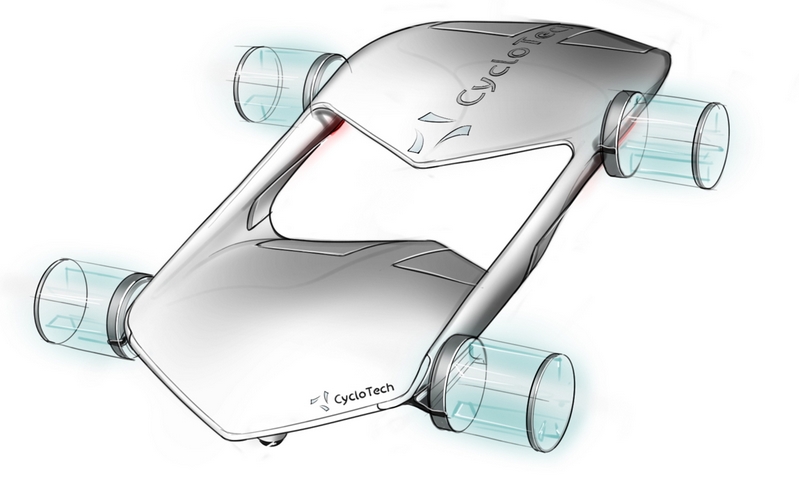
Cyclogyro – a potential four-seater air taxi with the most agile propulsion system in aviation


@cyclotech.at

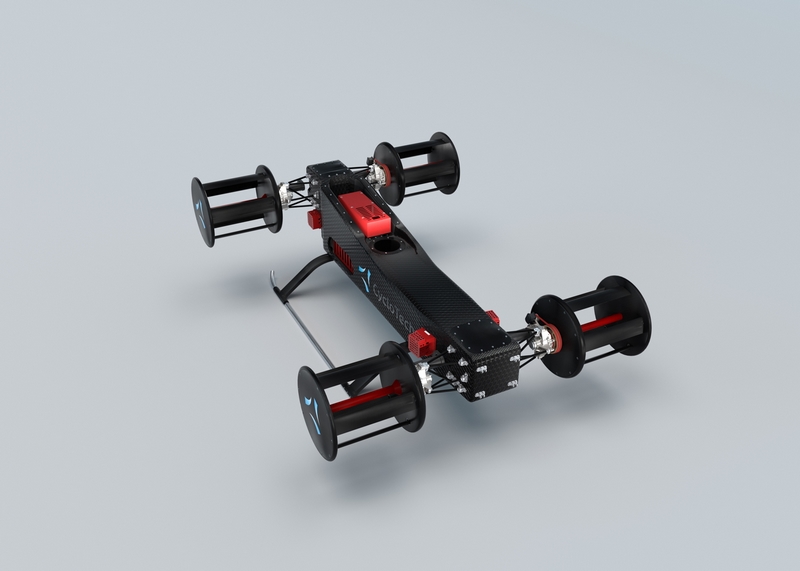
Austrian-based CycloTech wants to prove the viability of the Voith-Schneider-Propeller concept for the aviation industry.

The core of the drive concept was established by Ernst Schneider and the Voith GmbH technology group nearly 100years ago, and patented as the Voith Schneider Propeller (VSP). The drive provides high maneuverability, and ships equipped with two or more VSP can move in nearly every direction or perform a stationary turn. Because of its agility and flexibility, there have been myriad unsuccessful attempts to bring the VSP to the aviation industry – but only CycloTech has succeeded.

CycloTech’s patented technology is currently the only Cyclogyro rotor concept worldwide that can rotate at high speed and efficiently deliver sufficient thrust for a truly competitive alternative aircraft propulsion.

The Cyclogyro technology combines the main benefits of rotorcraft and fixed-wing concepts and therefore its uniqueselling proposition (USP) has three main components:

  • VTOL (Vertical Take Off and Landing), and agile maneuverability;
  • Increased efficiency in forward flight mode;
  • Compact design and reduced infrastructure demand (for example in urban areas).

The major challenge of using the Cyclogyro rotor technology in air instead of water is the far higher revolutions perminute required to create sufficient thrust for aviation applications.

This results in extreme lightweight construction requirements for highly stressed rotor components and demands newconcepts, advanced composite material and innovative processing methods. CycloTech faced the challenge – andfound the solution. The Cyclogyro rotor technology is a clear ground-breaking innovation for VTOL and urban air mobility.

@cyclotech.at

GROUND-BREAKING INNOVATION FOR URBAN AIR MOBILITY

Over the last three years, CycloTech developed and tested nine different rotor prototypes. Comprehensive wind tunnel tests proved a significant performance increase in forward flight which has been predicted through the CFD simulations.

The current Cyclogyro rotors are now fully lightweight optimized and have passed all performance and endurance tests. They are ready for integration into a flight demonstrator.

The final proof of concept to elevate our development on Technology Readiness Level (TRL) 7 will be performed with a  flight demonstrator of approximately 80kg take-off weight equipped with 4 of Cyclotech’s Cyclogyro rotors.

“By Q4 2020 CycloTech will be ready to fly the demonstrator proving the agility and advantages of the technology. We also started the development of a Cyclogyro rotor as an auxiliary system of a high precision inspection drone for use in harsh and tight environments,” said the company.

CycloTech is “looking for co-operation partners” to help advance its technology, Hans-Georg Kinsky, CycloTech CEO told evtol.com, including moving forward from the concept design stage for the air taxi. The company has four granted and two pending patents on its technology and is currently in discussion on three others.

According to evtol, CycloTech is also talking to the Munich, Germany-based air taxi developer AutoFlightX about how its rotors might be used in the company’s design. A further potential application is a compound helicopter; CycloTech has a patent for a design with two laterally placed Cyclogyro motors replacing the conventional tail rotor.

@cyclotech.at