Two creative directors out in one week. The designers are the headline; the operating model is the story.
In luxury, a creative director leaving is the equivalent of a CEO resigning, except it comes with a promise of a successor “soon” and a week of rumors. This October, Kering produced two of them.
What Happened
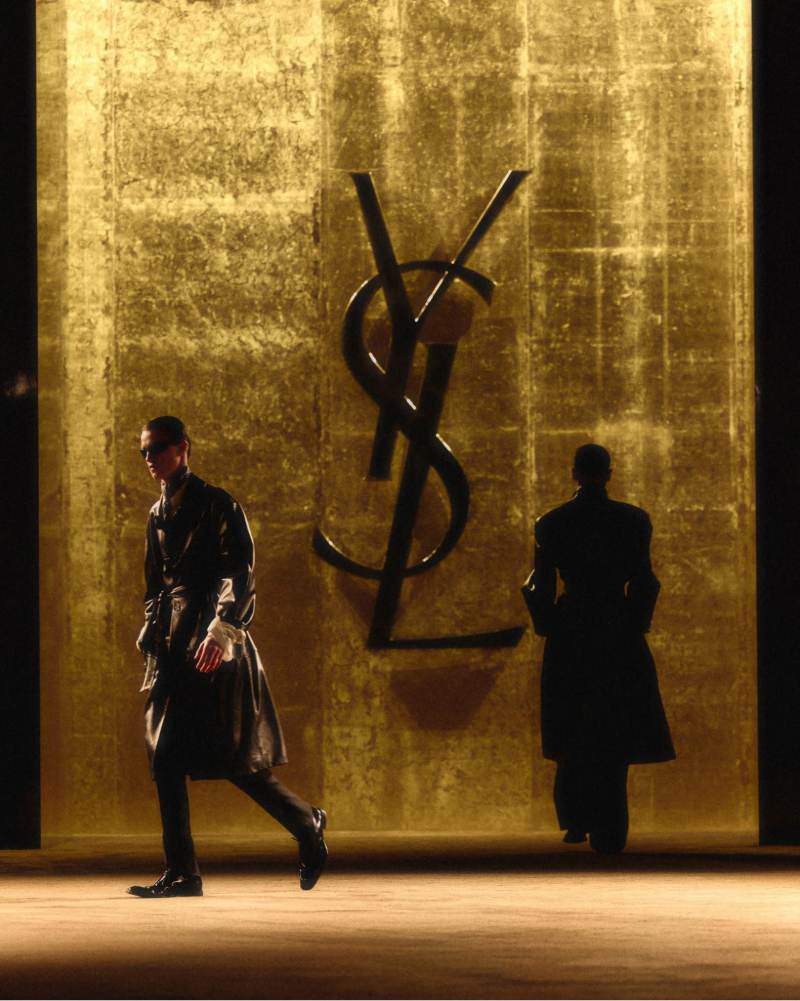
Saint Laurent, the Paris house founded by Yves Saint Laurent in 1961 and one of Kering‘s most commercially important labels, announced on October 9 that creative director Anthony Vaccarello is leaving after a decade in the job, which he took in 2016 after Hedi Slimane. His last show, an all-gold homage to the founder’s 1970s couture, was widely read as a farewell. According to Kering, Saint Laurent’s revenue fell 9% in 2024 and 6% in 2025 before largely stabilizing this year. A successor has not been named; industry speculation points to Chemena Kamali, now at Chloé and previously a Saint Laurent design director, but that is rumor until confirmed.
Six days later, Alexander McQueen, the London house founded in 1992 and known for dramatic tailoring, said it is parting ways with Seán McGirr, the Irish designer who succeeded Sarah Burton in 2023. The exit comes amid layoffs and a downsizing of the store network. Its CEO, Gianfranco D’Attis, a former Prada chief, took over only about four months earlier. WWD reports that Kering CEO Luca de Meo blamed heavy losses on opening 135 stores and an overreliance on sneakers, which at one point reached 80% of sales.
Between the Lines
1. The business reset comes first; the face changes last. At McQueen, a new CEO, store cuts and layoffs all preceded the designer’s exit. Blaming one designer for a model built on sneakers and store count (which pre-dates him) is convenient, but the pattern is clear: operators fix cost and distribution, then replace the creative figurehead. The designer is often the last domino, not the first.
2. Tenure is no longer protection. Vaccarello gave Saint Laurent a decade of identifiable style and, by one account, roughly tripled its sales. Two years of decline were still enough. Gucci, Balenciaga and Bottega Veneta all changed creative directors last year, so this is a group-wide reset, not an accident.
3. Who benefits? Three groups:
The Map to Modern Luxury
THE CURATED CALENDAR
Discover the world’s most prestigious gatherings & exhibitions- Proven designers elsewhere (the Kamali scenario), who can be poached from rival groups.
- Deputies and in-house leaders, following the path of Burton, who moved from McQueen to Givenchy.
- Independents with a prize halo, such as the 2026 LVMH Prize winner Julie Kegels, who are now more visible to headhunters.
But note the catch: successors inherit smaller store networks, tighter budgets and shorter patience. It is an opportunity with an expiry date.
4. Auteur or system? Brands are quietly hedging against churn by leaning on codes that outlive designers: Gucci’s Horsebit, Hublot’s origin watch, Louis Vuitton’s archive furniture. Yet Chanel just created a named creative makeup director, so the star-creator logic is far from dead. Expect both models to coexist.
Where This Points
- Shorter tenures and bigger accountability. Creative directors will increasingly carry a sell-through target, not just a runway reputation.
- CEO and creative director hired as a pair, with the operator setting the rules first.
- More internal promotions and rotation between groups, because talent is scarce and trust is expensive.
- More emphasis on house codes, as insurance against turnover.
A gentle joke: Kering’s HR department should consider a loyalty card, where the tenth farewell dinner is free. The serious point is that luxury is moving from worshipping designers to managing them, and the houses that cope best will be those whose identity does not walk out of the door with the sketchbook.