The official release celebrates six hotels. The previous year’s results add a footnote.
Awards season has a golden rule: every list is a victory for someone. Belmond’s announcement of six hotels in the 2026 World’s 50 Best Hotels is a good example. The facts are fine; the framing needs a second read.
What Happened
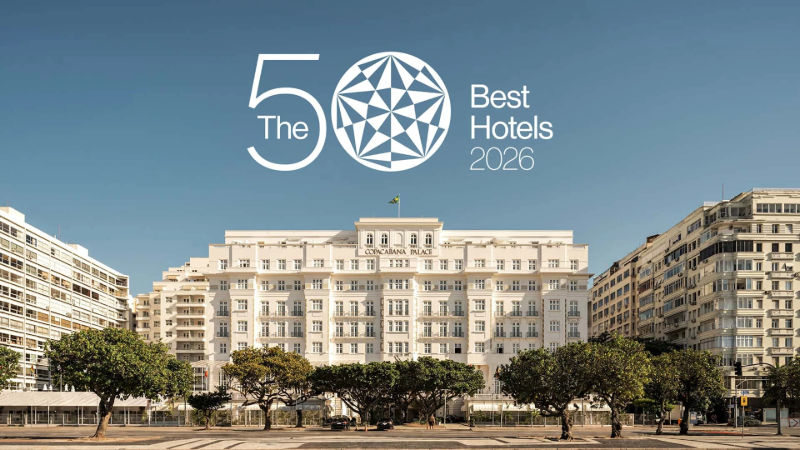
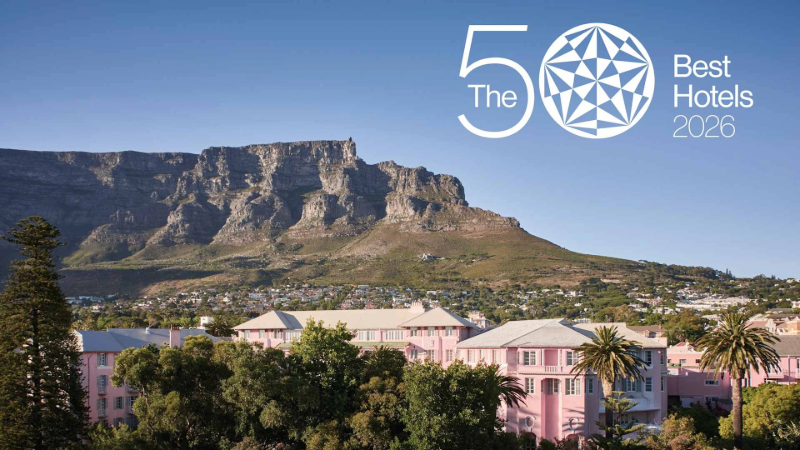
Belmond, the LVMH-owned collection of historic hotels, trains and river cruises, which brands itself around “slow luxury,” had six properties recognized in the fourth edition of the World’s 50 Best Hotels, whose ceremony was held in Paris for the first time. The ranking is voted by 800+ anonymous industry experts.
In the Top 50: Copacabana Palace, Rio de Janeiro (No. 29), Mount Nelson, Cape Town (No. 34), and Maroma, Riviera Maya (No. 47). On the extended 51–100 list: Palacio Nazarenas, Cusco (54), Splendido, Portofino (60) and Hotel das Cataratas, Iguazú (77). At the top, Rosewood Hong Kong ranked No. 1 for a second year, followed by Capella Bangkok, Four Seasons Bangkok, Atlantis The Royal in Dubai and Passalacqua on Lake Como.
Between the Lines
1. Compare with last year. In 2025, Belmond’s release counted seven properties, with Copacabana Palace at No. 11 (and awards as Best Hotel in South America and highest new entry) and Maroma at No. 33. In 2026, those two moved to 29 and 47 respectively. Mount Nelson, by contrast, came back into the Top 50 after appearing on the extended list last year. So the picture is mixed: fewer hotels overall, two notable slips, one return. Press releases celebrate the present tense; trends live in the comparison. (Rankings also depend on who votes, so a slip is a signal, not a verdict.)
2. Asia’s momentum. Four of the top eight are in Hong Kong or Bangkok, and a Beijing hotel ranks seventh. The top is full of newer or recently reinvented properties with a strong design identity. Heritage still wins (Claridge’s, Hôtel de Crillon, Raffles Singapore, the Taj Mahal Palace all appear in the Top 50), but history alone doesn’t guarantee a rise; renewed energy does.
3. Awards as a marketing system. Hotels now collect a stack of validations: lists, Michelin Keys (Hotel das Cataratas received three, Copacabana Palace two), Forbes ratings. Each is a distribution channel for stories, and each is also a business: awards programs run events and sponsorships. That doesn’t make them invalid, but it does mean readers should ask who votes, how, and who pays.
The Map to Modern LuxuryTHE CURATED CALENDAR
Discover the world’s most prestigious gatherings & exhibitions4. The group strategy. LVMH is assembling a portfolio of destination heritage hotels under Belmond, an interesting contrast to fashion’s focus on fast-changing looks. The rankings show that portfolio can produce recognition, but also that it must keep investing.
Where This Points
- Rankings are becoming booking tools, especially for affluent travelers choosing between similar five-star options.
- Reinvention beats reputation. Heritage hotels that refresh food, wellness, design and service rise; those that coast slip.
- Geography is shifting east and south, with new luxury energy in Asia, the Gulf and Latin America.
- Brands will chase lists, which risks making hotels optimize for voters as much as for guests.
Humor break: a hotel can now be both “among the best in the world” and “down eighteen places,” depending on which paragraph you read.
Bottom line: celebrate the six Belmond hotels, but read the trend line. In luxury hospitality, the hardest award to keep is the one you already have.