For three days in October the world’s largest luxury group let strangers into its workshops. Here is what changed, who got in, and why it matters.
Every so often luxury does something delightfully counterintuitive: it gives away what it normally guards. From October 16 to 18, LVMH, the group behind Louis Vuitton, Dior, Moët & Chandon, Tiffany & Co. and more than 75 other Maisons, held the sixth Les Journées Particulières, its open-doors weekend of ateliers, cellars, archives and historic addresses.
The Facts in Brief
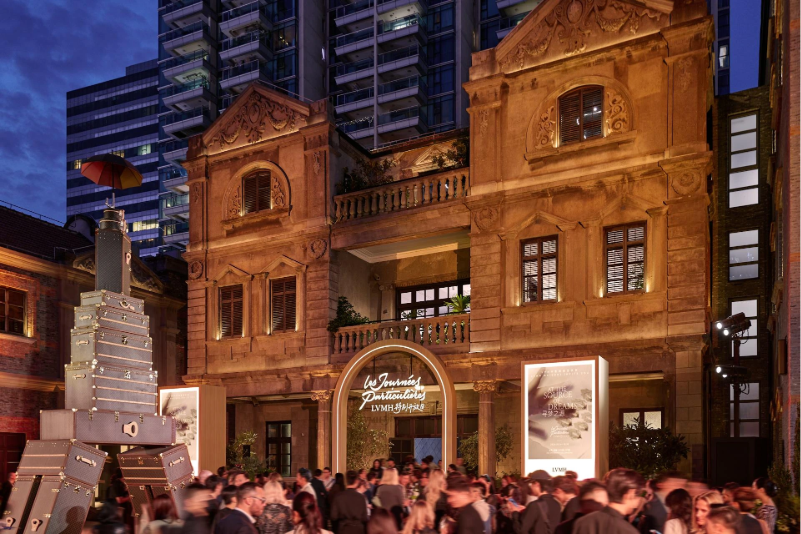
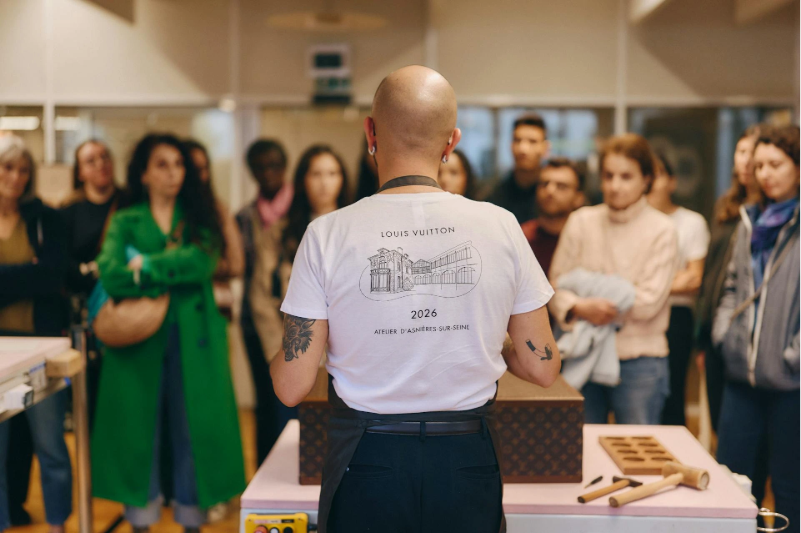
Forty-five Maisons opened 71 venues in 13 countries, free of charge, under the theme “At the Source of Dreams,” built on nature, culture and craft. Visitors saw Louis Vuitton’s historic workshops in Asnières, the Galerie Dior, Moët & Chandon’s cellars in Épernay, Hennessy’s estate in Charente, Loro Piana’s facility in Ulaanbaatar and Chandon’s vineyards in Napa Valley, plus guided tours, masterclasses and hands-on workshops. The weekend began with the LVMH Virtuosos ceremony honoring artisans at La Samaritaine in Paris.
What Is Different This Time?
- Smaller, by design. The 2022 edition (the fifth) drew more than 200,000 visitors at roughly 93 to 96 venues in 15 countries, with 57 brands. This year there were fewer venues and fewer Maisons, and LVMH said it did not expect to beat that record. The emphasis moved to depth: workshops where you can try a gesture, not just watch one.
- A surprise return. It came after a four-year gap (the event was paused for the 2024 Paris Olympics, of which LVMH was a premium partner). Antoine Arnault, who launched the weekend in 2011, said the group had not planned to hold it this year and moved it up from next year.
- A new front in China. Fifteen Maisons gathered at the Maison LVMH in Shanghai’s historic Zhangyuan district, with demonstrations, conferences and an exhibition, extended by the Louis Vuitton mansion in Shanghai, Chandon in Ningxia and Officine Universelle Buly in Hong Kong.
- No visitor total yet. LVMH’s wrap-up celebrates “enthusiastic reactions” in guestbooks but, so far, publishes no attendance figure.
Who Can Actually Get In?
Anyone, in theory: it is free and not invitation-only. In practice, access depends on timing and geography. Reservations were released in three waves (September 24, 28 and 30, at 2:00 pm Paris time), each with a different set of venues, and many tours take place in small working ateliers that cannot host crowds. Some sites welcomed walk-ins, subject to capacity. The opening evenings and the Virtuosos ceremony were for guests. So the doors were open, but the best ones were narrow.
Is It Only Marketing?
Of course it is marketing, in the best sense: it builds emotional trust at a time when luxury is asked to justify itself. But it is also useful. It recruits future artisans, shows regional roots, and gives craftspeople visible pride. The fair critique is transparency: an open-doors weekend shows what a Maison chooses to show.
Do Competitors Copy It?
Not at this scale. Others run smaller versions: Chanel opened its 19M métiers d’art campus (the Montex and MTX embroidery workshops) for two free, no-booking days in September, as part of European Heritage Days; Hermès has long toured its artisans through its own Festival des Métiers; and France’s Journées Européennes des Métiers d’Art invite the public into thousands of workshops each April. Collective efforts also exist, such as the Comité Colbert exhibition at New York’s The Shed this spring. The scale and global reach of LVMH’s weekend remain unique.
The Map to Modern Luxury
THE CURATED CALENDAR
Discover the world’s most prestigious gatherings & exhibitions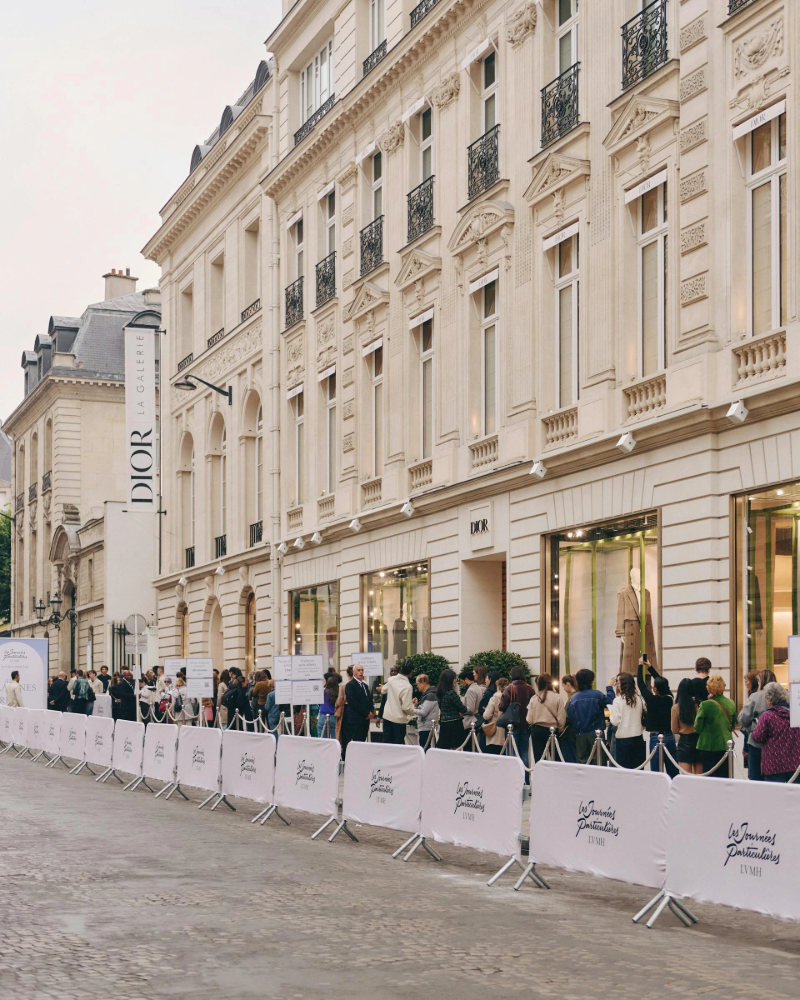
What Were the Most Interesting Moments?
We can’t measure the exact social buzz, but the sites LVMH highlighted tell a story: Celine’s ready-to-wear workshops in the Hôtel Colbert de Torcy, Chaumet’s Place Vendôme mansion, Tiffany’s Landmark in New York, the Copacabana Palace in Rio, the Paris Match archives (75 years of photographs), the Moynat trunk workshops and Berluti’s bootmakers, Maison Francis Kurkdjian’s new headquarters, and a Cheval Blanc restaurant in Japan offering three 15-minute workshops (tea, futomaki, mochi) to people who may never afford its tasting menu. Loro Piana’s new Piedmont knitwear center also opened its doors.
What It Means in 2026
In a more cautious luxury market, the weekend is a declaration: craft, place and people are the real assets. It is also soft power, for a group that wants to be loved as much as bought. The next evolution will probably be smaller, more hands-on and more local, with proof of impact (jobs, training) alongside the charm.
Open doors are now a luxury strategy. The question for 2028 and beyond is who gets to walk through them.