A luxury watchmaking brand founded on breaking the rules is now celebrating the first rule it broke. Nostalgia has a certain irony.
In 1980 a gold watch on a rubber strap horrified the Swiss establishment. In 2026 it is a tribute edition with a press kit and a price list.

What Happened
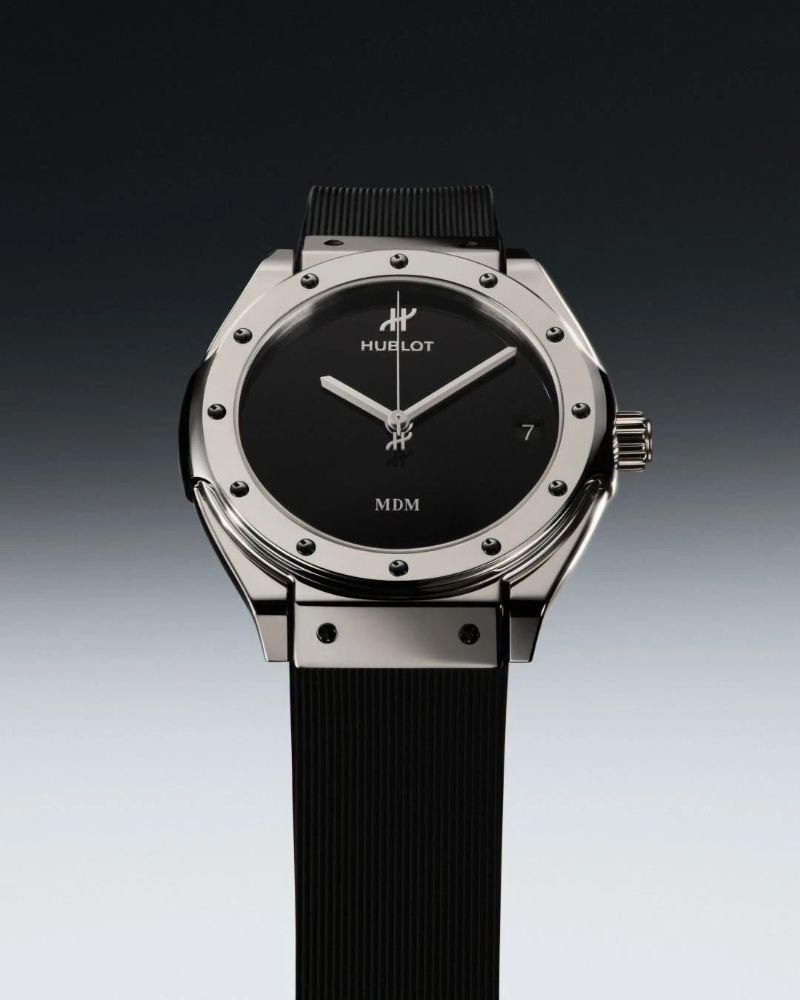
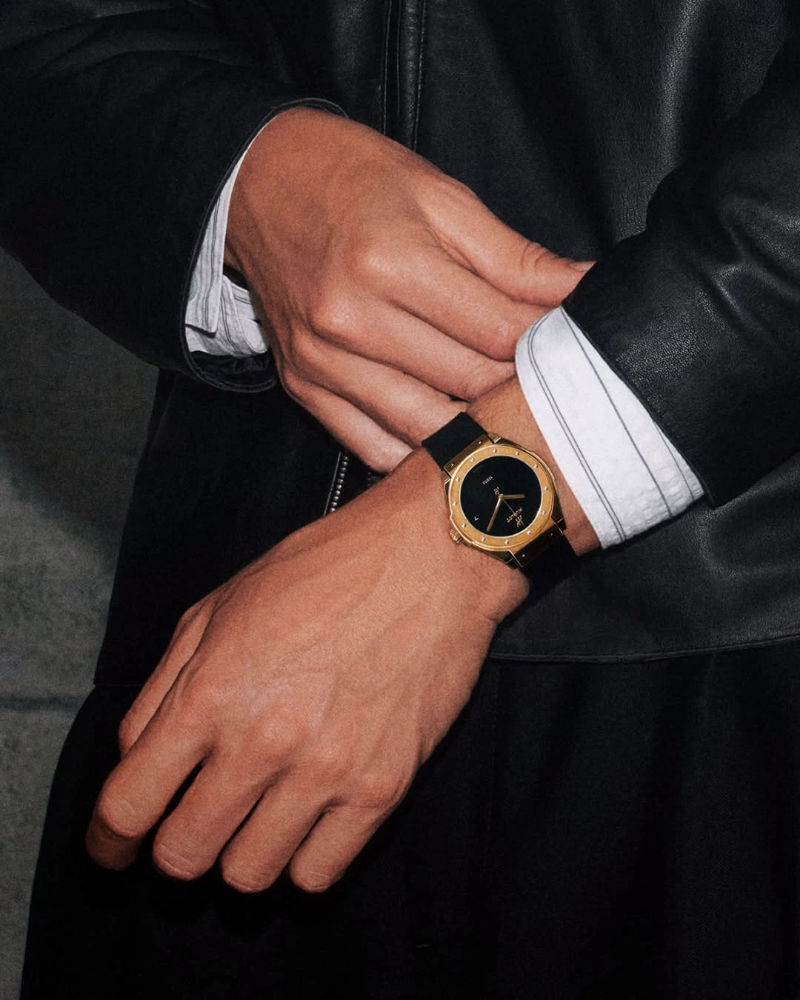
Hublot, the Swiss watchmaker owned by LVMH, has launched the Classic Fusion Tributo, a revival of the watch created by founder Carlo Crocco, who showed it at the Basel fair in 1980 under the name MDM Genève. It was the first watch to pair a gold case with a rubber strap, and its porthole-style bezel with 12 visible screws (hublot means porthole in French) later gave the brand its name.
The Tributo comes in 18-karat yellow or white gold, with a plain black dial, a date at 3 o’clock and the original 12-screw bezel. It grows from the 1980 original’s 36 mm to 38 mm and swaps the original quartz movement for Hublot’s in-house HUB1711 automatic, visible through the caseback. The strap is a modern rubber (no longer the original’s vanilla-scented natural rubber). It is not a limited edition and costs US$30,900 before taxes (about £23,600), according to launch coverage.
Between the Lines
1. Rebellion as heritage. Hublot’s identity has always been “Art of Fusion”: mixing things that supposedly don’t belong together. But the brand has now revisited its origin repeatedly, with Classic Fusion in 2008, the Classic Fusion Original in 2023 and now the Tributo. A disruptor that keeps returning to its first act is quietly admitting that the shock has become tradition. Gold on rubber stopped being rebellious years ago; what remains is the story.
2. Why now? A tribute edition is the safest kind of launch in an uncertain market. It offers a clear story to retailers, an easy reason for collectors to buy, and a design already validated by 46 years of history. It also arrives just weeks after Hublot’s Jeff Koons collaboration, so the brand is covering both ends: pop-art provocation and purist origin. That bracketing is a strategy in itself.
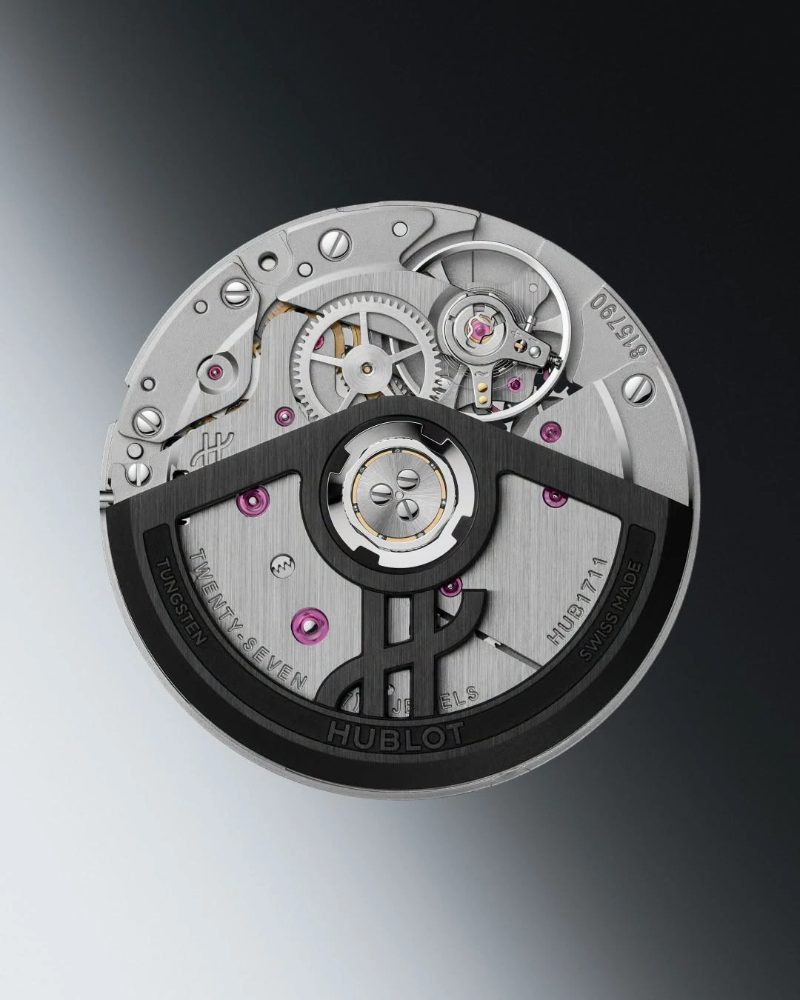
3. Read the specs. A 38 mm gold case at 9.5 mm thick, an in-house movement, no limited edition. The Tributo is deliberately restrained for a brand that became synonymous with big, loud watches. Two signals: the oversized-watch era is fading, and Hublot wants credibility with buyers who value proportion and manufacture over spectacle. Also note it is a regular production piece, so scarcity is not the sales pitch; story is.
The Map to Modern Luxury
THE CURATED CALENDAR
Discover the world’s most prestigious gatherings & exhibitions4. The authenticity test. Reissues work only if they honor what made the original special. Missing details (the vanilla smell, the five-strap fitting ceremony replaced by a modern folding buckle) show where practicality has overruled nostalgia. That’s sensible, but it reminds us that tributes are curated memories, not time machines.
Where This Points
- The archive economy keeps growing. From Gucci’s Horsebit to Louis Vuitton’s 1923 armchair and now Hublot’s 1980 original, luxury is mining its past because the past is verifiable and the future is not.
- Saturation risk. When every house reissues its “origin,” the claim loses force. The winners will be those whose origin story is genuinely distinctive.
- Value shifts from novelty to authorship. Buyers want to know who made it, when, and why, and a founder’s voice (Crocco is quoted in the launch) is worth more than a campaign.
Humor break: Hublot spent four decades proving rules are made to be broken, and has now written a rule: always return to the original.
Bottom line: the most radical thing luxury can do in 2026 may be to remember itself carefully. Hublot’s tribute is smart, but only if the next move is a new idea, not a fourth look back.


