On a bright Thursday at Gotham Hall, fashion paused to say thank you to a designer who has never stopped moving.
There are afternoons in the fashion calendar that feel like family reunions. The Couture Council luncheon at Gotham Hall on October 22 was one of them: a room full of people whose paths had crossed with Diane von Furstenberg over fifty years, gathered to honor her.
The Afternoon at Gotham Hall
The Museum at FIT (MFIT) is the only museum in New York devoted exclusively to the art of fashion, part of the Fashion Institute of Technology. Its Couture Council, a circle of supporters, gives an annual award at a fundraising luncheon that benefits the museum, with tables from $20,000 and single seats from $2,000. This year’s 2026 Couture Council Award went to Diane von Furstenberg for her transformational influence on women’s fashion, following recent honorees Olivier Rousteing of Balmain (2025), Jacquemus (2024), Gabriela Hearst (2023), Maria Grazia Chiuri of Dior (2022) and Wes Gordon of Carolina Herrera (2021).
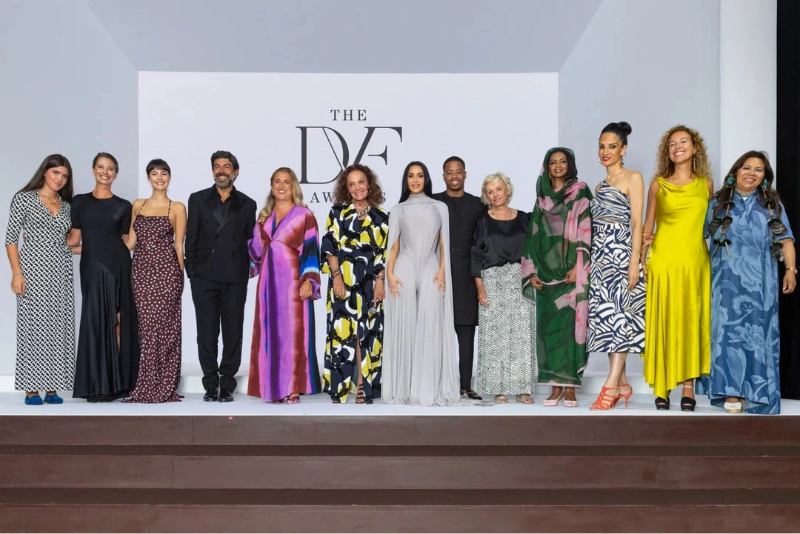
Among the guests: Martha Stewart, Linda Fargo, Narciso Rodriguez, LaQuan Smith, Nicole Miller, Candace Bushnell, Fern Mallis and many more. The tables were dressed in runners printed with a DVF pattern that has been in use for more than three decades, a quiet reminder of how long a good print can live.
Henry Zankov, artistic director of DVF and a proud FIT graduate, opened the program. He spoke about Diane’s belief that designers are like architects, who must understand how something is made and how it feels to wear. Zankov showed his first DVF collection at the High Line in September, which made the day feel like a passing of the torch. FIT’s new president, Jason Schupbach, thanked her for lifting up young creators, and also acknowledged a difficult week for the FIT community, reaffirming that FIT is committed to supporting its people and condemning harm toward women. Valerie Steele, MFIT’s director and chief curator, added her gratitude, and the Museum at FIT Student Award went to Chloe LaBel, Class of 2027.
The Woman Who Wasn’t Supposed to Exist
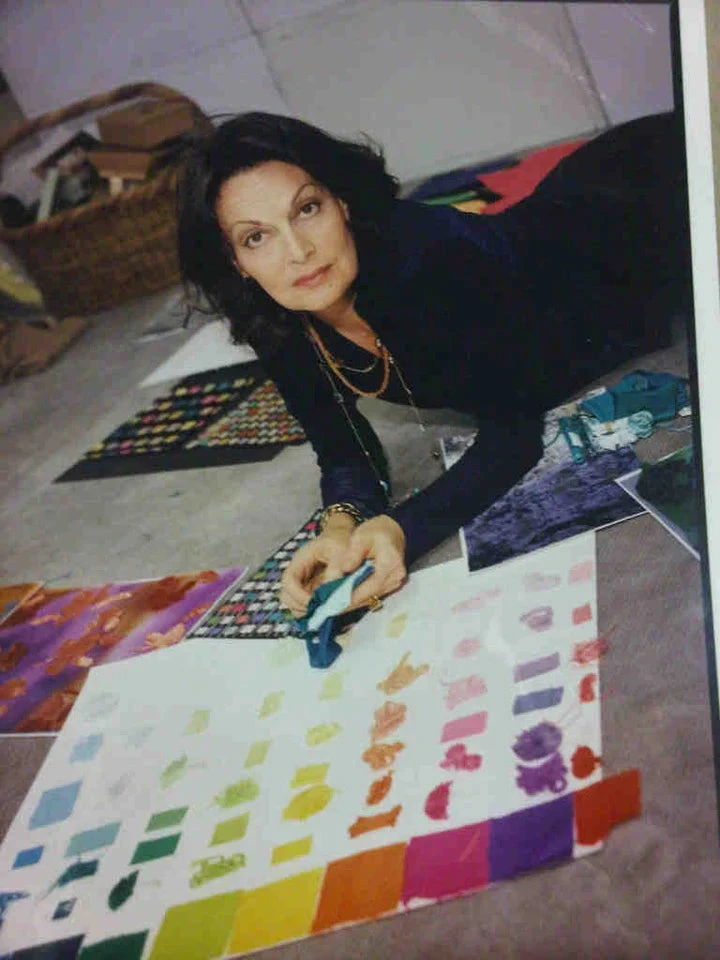
The presentation by Vanessa Friedman, fashion director and chief fashion critic of The New York Times, was the heart of the afternoon. She described a woman whose mother, a Holocaust survivor, was told she could never have children, and whose daughter went on to build a fashion business with no formal design training, landing on the cover of Newsweek at 29 and reinventing the company three times. Her influence has reached the city itself: through the Diller-von Furstenberg Family Foundation she has stewarded the High Line and Little Island, led the CFDA for more than a dozen years, helped restore the Statue of Liberty and now, on the eve of her 80th birthday, has taken on a project to save Venice. Friedman also recalled DVF’s candor when her business was restructured in the pandemic: she said there is no shame in admitting you are in trouble.
Accepting the award, Diane von Furstenberg retraced her story: from Belgium and a printing factory near Como, Italy, to marriage, New York, a first showing in a hotel, and a magazine cover that made her famous, with a joyful anecdote about a stranger on a flight to Pittsburgh who couldn’t believe she was reading the paper that had written about her.
Between the Lines: What This Honor Tells Us
1. Legacy and renewal in the same room. The founder is celebrated by the artistic director who has just stepped onto the runway for the brand. Heritage houses face the same challenge everywhere: honor the founder’s voice while giving the next designer room. DVF’s day offered a graceful model, in contrast to the creative-director exits elsewhere in luxury.
2. The designer as civic figure. DVF’s influence is measured not only in dresses but in parks, institutions and public causes. The most admired figures in luxury are increasingly those whose impact extends beyond the product, and whose generosity builds shared spaces.

Alexander McQueen to dive back into the world of perfume
Find more hidden gems in our archiveTHE CURATED CALENDAR
Discover the world’s most prestigious gatherings & exhibitions3. Vulnerability as leadership capital. The line Friedman highlighted, that there is no shame in admitting trouble, matters. In an industry built on perfection, candor about difficulty builds trust, and trust is the rarest currency luxury has.
4. A print is an asset. A pattern used for more than thirty years dressed the tables. It is a reminder that archives, codes and prints are the long-lived property of heritage brands: the same logic behind Gucci’s Horsebit and Louis Vuitton’s revived furniture.
5. Fashion’s cultural institutions need friends. A luncheon with $2,000 seats and $20,000 tables is how a museum funds its exhibitions. Luxury patronage, from MFIT to the LVMH Prize and Vacheron Constantin’s partnership with The Met, is quietly the engine that keeps fashion’s memory alive.
Honors celebrate the past, and rightly so. The real test for any legacy brand is the next chapter: whether the founder’s spirit can be translated into pieces that excite a new generation. Zankov’s debut is that test, and the room seemed to be rooting for him.
Where This Is Heading
Expect more tributes to designers who combine product, purpose and public presence, and more museums turning fashion’s biggest names into cultural events. The most lasting luxury, it seems, is the kind that gives something back to the city.