At Paris Fashion Week 2026, Louis Vuitton debuted a vest made from plant-based fur crafted from hemp, flax, and nettle — compostable, cruelty-free, and one of the most quietly disruptive moments in recent fashion history.
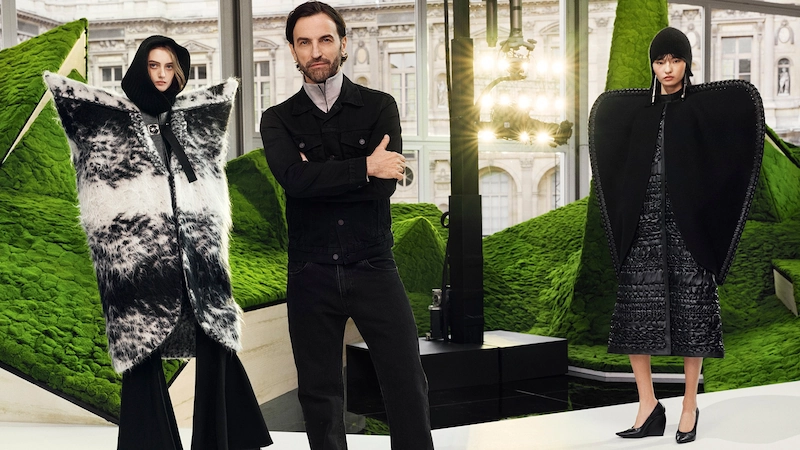
It happened at the Cour Carrée of the Louvre. One of the most storied courtyards in the world, transformed into a surreal digital countryside: angular hills coated in vivid green, a stark white runway cutting through what felt like a simulation of nature rather than nature itself. The collection was called Super Nature. Nicolas Ghesquière, Louis Vuitton’s creative director, was making a statement about the natural world — not as something to retreat to, but as something to reimagine.
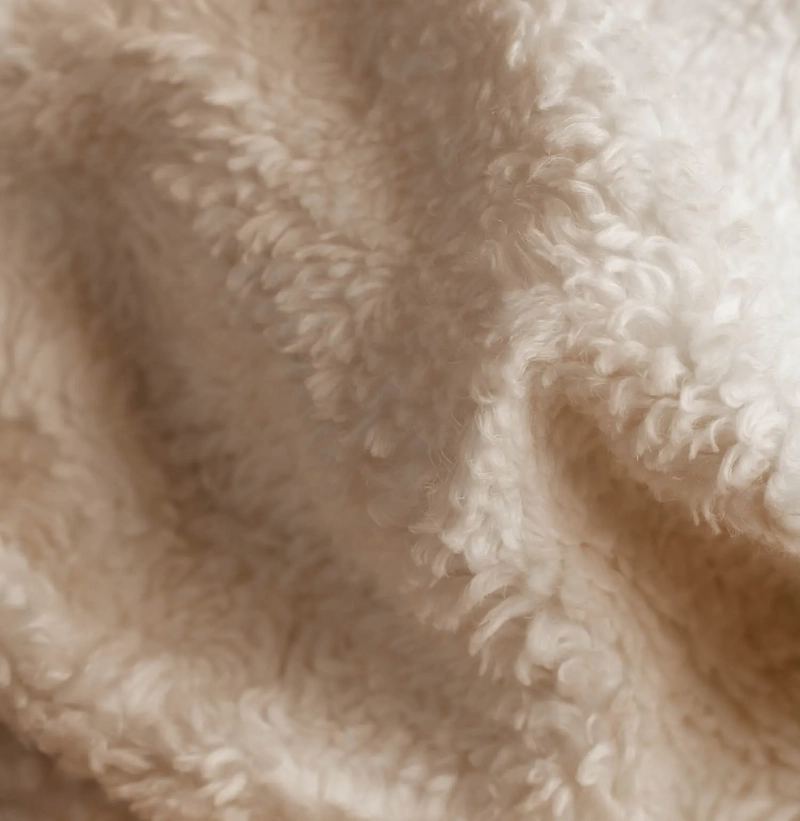
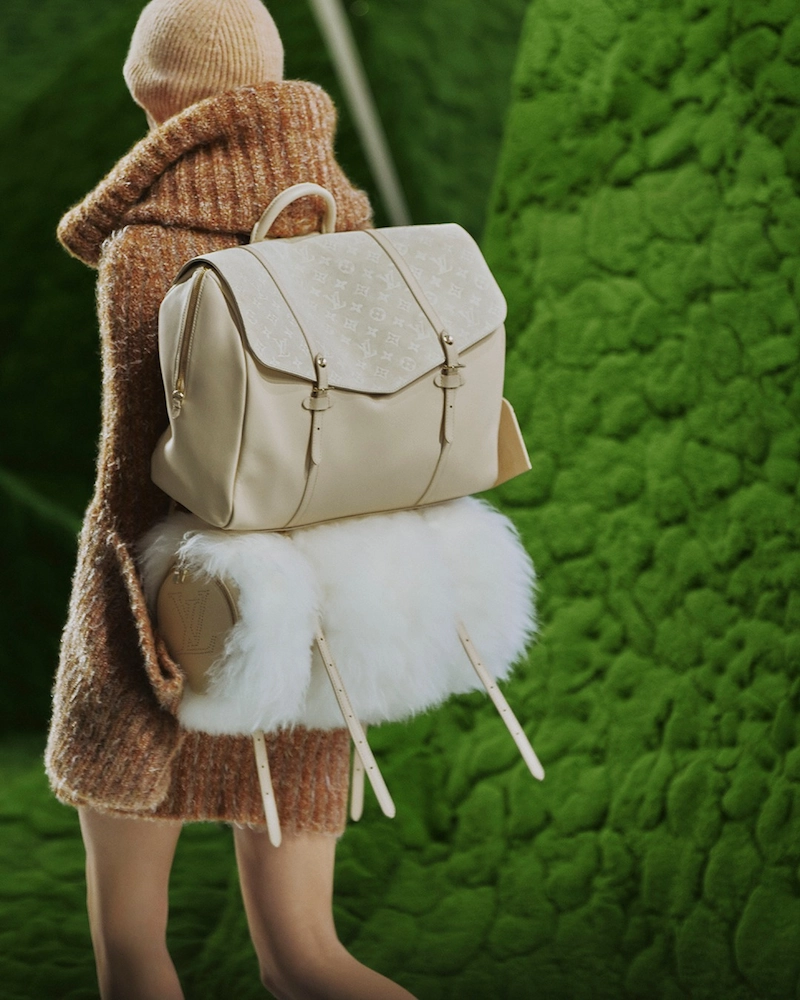
And then, almost quietly, a vest walked out. Textured. Plush. Wolfy. Made not from an animal, but from plants.
That vest was crafted from BioFluff’s Savian material — a plant-based fur made from nettles, flax, and hemp — making Louis Vuitton the first house in the entire LVMH group to use plant-based fur on a runway. In an industry built on animal pelts and polite silence about where they come from, that is not a small thing. That is a crack in a very old wall.
Meet the Material That Changed the Conversation
Before we talk about what this means for fashion, let’s talk about what Savian actually is — because it deserves more than a footnote.
BioFluff currently offers two lines: Savian Naturals, made from plant fibers sometimes blended with lyocell, and Savian Silks, from silk fibers. Its textures — Wolfy, Dalmatian, Cheetah, Bambi, Pony, Beaver among them — are animal-inspired but not intended to replicate actual pelts. The founder describes the material as its own thing entirely. Her comparison: a veggie burger.
That analogy is more precise than it sounds. A veggie burger doesn’t pretend to be beef. It’s its own category — and it made an entire generation comfortable with eating less meat. Savian is doing the same thing for fur. It’s not imitation. It’s evolution.
On the environmental side, a preliminary third-party life-cycle assessment found that Savian’s carbon emissions are at least 75 percent below those of plastic fur. In a landfill, it can biodegrade within a few years — versus centuries for polyester and acrylic. It can also be industrially composted in just 12 weeks.
A coat you wear this winter could, eventually, become soil. That is not marketing language. That is a genuinely different relationship between fashion and the earth.
BioFluff first launched its Savian line at COP28, in collaboration with Stella McCartney — a meaningful origin story for a material that has since traveled from climate conferences to the most watched runway in the world.
The Show: Super Nature and the Wolfy Vest
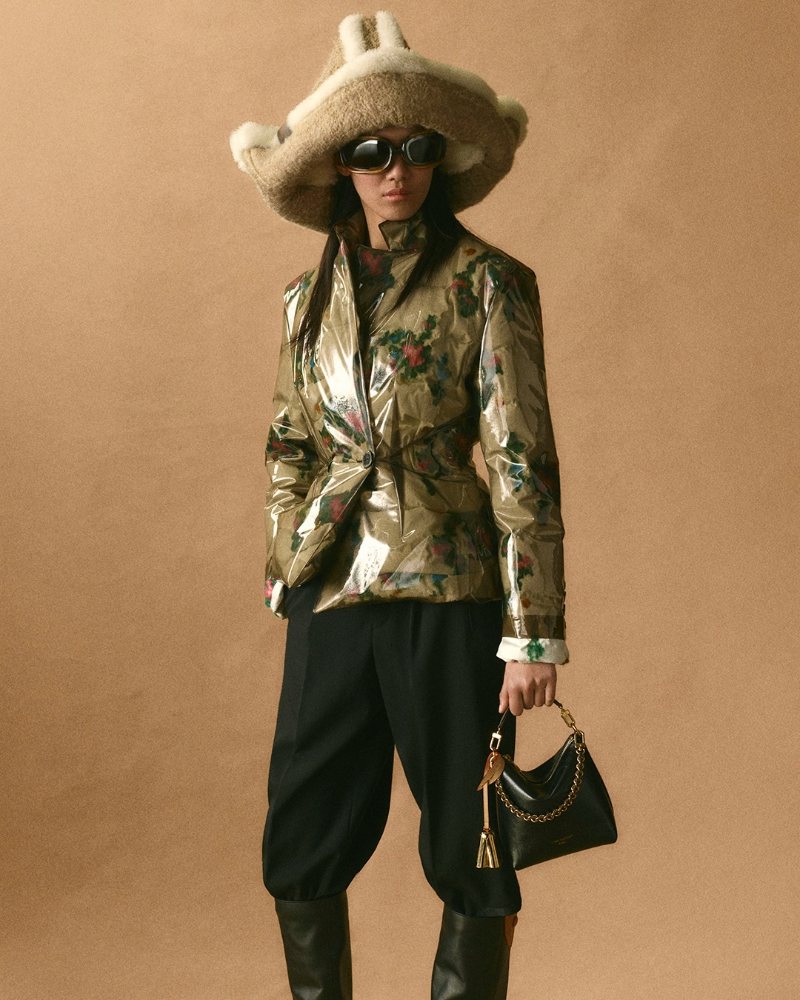
Nicolas Ghesquière described his Fall/Winter 2026 vision as hyper-craft — where the timeless ingenuity of artisans meets the tools of the present. The collection treated the natural world as architecture: mountains, forests, and terrain translated into silhouette and texture. Techniques such as 3D printing and experimental resins created details resembling minerals or antlers, while plant-based furs introduced entirely new textures. Leather was treated to resemble wood while remaining soft and flexible, blending realism with fantasy.
Among the most striking pieces: cropped leather jackets trimmed with vegetal fur, garments that felt simultaneously ancient and futuristic, folkloric and deeply modern. Vegetal furs took on a plush, almost feather-like quality. The horn-like heels on sharp pumps were resin. The whole collection felt like nature put through a filter of pure imagination — and then worn by humans who had decided to stop apologizing for being alive in it.
The front row told its own story. Zendaya attended in sweeping bridal white. Ana de Armas, Jennifer Connelly, Alicia Vikander, and Léa Seydoux completed the constellation. When people like that are watching, what walks the runway becomes global conversation within hours.
And on that runway, a plant-based vest walked. Quietly. Deliberately. As if it had always belonged there.
The Uncomfortable Truth They Haven’t Resolved Yet
Tax office demands data on yachts, luxury cars and art to crack down on wealthy tax dodgers
Find more hidden gems in our archiveTHE CURATED CALENDAR
Discover the world’s most prestigious gatherings & exhibitionsHere is where we have to be honest, because good news in fashion always comes with a footnote in small print.
Louis Vuitton is simultaneously one of the last major luxury fashion houses still using traditional fur, despite growing pushback over the industry’s environmental and animal welfare record. This is the contradiction sitting right in the middle of the Super Nature collection: a house reinterpreting nature on one rack, and still profiting from the death of animals on another.
This is not a victory. It is a signal. A test balloon. One vest, one texture, one season — watched very carefully by brand strategists, sustainability teams, animal rights organizations, and consumers who are increasingly unwilling to separate what a brand says from what it does.
Animal rights organizations, including PETA, are actively campaigning for the brand to eliminate fur entirely. The Savian vest could be a meaningful first step toward that goal. Or it could be a beautiful distraction. Fashion has a long, elegant history of both.
The question is not what Louis Vuitton did this season. The question is what Louis Vuitton does next season. And the one after that.
The Bigger Picture: An Industry Moving, However Slowly
Collina Strada, the New York-based vegan label, was the first runway brand to incorporate Savian’s Wolfy texture — at New York Fashion Week in February 2026. Then Louis Vuitton, two weeks later, at Paris. In the space of one fashion month, plant-based fur moved from independent vegan label to the biggest luxury conglomerate on earth.
That is not a slow trend. That is acceleration.
The global faux fur industry was valued at $4.58 billion in 2026 and is expected to reach $9.26 billion by 2035. The economics are already pointing in one direction. And when economics and ethics align, industries don’t gradually shift — they tip.
In March 2026, the Television Academy announced that real fur would be banned from the Emmys red carpet this September. Hollywood, luxury fashion, and climate science are all converging on the same exit door — and the animals who have been waiting behind it for decades deserve to see it open.
What This Means If You’re Paying Attention
The oldest excuse in fashion — there is no real alternative — has now been worn on the runway of Paris Fashion Week. By Louis Vuitton. In the Louvre. In front of Zendaya.
That excuse is officially gone.
What remains is a choice. For brands: do you follow, or do you lead? For consumers: do you reward the signal, or wait for the full commitment? For the industry: do you treat this as a trend cycle, or as the beginning of a genuinely different relationship between fashion and living creatures?
Louis Vuitton’s Super Nature collection was built on the premise of reinterpreting the natural world rather than imitating it. One vest, made of plants that will one day return to soil, suggests that perhaps the most radical reinterpretation of nature is simply deciding to stop destroying it for the sake of a coat.
The future has already been worn on a runway.
Now it’s about what we choose to wear next.