From a humbled LVMH to a $437,000 Patek Philippe that tracks sunrises, from Kering’s strategic reboot to billionaires booking biohacking clinics in the Alps — the luxury world in April 2026 is not slowing down. It is reorganizing. And the thread connecting everything is more coherent than it first appears.
There are weeks in the luxury calendar when the news feels like scattered static — brand announcements, earnings reports, watch launches, real estate statistics — each living in its own bubble, speaking its own language. And then there are weeks when you step back, look at all of it together, and realize it is actually one story being told from many different angles simultaneously.
This is one of those weeks.
Across the major conglomerates, the independent ateliers, and the quiet corridors where ultra-high-net-worth individuals decide what to do with their time and money, a single question is being asked in different registers: What does luxury actually mean now? Not what it meant in 2015, not what it meant in the post-pandemic consumption surge, but right now, in a world where conspicuous spending feels increasingly beside the point.
The answers arriving this week are fascinating. Let’s read them carefully.
Act One: The Conglomerates Recalibrate
The earnings season has a way of cutting through mythology, and LVMH’s Q1 2026 results did exactly that. A modest 1% organic growth — hampered by geopolitical turbulence across the Middle East — is a far cry from the double-digit momentum the world’s largest luxury group rode for years. Fashion and leather goods, the historic engine of the empire, slowed visibly.
But here is the detail worth keeping: inside that muted headline, Loro Piana is posting double-digit gains. The house that doesn’t advertise. The house that has never held a traditional runway show. The house whose customers consider a visible logo an act of poor taste. In a season where the broader group stumbled, the quietest brand in the portfolio ran fastest.
That is not a coincidence. That is a market sending a signal.
Quiet Luxury — that much-discussed, often-misunderstood philosophy of understatement, material excellence, and deliberate invisibility — is not a trend that peaked and passed. It is deepening. Its customers are not aspirational buyers who read about it on Instagram. They are people for whom the quality of the cashmere is literally more important than whether anyone notices they are wearing it. LVMH, whether it fully intended to or not, is now holding the proof of concept.
Meanwhile, across the Place Vendôme axis, Richemont is having an entirely different kind of quarter. Eleven percent growth, anchored almost entirely by the explosive and seemingly inexhaustible demand for Cartier and Van Cleef & Arpels jewelry. Hard luxury — stones and precious metals, objects made to last centuries — is outperforming soft luxury across nearly every metric that matters.
The reading here is not complicated. In a world of uncertainty — geopolitical, economic, cultural — people of serious means are moving toward objects that are non-negotiable in their value. A Cartier Love bracelet is not a fashion purchase. It is a store of meaning, an heirloom in the making, a decision that outlives a season. Richemont’s results are less about jewelry and more about the fundamental human instinct to hold things that last.
And then there is Kering, which is doing something braver and riskier than either of its major rivals: it is being honest about its situation and announcing a plan to fix it.
ReconKering — the multi-year desirability rebuilding strategy that runs through 2028 — is a name that is either boldly self-aware or slightly awkward, depending on your tolerance for corporate wordplay. But the substance beneath it is serious. The house is explicitly using the language of “True Luxury” — an acknowledgment that somewhere in the pursuit of growth and volume, something essential was diluted. It is also moving into a tech-forward eyewear partnership with Google, which is either a visionary extension of the accessories category or a very unusual detour, depending on how the execution lands.
What matters most about ReconKering is the admission embedded in its existence: that desirability is not a permanent condition. That it must be earned, maintained, and sometimes rebuilt from foundations. In an industry that often prefers to communicate only from positions of strength, that is a genuinely unusual kind of transparency.
Act Two: The Ateliers Remind Everyone What Time It Is
While the conglomerates were managing expectations, Geneva was doing what Geneva does best: making time itself feel like an art form.
Watches and Wonders 2026 dominated the week in horology, and two moments stood above the rest in different but complementary ways.
Rolex celebrated the 100th anniversary of the Oyster case — the foundational waterproof case that changed watchmaking permanently — with a detail so understated it is almost a philosophical statement. A secret “100” relief, engraved on the crown of new Oyster Perpetual models. Not on the dial. Not on the case back. On the crown — the small winding mechanism your fingers touch every time you interact with the watch. Hidden. Tactile. Meant for the owner, not the observer.
It is worth pausing on this. Rolex could have released a limited anniversary edition with a special dial, a commemorative box, a leather-bound booklet, a press tour. Instead, it put the number where almost no one will see it unless they look specifically for it. That is a brand so secure in its identity that it celebrates itself by whispering. The Loro Piana of watchmaking, in other words.
Patek Philippe, characteristically, chose a different register entirely — one of astronomical ambition and extraordinary technical courage.
The Celestial Ref. 6105G-001, priced at $437,000, introduces something the manufacture has never offered in regular production before: a genuine sunrise and sunset display. Not a complication for its own sake, but a mechanism that tells you when the sky changes — calibrated to a specific latitude, specific to the owner’s world. The sun rising and setting on your wrist, in your city, on your time.
At $437,000, this is not a watch for everyone. It is barely a watch for anyone. But what it represents — the marriage of astronomical science, hand-finished movement architecture, and deeply personal meaning — is exactly the category of object that ultra-high-net-worth collectors are moving toward. Not more watches. Fewer, better, more singular ones. Objects that justify themselves not through brand recognition but through the irreducible complexity of what they do and how they do it.
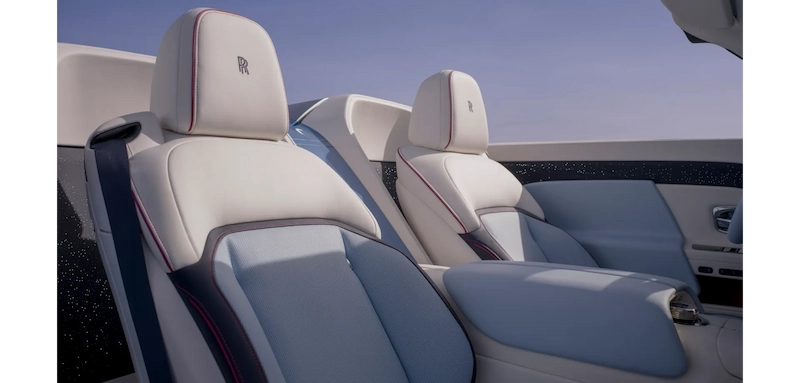
Rolls-Royce completed the week’s artisan triptych with Project Nightingale — an ultra-exclusive electric convertible limited to exactly 100 units, offered by invitation only to a pre-selected client list.
The Map to Modern Luxury
THE CURATED CALENDAR
Discover the world’s most prestigious gatherings & exhibitionsThere are several things to unpack here. Electric, because Rolls-Royce understands that its future patrons will not accept a trade-off between environmental values and physical sensation — and that the instant torque of electric propulsion is, if anything, more Rolls-Royce than the internal combustion engine ever was. Convertible, because the sky has always been part of the Rolls-Royce experience. One hundred units, by invitation, because scarcity at this level is not a marketing strategy. It is a relationship management system. To be on that list is itself the luxury.
Project Nightingale is named after a bird famous for singing in darkness — which may or may not be a deliberate metaphor for an industry navigating an uncertain moment with something approaching beauty.
Act Three: The Money Is Thinking Differently
The most important story of the week is not a product launch or an earnings report. It is a shift in how the wealthiest people in the world are choosing to spend — and what that spending now means to them.
UHNWI behavior is undergoing a genuine philosophical reorientation. The movement is away from conspicuous and toward what is now being called cognitive — wealth expressed not through what others can see, but through what the owner experiences, thinks, and becomes.
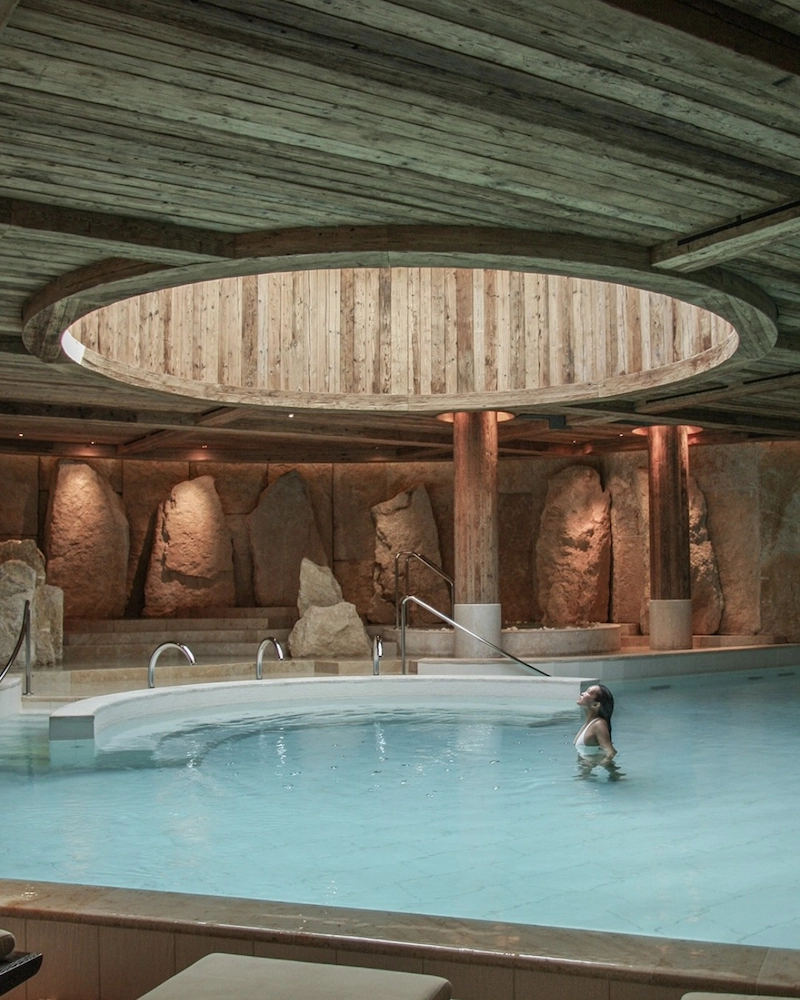
Cognitive Wellness is the emerging status category. Biohacking clinics, longevity programs, advanced recovery suites — not as indulgences but as investments in mental and physical optimization. Properties like The Alpina Gstaad are reporting record bookings for exactly these services. The clientele is not seeking relaxation. They are seeking performance. The luxury hotel room is being supplemented — and in some cases replaced — by the precision health protocol.
This is a meaningful departure from the traditional luxury hospitality model. For decades, the aspiration was comfort: the softest bed, the finest breakfast, the most attentive service. The new aspiration is transformation: to leave a property functionally better than when you arrived. Not rested. Upgraded.
Luxury real estate has absorbed the same logic. Wellness-certified homes — featuring advanced air purification systems, circadian lighting, dedicated recovery and biohacking spaces, and acoustic engineering — now command a 25% price premium over standard luxury listings in the same markets. That premium has appeared and stabilized faster than almost any previous feature-driven price differential in the sector.
The wealthy are paying more, significantly more, to live inside environments optimized for their own biology. The home is no longer primarily a status display. It is a health infrastructure.
Perhaps the most structural shift of all, and the one with the longest runway, concerns who the ultra-wealthy are. By 2040, women are projected to hold 20% of global UHNW wealth — a figure that sounds modest until you place it against historical baselines and realize it represents one of the fastest demographic wealth transfers in modern economic history. And the spending patterns of this cohort are already reshaping what luxury invests in and what it produces.
Purpose-led investments, heritage-focused collecting, brands with coherent values and documented provenance — these are the categories showing strongest growth among women entering ultra-high-net-worth status. Not coincidentally, these are also exactly the categories that LBTY. Beauty, Loro Piana, Richemont’s jewelry houses, and Patek Philippe operate in. The market is not shifting by accident. It is being pulled forward by a new center of gravity.
The Thread
Lay all of this out and the connecting line becomes clear.
The luxury industry in April 2026 is in the middle of a fundamental redefinition of what it is selling. Not objects. Not status. Not heritage, exactly — though heritage remains the raw material. What it is selling, in every category from watchmaking to wellness real estate, from plant-based fur to a sunrise on your wrist, is meaning at the highest possible level of craft.
Conspicuous luxury — the kind that performs for an audience — is losing ground to intentional luxury — the kind that performs for its owner. The audience is shrinking. The self is expanding. And the brands, ateliers, and properties that understand this shift most clearly are the ones posting the numbers that the rest of the industry is watching.
LVMH’s fastest brand is invisible. Richemont’s growth is in objects that outlast generations. Kering is rebuilding desirability by returning to first principles. Rolex hid its centenary on a crown. Patek Philippe put the sun and moon on a wrist for $437,000 and people are waiting in line. Rolls-Royce is building 100 cars for people whose names it already knows. The wealthiest people in the world are booking biohacking sessions in the Alps and paying 25% more to breathe better air at home.
None of this is noise. All of it is signal.
The luxury industry has always sold the idea that some things are worth more because they are made better, last longer, and mean more. That idea is not under threat. It is simply being held, in 2026, to a higher standard of proof than ever before.
The brands that can prove it are thriving.
The ones that cannot are ReconKering.
This is a weekly luxury briefing synthesizing major news from the world of high-end fashion, watches, automobiles, real estate, and wealth trends.