Costume Institute’s Spring Exhibition Karl Lagerfeld: A Line of Beauty to Open at The Met on May 5.
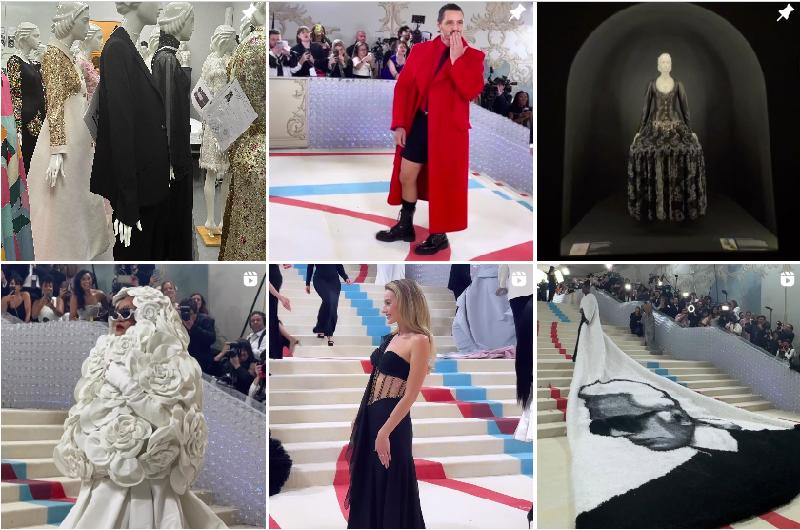
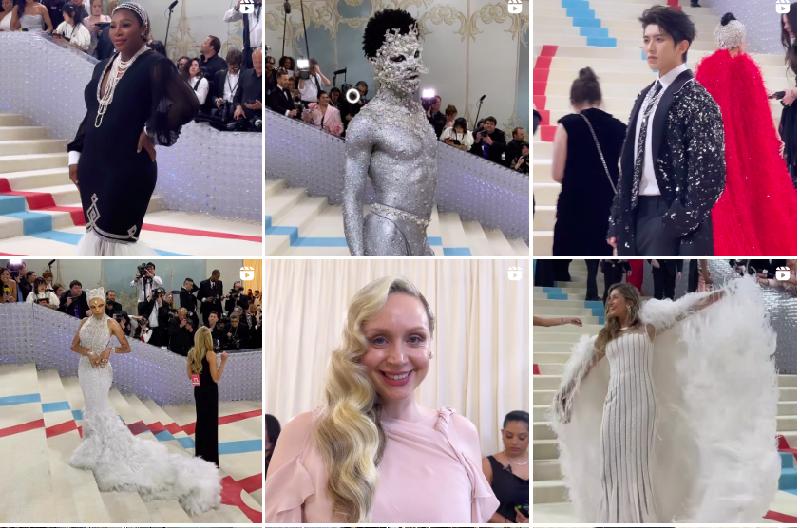
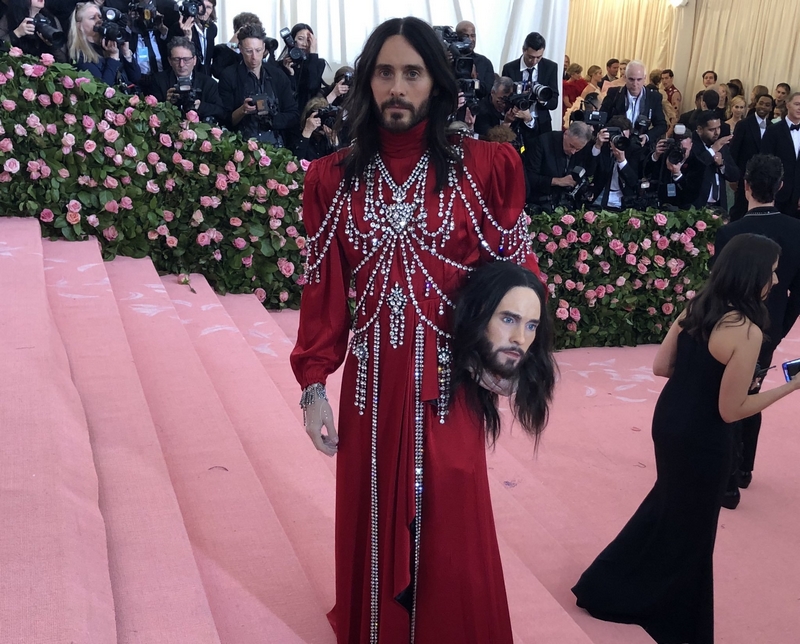
The Costume Institute’s spring exhibition Karl Lagerfeld: A Line of Beauty opened yesterday and was celebrated at The Costume Institute Benefit (also known as The Met Gala), with co-chairs Michaela Coel, Penélope Cruz, Roger Federer, Dua Lipa, and Anna Wintour.
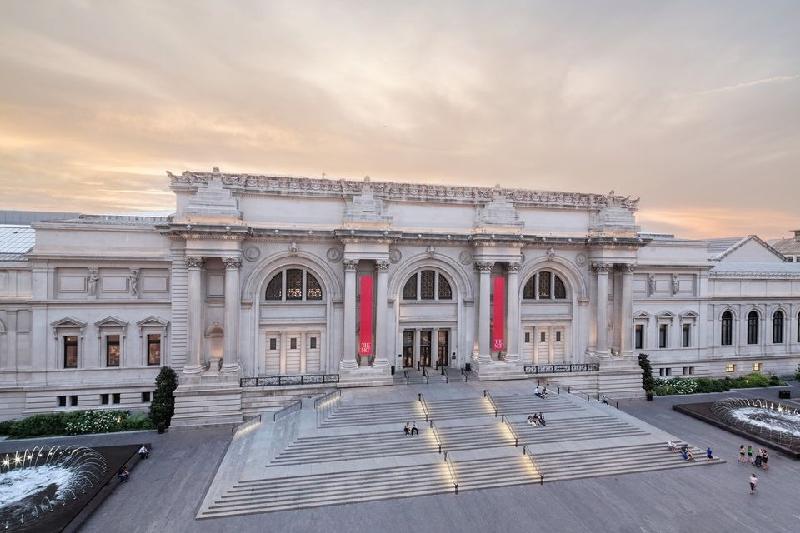
The show spotlights Lagerfeld’s unique working methodology, focusing on the late designer’s stylistic vocabulary as it was expressed in “through lines”—aesthetic and conceptual themes that appear time and again—in his fashions from the 1950s to his final collection in 2019. More than 200 objects are on display, and Lagerfeld’s sketches accompany most of the pieces, underscoring his complex creative process and collaborative relationships with his premières d’atelier. The exhibition will be on view at The Met Fifth Avenue through July 16, 2023.
The Met Gala provides the department with its primary source of annual funding for exhibitions, publications, acquisitions, operations, and capital improvements.
The exhibition and benefit are made possible by CHANEL. Major support is provided by FENDI. Additional funding is provided by KARL LAGERFELD and Condé Nast.
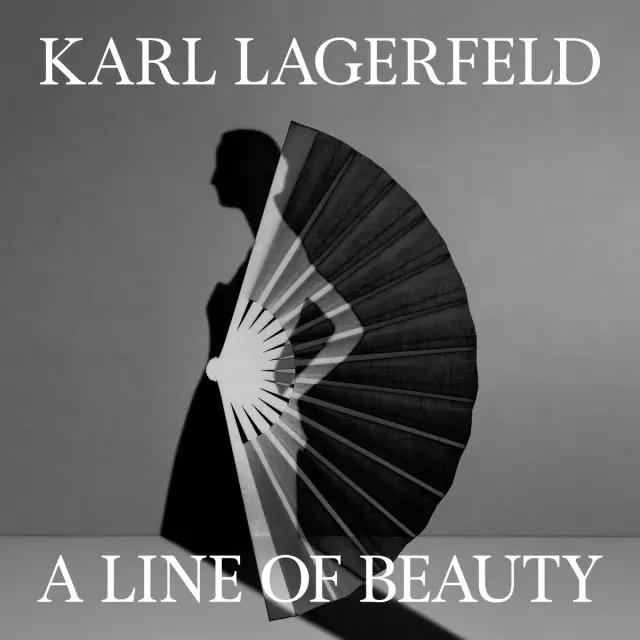
Max Hollein, Marina Kellen French Director of The Met, commented: “Karl Lagerfeld was one of the most captivating, prolific, and recognizable forces in fashion and culture, known as much for his extraordinary designs and tireless creative output as his legendary persona. This immersive exhibition unpacks his singular artistic practice, inviting the public to experience an essential part of Lagerfeld’s boundless imagination and passion for innovation.”
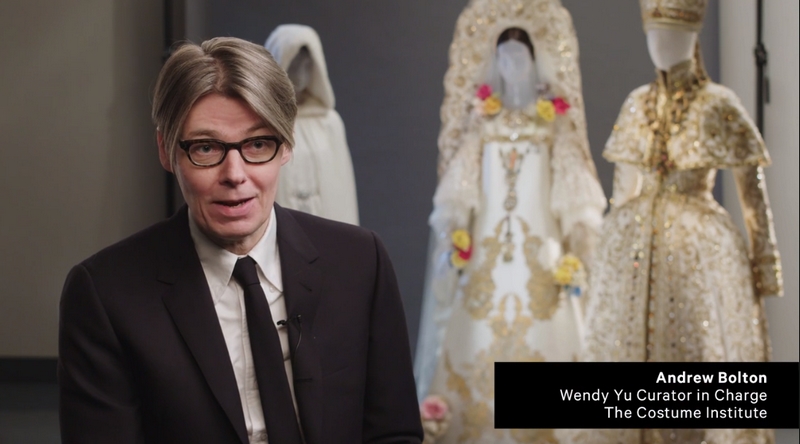
Andrew Bolton, Wendy Yu Curator in Charge, The Costume Institute, said: “The exhibition explores Lagerfeld’s complex working methodology, tracing the evolution of his fashions from the two dimensional to the three dimensional. The fluid lines of his sketches found expression in recurring themes in his fashions, uniting his designs for Chanel, Chloé, Fendi, Patou, and his eponymous label, Karl Lagerfeld, creating a diverse and prolific body of work unparalleled in the history of fashion.”
The exhibition’s theoretical framework is inspired by William Hogarth’s book The Analysis of Beauty, which describes his theories of art and aesthetics centered around his concept of the line of beauty, or the serpentine line: an S-shaped curved line appearing within an object or as the boundary line of an object, representing liveliness and movement. While Hogarth viewed straight lines as representative of stillness and inactivity, Lagerfeld took inspiration from both the straight and serpentine line in equal measure.
Presented as a thematic and conceptual essay about Lagerfeld’s work, rather than a traditional retrospective, the show opens with introductory galleries that explore Lagerfeld’s early career, including being awarded the International Woolmark Prize in 1954 and his ensuing roles as a design assistant at Balmain and an artistic director of Patou, where he continued to refine his unique style of sketching.
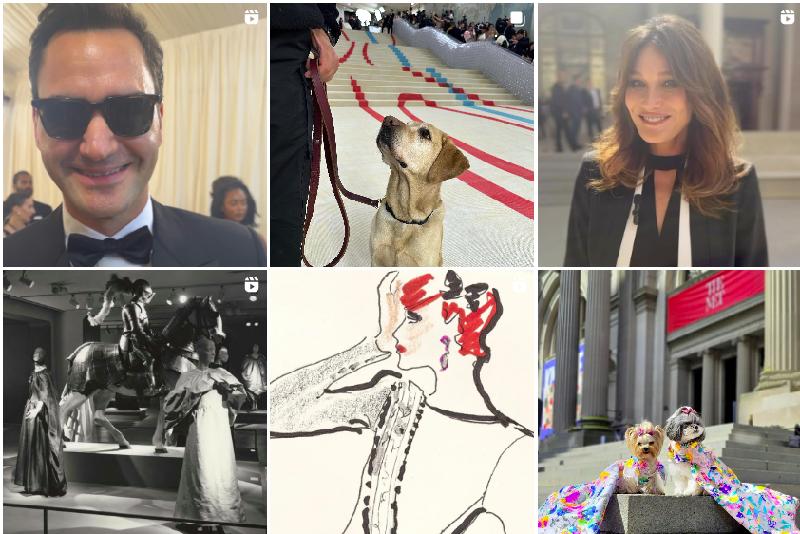
Sketching was both Lagerfeld’s primary mode of creative expression and his primary mode of communication. Illustrating its significance to the designer’s creative practice, another introductory gallery is dedicated to the premières d’atelier—the seamstresses regarded as the architects of Lagerfeld’s vision, responsible for translating his two-dimensional drawings into three-dimensional garments. Shedding light on this creative collaboration is a series of on-camera interviews—conducted by French filmmaker Loïc Prigent, who followed and documented the late designer’s collections from 1997 to 2019—featuring premières from Chanel, Chloé, Fendi, and Lagerfeld’s eponymous label.
Two through lines that represent conceptual expressions of Lagerfeld’s sketches —the serpentine line and the straight line, which designate opposing yet complementary forces in his work—anchor the subsequent sections of the exhibition. The serpentine line signifies Lagerfeld’s historicist, romantic, and decorative impulses, while the straight line indicates his modernist, classicist, and minimalist tendencies.
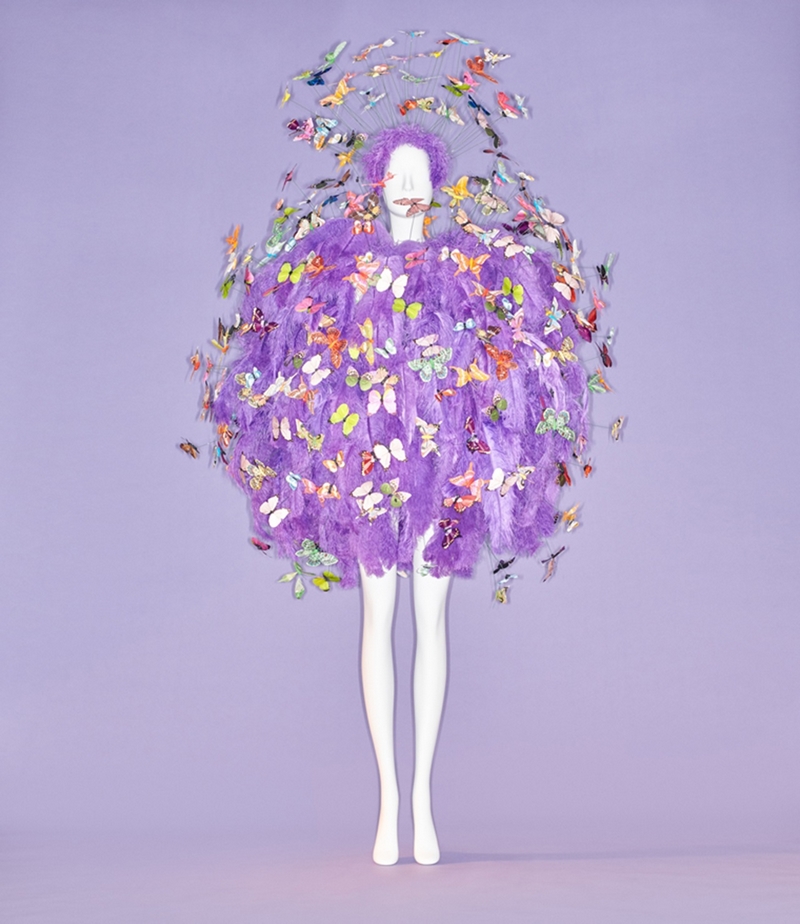
These two lines are further divided into nine “sublines” that present aesthetic and conceptual dualities showcased in Lagerfeld’s designs for Chanel, Chloé, Fendi, and Karl Lagerfeld: feminine and masculine, romantic and military, rococo and classical, historical and futuristic, ornamental and structural, canonical and countercultural, artisanal and mechanical, floral and geometric, and figurative and abstract. Bridging these dualities will be figurative “explosions”: garments that represent moments of convergence, wherein the competing aesthetics of these dichotomies are united and reconciled.
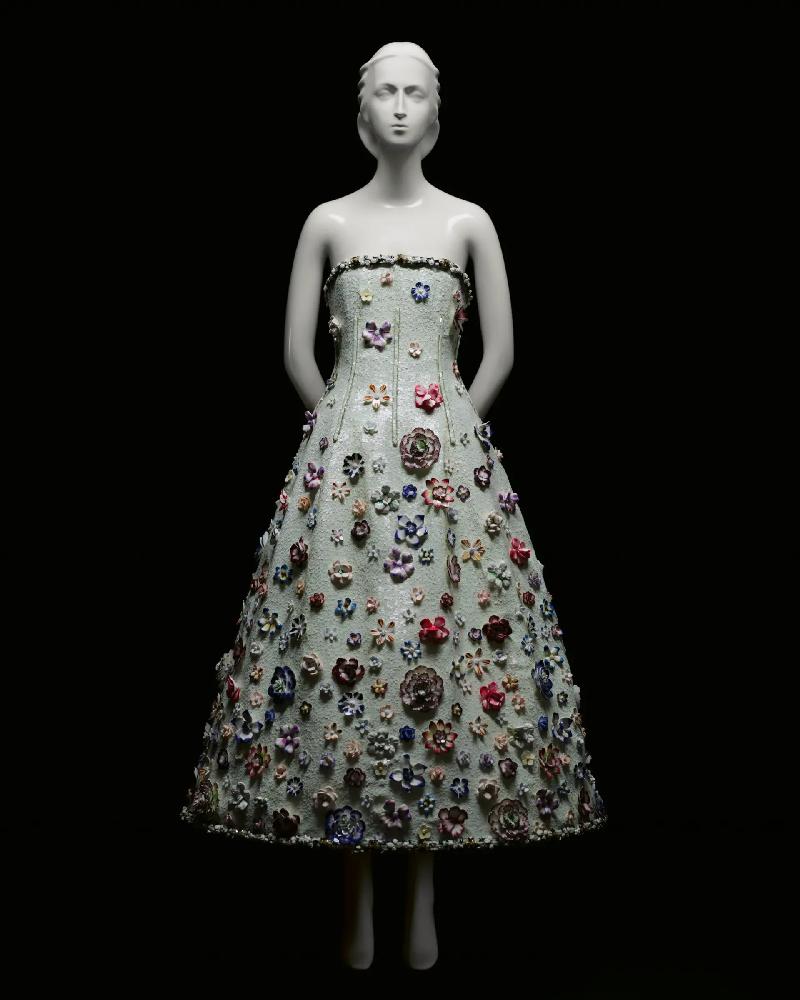
The dualities together reveal the complexity of Lagerfeld’s multifaceted designs as well as the breadth of his influences, which span art, film, music, design, fashion, literature, and philosophy. When extant, a sketch is reproduced adjacent to its finished garment; artworks that influenced some of Lagerfeld’s designs are also pictured alongside the garments they inspired.
The exhibition concludes with the satirical line, which will comprise two parts: the first will include garments that communicate Lagerfeld’s razor-sharp wit expressed through ironic, playful, and whimsical embroideries; the second will feature ensembles that mirror the late designer’s self-image through various representations of his immediately recognizable black-and-white “uniform.”
The final gallery, modeled after an ellipse and intended to envelope visitors, features a video installation by filmmaker Baillee Walsh that includes never-before-seen archival footage of Lagerfeld by Prigent and is displayed across 81 iPhones – a nod to the designer’s primary mode of creativity and communication.
The exhibition was designed by world-renowned architect Tadao Ando, who first met Lagerfeld in 1996, when the late designer commissioned him to create a design studio in Biarritz, France. Though the project never came to fruition, it had a lasting impact on Ando, who, in collaboration with The Met’s Design Department, produced a concept that exemplifies the intersection of the straight and serpentine lines and serves as a physical manifestation of Lagerfeld’s creative dynamism.
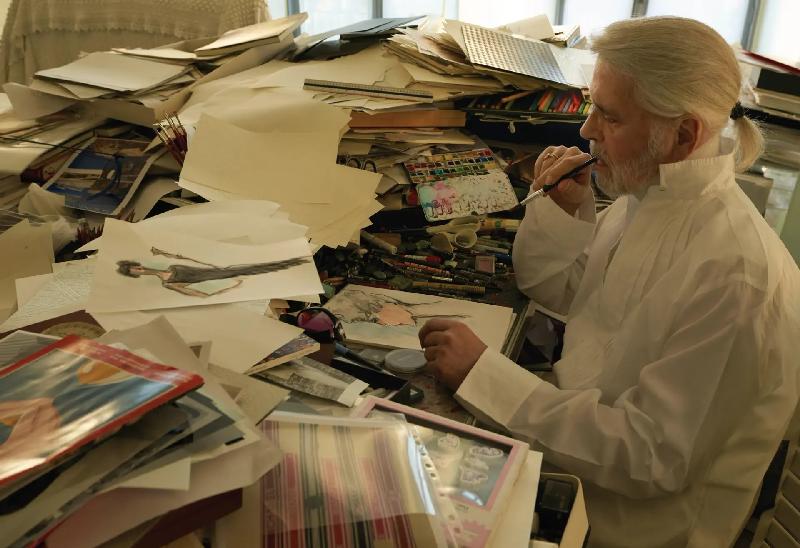
The exhibition is organized by Andrew Bolton with support from Mellissa Huber, Associate Curator.
Amanda Harlech serves as the Creative Consultant for the exhibition. Architect Tadao Ando, Tadao Ando Architect & Associates, designed the exhibition, which The Met’s Design Department realized in the Museum’s Tisch Galleries. Film director Loïc Prigent produced original video content featured throughout the show; filmmaker Baillee Walsh conceptualized a video installation for the concluding gallery. Michel Gaubert created a soundscape for the space, a version of which is now available on the Museum’s Spotify account.
Related Content
A publication for Karl Lagerfeld: A Line of Beauty—written by Bolton, published by The Metropolitan Museum of Art, and distributed by Yale University Press— is now available. Designed by OK-RM, London, the publication features new photography by Julia Hetta alongside drawings by Lagerfeld; interviews with Lagerfeld’s premières d’atelier at Chanel, Chloé, Fendi, and the Karl Lagerfeld brand; and reflections on the designer by Wintour, Patrick Hourcade, Harlech, and Ando.