August is supposed to be luxury’s quiet month — the pause between resort season and the September show circuit. This week said otherwise. Auction houses posted their best first half in years, private jet operators are consolidating and rationing access in the same breath, a hypercar shed a meter of height for the sake of proportion alone, and Chanel just won a court battle that will quietly reshape how “upcycled” luxury gets sold. Here’s what actually mattered.
Fashion: The Entry Point Is Doing the Heavy Lifting
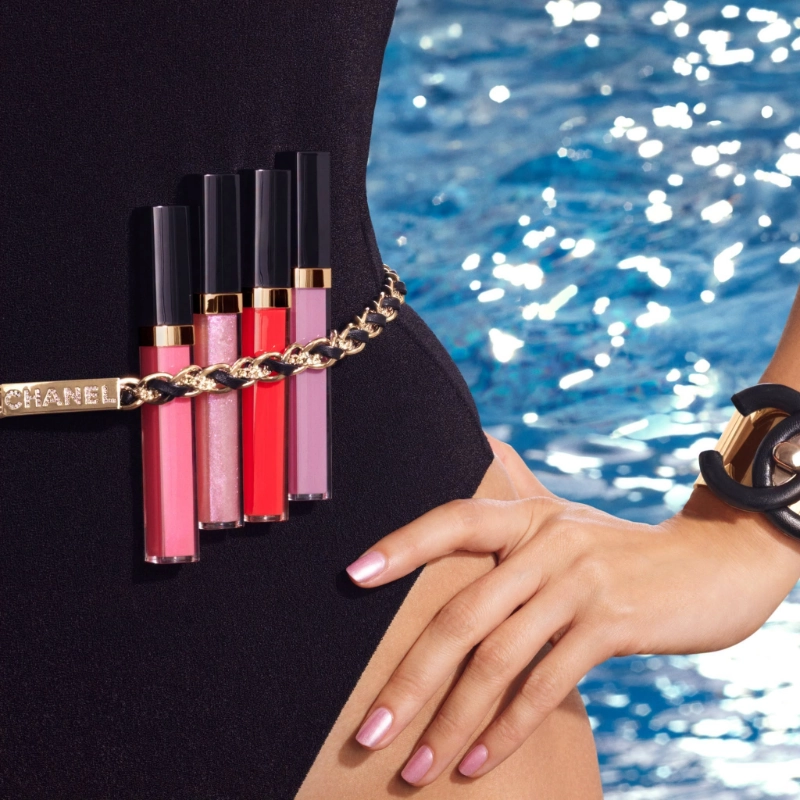
Chanel holds its position as the world’s hottest brand, but the real story is in the details: searches for Chanel sunglasses jumped 70% quarter-on-quarter. When the flagship item people are chasing is eyewear rather than couture, it tells you where most “luxury demand” is actually happening — at the accessible edge of an inaccessible brand.
That same dynamic explains the quarter’s biggest riser. Massimo Dutti climbed eight spots into the Top 10 after a 43% surge in demand, fueled by high-profile red-carpet visibility and a growing appetite for Mediterranean-inspired tailoring that sits comfortably next to genuinely expensive pieces. Meanwhile Celine (+5, on the strength of Michael Rider’s direction) and Phoebe Philo — debuting on the Index entirely, expanding steadily across Asia-Pacific — prove that restraint, done with conviction, still moves the needle.
Behind the ready-to-wear numbers, hard luxury quietly outperformed soft luxury again this quarter. Richemont posted a 20% jump in group sales to €6.3 billion, driven by a 24% surge across its jewelry maisons — Cartier and Van Cleef & Arpels chief among them. The read here isn’t complicated: in a jittery economic climate, buyers are increasingly treating jewelry and watches as tangible, inflation-resistant assets rather than seasonal purchases, a shift LVMH’s Tiffany & Co. and Bulgari results echo as well.
Automotive: Proportion as the New Performance Metric
Two bespoke debuts this week made the same argument from opposite directions. Bugatti unveiled the Destrier, the third one-of-one from its Programme Solitaire — built on the Bolide’s carbon-fiber monocoque but stripped of every wing, vent, and aerodynamic addition, leaving a car that stands just one meter tall, the lowest Bugatti ever built. Its 1,600 PS W16 engine is mentioned almost as an afterthought in Bugatti’s own materials, which is rather the point: this is a car designed to be looked at, not driven hard.
Porsche took the opposite emotional route with its Sonderwunsch 911 Turbo S “Land Down Under,” created with Sydney artist Werner Bronkhorst to mark 75 years of Porsche in Australia. Its hand-applied Chromaflair paintwork shifts from Terra Australis Red to Southern Cross Blue across the body — less sculpture, more portrait of a sunset. Together, the two cars capture where automotive bespoke is heading: less about lap times, more about commissioning something closer to art.
Yachting: Bigger Isn’t the Flex It Used to Be
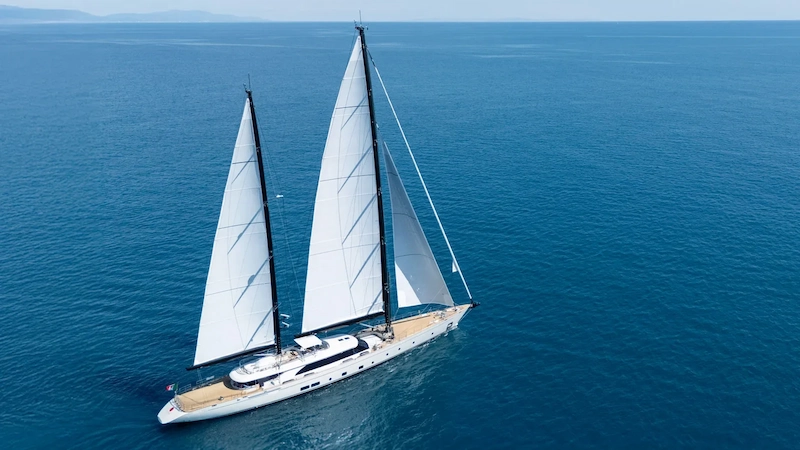
The category most luxury digests skip entirely had one of its most telling weeks of the year. Boat International’s 2026 World Superyacht Awards returned to Venice, and the winners — vessels like Andala, Lady Estey, and Valor — shared a common thread that isn’t length. Judges rewarded range, capability, and genuine time spent at sea over sheer scale, a marked shift for an industry long obsessed with topping the next meter.
That shift is visible in what’s currently under construction, too. Feadship’s 101-metre Project 1014 has just entered its outfitting phase, while Lürssen’s Cosmos — one of the first fuel-cell-powered superyachts in the world — is drawing attention for proving that decarbonization and scale aren’t mutually exclusive anymore. If last decade’s superyacht flex was size, this decade’s is clearly capability.
Art: The Auction Houses Had Their Best Half in Years
The art market’s H1 numbers, released this week, are hard to overstate. Christie’s, Sotheby’s, and Phillips together sold $2.5 billion worth of art in May alone — nearly double the same month last year. Across the full first half, Christie’s posted $4.5 billion (its strongest opening six months in five years), Sotheby’s matched it with a record $4.4 billion, and Phillips saw sales jump 60% to $507 million.
The Map to Modern Luxury
THE CURATED CALENDAR
Discover the world’s most prestigious gatherings & exhibitionsMuch of the momentum traces back to a single event: Christie’s sale of the late Condé Nast chairman S.I. Newhouse’s collection, which included Jackson Pollock’s Number 7A selling for $181.2 million — the largest drip painting in private hands, hammered down after more than 60 bids. But the more interesting story sits beneath the headline figure: auction houses are increasingly generating revenue from private sales, lending, and advisory services rather than the auction block alone. The business of selling art, in other words, is quietly becoming the business of managing wealth.
Aviation: Access Is Tightening Right When Demand Is Peaking
Two aviation stories landed within days of each other, and read together they tell a clear story about where private flying is headed. NetJets curtailed sales of its popular jet cards and leases for the second time in five years, citing record retention among existing fractional owners rather than a pursuit of new growth — in plain terms, the world’s largest private aviation company would rather protect service quality for people already in the club than chase new members.
Almost simultaneously, Solairus Aviation agreed to acquire Clay Lacy Aviation’s charter and management operations, creating a combined fleet of more than 500 jets and instantly becoming the sixth-largest operator in the US by charter hours. Consolidation at the top, scarcity at the point of entry — private aviation is behaving less like a luxury service industry and more like a members’ club with a waiting list.
Gourmet: Tokyo Reasserts Its Culinary Supremacy
The Michelin Guide Tokyo 2026 handed out its verdicts this year, and the city once again holds the world’s highest total star count. Eighteen restaurants earned new stars, but the headline promotion belonged to Myojaku, which rose from two to three stars under chef Hidetoshi Nakamura — a kaiseki restaurant built around deep-sea spring water and a philosophy of restraint that, frankly, would fit right in next to this week’s Phoebe Philo story. Tokyo’s dominance is a reminder that culinary luxury, unlike fashion, rewards decades of quiet obsession rather than seasonal reinvention.
Jewelry, Sustainability & the Law: The Quiet Precedent That Matters Most
The single most consequential story of the week may be the least glamorous one. A Paris court ruled in Chanel’s favor against upcycling company Kamad Reworked, rejecting the argument that turning authentic Chanel buttons and charms into new jewelry was protected under trademark exhaustion. It’s a landmark ruling for the luxury sector’s growing “reworked” and resale economy, effectively giving major houses stronger legal footing to control how their components are reused and resold across Europe — a precedent every resale and upcycling brand will now have to design around.
Sweden, meanwhile, announced a national ban on PFAS (“forever chemicals”) in consumer goods — including fashion, footwear, and cosmetics — starting in 2028, moving ahead of the broader EU timeline. For luxury manufacturers, this isn’t a distant regulatory footnote; it’s a hard deadline for reformulating technical fabrics and finishes well before the rest of the bloc catches up.
The Takeaway
Pull the threads together and this week wasn’t quiet at all — it was a preview of where luxury is heading structurally. Auction houses are becoming wealth managers. Private aviation is becoming a members’ club. Yachts are being judged on capability, not length. And two of the industry’s most significant events — a car stripped down to pure proportion and a lawsuit about a repurposed button — made the same argument from opposite ends: in this next phase of luxury, substance, provenance, and legal ownership of one’s own story matter more than spectacle ever did.


1 thought on “The Week in Luxury: Sculpture, Scarcity, and the Slow Reset of an Industry”
Comments are closed.