Hermès Opens Its 25th Leather Workshop in France — And It’s a Quiet Revolution Hidden in Plain Sight
The luxury giant just inaugurated a new atelier in Loupes, Gironde, creating 260 artisan jobs, planting a timber-framed building in a forest, and — perhaps more quietly — sending a message to every other luxury house on earth.
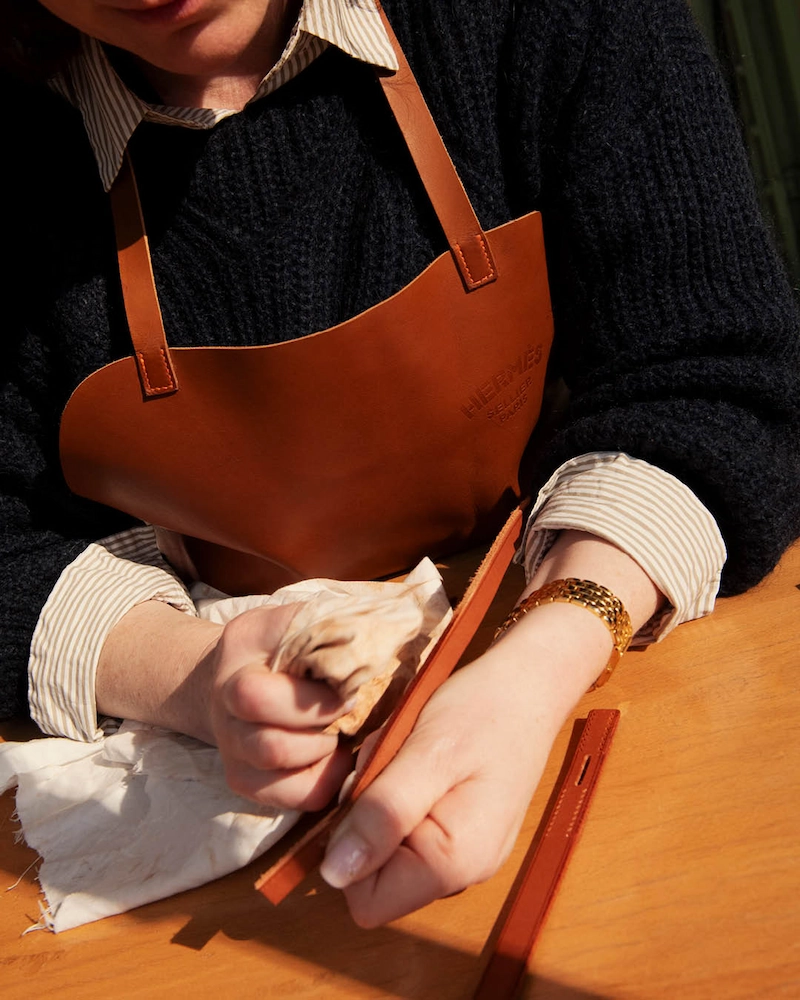
Let’s start with the facts, because they are genuinely remarkable on their own. Hermès has just opened its 25th leather goods workshop in France — this one in Loupes, a small commune in the Gironde department of Nouvelle-Aquitaine, tucked into a wooded landscape between Bordeaux and the Dordogne. It’s the sixth Hermès leather production site in the region alone, and it will eventually employ 260 artisan saddler-leatherworkers, all trained through the École Hermès des savoir-faire — the house’s own in-house vocational school, accredited by the French Ministry of Education since 2021.
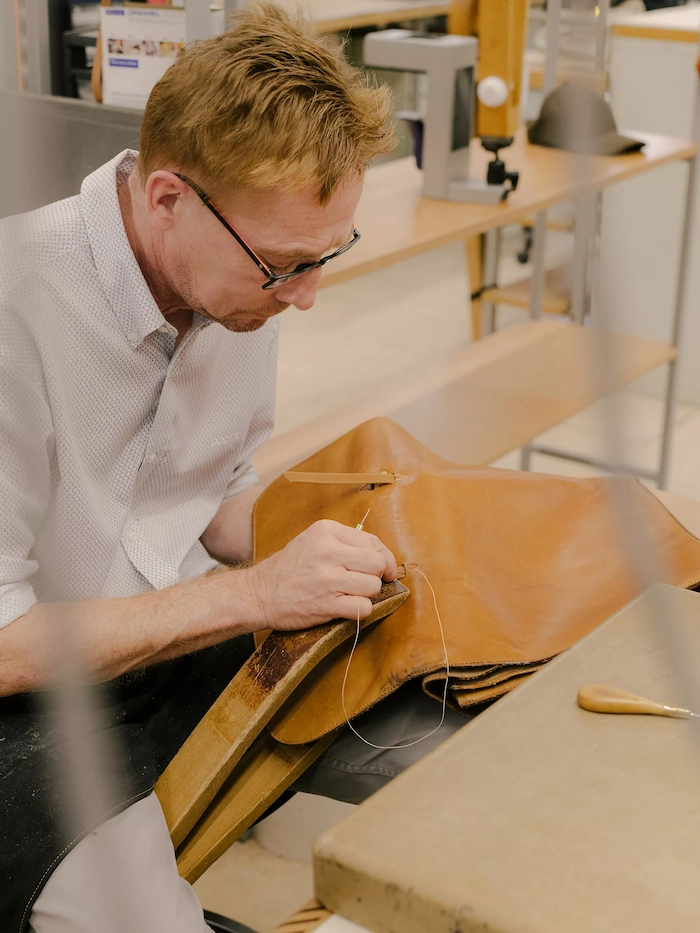
Inside those eight workshops, hands will be making the Kelly, the Constance, and the Bride de Gala. Not algorithms. Not offshore contractors. Hands.
The Hermès training is free. Trainees are paid. No prerequisites required. Anyone who wants to become a Hermès leather artisan can apply. Read that again.
The Hermès Atelier Building Itself Is a Statement
Before we even get to the geopolitics of luxury, let’s talk about the architecture, because it tells you everything about Hermès’ intent. The Loupes workshop was designed by Bayonne-based firm Patrick Arotcharen Architecte — the same studio behind the Saint-Vincent-de-Paul site inaugurated in 2021. The building doesn’t announce itself. It emerges from the forest. Its elongated form follows the natural contours of the trees. A double-curved roof manages rainwater. There’s a semicircular terrace anchored by two prominent oak trees that were, crucially, not cut down.
The structure sits on pylons so as not to disturb root systems. The concrete foundations are low-carbon. The skeleton is Douglas fir — exposed, rounded, warm. The walls are largely glass, facing north-south to flood the workshops with natural light throughout the day. Workers don’t look out onto a parking lot or an industrial estate. They look out onto a tree canopy. Through every season. Every day.
Heated by geothermal energy from probes embedded in the foundation piles, fitted with photovoltaic panels, a rainwater recovery system, electric vehicle charging stations, and public transport access — this is a workshop that costs a great deal to build and almost nothing to apologize for.
Hermès calls this their “Harmonie” sustainable real estate framework. It sounds like marketing until you see the detail: ecologists were embedded in the project team from the start to preserve soil permeability and adapt the building placement to the site’s actual water flows and topography. That’s not a press release. That’s a brief.
Decoding the Move: What’s Really Going On
Here’s where it gets interesting — and a little sharp.
Hermès is, by any reasonable measure, the most financially resilient luxury house on earth right now. While LVMH navigates slowdowns in China and Kering watches Gucci struggle to find its footing, Hermès keeps posting results that feel almost surreal. The reason is structural: scarcity by design, craftsmanship as moat, and — critically — vertical integration so deep that no consultant has ever truly been able to dismantle it.
Opening a 25th workshop in France is not a response to demand in the traditional sense. It’s a long-term bet on constraint. Hermès doesn’t want to make more bags faster. It wants to make more bags better, and to ensure that the people who make them exist in 20 years. That is a completely different industrial logic from almost everyone else in the sector.
Think about what the rest of the luxury industry has been quietly doing for two decades: moving production to lower-cost regions, consolidating suppliers, automating where possible, growing volumes aggressively to chase the aspirational middle market. Some of them still sew “Made in Italy” labels onto products that were largely assembled elsewhere. Some of them are now realizing, a little late, that the craftsmanship they outsourced was also the story they were selling — and that story has holes in it.
The Map to Modern Luxury
THE CURATED CALENDAR
Discover the world’s most prestigious gatherings & exhibitionsHermès never sold that story. It is that story. And it keeps building new chapters, in limestone and Douglas fir, in small French towns, with 260 people who will spend years learning to cut and stitch leather in ways that cannot be easily replicated.
The Competitor Signal
Let’s be direct: this is competitive positioning as much as it is industrial policy. Every time Hermès opens a new atelier in France, it is drawing a line between itself and the rest of the luxury world — a line that grows harder to cross with each passing year.
For competitors, especially those who have prioritized margin efficiency over craft continuity, there is no quick path back. You cannot open an atelier in Nouvelle-Aquitaine and immediately produce goods of this caliber. You need the knowledge networks, the master artisans, the apprenticeship infrastructure, the 15-year relationships with regional training institutions. Hermès has been building this quietly and consistently for decades, and now it has 25 workshops in France and three more in development — in Charleville-Mézières, Colombelles, and Les Andelys.
By the time those open, Hermès will have embedded itself even more deeply into the French regional economy as a genuinely responsible employer. That’s not just good PR. That’s geographic lock-in for talent. It’s the kind of moat that doesn’t show up on a balance sheet until it’s too late for anyone else to dig one.
The Agentic Shadow (or: What This Means Now)
There is something quietly poignant — and quietly defiant — about all of this in the current moment. We live in a period of maximum hype around automation, artificial intelligence, and the replacement of human skill with machine efficiency. The “agentic universe,” as someone recently put it, where robots might eventually work in the dark, assembling things without needing light because no human is present to see.
Hermès is doing the opposite. It’s building workshops with north-south orientation specifically so humans can see properly while they work. It’s preserving oak trees so humans can look at them through glass walls on a Tuesday afternoon. It’s paying people to learn a craft with their hands, with no prerequisites, because the belief — stated or unstated — is that human skill is irreplaceable, or at least that the story of human skill is worth more than the margin you’d recover by replacing it.
Whether that’s a philosophical stance or a commercial strategy is almost impossible to separate, which is probably the point.
The Hope Note (And the Honest Caveat)
For anyone who cares about craft, about regional employment, about the idea that making things well is its own form of intelligence — this is genuinely good news. In a world where the luxury segment has been cannibalizing its own mythology for growth, a house that keeps building places where people learn to make things with their hands deserves acknowledgment.
The honest caveat is that Hermès can afford to do this precisely because its pricing power is extraordinary. The Kelly bag that comes out of Loupes will cost more than most people’s monthly salary. The artisans who make it will earn a fair French wage — but they are also producing objects accessible to a vanishingly small percentage of the global population. The workshop is sustainable. The product is aspirational to the point of exclusion. Both things are true at once.
But maybe that’s the deal. Maybe the price of genuine craft, in a world optimized for scale, is that it lives in a bubble. The question luxury as an industry has never fully answered is whether it can be the exception that proves the rule — or whether it’s just the rule, dressed in better leather.
Hermès, at least, is betting on the exception. In a forest in Gironde. With two oak trees they were careful not to cut down.
Applications for training at the École Hermès des savoir-faire can be submitted at ecole.hermes.com. Training is free. No prior experience required.