Decoding the relaunch of Thrupp & Maberly — and why “no heritage replicas” is the most interesting phrase in the announcement.
Every so often a name from the deep archive of British craftsmanship gets dusted off, and the immediate assumption is nostalgia: a retro relaunch, a heritage replica, a museum piece with a price tag. Thrupp & Maberly’s return is explicitly not that — and the announcement goes out of its way to say so.
The decoding: what’s actually being relaunched
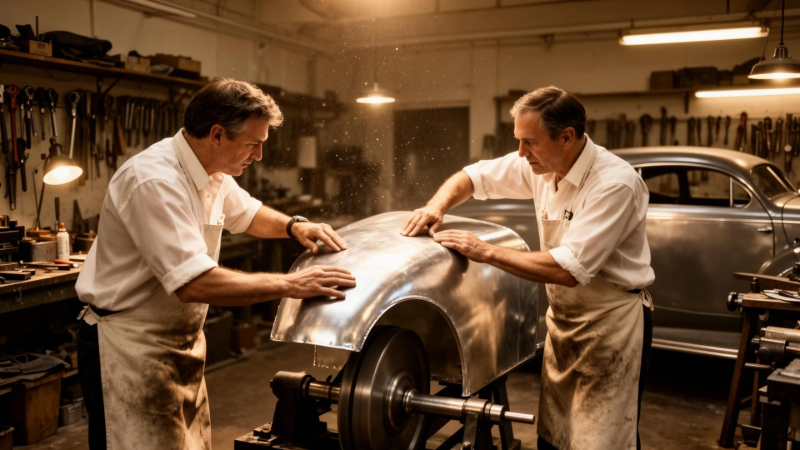
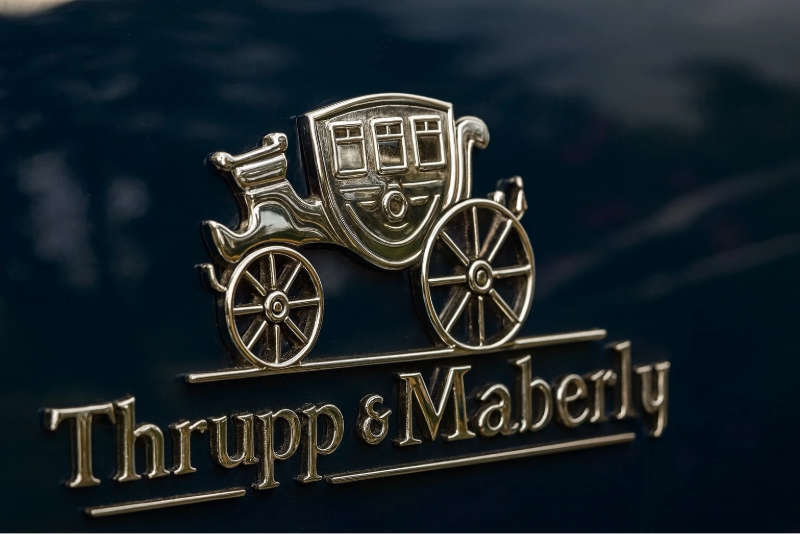
Thrupp & Maberly traces its origins back to the eighteenth century, when British coachbuilding meant literally building the coach — the horse-drawn kind — by hand. The name has now been revived as a contemporary bespoke automotive atelier based in Coventry, founded through a partnership between Brendan O’Toole and Lars Carlstrom, combining decades of specialist automotive craftsmanship with international industrial experience. The plan: ultra-low-volume coachbuilt motor cars, handcrafted interiors and fully private commissions, produced by a dedicated team of around sixty craftsmen.
The critical line in the announcement is the one easiest to skim past: the company will not produce heritage replicas. That’s a real distinction in coachbuilding, where reviving a beloved historic name often means literally that — recreating a beloved historic silhouette with modern underpinnings, selling nostalgia dressed as innovation. Thrupp & Maberly is explicitly positioning itself the other way around: original, contemporary motor cars that honour the traditions and principles of British coachbuilding while embracing modern engineering and materials, rather than costume-department reproductions of cars people already remember.
Its inaugural commission, currently developed under the project name Project Mayfair, is described as a contemporary interpretation of the British grand touring motor car — refined proportions, handcrafted coachwork, curated materials, and production numbers small enough to make “limited edition” sound generous. Further details are expected this autumn.
Why the “no replicas” stance matters more than it sounds
The Map to Modern Luxury
THE CURATED CALENDAR
Discover the world’s most prestigious gatherings & exhibitionsCoachbuilding as a category has had a strange decade. A wave of low-volume ateliers has built businesses almost entirely on recreating specific historic silhouettes for wealthy collectors who want a beloved shape with modern reliability underneath. That’s a legitimate business, but it’s also, in a sense, backward-looking by design — the creative brief is essentially “make it look like it used to.” Thrupp & Maberly is making a different bet: that there’s still a market for genuinely new coachbuilt design, made the old way but not made to look like the old way. That’s a much harder brief to execute and a much harder story to sell, because there’s no existing nostalgia to lean on — the car has to be desirable entirely on its own terms.
The industry-wide read
Ultra-bespoke coachbuilding sits in a strange, small corner of the luxury automotive world — too expensive and too slow-produced to compete with the majors, too serious and craft-driven to be dismissed as a novelty. What’s notable is the timing: Thrupp & Maberly’s relaunch lands in the same season as Louis Vuitton and Singer’s collaborative Porsches and Karma’s new-generation ultra-luxury EREVs, all converging on the same idea from different directions — that the top of the automotive market increasingly wants objects that feel individually made, not merely individually optioned. Whether Project Mayfair delivers on that promise is a question for autumn. But the fact that a genuinely new (not revived-in-name-only) British coachbuilder can raise capital, assemble sixty craftsmen and generate this much attention before a single car has been photographed says something about how much appetite is currently sitting at the very top of the market, waiting for something worth waiting for.