Decoding Louis Vuitton and Singer’s first-ever co-branded creation — and what it says about where luxury collaborations are headed.
Most great collaborations start with a grand plan. This one started with someone wanting a nicer clock.
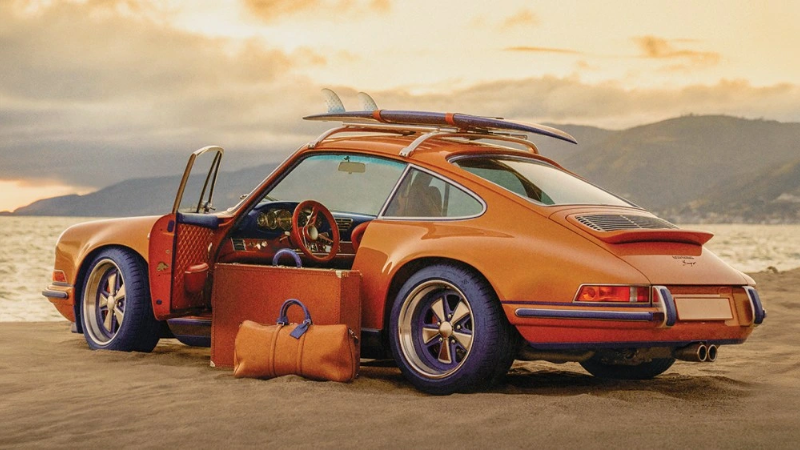
At Monterey Car Week 2026, Louis Vuitton and Singer Vehicle Design unveiled two extraordinary reimagined Porsche 911s — a Classic coupe and a Classic Turbo cabriolet — marking the first time in Louis Vuitton’s 172-year history that the house has shared billing with another brand on a finished product. For Singer, the California atelier famous for meticulously “reimagining” classic air-cooled 911s into six-figure works of engineering art, it’s equally unprecedented territory.
The decoding: how a clock became two entire cars
The project’s origin story is almost comically modest for where it ended up. Louis Vuitton was initially approached to design a removable dashboard clock for a Singer-built Porsche 911, inspired by the house’s own Tambour watch — something you could unclip from the car and use as a desk clock. From there, the ambition simply refused to stay small. What began as one instrument evolved into a full reconsideration of every functional detail across two entire vehicles: speedometers, rev counters, switches, vents, even the metal fittings, all reworked using techniques borrowed from fine watchmaking rather than automotive convention.
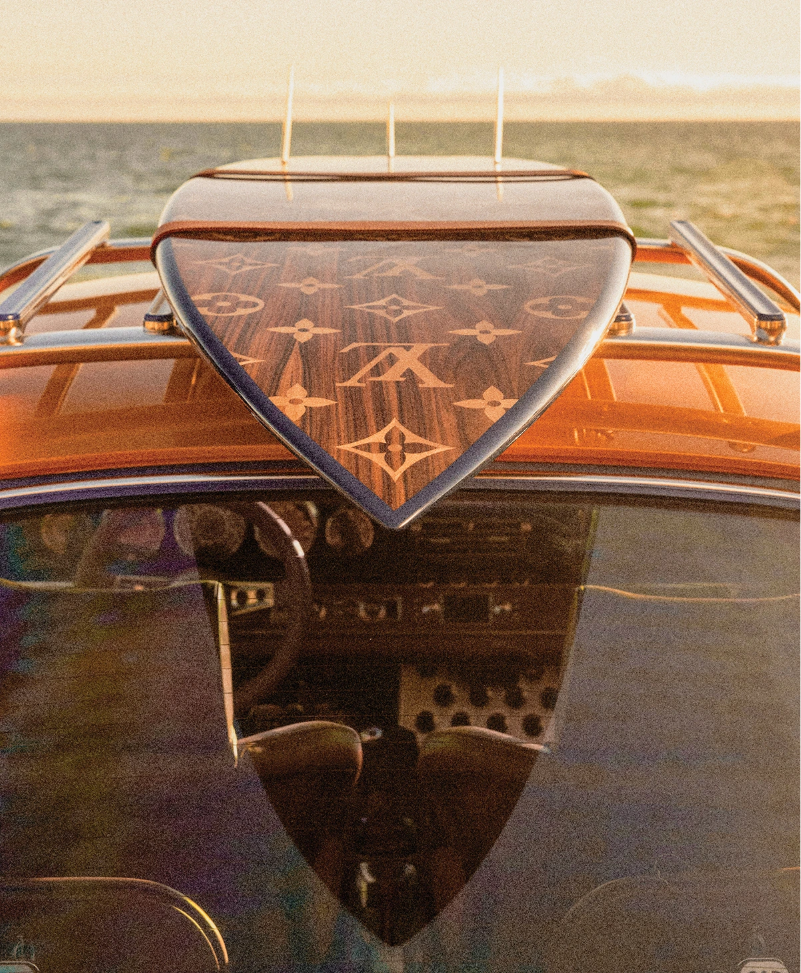
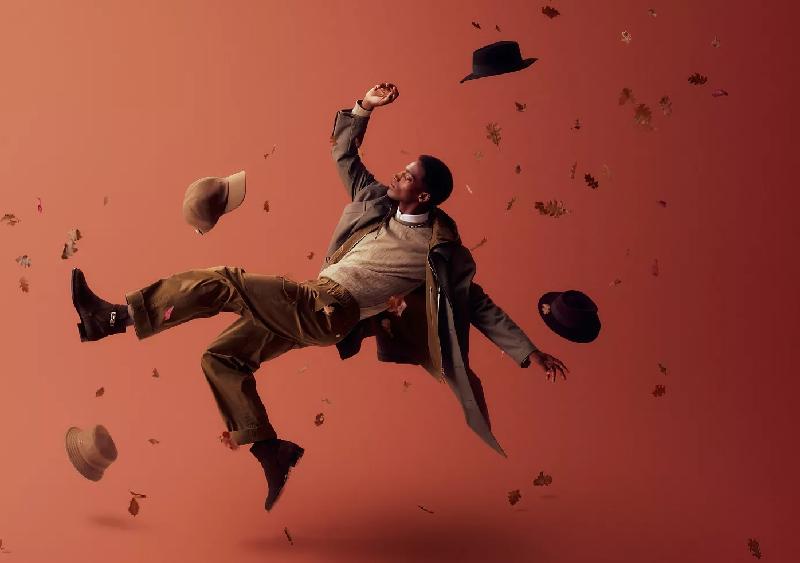
The results read like a conversation between two very different crafts. The Porsche 911 coupe wears Louis Vuitton’s own saffron, cobalt blue and yellow palette, with diamond-pattern embossing lifted straight from the malletage of a Vuitton trunk, Monogram flowers worked into the ventilation eyelets, and natural leather inspired by the house’s own travel goods. The cabriolet, designed by Louis Vuitton’s artistic director of women’s collections Nicolas Ghesquière, goes nautical instead — white paint, precious wood trim, and a full sailing-inspired interior treatment, right down to a one-off surfboard finished with LV marquetry. Both cars arrive with matching made-to-measure Louis Vuitton capsule collections: leather racing jackets, a Tambour Automatic watch, even a suit cut from parachute silk.
Why this collaboration is different from a badge on a hood
The Map to Modern Luxury
THE CURATED CALENDAR
Discover the world’s most prestigious gatherings & exhibitionsLuxury collaborations have a well-worn playbook: put one brand’s logo somewhere on another brand’s product, ship a limited run, move on. What makes this one genuinely notable is that neither brand stayed in its lane. Louis Vuitton didn’t just decorate the car — its watchmaking division, La Fabrique du Temps, built functioning mechanical components for it. Singer didn’t just accept a paint job — it opened up the vehicle’s entire functional architecture to a fashion house’s design language. That’s a meaningfully deeper kind of collaboration than most “capsule collections” ever attempt, and it required both sides to genuinely trust the other’s craft rather than simply license a logo.

The industry-wide read
This sits at the intersection of two trends reshaping luxury right now: heritage automotive restomodding as a legitimate collectible category (Singer has proven there’s a real market willing to pay Ferrari-money for a “better” version of a car that already existed), and mega-conglomerates like LVMH increasingly treating cross-category collaboration as a growth lever rather than a marketing gimmick. Expect more of this — not badge-slapping, but genuine cross-pollination between fashion houses and specialist automotive ateliers, each one lending the other a kind of credibility neither can manufacture alone. If a handbag maker can help reimagine a gauge cluster, the old boundaries between “car people” and “fashion people” are looking thinner by the season.