Decoding the new LVMH’s “Sciences & Creation” Chair — and what it actually means once the press release ends
Every luxury conglomerate eventually produces a headline that sounds like it was generated by a very expensive fog machine. “LVMH and Institut Français de la Mode launch the Sciences & Creation Chair, dedicated to new scientific approaches to creativity” is, on paper, exactly that kind of sentence. But strip away the institutional perfume and there’s a genuinely interesting bet underneath: LVMH wants to know, empirically, how creativity actually works — and then teach that knowledge to the next generation of people it plans to hire.
The decoding: what’s actually being funded
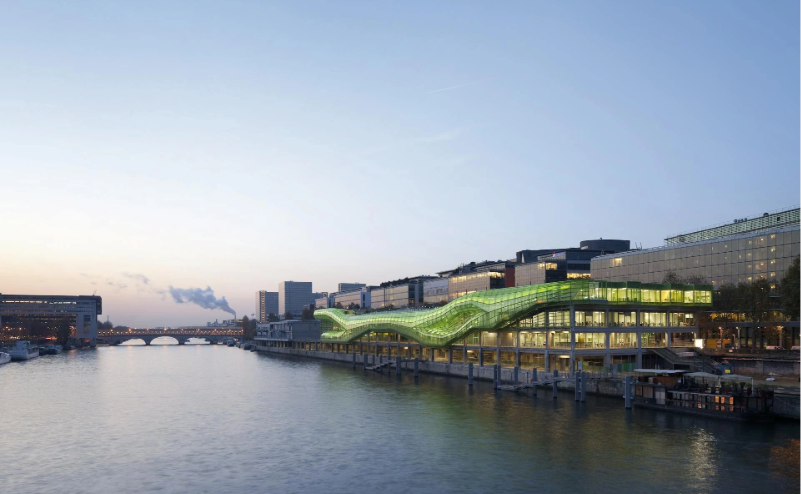
Announced July 13, this is an academic Chair — a funded, structured research and teaching partnership — between LVMH and IFM, the Paris school that trains a large share of the industry’s future designers and executives. It is not a single lab or a one-off symposium. It’s organized around three research tracks that read like a syllabus for understanding genius itself: “Creation and cognition” (the mental and perceptual mechanics of inspiration and intuition), “Computational models of creation” (what AI and generative tools are doing to the creative process, for better or worse), and “Social sciences and anthropology of creation” (the cultural and social conditions that let talent get noticed in the first place — because plenty of brilliant, unrecognized designers exist; this track studies why some break through and others don’t).
Who actually benefits, practically speaking
This is where the press release gets specific enough to be useful. The Chair isn’t an abstract research fund floating above the industry — it’s wired directly into IFM’s classrooms. A Specialized Master’s track will run the material through roughly 80 to 90 management students. A cross-disciplinary elective will reach another 30 to 40 students split between management and creative programs. And, most tellingly, a hands-on workshop will be reserved for a tiny cohort of just 2 to 6 design students — the kind of low-number, high-attention program that tends to produce exactly the talent a luxury group wants to recruit early and keep close, including through LVMH’s “INSIDE LVMH Days,” where students get direct exposure to the Group’s Maisons.
The practical application, near-term
The Map to Modern Luxury
THE CURATED CALENDAR
Discover the world’s most prestigious gatherings & exhibitionsDon’t expect a product launch out of this. Expect, instead, a slow but real shift in how design teams are trained and briefed. If the “computational models of creation” track produces usable findings, the near-future application is fairly obvious: better frameworks for how Maisons integrate generative AI tools into ideation without diluting a house’s aesthetic DNA — a problem every creative director from ready-to-wear to fine jewelry is currently solving by instinct rather than research. If the cognitive science track delivers, expect it to quietly shape how design education itself is structured — less “talent is innate and unteachable,” more “here are the actual conditions under which intuition and expertise develop,” which is a very different (and more scalable) way to build a design school pipeline.
The industry-wide read
This Chair is part of a broader pattern of luxury conglomerates treating creativity itself as a manageable, even engineerable, resource rather than a mystical spark that shows up in a handful of once-in-a-generation designers. That’s a genuinely significant shift for an industry whose entire mythology has been built on the idea of the singular, untouchable creative genius. LVMH is essentially betting that understanding the mechanism behind the magic trick won’t ruin the magic — it’ll help them produce more magicians, faster, and hire them before anyone else does.
Cynics will call it recruitment dressed up as research. They’re not entirely wrong. But given how much of the luxury industry’s future value sits inside a handful of creative directors’ heads, funding actual science to understand — and eventually replicate — what’s happening in there might be the least sentimental, most rational move LVMH has made all year.