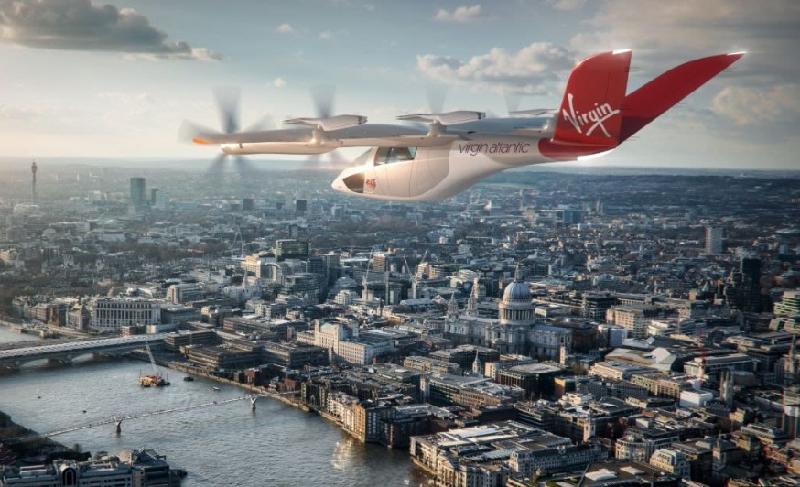
Virgin Atlantic is one step closer to make zero-emission short-haul air travel a reality

Virgin Atlantic and partners explore world-first advanced electric flight ecosystem; @Virgin Atlantic

Virgin Atlantic accelerates the introduction of zero emission flight to UK customers.

The technology needed for new, quicker ways to travel – including short-haul, vertical take-off aircraft – is one step closer to being developed. Virgin Atlantic, has joined a consortium to work on developing the technology needed to introduce Advanced Air Mobility (AAM) in the UK.

What is Advanced Air Mobility or AAM?

AAM offers a new form of travel that will mean it’s quicker and easier to travel into congested urban areas and across regions under-served by existing infrastructure. Virgin Atlantic and Vertical Airspace previously announced a partnership to pioneer zero-emissions short-haul air travel.

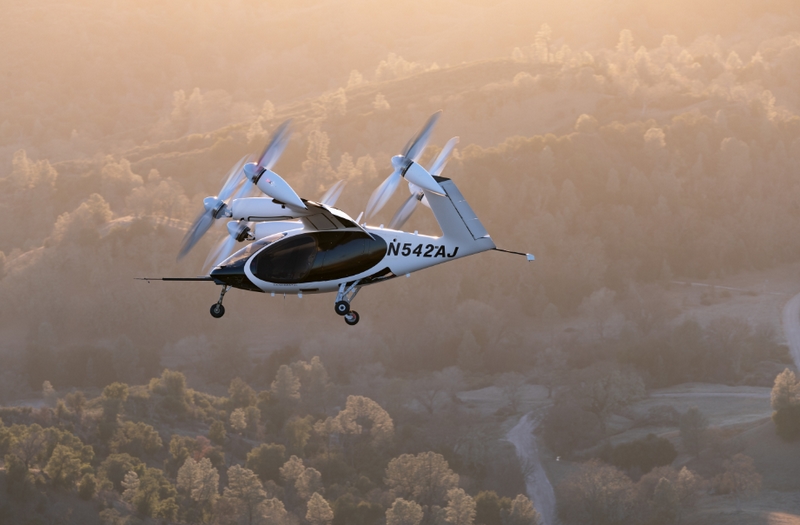
Vertical Aerospace is developing electrical Vertical Take-Off and Landing (eVTOL) aircraft that make virtually no noise and have a range of over 100 miles. The VX4 will carry four passengers plus a pilot. It has four tilting advanced rotors at the front and stowable rotors at the rear, making it capable of speeds over 200mph.

How is Virgin Atlantic Accelerating AAM.

Virgin Atlantic along with its partners Vertical Aerospace, Atkins, Skyports, NATS, Connected Places Catapult and leading academic institutions Cranfield University and WMG, University of Warwick, have announced the creation of the Advanced Mobility Ecosystem Consortium – which has been awarded a £9.5m grant by the UK government’s Future Flight Challenge.

The money will be used to develop a viable AAM ecosystem that could progress into commercial operations. The first-of-its-kind ecosystem will help accelerate AAM in the UK by creating and testing technological developments in aircraft electrification, airspace management, ground infrastructure, operational procedures, and the systems and supporting business cases needed to implement a new model of aerial passenger transport in the UK.

The Advanced Mobility Ecosystem Consortium is looking to demonstrate the feasibility of a UK AAM ecosystem using the VX4 aircraft, operated by Virgin Atlantic. Two flights will take place between Bristol Airport and an airfield in southwest England, and between London Heathrow Airport and the Living Lab vertiport – a testing facility that Skyports will build and operate. A third simulation flight will demonstrate urban connectivity between London City and Bristol airports.

These demonstrations will explore key aspects of the passenger journey, vehicle operation, airspace navigation, ground charging, security provision and local stakeholder engagement. The two-year project will be overseen by aerospace engineering experts Atkins, the consortium lead.

Duncan Walker, CEO of Skyports, said: “Just as airports are critical to commercial aeroplane travel, vertiports are critical to AAM. Our Living Lab will be a central component of the consortium, enabling Skyports and partners to demonstrate end-to-end operations and test the complexities of developing a commercially viable AAM network in the UK.”

Holly Boyd-Boland, VP corporate development at Virgin Atlantic, added: “We are thrilled to be working alongside our consortium partners to accelerate the introduction of zero emission flight to UK customers. As the only airline in the consortium, Virgin Atlantic brings 38 years of operational excellence, a relentless focus on safety and security, and an unrivalled focus on the end-to-end customer journey. Alongside our partners, we are looking forward to getting the first Virgin Atlantic eVTOL aircraft into the skies.”


@Vertical Aerospace VX4 will transform the way people travel./ @vertical-aerospace.com/

Revolutionary eVTOL aircraft company to begin on-demand air taxi operations

Joby Aviation is one step closer to eVTOL flights. California-based all-electric aircraft company to begin on-demand commercial air taxi operations. Joby Receives Part 135 Certification from the FAA. Certification allows Joby to operate aircraft commercially.Part 135 Air Carrier Certificate received ahead of schedule, initially targeted for second half of 2022 Joby will use conventional aircraft … Read more

What it’s like to fly a revolutionary eVTOL first-hand

  Joby Aero, a California-based company developing all-electric aircraft for commercial passenger service, is opening a new office in Washington, DC to support the collaborative work it is doing with the aviation community and policymakers to bring quiet, zero-emissions aviation to life. Equipped with a state-of-the-art flight simulator, visitors to the new office are able … Read more

Talyn eVTOL can fly three times farther than most competitors

Talyn can take off and land anywhere in half the time. This new eVTOL is the fastest and greenest way to fly between cities. It skips the airports and flies straight to your destination. 100% battery electric flight with vertical take-off and landing. Talyn can take off and land anywhere, directly from your door to the … Read more

German eVTOL maker Lilium announces first hub for a high-speed electric air mobility network in America

    First US Vertiport to be located at Orlando’s Aerotropolis in Lake Nona. Lilium is building the first stretch of Florida’s high-speed electric transportation network with Central Florida. Advanced air mobility: German eVTOL maker Lilium is building the first vertiport for its electric aircraft as a regional commuter hub. The first hub location for … Read more

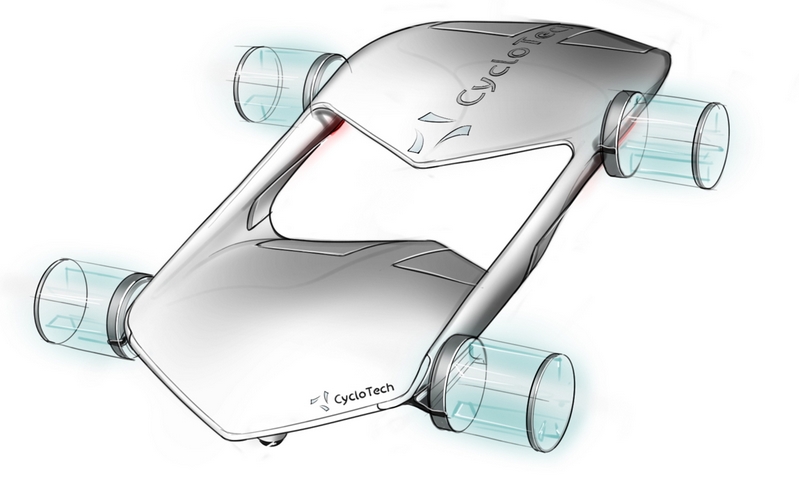
Cyclogyro – a potential four-seater air taxi with the most agile propulsion system in aviation


@cyclotech.at

Austrian-based CycloTech wants to prove the viability of the Voith-Schneider-Propeller concept for the aviation industry.

The core of the drive concept was established by Ernst Schneider and the Voith GmbH technology group nearly 100years ago, and patented as the Voith Schneider Propeller (VSP). The drive provides high maneuverability, and ships equipped with two or more VSP can move in nearly every direction or perform a stationary turn. Because of its agility and flexibility, there have been myriad unsuccessful attempts to bring the VSP to the aviation industry – but only CycloTech has succeeded.

CycloTech’s patented technology is currently the only Cyclogyro rotor concept worldwide that can rotate at high speed and efficiently deliver sufficient thrust for a truly competitive alternative aircraft propulsion.

The Cyclogyro technology combines the main benefits of rotorcraft and fixed-wing concepts and therefore its uniqueselling proposition (USP) has three main components:

  • VTOL (Vertical Take Off and Landing), and agile maneuverability;
  • Increased efficiency in forward flight mode;
  • Compact design and reduced infrastructure demand (for example in urban areas).

The major challenge of using the Cyclogyro rotor technology in air instead of water is the far higher revolutions perminute required to create sufficient thrust for aviation applications.

This results in extreme lightweight construction requirements for highly stressed rotor components and demands newconcepts, advanced composite material and innovative processing methods. CycloTech faced the challenge – andfound the solution. The Cyclogyro rotor technology is a clear ground-breaking innovation for VTOL and urban air mobility.

@cyclotech.at

GROUND-BREAKING INNOVATION FOR URBAN AIR MOBILITY

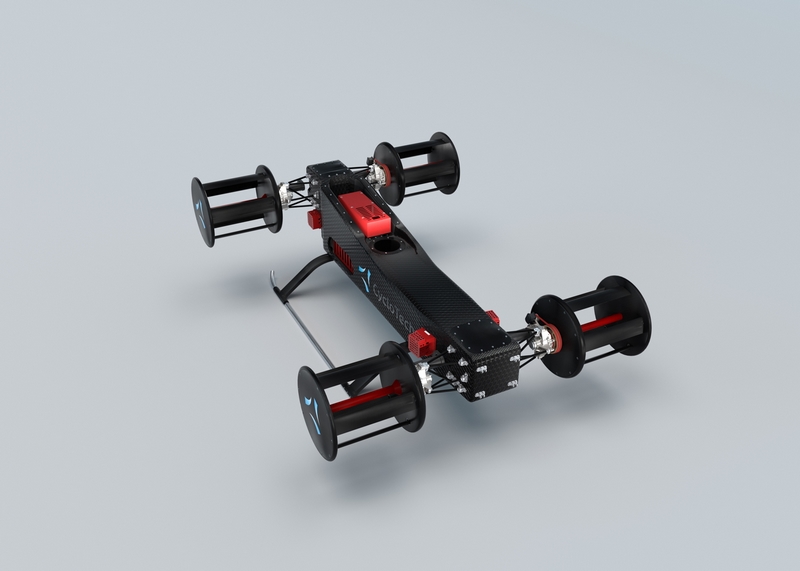
Over the last three years, CycloTech developed and tested nine different rotor prototypes. Comprehensive wind tunnel tests proved a significant performance increase in forward flight which has been predicted through the CFD simulations.

The current Cyclogyro rotors are now fully lightweight optimized and have passed all performance and endurance tests. They are ready for integration into a flight demonstrator.

The final proof of concept to elevate our development on Technology Readiness Level (TRL) 7 will be performed with a  flight demonstrator of approximately 80kg take-off weight equipped with 4 of Cyclotech’s Cyclogyro rotors.

“By Q4 2020 CycloTech will be ready to fly the demonstrator proving the agility and advantages of the technology. We also started the development of a Cyclogyro rotor as an auxiliary system of a high precision inspection drone for use in harsh and tight environments,” said the company.

CycloTech is “looking for co-operation partners” to help advance its technology, Hans-Georg Kinsky, CycloTech CEO told evtol.com, including moving forward from the concept design stage for the air taxi. The company has four granted and two pending patents on its technology and is currently in discussion on three others.

According to evtol, CycloTech is also talking to the Munich, Germany-based air taxi developer AutoFlightX about how its rotors might be used in the company’s design. A further potential application is a compound helicopter; CycloTech has a patent for a design with two laterally placed Cyclogyro motors replacing the conventional tail rotor.

@cyclotech.at