This is the future of flight: IWC X Airspeeder introduce world’s first racing series for flying electric cars


Nothing drives innovation like racing. Take a look at IWC Schaffhausen x Airspeeder flying racecar ushering in a new era of sustainable motorsport.
@ IWC Schaffhausen X @Airpseeder; @airspeeder.com/

Airspeeder is the world’s first racing series for electric flying cars.

The Airspeeder racing series is the brainchild of founder Matt Pearson, who also runs Alauda, the world’s first performance electric flying car manufacturer. Taking inspiration from the role sport has traditionally played in advancing the cause of technology, Pearson’s visionary idea is to create a new kind of motorsport to accelerate the advanced air mobility revolution and transform passenger, logistical and even medical transportation.

The planned global race series will eventually see a full grid of eVTOL (electric Vertical Take-Off and Landing) craft,
manufactured by Alauda, managed by individual teams and operated by elite pilots, compete at heights of up to 40m off the ground and at top speeds of 200km/h. The air races will take place on electronically-created tracks and be streamed globally, minimising the environmental impact of more complex logistics and infrastructure.

“It’s fantastic to play a part in bringing Matt’s bold vision to life. The Airspeeder team are true pioneers of aviation and they are bringing together two things that are really close to IWC’s heart. From making some of the planet’s best pilots’ watches for the last eighty years to the cut and thrust of modern automotive design and racing, we have always equipped and inspired those who dare to dream. We are proud to collaborate on an endeavour that will make such a progressive impact on society,”  Christoph Grainger-Herr, IWC CEO.

Airspeeder developed its first small-scale prototype performance eVTOL in 2017 and has continued to finesse the design ever since through computer modelling and simulation, as well as extensive testing.
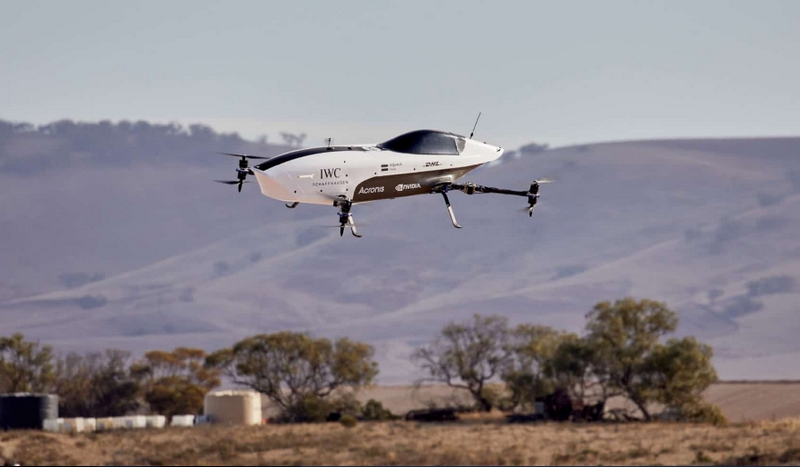
@ IWC Schaffhausen X @Airpseeder; @airspeeder.com/

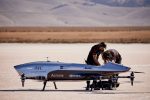
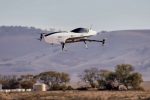
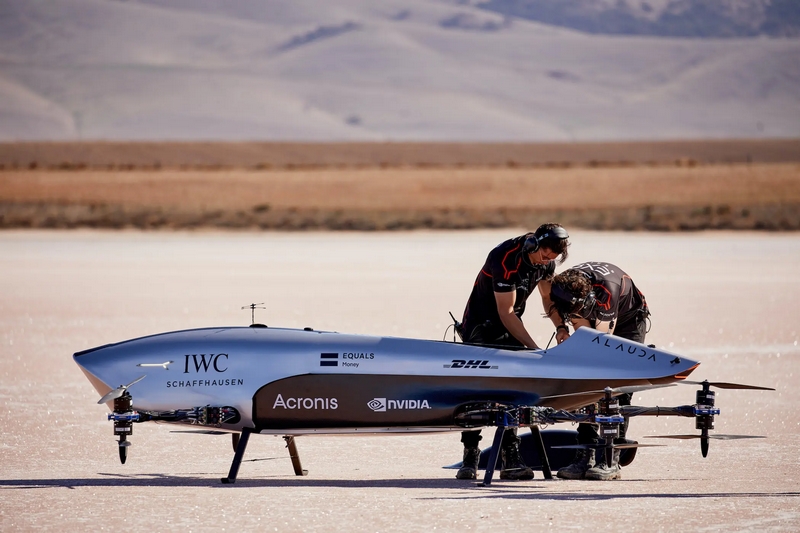
The newest vehicle, the Mk3, is the world’s first fully functional electric flying racing car.

With an overall aesthetic reminiscent of classic 1950s sportscars combined with racing drones, the speeders feature an octocopter layout, airfoil- profiled rotor arms, cutting- edge carbon-fibre composites and the latest EV battery technology. New advances in safety are delivered through a suite of technologies and engineering elements never before seen on an eVTOL craft. These innovations include LiDAR and Radar collision avoidance systems that create a ‘virtual force field’ around the craft to ensure close but ultimately safe racing. Designed for maximum performance and aerial agility, they move through the air with precision and pace. An entire grid of these remotely piloted Mk3s is currently being built by Airspeeder, ahead of this year’s competitive pilotless events.

The Mk4 is expected to launch in 2022, before the inaugural crewed season gets underway.
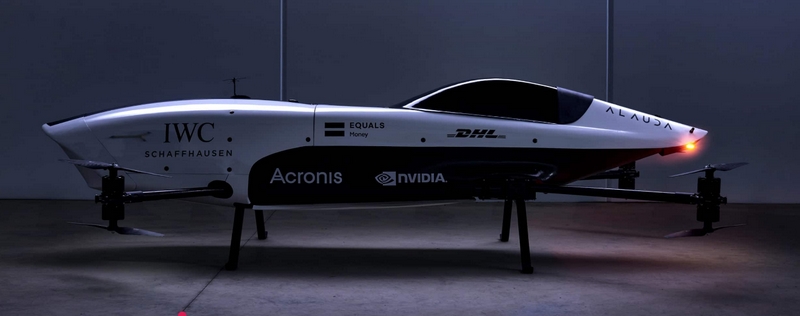
@ IWC Schaffhausen X @Airpseeder; @airspeeder.com/

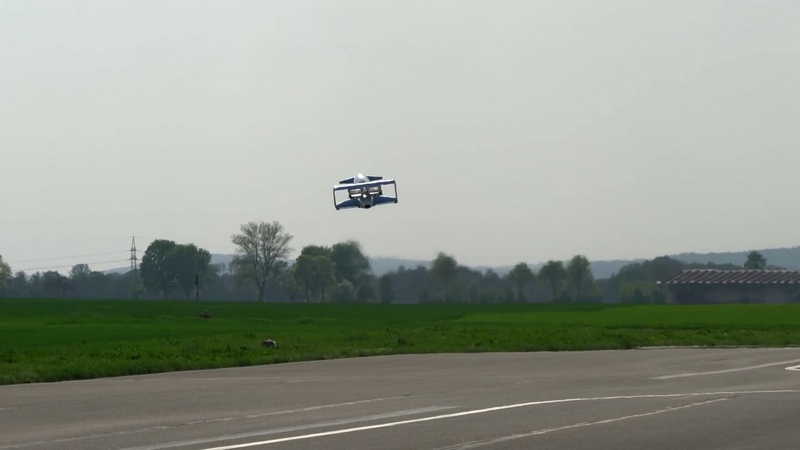
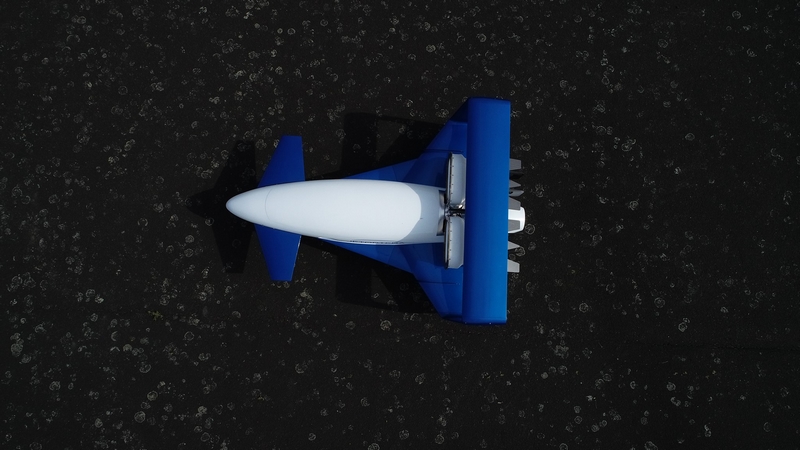
Jetoptera flying car’s unique propulsion system is turning the air around the craft into powerful thrust


@Jetoptera

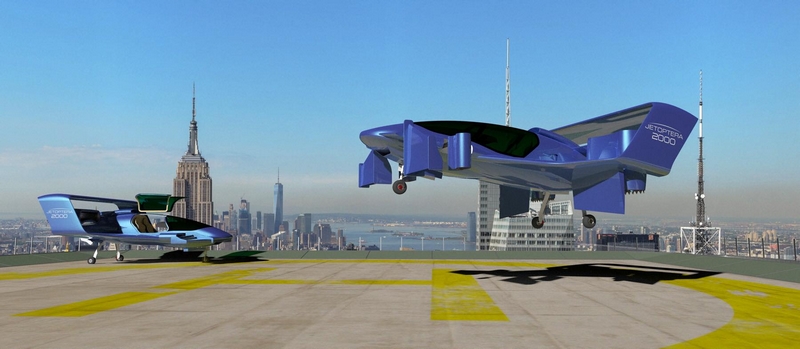
Jetoptera’s vision is to create a world where aerial mobility is commonplace for both cargo and people. Jetoptera J-2000 is powered by a new system called fluidic propulsion system (FPS).

The Seattle startup has developed a unique propulsion system integrated with a novel bladeless airframe. This
allows Jetoptera to create lighter, more efficient, and less complex aircraft. This innovative technology enables vertical and short takeoff and landing (V/STOL), high speeds, sizable payloads and range, and maneuverability.

“Our planes can take off from and land almost anywhere without the fear of a rotor strike and fly like a real plane! A scalable solution for unmanned and manned aerial vehicles up to 4 passengers.” – Jetoptera.

@Jetoptera / @jetoptera.com

Jetoptera design

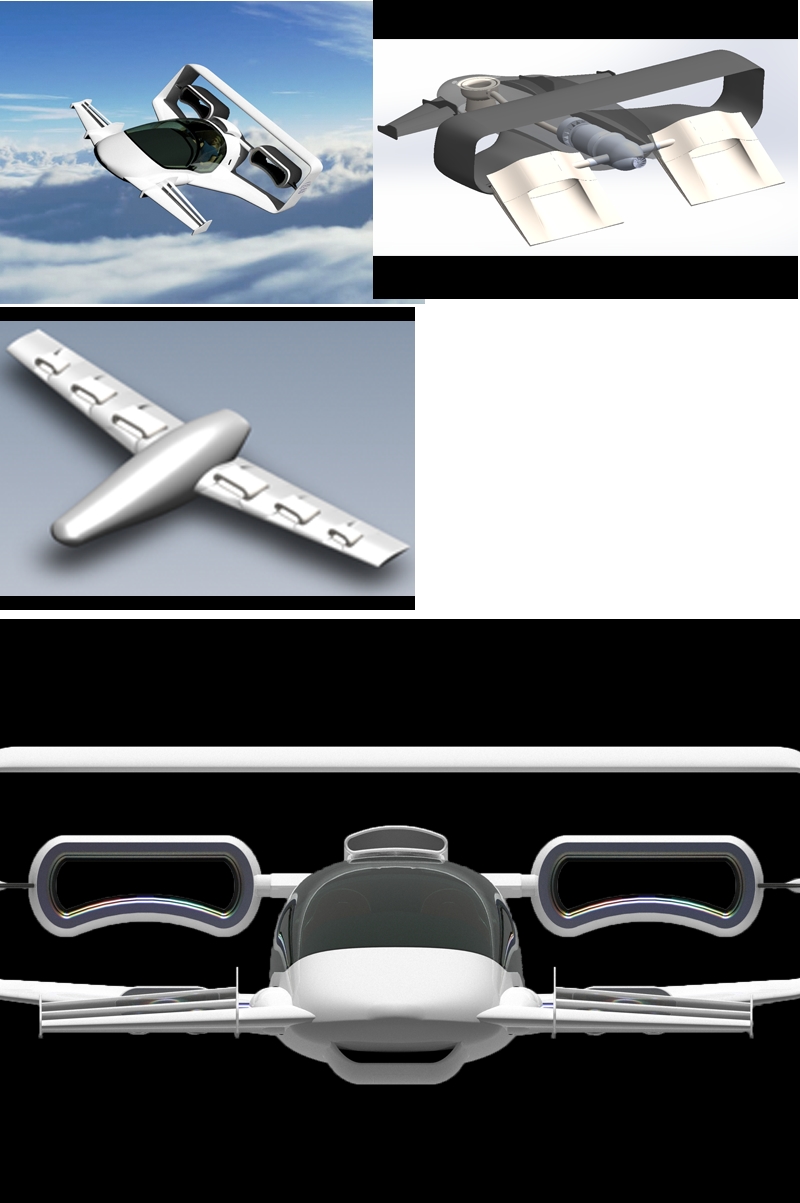
Jetoptera’s design is a true distributed propulsion that is integrated into a novel airframe. It improves propulsive
efficiency by more than 10% while lowering fuel consumption by more than 50% compared to small turbojets. The
propulsion system saves approximately 30% in weight compared to turbofans or turboprops and also significantly
reduces complexity. The integrated aircraft is capable of hovering and VTOL.

The complete propulsion system is a unique combination of a gas turbine and fluidic thrust augmentation that can
distribute thrust across the airframe. It can be implemented in various geometric shapes, can be embedded with the airframe, and has no propellers or rotating parts. The system is used in all phases of flight.

The combination of VTOL and high speed has proven elusive, especially in a compact, quiet, efficient, and safe
aircraft. The Fluidic Propulsive System enables all that and 200 mph speeds, say Jeloptera’s founders.

Direct turbofan through Fluidic Propulsive System for hover/low speed and transition to turbofan for high speed,
folding thrusters into the wing, resulting in 400+ mph cruise / 400 mi range. If the concept will come into production, Jetoptera will be the fastest commercial VTOL aircraft in the world.

The ability to give thrusters non-round shapes allows conformal integration with upper wing resulting in doubling of lift coefficient. This new design enables takeoff and landing over a 50 ft obstacle within 150 ft.

@Jetoptera

Jetoptera Gas Generator

Pairing the simple architecture of a gas generator with the advanced augmentation system results in significantly
superior efficiency versus typical small turbojets. It also guarantees great operability and low fuel burn at all stages of flight.

Thrust augmentation

Output of the gas generator is channeled through specially designed augmentation components. The exhaust gasses
entrain and accelerate ambient air. Augmentation and low exhaust temperatures enable VTOL and high
maneuverability.

In March, Jetoptera was awarded two 2021 Small Business Technology Transfer (STTR) contracts from the USAF
(United States Air Force) to further characterize the noise of its patented Fluidic Propulsive System (FPS™) in an anechoic chamber wind tunnel and to prove that the FPS™ used with an Upper Surface Blown Wing (USB)
configuration will produce specific lift force levels similar to those of a rotor-wing aircraft, yet without moving parts.

@Jetoptera

This new flying SUV offers a new generation commuter vehicle


World’s First Consumer Drive & Fly eVTOL; @Aska Fly

A new Flying SUV Wants to Be a Private Commuter for all of us. Enjoy the city and then quickly and safely travel to the countryside in your own private vehicle.

Flying cars have the potential to create the same kind of niche in mass transportation as conventional cars did one
century ago. Aska’s new urban air mobility vehicle enters the fast-developing urban air mobility sector with an offer for commuting between the city and suburbs.

World’s First Consumer Drive & Fly eVTOL

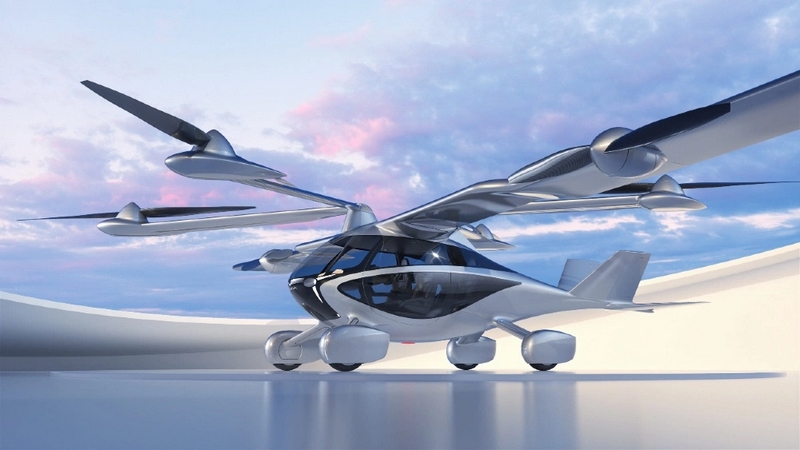
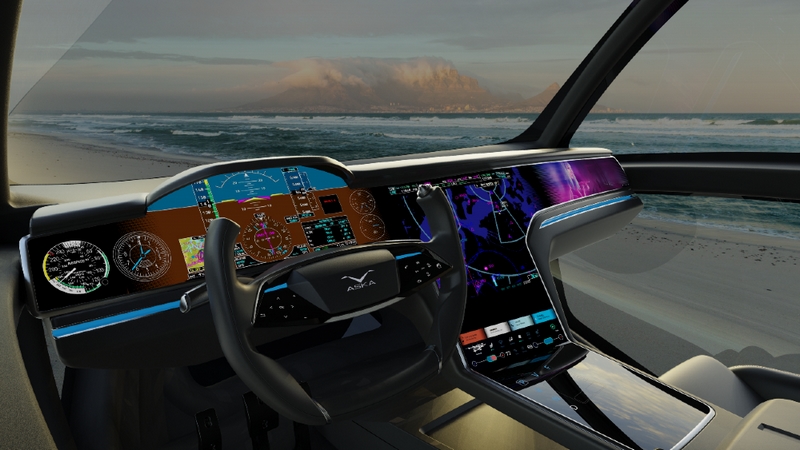
ASKA offers consumers a new generation commuter vehicle that combines the convenience of an automobile, with the safety, ease and efficiency of VTOL and STOL flight. Because ASKA is both drive and fly, it can be parked in existing parking spaces / garages and charge in existing EV charging stations.

World’s First Consumer Drive & Fly eVTOL; @Aska Fly

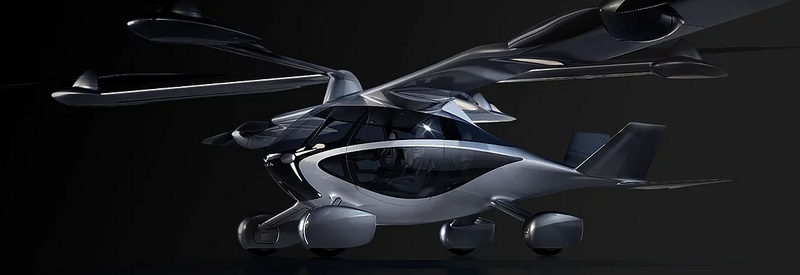
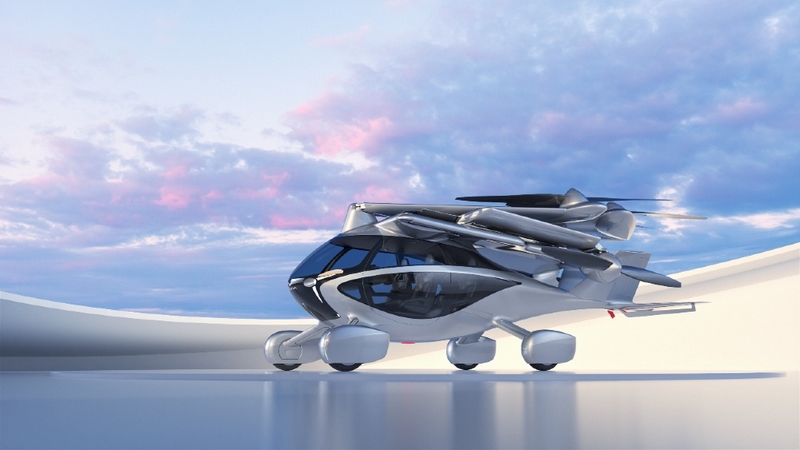
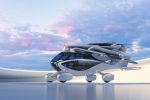
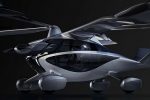
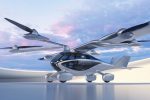
Aska’s flying car is a much larger air-mobility vehicle the size of an SUV.

With first deliveries scheduled for 2026 and a range of about 250 miles, this four-passenger flying car will feature electric motors powered by six batteries. ASKA has dual type of power supply sources. Each rotor has an independent battery power source plus a range extender power. Designed to ensure continued flight and a safe landing in the event of an emergency. The project features a robust energy management system with redundant power distribution architecture. Full electric system architecture of ASKA enables future models to convert range extenders to any other energy source such as hydrogen.

“The first deliveries may be limited to local roads. Our target is to obtain highway certification with a speed of 70 mph.” Aska Fly

The large wing design is optimized for safe landings and to reduce energy consumption. The flying SUV is boarded like a car, at home, in a garage or on the street, not on a busy airfield. The model gains additional safety with ballistic parachute. With the large propellers, ASKA has the best in class low Disc Loading (DL) and high Power Loading (PL) to hover with high efficiency and maneuverability.

World’s First Consumer Drive & Fly eVTOL; @Aska Fly

ASKA advances a great performant experience with its in-wheel motor technology, on the road or in the air. With this technology the wheels can be placed outside the fuselage, enabling better aerodynamics, and creating additional interior space to comfortably seat 4 passengers. It provides a high driving position, similar to a SUV, enabling the driver to have excellent visibility, and facilitates adequate ground clearance for Short Takeoff and Landing (STOL) mode.

In drive mode, the in-wheel motor supports dynamic handling capabilities for a great driving experience.

VIP customers who preorder the $789,000 ASKA will become influential partners in the ASKA Founders Club, a global community of people who share our passion for travel in the 3rd dimension.

Club members are encouraged to be active contributors in virtual brainstorming sessions with the founders and
engineering team. Their insights will be used to improve the design and user experience of ASKA. Benefits of this
Founders Club include updates on key developments in Advanced Air Mobility (AAM) curated from NASA, the FAA,
EASA and industry experts.

World’s First Consumer Drive & Fly eVTOL; @Aska Fly