Flying-V, the energy-efficient aircraft of the future, makes successful maiden flight


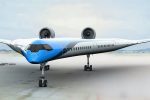
@KLM Royal Dutch Airlines’ Flying-V aircraft

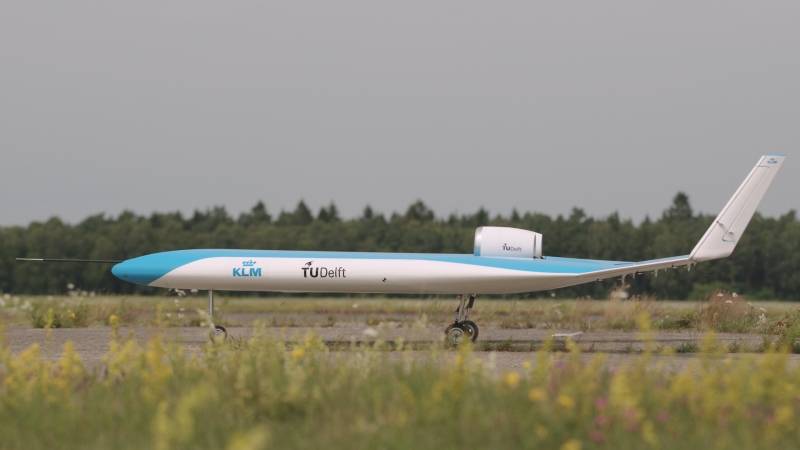
The scale model of the Flying-V – the energy-efficient aircraft of the future – has flown for the first time.
KLM and TU Delft present successful first flight Flying-V flying-wing aircraft.

A year and a half ago Delft University of Technology (TU Delft) and KLM Royal Dutch Airlines announced the start of the design of the Flying-V, a V-shaped plane, during IATA 2019 and after extensive wind tunnel tests and ground tests it was finally ready. The first successful test flight is a fact.

Last month a team of researchers, engineers and a drone pilot from TU Delft traveled to an airbase in Germany for the first test flight.

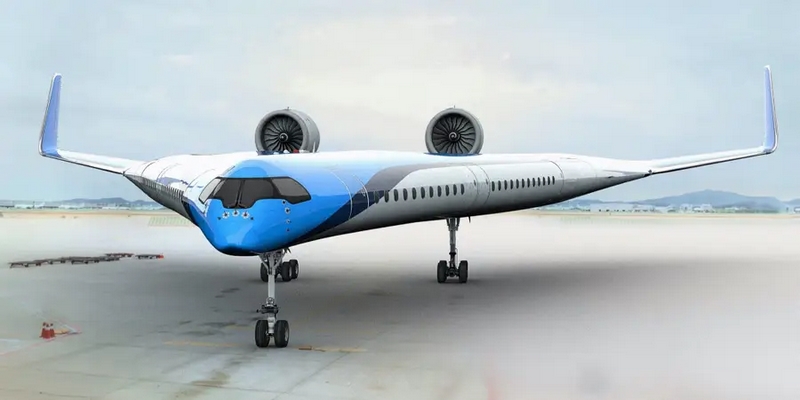
The Flying-V is a design for a very energy-efficient long-haul aircraft. The design of the aircraft integrates the passenger cabin, cargo hold and fuel tanks in the wings, creating a spectacular V-shape. Computer calculations have predicted that the improved aerodynamic shape and reduced weight of the aircraft will reduce fuel consumption by 20% compared to today’s most advanced aircraft.

KLM presented the scale model for the first time during KLM’s 100th anniversary in October 2019. Several partners are now involved in the project, including manufacturer Airbus.

“You can’t make the aviation sector more sustainable on your own, but you have to do it together,” says Pieter Elbers, President and CEO of  KLM. Collaborating with partners and sharing knowledge takes us all further. That’s why we will further develop the Flying-V concept with all partners. The next step will be to fly the Flying V on sustainable fuel”.

“Though it’s not a full-size prototype, the scaled model proves the aircraft is aerodynamically sound and can fly as designed. It’s now up to KLM  and TU Delft to build a full-size prototype that can hold passengers, an investment that could cost billions in research and development,” commented businessinsider.com.
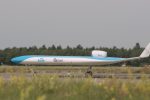
@KLM Royal Dutch Airlines’ Flying-V aircraft

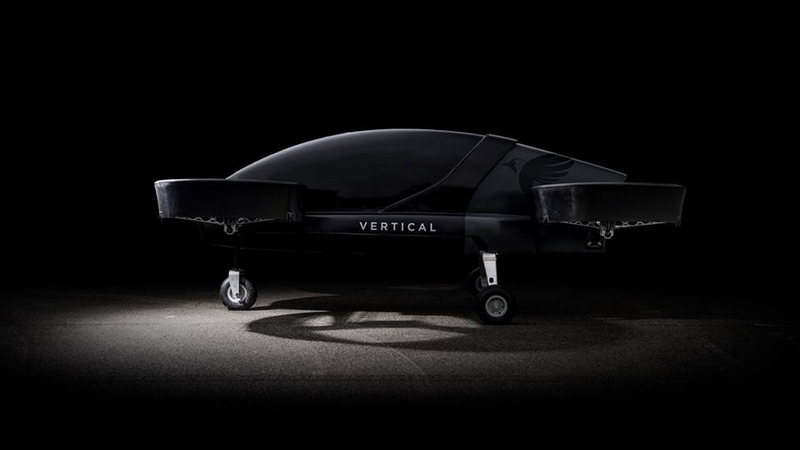
Vertical Aerospace Seraph, UK-built electric VTOL Air Taxi, makes maiden flight


Another major milestone on the path towards carbon-free flight. UK’s Vertical Aerospace Flies Electric Air Taxi Developed Using F1 Technology.

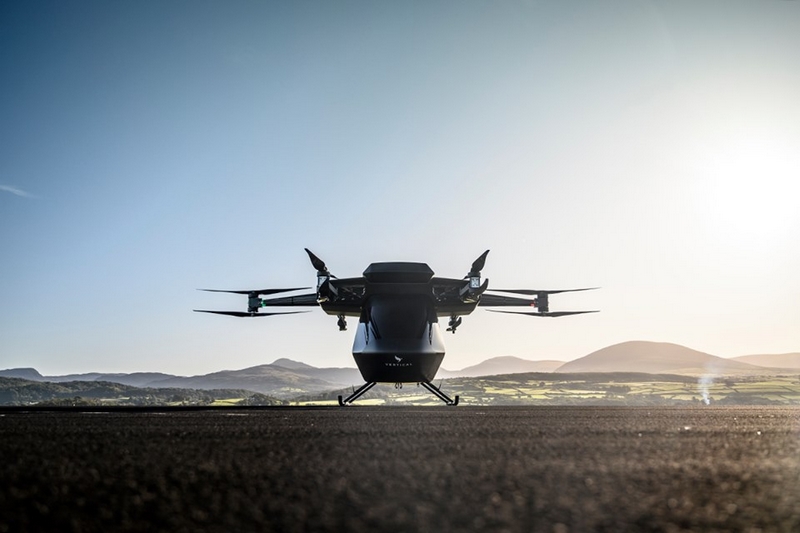
Vertical Aerospace Seraph 2019
Vertical Aerospace Seraph 2019; @vertical-aerospace

Vertical Aerospace has revealed flight footage of an electric vertical take off and landing aircraft (eVTOL) named Seraph.

Vertical Aerospace became the first company in the world to release flight footage of an eVTOL aircraft capable of carrying 250kg, the equivalent of three passengers. The Seraph can also fly at up to 80kmph. The maiden flight at Llanbedr Airfield in Wales follows the successful flight of Vertical Aerospace’s first full-scale prototype in May 2018, the UK’s first eVTOL aircraft to be granted flight permission by the Civil Aviation Authority (CAA).

The company has already begun the certification process for its next model, a passenger aircraft due to be unveiled next year and aims to have a certified aircraft in the next three years.

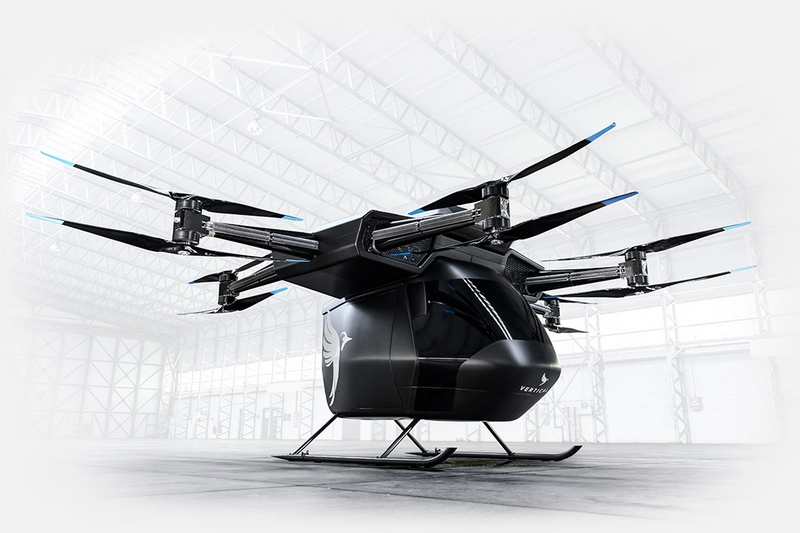
The Seraph flying taxi was built to test new technologies and systems for integration into Vertical Aerospace’s upcoming passenger model, due to be unveiled next year. The aircraft is capable of carrying loads of up to 250kg and can reach speeds of up to 80km per hour. The aircraft develops concepts from their first aircraft and builds in capabilities which will be critical for eVTOL aircraft seeking certification from aviation authorities.

Vertical Aerospace Seraph 2019-
Vertical Aerospace Seraph 2019; @vertical-aerospace

“One year ago, we flew a full-scale electric VTOL aircraft, the UK’s first. Today, we’re revealing flight footage of our second full-scale prototype, the Seraph, an air taxi prototype capable of carrying 250kg. Air travel is one of the worst contributors to climate change and among the slowest sectors to decarbonise. Our mission at Vertical Aerospace is to make personal, on-demand and carbon-free flight a reality,” commented Stephen Fitzpatrick, Founder and CEO of Vertical Aerospace.

The successful test flight comes as Vertical Aerospace announces the acquisition of MGI, an F1 engineering consultancy led by British motorsport veteran Mike Gascoyne. Gascoyne and his team of 20 specialists will form Vertical Advanced Engineering, bringing the total Vertical team to more than 70.

Gascoyne’s team bring decades of experience building high performance vehicles for Formula 1 and Formula E, having worked with international racing teams including Williams, McLaren, Tyrell, Benetton, Renault and Lotus. They will apply the latest technologies and agile processes from F1 to the development of eVTOL aircraft. By combining aerospace engineering excellence with new technologies from Formula 1 Vertical Aerospace will be able to bring a superior certified aircraft to market more quickly.

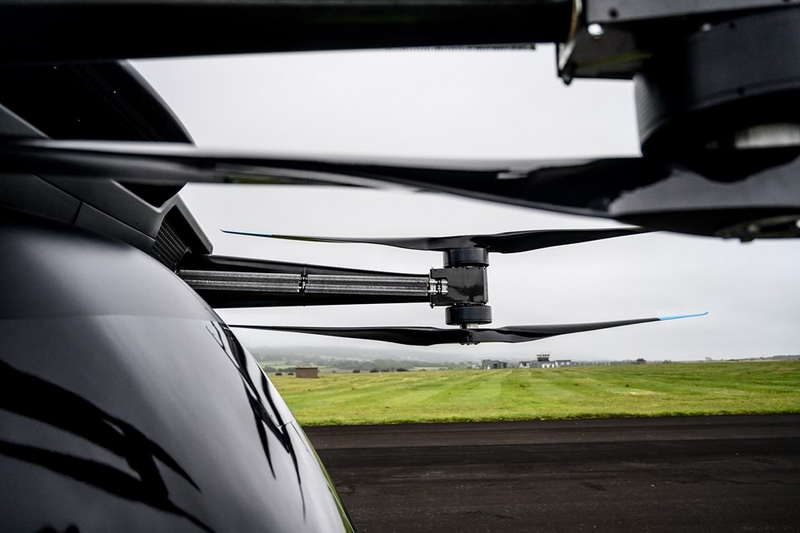
Vertical Aerospace Seraph
Vertical Aerospace Seraph 2019; @vertical-aerospace
Vertical Aerospace -02
Vertical Aerospace Seraph 2019; @vertical-aerospace
Vertical Aerospace -01
Vertical Aerospace Seraph 2019; @vertical-aerospace

The world’s first electric vertical take-⁠off and landing jet celebrates successful maiden flight

Lilium Jet takes to the skies. The all-electric ‘flying car’ take its first test flight.

The Lilium Jet – The world's first all-electric VTOL jet -
The Lilium Jet – The world’s first all-electric VTOL jet


The Lilium Jet successfully completed its maiden test flight series in the skies above Bavaria. The 2-seater Eagle prototype executed a range of complex maneuvers, including its signature mid-air transition from hover mode to wing-borne forward flight.

Lilium Aviation have solved some of the toughest engineering challenges in aviation to get to this point.

“The successful test flight programme shows that our ground-breaking technical design works exactly as we envisioned. We can now turn our focus to designing a 5-seater production aircraft,” said Lilium Aviation.

The world’s first electric vertical take-⁠off and landing jet commutes without emissions and noise pollution. It has a 300km range and it can fly from London to Paris in one hour. Access inner cities with less noise than a motorbike, while flying as fast as a Formula One car (300 km/h speed).

Lilium Aviation also announced plans for a 5 seater Lilium Jet aimed at on-demand air taxi services. A typical journey with the Lilium Jet will be at least 5x faster than by car, with even greater efficiencies in busy cities. So a flight from Manhattan to New York’s JFK Airport will take around 5 minutes, compared to the 55 minutes it would take you by car.

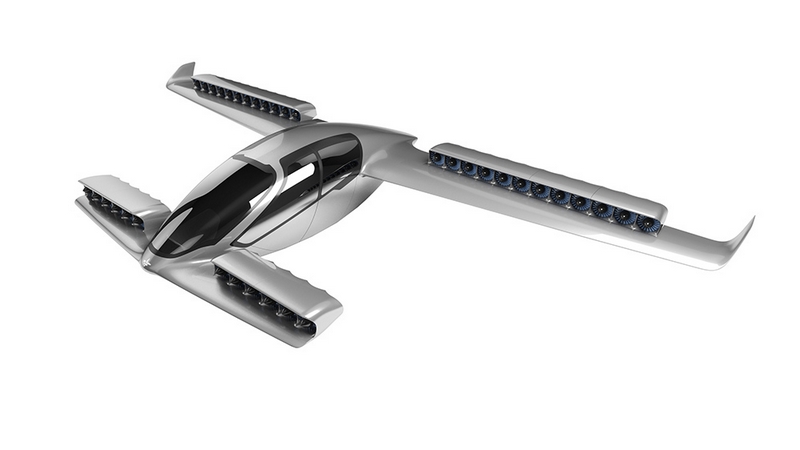
The Lilium Jet consists of a rigid winged body with 12 flaps. Each one carries three electric jet engines. Depending on the flight mode, the flaps tilt from a vertical into a horizontal position. At take-off, all flaps are tilted vertical, so that the engines can lift the aircraft. Once airborne, the flaps gradually tilt into a horizontal position, leading the aircraft to accelerate. When they have reached complete horizontal position, all lift necessary to stay aloft is provided by the wings as on a conventional airplane.


The Lilium Jet – The world's first all-electric VTOL jet The Lilium Jet – The world's first all-electric VTOL jet - renderings The Lilium Jet – The world's first all-electric VTOL jet - maiden flight