The future of flight is renewable hydrogen.

A new aviation partnership moves the ball a significant distance down the field towards zero-emission goal line of commercial hydrogen operations.
ZeroAvia, the leader in developing zero-emission solutions for commercial aviation, announced the signing of a collaboration agreement with Shell, Rotterdam The Hague Airport and Rotterdam the Hague Innovation Airport. The parties will develop a concept of operations for hydrogen in airports and demonstration flights to European destinations by the end of 2024, gearing up for commercial passenger flights by 2025.
Following up on the cooperation commitment announced last year to launch the first hydrogen-electric commercial flight, this specific collaboration will focus on serving the first hydrogen flight from Rotterdam, including operation at the airport, developing on-the-ground infrastructure and operations to satisfactorily pilot distribution, storage, and dispensing of hydrogen for aviation, leading towards decarbonizing the whole airport ecosystem.
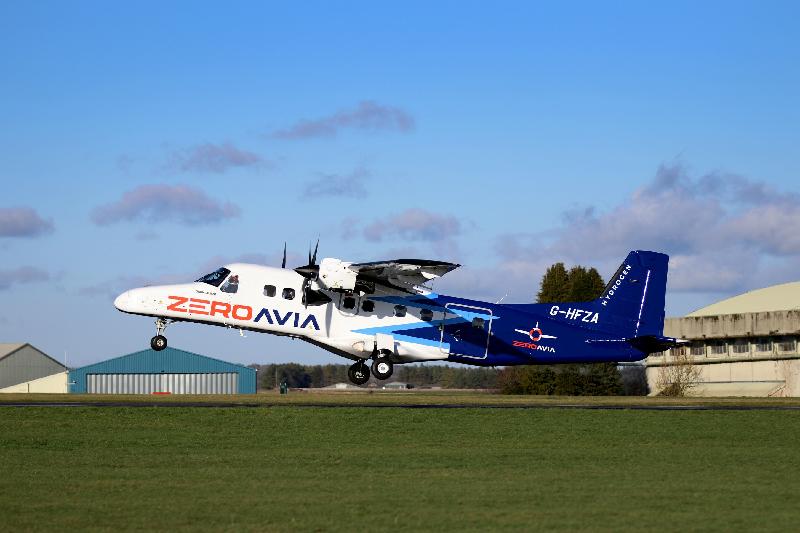
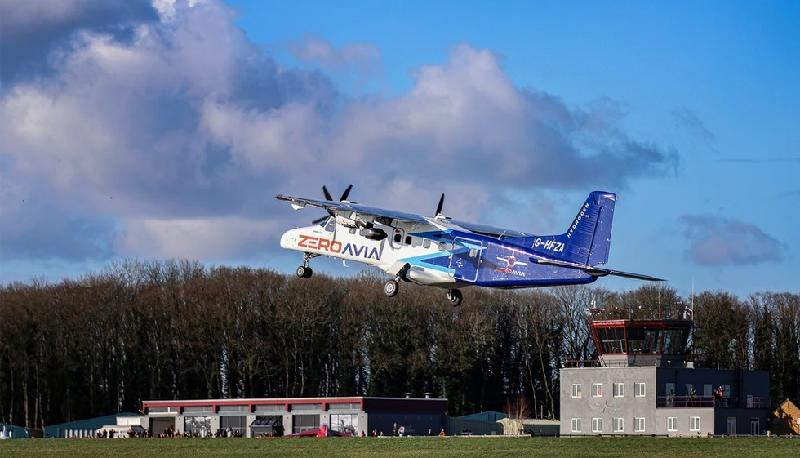
Ultimately, the project targets supporting aircraft operations using gaseous hydrogen to fuel ZeroAvia’s hydrogen-electric, zero-emission ZA600 engines. For these specific demonstration flights the parties aim to establish routes to airports in Europe within 250 nautical mile radius of Rotterdam. Last month, ZeroAvia demonstrated a first flight of a 19-seat aircraft powered by its prototype ZA600 engine.
This project will also target the development of aviation specific standards and protocols around safety, refueling and hydrogen management, enabling rollout of the promising fuel seamlessly. The parties will work together in discussions with potential airline operators for the initial demonstration and subsequent commercial flights.
Shell brings critical experiences and technical capabilities to the project. This is expertise related to hydrogen end-to-end supply chains and global experiences in design and operation of refueling equipment, including hydrogen. Shell invests in hydrogen production projects with the aim to develop regional and international hydrogen economies. In its decarbonization efforts Shell collaborates with airports to develop fit-for-future infrastructure that will allow it to supply customers with sustainable aviation fuel, hydrogen and electric planes charging, so called “multi-modular” infrastructure.
“There is still a lot of work to do, but with clear milestones and targets identified, the hard work really starts now towards delivering the infrastructure and exploring the protocols and standards required.” – Arnab Chatterjee, VP, Infrastructure, ZeroAvia.
“This project and collaboration is a milestone as it enables a rapid decarbonization of a hard-to-electrify sector such as aviation. It also offers the chance to support one of the first international zero-emission passenger routes. On top of that, it allows the opportunity to road test multi-fuel and multimodal fueling operations in a live airport environment. This is a big step forward for hydrogen aviation and for Shell’s plans in this space,” – Oliver Bishop, General Manager Hydrogen at Shell.

” Hydrogen is key to decarbonize aviation. This collaboration helps us demonstrate and validate new airport infrastructure requirements as well as concepts of operation. And hence accelerate and stimulate airport transformation towards Zero-Emission,” – Wilma Van Dijk, CEO, Rotterdam The Hague Airport of Royal Schiphol Group.
ZeroAvia has previously partnered with Shell for the provision of low carbon-intensity hydrogen to power some of its testing and early commercial operations in California. The multinational energy company also invested in ZeroAvia last year.
Miranda Janse, CEO Rotterdam the Hague Innovation Airport, said: “As a foundation supported by Rotterdam The Hague airport and Municipality of Rotterdam, RHIA is always keen to drive innovation and sustainable aviation developments at RTHA together with and for a network of partners. RHIA is actively working with partners within its DutcH2 Aviation Hub program to develop hydrogen-driven flights from RTHA. This collaboration is one of the projects within the program that helps us create the open-access infrastructure required for the sector. RHIA is happy to help facilitate this specific partnership and bring the project to life as well as creating the foundation for the partners within the community.”
ZeroAvia’s testing of the ZA600 powertrain in flight is part of HyFlyer II, an R&D project supported in part by the UK Government’s ATI programme. The project has also seen the further development of ZeroAvia’s Hydrogen Airport Refuelling Ecosystem (HARE) demonstrator alongside project partner EMEC, and separately ZeroAvia has developed a hydrogen refuelling pipeline at Cotswold Airport.