Urban Air Port has the potential to revolutionise cities across the world, making them more connected, cleaner and accelerating our green economic recovery.
The aviation company plans to install more than 200 zero emission sites worldwide over the next five years in response to global demand.
NASA predicts that urban-air mobility in the US alone could be worth up to $500 billion USD (£375 billion) in the near-term and states that a significant barrier to market growth is the lack of infrastructure, an issue which Urban Air Port was established to resolve.
The Urban Air Mobility Division of Hyundai Motor Group has chosen Urban Air Port as its priority infrastructure partner to support the global growth of this new sector. The South Korean company plans to create its own eVTOL aircraft and support the broader urban air mobility eco-system. Hyundai Motor Group is supporting the development of Air-One® as part of its plan to commercialise its aircraft by 2028.
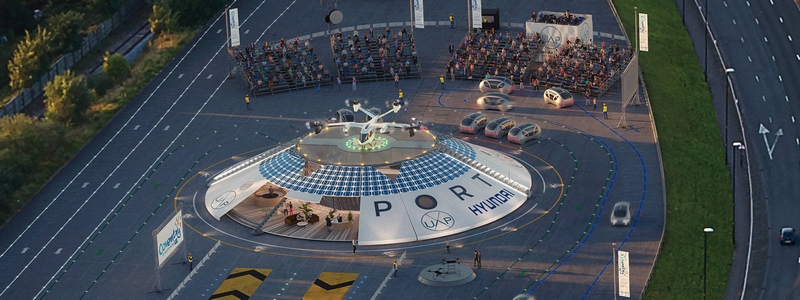
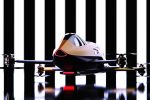
The eVTOL hub provides an integrated approach to the decarbonisation of cities. It is designed to support any eVTOL aircraft and
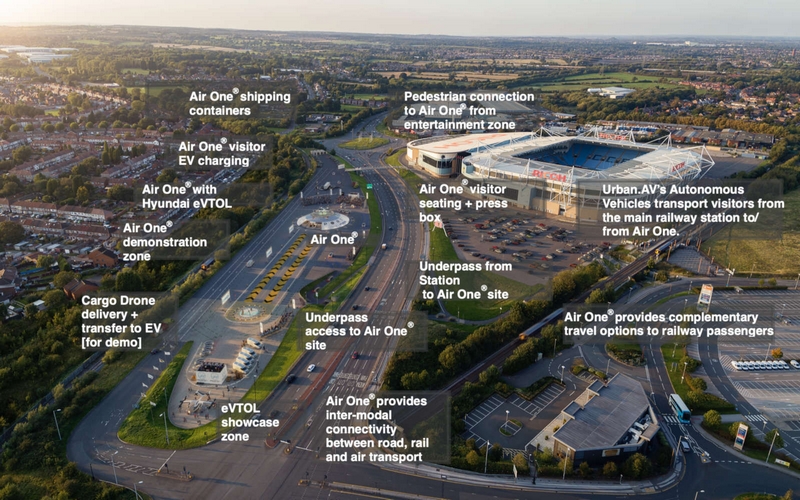
complements other modes of sustainable transport as a hub for electric vehicles, buses or scooters. The design enables Urban Air Ports to be easily moved to alternative sites, as the air-mobility sector develops. This design also means the sites are ideal for disaster emergency management. Urban Air Ports can rapidly deploy drones and other eVTOL to collect and transport emergency supplies, equipment and people where needed.
Urban Air Port Air-One eVTOL hub; @hyundai.news
The physical footprint of an Urban Air Port is 60% smaller than a traditional heliport (the most comparable existing infrastructure). Using innovative construction, the sites can be installed in a matter of days, emit net zero carbon emissions and can be operated completely off-grid, meaning they do not always have to rely on a suitable grid connection.
“Cars need roads. Trains need rails. Planes need airports. eVTOLs will need Urban Air Ports. Over a hundred years ago, the world’s first commercial flight took off, creating the modern connected world. Urban Air Port will improve connectivity across our cities, boost productivity and help the UK to take the lead in a whole new clean global economy. Flying cars used to be a futuristic flight of fancy. Air-One will bring clean urban air transport to the masses and unleash a new airborne world of zero emission mobility.” – Ricky Sandhu, Founder and Executive Chairman of Urban Air Port.
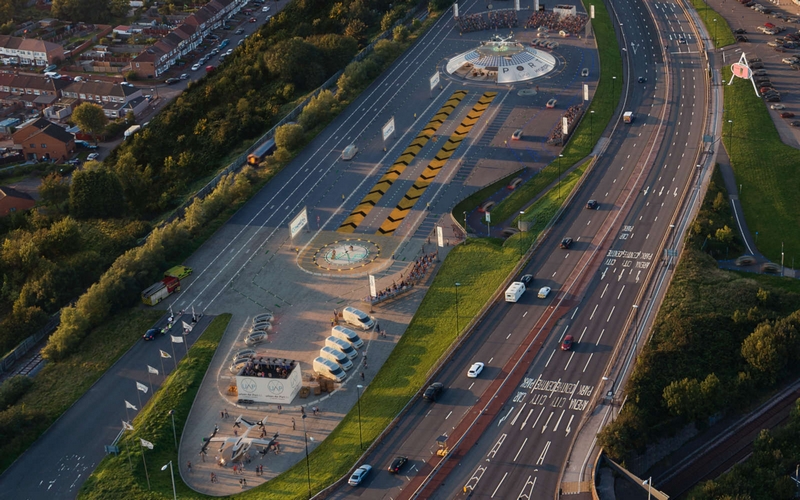
Urban Air Port chose Coventry for the first site due to its important location in the heart of the UK and because it is a historic hub for the automobile and aerospace industry, with a pool of people and skills that can support the manufacturing industries of the future. The city’s unique location also provides easy access within four hours to most parts of the country. In December 2020, Coventry was named the best UK town for electric cars. Air-One will be unveiled during Coventry’s UK city of culture celebrations in 2021 and continue to form part of the Commonwealth Games in 2022.
Urban Air Port has been awarded a £1.2 million grant from UK Research and Innovation’s Future Flight Challenge. The programme is funded by £125 million from the Industrial Strategy Challenge Fund and is expected to be matched by up to £175 million from industry.
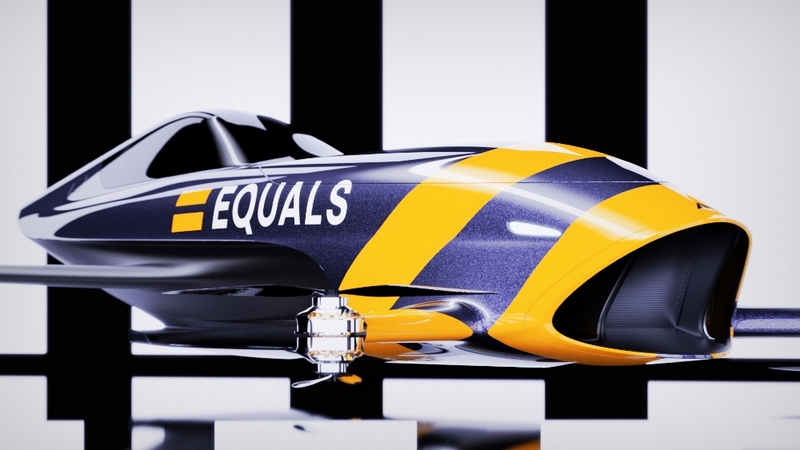
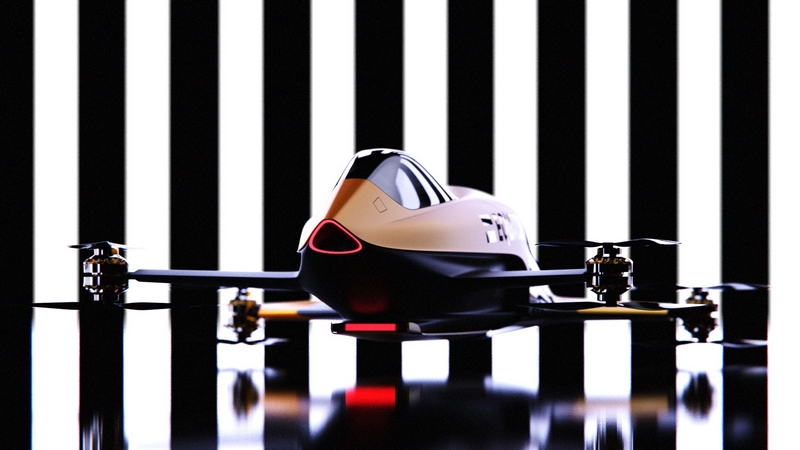
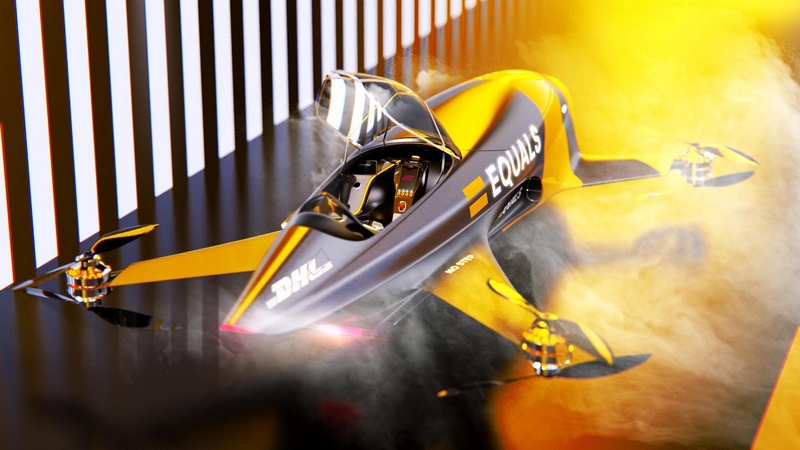
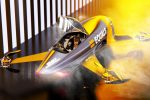
Motorsport evolved: Airspeeder race eVTOL is built for a future international race series.
@airspeeder
The world no longer demands what traditional motorsport delivers. The future of transport is flight. Airspeeder takes what is dreamed in E-Sports and makes it reality, says Australian aviation firm Alauda Racing, a leading performance flying car manufacturer. Their vehicles power the world’s first electric flying car racing series. Alauda Aeronautics is a Sydney-based company founded by Matt Pearson in 2016.
@airspeeder
Airspeeder will be synonymous with the world’s first electric flying car racing series.
It is the world’s first racing series for manned electric flying cars. With elite pilots race manned electric multicopters above some of the world’s most exotic locations, this new sport is found at the confluence of frontier technology and new world entertainment. The sport promises to be the greatest modern sporting spectacle on the planet, with pilots propelled to speeds of 200kph in the largest, most powerful octocopters on the planet.
Alauda Racing is currently at a stage of advanced testing. Its MK2 electric flying multicopters successfully completed trials throughout2019. A team of test pilots recruited from the US Air Force and Martin Aviation will test the MK3 advanced development prototype in the Mojave desert.
The MK4, first shown as a concept in the summer of 2019 will be co-developed in the UK and South Australia, with the latter proving the perfect testing ground for both ground control and manned flights as the sport nears its inaugural ‘Beta Season’. This will included public manned test flights that will demonstrate Airspeeder’s potential to be the most exciting sport on the planet. The firm is poised to deliver this flight but exact timings will be dependent on the lifting of restrictions related to the current global health crisis.
Matthew Pearson and CCO, Jack Whithanshaw are actively engaged in open dialogue with the wider passenger flying car industry (eVTOL) to open co-development channels that address the key issues of safety, regulation and awareness.
“We believe in open innovation. Looking back to the development of both the car and aeroplane over a century ago, it was sporting competition that drove progress. We are delighted to work in close collaboration with global regulators and the wider eVTOL industry to bring closer a revolution in airborne mobility,” said Matt Pearson, Founder, Alauda & Airspeeder.
Airspeeder’s vision has been affirmed by significant institutional backing. The firm has secured funding from two of Australia’s leading technology Venture Capital firms, Saltwater Capital and Jelix Ventures. The investment into the future of mobility backs a pioneer in eVTOL (Electrical Vertical Take Off and Landing), which is a sector that is predicted to be worth $1.5 trillion by 2035.
Final ‘manned’ tests of the Speeders are technically ready. These flights will take place in the desert surrounding the firm’s HQ in South Australia once restrictions relating to the global health crisis are lifted. First head-to-head dual races are planned to take place in late 2020.
Designers, engineers and programmers have heard the klaxon call. The last few weeks have seen a wave of ingenuity unleashed, with both garden-shed tinkerers and high-tech manufacturers scrambling to develop things that will combat the spread of Covid-19.
Many of their innovations raise as many questions as they answer, though. Could 3D printing now finally come into its own, with access to open-source, downloadable designs for medical parts? If so, will intellectual property infringements be waived, or will altruistic hacktivists still face costly lawsuits? Could mobile phone tracking map the spread of infection like never before, keeping people away from virus hotspots? If so, might governments use the pandemic as an excuse to ramp up surveillance measures post-crisis?
From 3D-printed respirator valves to UV-sanitising robots, here are 10 inventions that the battle against coronavirus has spawned so far.
Anti-virus snood
The Virustatic Shield snood.Photograph: Virustatic Shield
Biochemists at Manchester University have developed a snood with “germ trap” technology. The result of a 10-year project with biotech firm Virustatic, the snood has now been hurried into production. Its creators say the fabric coating has a similar formation to the carbohydrate structures on the surfaces of the cells that cover the oesophagus. They created the technology by attaching glycoproteins to carbon cloth, then to other cheaper materials such as cotton.
Their tests have shown that it traps 96% of airborne viruses. According to inventor Paul Hope, the snood is more breathable and flexible than a conventional mask, meaning patients can also wear them. “The biggest spreader of viruses, the people you are treating, can’t wear existing masks,” he says, “because of issues with breathability. If they could, that would reduce the virus within the hospital environment. Our snood mask moulds to your face, and it’s all the way round, not just your nose and mouth. It fits everyone.” The company hopes to make as many as a million a week, reserving a portion for the NHS.
Fever-finding smart helmet
Police officers in Chengdu, China, wearing smart helmets fitted with infrared cameras to detect citizens with high body temperatures.Photograph: China News Service via Getty Images
Our Robocop future just got one alarming step closer thanks to Chinese tech firm Kuang-Chi Technologies. The Shenzhen-based company has developed a smart helmet that can detect people with a fever up to five metres away, sounding an alarm when anyone with a high temperature comes close.
The headset, which is already used by police in Shenzhen, Chengdu and Shanghai, features an infrared temperature detector, an augmented-reality visor, a camera that can read QR codes, plus wifi, Bluetooth and 5G so it can beam data to the nearest hospital. Equipped with facial recognition technology, the helmet can also display the subject’s name on the AR visor, as well as their medical history.
According to the developer, it would only take officers two minutes to scan a queue of more than 100 people with the help of the helmets, while one big hospital would only need 10 such helmets to cover every corner of its site. Reassuring in a pandemic, perhaps, but a terrifying prospect the rest of the time.
3D-printed ventilator valves
3D-printed valves help hospitals in Italy keep up with demand.Photograph: Filippo Venezia/EPA
An Italian company came to the rescue after a hospital ran out of crucial valves for its ventilators. The hospital in Chiari, in the Brescia area of northern Italy hit hard by the virus, had 250 coronavirus patients in intensive care, and was short of venturi valves – which connect the ventilator to a patient’s face mask, and need to be replaced for each patient.
After the original supplier was unable to provide new valves quickly enough, the hospital put out a call for help. Isinnova contacted the manufacturer, Intersurgical, but was unable to obtain a digital model of the part, so its team decided to reverse-engineer its structure themselves. The first prototype was ready within six hours, with 100 working valves printed and supplied to the hospital within a day.
Isinnova CEO Cristian Fracassi told the BBC : “The valve has very thin holes and tubes, smaller than 0.8m – it’s not easy to print the pieces … Plus you have to respect not [contaminating] the product – really it should be produced in a clinical way.” His team has since developed a 3D-printed adapter to turn a snorkelling mask into a non-invasive ventilator for coronavirus patients, to help to address the possible shortage of oxygen masks.
Coronavirus testing booths
South Korea has been leading the way in testing its citizens for Covid-19, with nearly 20,000 people tested every day, more people per capita than anywhere else in the world. As well as pioneering drive-through centres, where people with symptoms can check their health status, one hospital in Seoul has introduced new testing booths that allow medical staff to examine patients from behind the safety of a plastic panel.
The phone box-like cubicles use negative air pressure to prevent harmful particles from escaping outside. Each patient steps into the booth for a rapid consultation via an intercom, while samples can be safely taken by swabbing their nose and throat using arm-length rubber gloves built into the panel. The whole process takes about seven minutes and the booth is then disinfected and ventilated.
“We used to collect samples inside a large negative-pressure room,” says Kim Sang-il, president of the H Plus Yang hospital where the booths are in use. “It took a long time to disinfect the place. We used to take eight to nine samples per day, but we can now take 70 to 80.”
Hands-free door opener
Armed and less dangerous … Materialise’s door opener.Photograph: Paolo Vergalito/Materialise
Tired of pulling your sleeve over your hand to touch the door handle? Belgian 3D printing company Materialise has designed a hands-free door handle attachment. Under the slogan “Do less harm, use your arm!”, the design, which has been made available to download for free, consists of two simple parts that can be screwed either side of a handle, allowing you to use your arm or elbow to turn the handle.
“Door handles are said to be among the most contagious places in a building,” says the company’s CEO, Fried Vancraen. “We call upon everyone who has access to a 3D printer to print the part and make it available to their local community.”
UV-sanitising robots
Virus killer … the disinfecting UVD robot.Photograph: UVD Robots
Looking like a cluster of lightsabers on wheels, a sterilising robot has been developed by a Danish company. It can kill virus cells and sanitise hospital wards without the need for chemicals. The eight bulbs on each roaming robot emit concentrated UV-C ultraviolet light, which destroys bacteria, viruses and other harmful microbes by damaging their DNA and RNA, so they can’t multiply.
This could reduce dependency on chemical-based disinfectants such as hydrogen peroxide, which require rooms to be left empty for several hours during sterilisation, making them impractical for many parts of hospitals.
The robot was launched in early 2019, following six years of collaboration between parent firm, Blue Ocean Robotics and Odense University Hospital, but recent demand has seen production accelerate, so it now takes less than a day to make one robot.
A similar device has been developed by Chinese firm YouiBot, which took its existing robot base and added thermal camera and UV-C bulbs. It has supplied factories, offices and an airport, and a hospital in Wuhan. “It’s running right now in the luggage hall,” says YouiBot’s Keyman Guan, “checking body temperature in the day, and it goes virus killing during the night.”
3D-printed isolation wards
Quick care … 3D-printed isolation wards have been put into use at Xianning Central Hospital, China.Photograph: Winsun
Chinese company Winsun has deployed its rapid 3D-printing powers on an architectural scale, manufacturing 15 coronavirus isolation wards in a single day. The little concrete cabins were originally designed to be used as holiday homes, but the company ramped up production to cope with demand from overcrowded Chinese hospitals at the height of the epidemic.
The buildings, which have showers and eco-toilets, were printed through an extrusion process, with a robotic arm mounted on rails, gradually depositing layers of concrete to build the walls. The company says it uses recycled construction rubble in the process and claims its structures are twice as strong as a conventional concrete construction.
Corona 100m app
The Corona 100m app from South Korea.Photograph: PR
Coders have joined the battle against coronavirus, racing to develop apps. In South Korea, virus-tracking apps make up six of the most popular 15 downloaded apps, by far the most popular being Corona 100m. Using the wealth of data collected by the government’s testing programme, the app alerts users when they come within 100 metres of a location visited by an infected person.
It also allows people to see the date a coronavirus patient was confirmed to have the disease, along with that patient’s nationality, gender, age and the places the patient visited. Launched on 11 February, the app had a million downloads in its first 17 days.
Other initiatives include the Coronamap website, which shows the travel histories of confirmed Covid-19 patients and Coronaita, which functions like a search engine for information on coronavirus-hit areas. Other states, including Singapore and Israel, have also deployed apps that can help the authorities track who users have come into contact with, to help model the spread of the virus, while Taiwan has introduced an “electronic fence” system that alerts the local police if a quarantined user leaves their home.
Discussions are under way about a tracking app in the UK, sparking a debate about privacy. An open letter from a group of “responsible technologists” highlighted concerns “that data collected to fight coronavirus could be stored indefinitely or for a disproportionate amount of time, or will be used for unrelated purposes”. They added: “These are testing times, but they do not call for untested new technologies.”
3D-printed face shield
A prototype Prusa face shield.Photograph: Prusa Printers
Czech company Prusa, which claims to have the largest 3D printing farm in the world, with more than 500 printers, has started mass-producing protective face shields, used by medics. It is manufacturing over 800 a day, and has donated 10,000 to the Czech ministry of health.
“The materials required to manufacture one unit are less than $1 and that is without any quantity discounts when buying,” says the company’s founder, Josef Průša. “We literally got materials around Prague during one afternoon.”
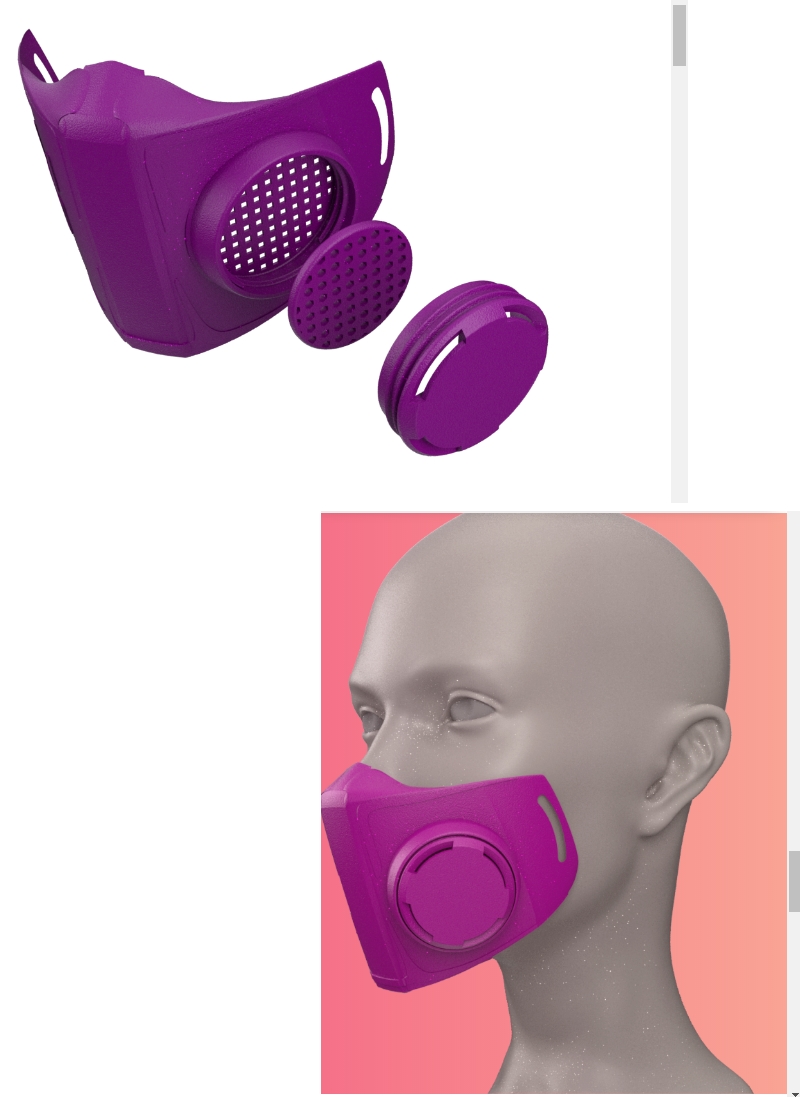
Chilean/US company Copper3D developed a 3D-printed N95 mask called NanoHack, designed to filter out airborne particles that could carry the virus, with plans available to download online.
Another firm, Stratasys, has also developed a 3D-printed face shield and masks. According to its CEO, Yoav Zeif: “The strengths of 3D printing, be anywhere, print virtually anything, adapt on the fly, make it capable for helping address shortages of parts related to shields, masks, and ventilators, among other things.”
Virus-fighting drones
Eye in the sky … a Chinese police officer employs a drone in Shenzhen to track vehicle movements.Photograph: Chine Nouvelle/Sipa/Rex/Shutterstock
In a world where we are forbidden from leaving the house, it looks like drones might finally come into their own. In China, the world leader in drone manufacturing, the mini choppers have been mobilised for everything from fever detection in crowds to disinfecting public spaces, to delivering supplies to far-flung locations.
Agricultural drones, designed to spread fertiliser, have been repurposed to spray disinfectant across pavements and public squares, as well as deliver groceries to remote island communities. Drones have also been used to deliver test samples, dramatically cutting journey times.
In France, the police have started using drones to help enforce its lockdown, monitoring parks and public spaces to make sure people are not leaving their homes for non-essential trips, while, in the UK, Northamptonshire police are planning to increase their fleet of drones, which will be equipped with speakers to transmit public information messages and tell people to get back indoors. No nipping out to get those non-essential items, now – the drones are watching.
One of the first drone deliveries was operated not by a tech giant from Silicon Valley but by small-time criminals who saw potential in the new technology.
In late 2013, days before Amazon announced its futuristic plan to operate a fleet of automated vehicles, four people were arrested for attempting to smuggle contraband into a Georgia state prison using a drone.
Guards had noticed a remote-controlled helicopter hovering above Calhoun prison. Later, they found the six-rotor drone in a nearby car alongside what appeared to be its cargo: pouches of tobacco and mobile phones.
Five years later, Amazon still hasn’t launched its sky delivery service, while the proliferation of cheap, commercially available drones worldwide has far outpaced the ability of authorities to control them.
Security personnel surround Venezuela’s president, Nicolás Maduro, during an attempted drone attack in Caracas in August 2018.Photograph: Xinhua/AP
Responding to the threat, a host of companies – from state-run defence contractors to startups – have developed products that can detect, track, jam, destroy or even commandeer rogue drones.
These services comprise a market that is expected to grow by between 20% and 30% in the next few years and could be worth £4bn by the middle of the next decade.
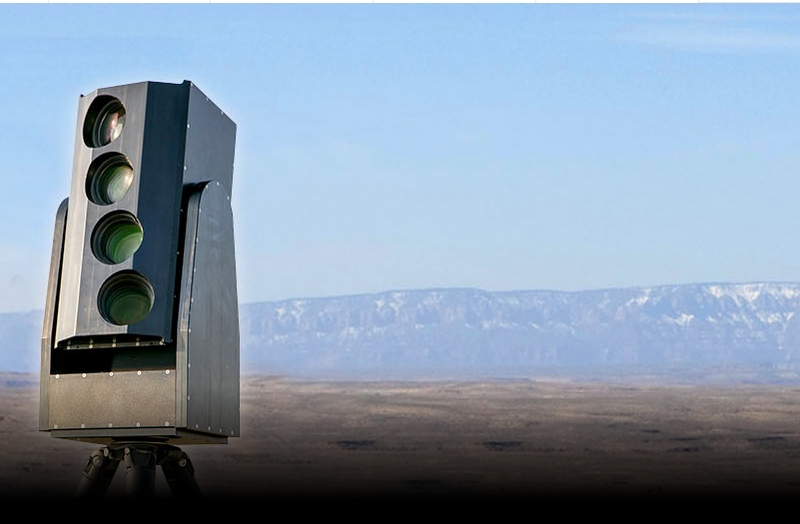
“It’s a very, very big issue,” said Alex Riahi, who works for Israel Aerospace Industries (IAI), Israel’s major aerospace and defence manufacturer. In September IAI released its Popstar system, which can detect and track drones up to 4km away in day or night.
The Popstar system was developed for detecting, handling and tracking drones.Photograph: Israeli Aerospace Industries
IAI sells drone defence to foreign governments to place along their borders or around sensitive sites such as army bases or power plants to avoid spying or air attacks, and also provides equipment to shoot down military drones. But it is increasingly finding interest from other clients – airports, for example – who want to protect against shop-bought drones.
Although coy about pricing, Riahi said the cost of these systems was less than the expense to a major airport of shutting down for an hour.
Israel, with its history of drone warfare, has become a key producer of anti-drone products, especially as members of the military intelligence services often transfer their knowledge to start hi-tech companies after they leave the army. The booming industry has also sprung up in the US, Europe and China.
A host of smaller firms are entering the market. Vorpal, another Israeli company, has compiled a database of signals emitted by 95% of drones that are available to buy, giving its clients the ability to detect most drones buzzing overhead.
“There is no civil technology today that gives you 100%, bulletproof, all-cases, all-drone-types solution,” said Avner Turniansky, Vorpal’s vice-president of strategy. His VigilAir product has been tailored to work in dense urban environments where high buildings and radio “noise” often hide drone signals.
During this year’s Eurovision song contest held in Tel Aviv, Israeli police bought his system and caught more than 20 people who were operating drones in no-fly zones over venues. Authorities wanted to clear the air to prevent any potential attacks, but also to make sure drones did not accidentally fall over large crowds.
Turniansky said none of the perpetrators had apparent nefarious aims and in most cases they were completely clueless that they were flying illegally.
An anti-drone system on display at an exhibition in Israel in November.Photograph: Jack Guez/AFP via Getty Images
Drones often have internal safeguards such as software that prevents them from flying over sensitive sites, meaning the drone will stop in midair as if it has hit a virtual wall. But Turniansky said at least one confiscated drone at Eurovision had been tampered with to block its GPS, allowing it to fly freely.
Once detected, drones can be taken control of with a remote cyber-attack or, more straightforwardly, shot out the air with net guns. Radiofrequency jammers are also used, although not in airports where they could affect safety systems. “In an airport, nobody wants to jam,” Turniansky said.
He said Vorpal’s system not only tracks drones but also allows users to locate the people flying them. This information is often more crucial than the location of the drone, as taking down one drone disrupting an airport is useless if the operator has more to hand. “In such cases, the ability to tell you where the operator is very valuable,” Turniansky said.
Nimo Shkedy is also Israeli but his drone defence company, ApolloShield, is headquartered in New York. He sells counter-drone technology, including jamming “guns” that block drones with radio waves. In the US, these types of systems can only be sold to government agencies or with official authorisation, but the list of potential clients is growing.
“We started with stadiums and public events,” said Shkedy. “But now this technology and these requirements are all over the place – airports, VIPs, prisons, borders, power plants, oil refineries, nuclear power plants, seaports, yachts,” he said.
Shkedy and his business partner started the firm in 2016 after hearing that the Israeli supermodel Bar Refaeli had unsuccessfully attempted to shut down the airspace above her wedding to prevent paparazzi from using drones. If she and her billionaire fiancé, Adi Ezra, had anti-drone products, they could have blocked off their area themselves.
“We realised it was a big problem and it’s on the rise,” Shkedy said. “And it’s been on the rise ever since.”
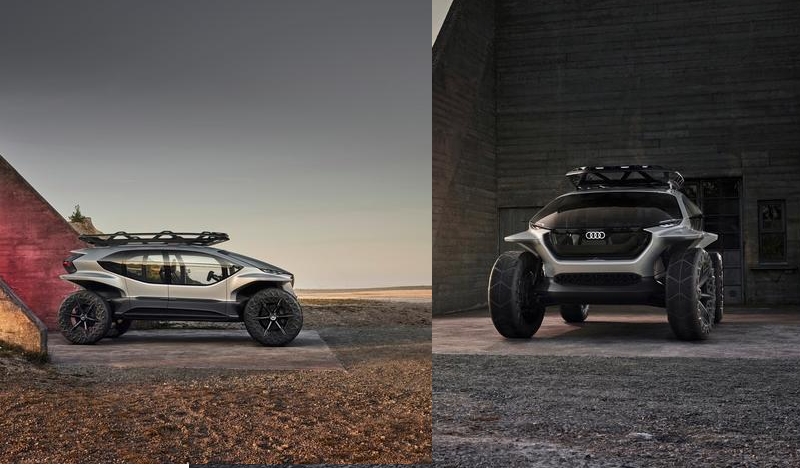
With helicopter-style all-round visibility, Audi AI: Trail Quattro is a comprehensive concept for sustainable mobility off the beaten track. The Audi AI:TRAIL quattro is the fourth entrant in the series of concept cars with electric drive systems, which began with the presentation of the Audi Aicon at the 2017 iteration of the … Read more
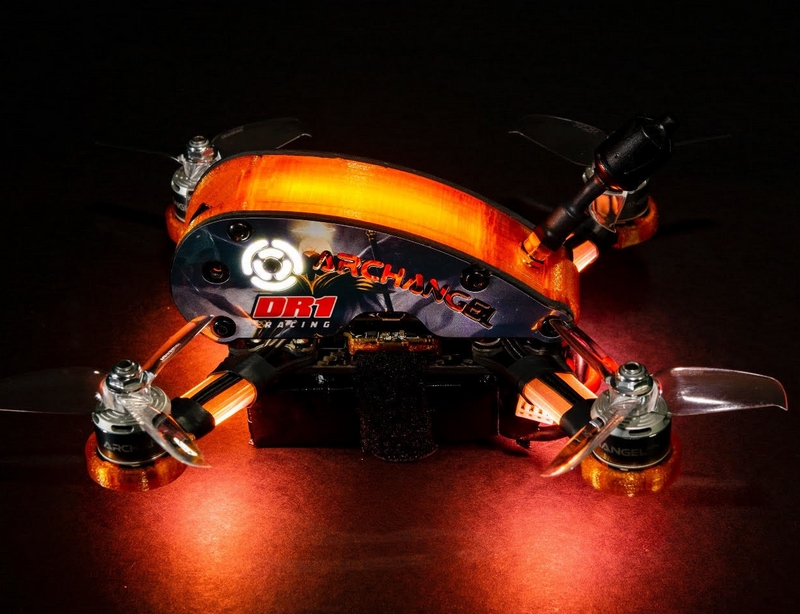
Archangel releases Limited Edition DR1 Racing Drones.
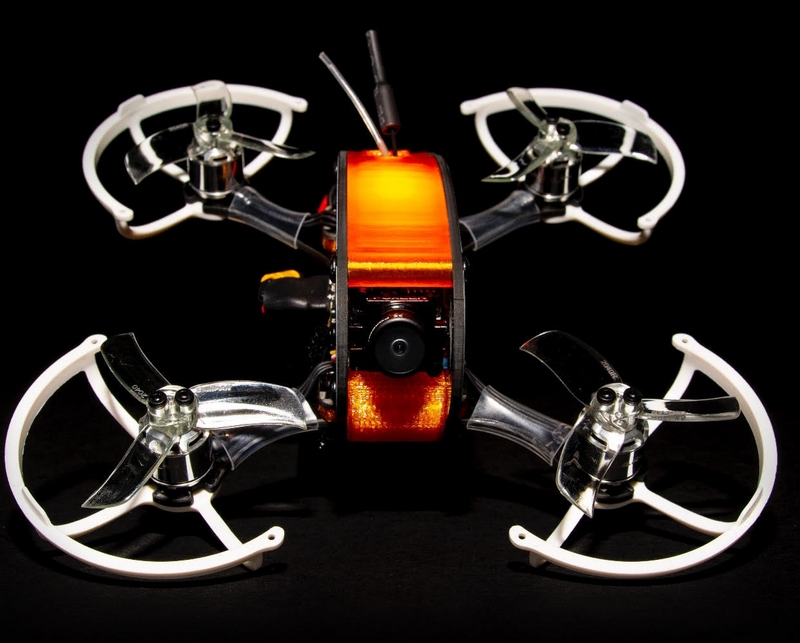
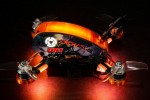
Archangel DR1 Limited Edition Racing Drone 3 inch; photo: Archangel
Up and coming drone racing brand, Archangel announced the release of their racing drone lineup. The new limited edition drones were conceived to commemorate the 2018 DHL Champions Series. The Archangel drone was first unveiled during the airing of Season 2 of The DR1 DHL Champions Series fueled by Mountain Dew, in a one-minute commercial. Team Archangel, representing Archangel FPV, placed third in the competition.
“DR1 races are broadcast in over 130 countries, reaching almost 30 million viewers worldwide. “We are the most watched drone racing series on broadcast television, and the Champions Series finals was the most watched race ever produced,” said Brad Foxhoven of DR1 Racing.
DR1 Racing has achieved many firsts in the sport, making them trailblazers in the industry. DR1 Racing is the first company to broadcast a drone race on TV and the first to create the team format in addition to introducing large Pro Class drones to the sport. Measuring over 4 times larger than previous racing drones, the giant Pro Class drones will allow fans to follow the action better than ever before as they reach speeds over 100 MPH in just over one second.
The Limited DR1 Racing Edition lineup features micro, mini and macro-sized drones; two-inch, three-inch and five-inch versions. As part of the collaboration, the color selection, and LEDs of the Archangel were updated to match DR1 branding. Each drone features a “Halo” lighting effect which is one of the Archangel’s signature features.
To ensure a successful release of the series, a model of each size was unboxed and flown by racers handpicked from The Drone Racing International FPV social media community.