Cyclogyro – a potential four-seater air taxi with the most agile propulsion system in aviation


@cyclotech.at

Austrian-based CycloTech wants to prove the viability of the Voith-Schneider-Propeller concept for the aviation industry.

The core of the drive concept was established by Ernst Schneider and the Voith GmbH technology group nearly 100years ago, and patented as the Voith Schneider Propeller (VSP). The drive provides high maneuverability, and ships equipped with two or more VSP can move in nearly every direction or perform a stationary turn. Because of its agility and flexibility, there have been myriad unsuccessful attempts to bring the VSP to the aviation industry – but only CycloTech has succeeded.

CycloTech’s patented technology is currently the only Cyclogyro rotor concept worldwide that can rotate at high speed and efficiently deliver sufficient thrust for a truly competitive alternative aircraft propulsion.

The Cyclogyro technology combines the main benefits of rotorcraft and fixed-wing concepts and therefore its uniqueselling proposition (USP) has three main components:

  • VTOL (Vertical Take Off and Landing), and agile maneuverability;
  • Increased efficiency in forward flight mode;
  • Compact design and reduced infrastructure demand (for example in urban areas).

The major challenge of using the Cyclogyro rotor technology in air instead of water is the far higher revolutions perminute required to create sufficient thrust for aviation applications.

This results in extreme lightweight construction requirements for highly stressed rotor components and demands newconcepts, advanced composite material and innovative processing methods. CycloTech faced the challenge – andfound the solution. The Cyclogyro rotor technology is a clear ground-breaking innovation for VTOL and urban air mobility.
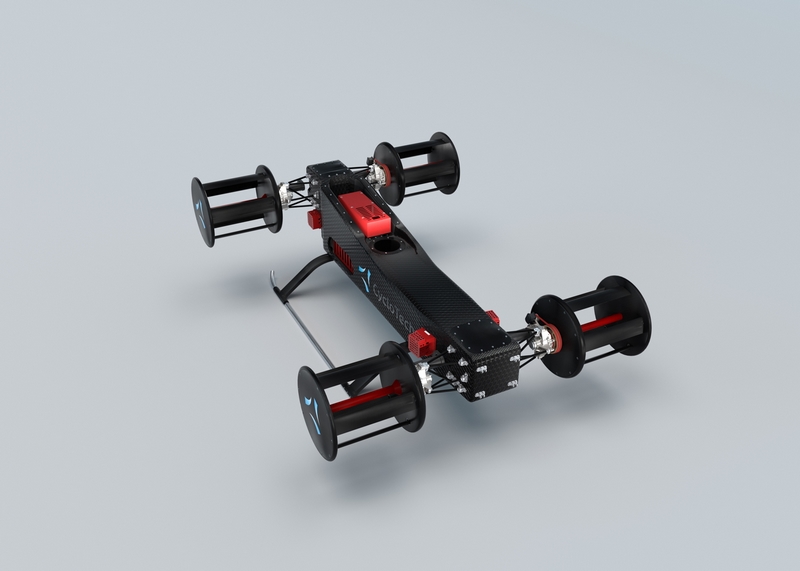
@cyclotech.at

GROUND-BREAKING INNOVATION FOR URBAN AIR MOBILITY

Over the last three years, CycloTech developed and tested nine different rotor prototypes. Comprehensive wind tunnel tests proved a significant performance increase in forward flight which has been predicted through the CFD simulations.

The current Cyclogyro rotors are now fully lightweight optimized and have passed all performance and endurance tests. They are ready for integration into a flight demonstrator.

The final proof of concept to elevate our development on Technology Readiness Level (TRL) 7 will be performed with a  flight demonstrator of approximately 80kg take-off weight equipped with 4 of Cyclotech’s Cyclogyro rotors.

“By Q4 2020 CycloTech will be ready to fly the demonstrator proving the agility and advantages of the technology. We also started the development of a Cyclogyro rotor as an auxiliary system of a high precision inspection drone for use in harsh and tight environments,” said the company.

CycloTech is “looking for co-operation partners” to help advance its technology, Hans-Georg Kinsky, CycloTech CEO told evtol.com, including moving forward from the concept design stage for the air taxi. The company has four granted and two pending patents on its technology and is currently in discussion on three others.

According to evtol, CycloTech is also talking to the Munich, Germany-based air taxi developer AutoFlightX about how its rotors might be used in the company’s design. A further potential application is a compound helicopter; CycloTech has a patent for a design with two laterally placed Cyclogyro motors replacing the conventional tail rotor.
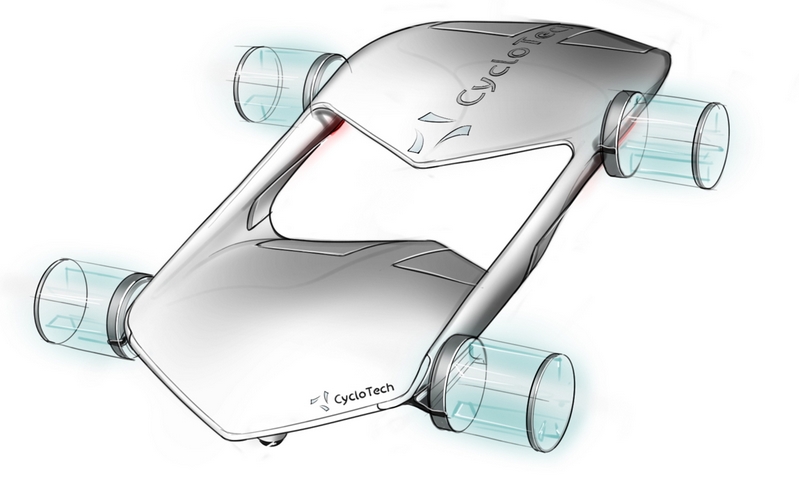

@cyclotech.at

Inside the airline industry’s meltdown

Coronavirus has hit few sectors harder than air travel, wiping out tens of thousands of jobs and uncountable billions in revenue. While most fleets were grounded, the industry was forced to reimagine its future

Space tourism: Spaceship Neptune luxury capsule will carry you on a journey to the edge of space


Spaceship Neptune luxury capsule suborbital flight; @thespaceperspective.com

Space Perspective’s magnificent, safe suborbital flight via space balloon will smoothly fly you to the edge of space.

Space Perspective, founded in 2019, was created to provide more people, not just astronauts, the opportunity to see Earth as a planet from
space. Space Perspective’s balloon will safely and smoothly fly space travelers to the edge of space inside the revolutionary, near-zero
emissions Spaceship Neptune. The pressurized capsule affords a relaxed environment with plush reclining seats and a refreshments bar.
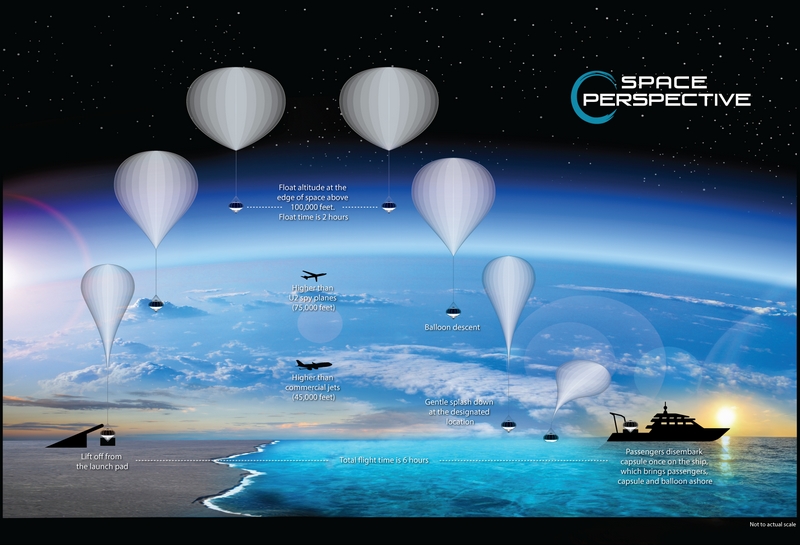
Spaceship Neptune will ascend for two hours while the sky is still dark and stars are visible. As Spaceship Neptune glides along the edge of
space, the passengers will watch the sun slowly rise over the curved limb of Earth—a view that has transfixed astronauts since the dawn of the space age. Neptune will then gently descend and two hours later splash down off the coast of Florida.

This once-in-a-lifetime opportunity is offered via the partnership between Exclusive Resorts, the premier Members-only vacation club, and Space Perspective.

Planned to launch at the end of 2024, the luxury capsule will carry eight Exclusive Resorts Members and a pilot on a journey to the edge of space. Club Members will enjoy a leisurely six-hour journey, which begins before sunrise from NASA’s Kennedy Space Center in Florida and soars above 99% of Earth’s atmosphere to an altitude of over 100,000 feet—three times higher than commercial airlines fly. The Club’s privately chartered flights aboard Spaceship Neptune are planned to be the pinnacle of The Club’s 2024 Once-in-a-Lifetime Journeys, a collection of itinerary-based bucket list trips in exotic locales, designed and vetted by Exclusive Resorts specifically for its Members. Exclusive Resorts, alongside Space Perspective, will be creating a custom flight experience for its Members to celebrate this momentous adventure.

Spaceship Neptune luxury capsule suborbital flight; @thespaceperspective.com

Once the FAA has licensed the vehicle for flight, Space Perspective will give Exclusive Resorts Members priority access, becoming the first privately chartered travel group to fly in Spaceship Neptune. “We agreed to partner with Exclusive Resorts because of the group’s  pioneering spirit, and we couldn’t be happier that they are now forging a pathway with us to a new travel destination: Space,” says Jane Poynter, Founder and Co-CEO of Space Perspective. “We are thrilled to be giving Exclusive Resorts Members an opportunity to be among the first to view the world in a way very few have done before. I can’t wait to hear Members’ stories about this unique and life-changing experience of seeing our Earth in space.”

Exclusive Resorts continuously provides once-in-a-lifetime opportunities for its Members to traverse all seven continents of the globe by way of its Residence and Experience Collections. Now, they are extending their reach beyond land and heading to the edge of space—the final frontier. The Club hopes to send at least five groups, or 40 Club Members, to space starting in late 2024.

It is anticipated that flights aboard Spaceship Neptune will be available for Exclusive Resorts Members to reserve on a first come, first served  basis beginning in October 2023.

Spaceship Neptune luxury capsule suborbital flight; @thespaceperspective.com

Three game-changing concepts for future aircraft

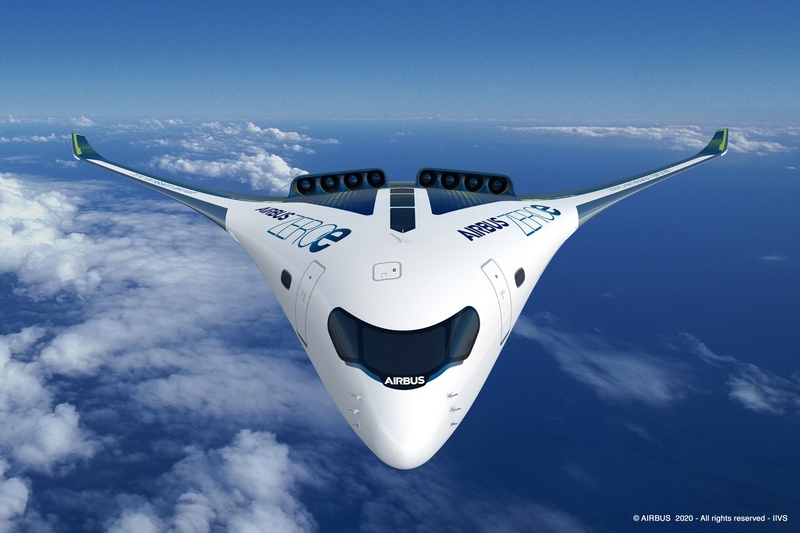
    By 2035, the world’s first zero-emission commercial aircraft could take to the skies. Airbus ZEROe will be the world’s first zero-emission commercial aircraft. The world’s first zero-emission commercial aircraft by 2035. Airbus unveiled three game-changing concepts for future aircraft. Airbus is exploring game-changing concept aircraft—known as ZEROe—powered by hydrogen, a disruptive zero-emission technology … Read more

Flying-V, the energy-efficient aircraft of the future, makes successful maiden flight


@KLM Royal Dutch Airlines’ Flying-V aircraft

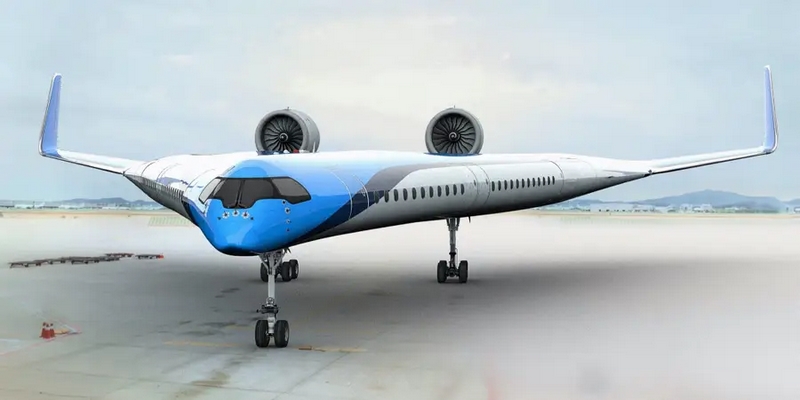
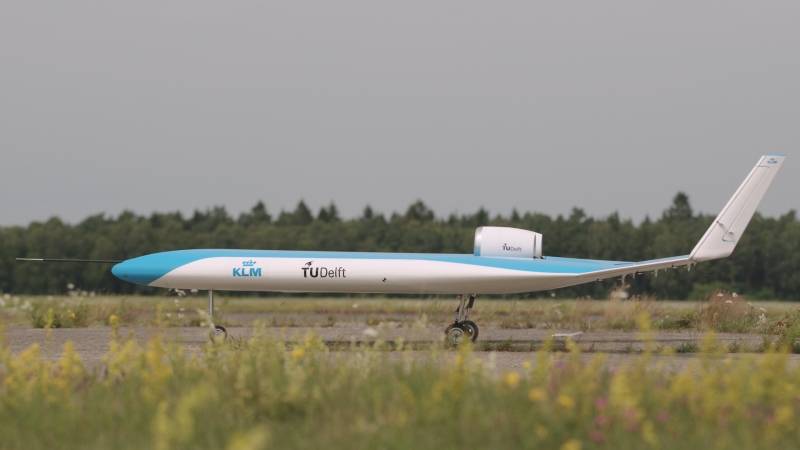
The scale model of the Flying-V – the energy-efficient aircraft of the future – has flown for the first time.
KLM and TU Delft present successful first flight Flying-V flying-wing aircraft.

A year and a half ago Delft University of Technology (TU Delft) and KLM Royal Dutch Airlines announced the start of the design of the Flying-V, a V-shaped plane, during IATA 2019 and after extensive wind tunnel tests and ground tests it was finally ready. The first successful test flight is a fact.

Last month a team of researchers, engineers and a drone pilot from TU Delft traveled to an airbase in Germany for the first test flight.

The Flying-V is a design for a very energy-efficient long-haul aircraft. The design of the aircraft integrates the passenger cabin, cargo hold and fuel tanks in the wings, creating a spectacular V-shape. Computer calculations have predicted that the improved aerodynamic shape and reduced weight of the aircraft will reduce fuel consumption by 20% compared to today’s most advanced aircraft.

KLM presented the scale model for the first time during KLM’s 100th anniversary in October 2019. Several partners are now involved in the project, including manufacturer Airbus.

“You can’t make the aviation sector more sustainable on your own, but you have to do it together,” says Pieter Elbers, President and CEO of  KLM. Collaborating with partners and sharing knowledge takes us all further. That’s why we will further develop the Flying-V concept with all partners. The next step will be to fly the Flying V on sustainable fuel”.

“Though it’s not a full-size prototype, the scaled model proves the aircraft is aerodynamically sound and can fly as designed. It’s now up to KLM  and TU Delft to build a full-size prototype that can hold passengers, an investment that could cost billions in research and development,” commented businessinsider.com.

@KLM Royal Dutch Airlines’ Flying-V aircraft

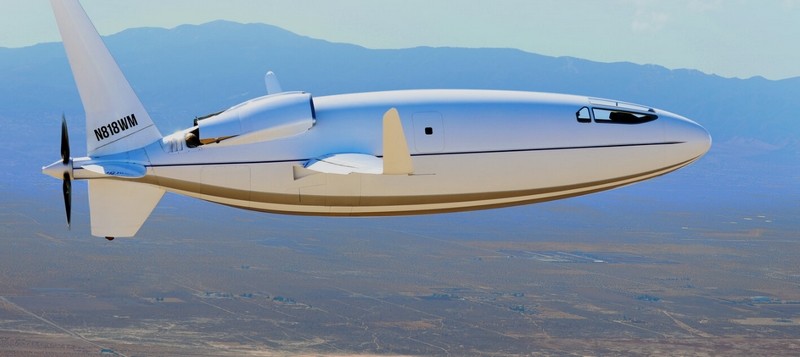
The laminar-flow design of the Celera 500L is making private aviation as affordable as commercial air travel

  The 4,500 nautical mile range means the Cellera 500L aircraft can service virtually any city pair in the U.S. without refueling. Otto Aviation Celera 500L doesn’t just outperform in every category. It crushes it . Imagine the convenience of private air transportation but at a significantly lower cost and a dramatically reduced carbon footprint. … Read more