
Vogue centenary exhibition styles fashion bible as cultural record

vogue100exhibition vogue100- vogue100


Powered by Guardian.co.ukThis article titled “Vogue centenary exhibition styles fashion bible as cultural record” was written by Hannah Marriott, for The Guardian on Monday 7th September 2015 16.19 UTC

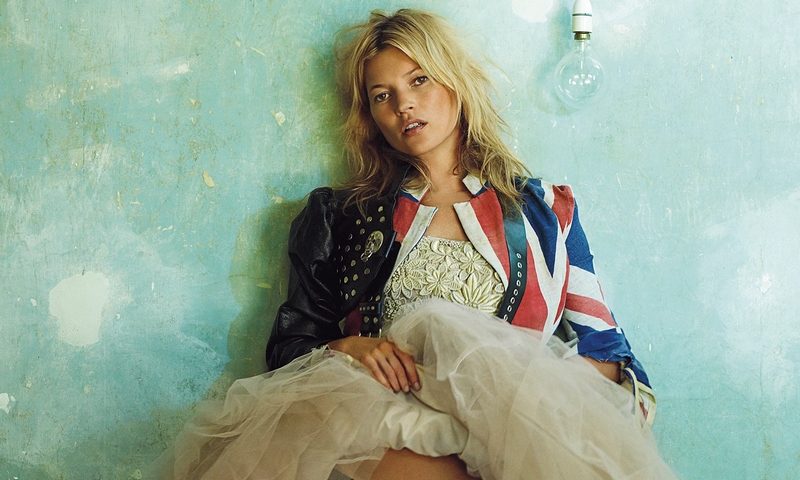
At first glance, it’s all chiffon and glamour: Kate Moss in a huge hooped skirt, photographed by Mario Testino in 2008; David Hockney posing with a sequin-clad Maudie James in 1968, as captured by Cecil Beaton; Anne Gunning, swathed in pink in Jaipur in the 50s, looking away from Norman Parkinson’s lens.

But the National Portrait Gallery’s major spring exhibition, celebrating 100 years of British Vogue, will argue that it is much more than a style magazine.

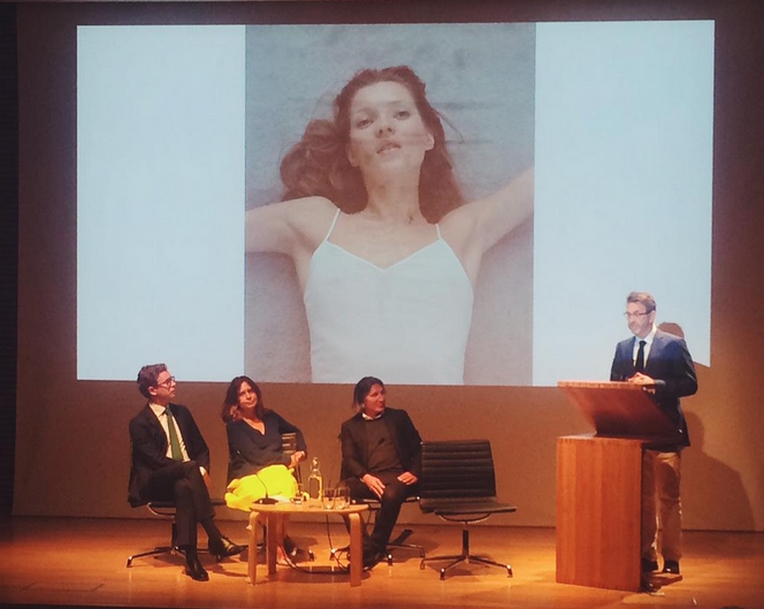
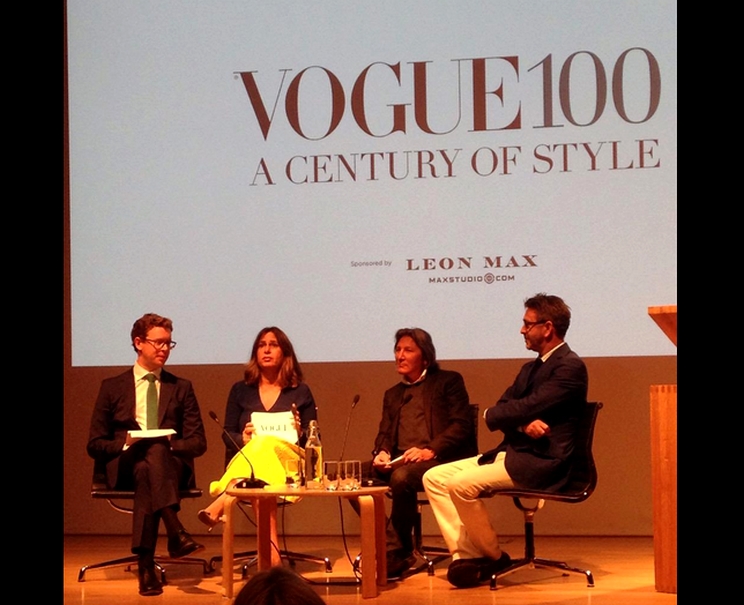
“As well as the fashion bible it has now become, it is a cultural record of the times,” said current editor Alexandra Shulman at a launch event for Vogue 100, A Century of Style, on Monday. The exhibition, opening on 11 February next year, will launch the magazine’s centenary celebrations, which also include a behind-the-scenes BBC2 documentary.

A preview of the exhibition

British Vogue first hit newsstands in 1916 and – as with many desirable fashion brands – the ability to leverage this illustrious heritage has been key to the magazine’s success.

The exhibition will highlight British Vogue’s work with “the greatest photographers in modern history”, said curator Robin Muir, including Edward Steichen, Helmut Newton, Man Ray and Irving Penn, and will include portraits of Marlene Dietrich, Henri Matisse, Francis Bacon and Fred Astaire.

The show will also incorporate moments of recent fashion history, such as the 1990 Peter Lindbergh cover – featuring Naomi Campbell, Linda Evangelista, Tatjana Patitz, Christy Turlington and Cindy Crawford – widely regarded as defining the supermodel era, and the notorious 1993 Corinne Day shoot that helped introduce Kate Moss, and so-called “heroin chic”.

Photograph by Cecil Beaton titled The Second Age of Beauty.
Photograph by Cecil Beaton titled The Second Age of Beauty is Glamour. Photograph: Cecil Beaton/Conde Nast Publications

Tellingly, as printed magazines fight to underline their relevance in the digital age, Vogue 100 will begin in the present day, with a room devoted to digital fashion film. Visitors will then “travel back in time to the 90s, with Herb Ritts and Corinne Day; to the 80s with Bruce Weber and Peter Lindbergh; to the 70s with Helmut Newton and Guy Bourdin,” said Muir.

Finally, they will reach “the year zero and the quieter, beautiful, more meditative vintage masterworks of photographers such as Steichen and Man Ray,” he said.

Dr Nicholas Cullinan, director of the National Portrait Gallery, said that the show would represent “a panoramic image of the last century”.

That view is, however, undeniably well-heeled and overwhelmingly white. Questioned about a lack of racial diversity, Shulman said: “[British Vogue] has been a reflection of our culture for 100 years and it has been predominantly white culture. I think we just have to accept that. Though there certainly are a number of non-white people in the exhibition.”

As Britain became a more multicultural society, that shift was reflected in the photography, Cullinan said.

“Something we should be very proud of, and which I have included in the exhibition, is that British Vogue was the first mainstream magazine to have a black cover model, Donyale Luna, shot by David Bailey in 1966,” said Muir.

David Hockney, Peter Schlesinger and Maudie James appear in the major exhibition celebrating 100 years of British Vogue.
David Hockney, Peter Schlesinger and Maudie James appear in the major exhibition celebrating 100 years of British Vogue. Photograph: Conde Nast Publications

“It’s not all rarefied clouds of pink chiffon,” said Muir, adding that unexpected exhibits would include “extraordinarily graphic depiction of war” taken during the 1940s by Lee Miller.

“Those are not the sort of images anyone ever expected to be commissioned by a magazine like Vogue – but Vogue did have its own war photographer,” he said. “Real life intrudes – particularly at the magazine’s start, during the first world war, and during the second world war and the 1960s, when you can see class barriers being broken down in its pages.”

Muir added that Vogue was as much about creating magic and fantasy as it was about reflecting reality. “Cecil Beaton once said, ‘when I die I want to go to Vogue’ – and without wishing to dismiss the competition, saying ‘when I die I want to go to Marie Claire’ does not have the same kind of resonance.”

guardian.co.uk © Guardian News & Media Limited 2010

Published via the Guardian News Feed plugin for WordPress.

L’Artisan Parfumeur Noir Exquis – an unexpected rendez-vous in a French patisserie

Noir Exquis – a gourmand fragrance. Two people meet over a coffee. In this delicious atmosphere of a French patisserie and coffee, hushed looks are exchanged. This delightful rendez-vous is the beginning of a new story with the delicious Noir Exquis, the new fragrance from L’Artisan Parfumeur, one of the most iconoclastic fragrance houses in … Read more

Out of the toy box and on trend: Barbie gets a style reboot

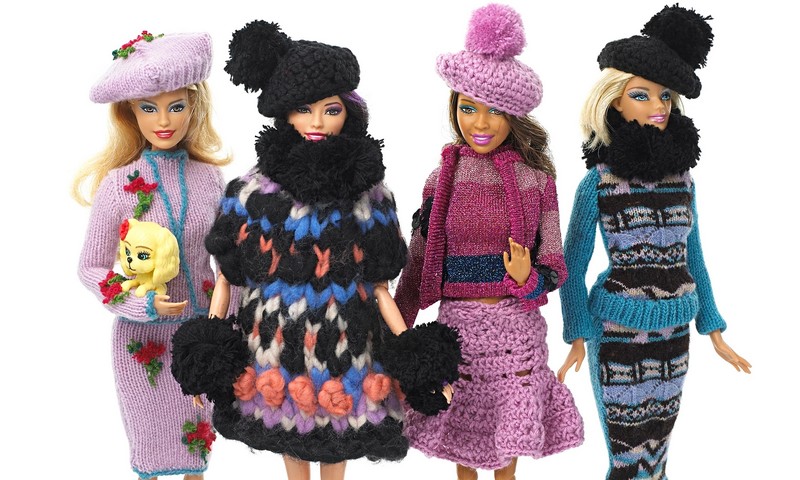
Inspired by the tiptoeing doll, shoe designer Sophia Webster has created a line of heels and flats for real women. She’s the latest fashion star attempting to bring the plastic classic up to date

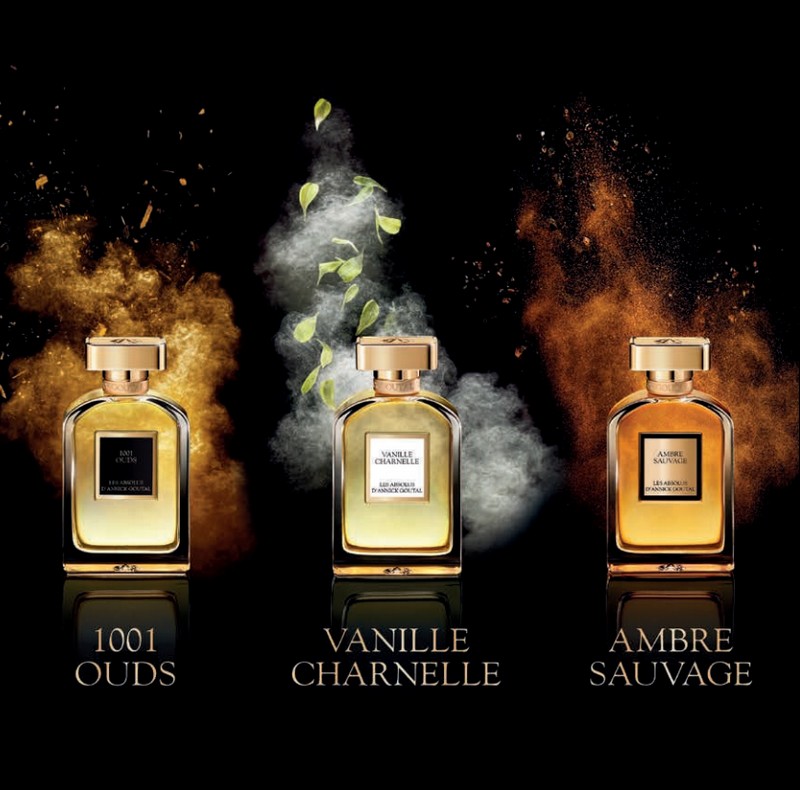
The pleasure to offer unique olfactory creations: Annick Goutal Les Absolus trilogy

LES ABSOLUS BY ANNICK GOUTAL oriental fragrance family collection. The Amber, the Vanilla bean, and the Oud wood are the heroes of a trilogy of impressive Oriental scents by Annick Goutal. Les Absolus oriental fragrance family collection is paying homage to the purity and singularity of each precious knight ingredient infusing the wearer from head … Read more

Luxury Lifestyle Award 2015 Asia Honouring The Best of Luxury

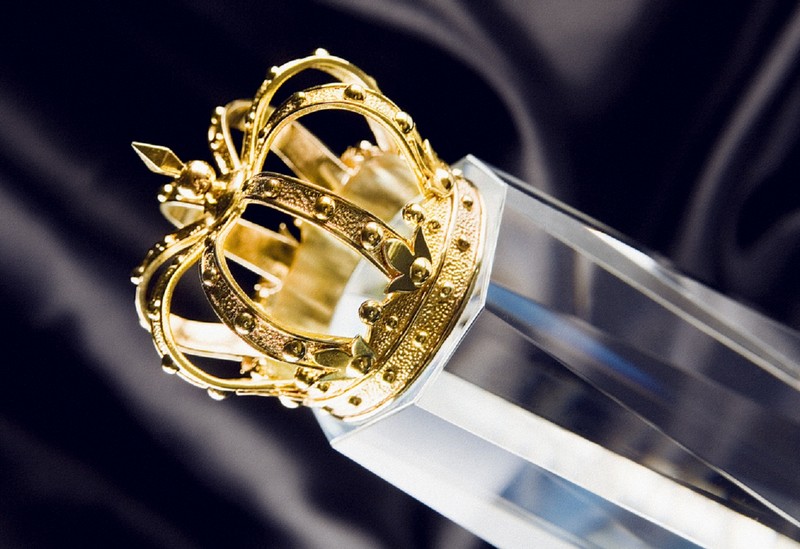
The whole world of luxury is awaiting the 9th annual Gala Ceremony of the prestigious international competition for high-end companies and brands – the Luxury Lifestyle Awards 2015 Asia. This year’s first-class awarding event will be hosted at the Fairmont Singapore hotel on the the 17th of December and will bring together more than 300 … Read more

Love the age you are: A new super serum is on a mission to revolutionise the lives of women over 50

‪#‎superrestorative‬: Special care for 50+.

clarins love the age you are - 2015 campaign

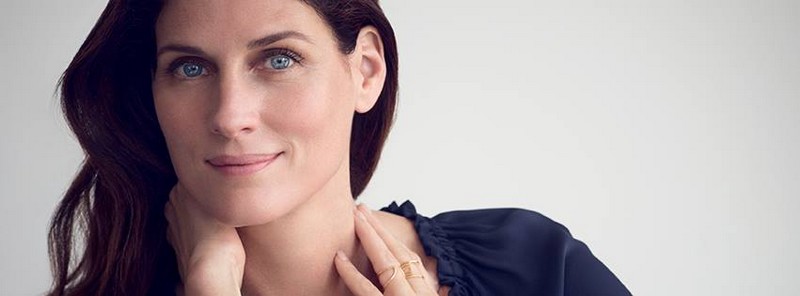
After 50, most women dream of reversing the effects of gravity on their face and body. A smile is precisely the upward movement of facial tissues which instantly makes the face radiant and welcoming. It’s the natural, most effective weapon against gravity and ageing. The second most effective remedy is an anti-ageing skincare strategy – a replenishing program for skin challenged by hormonal changes due to the ageing process.

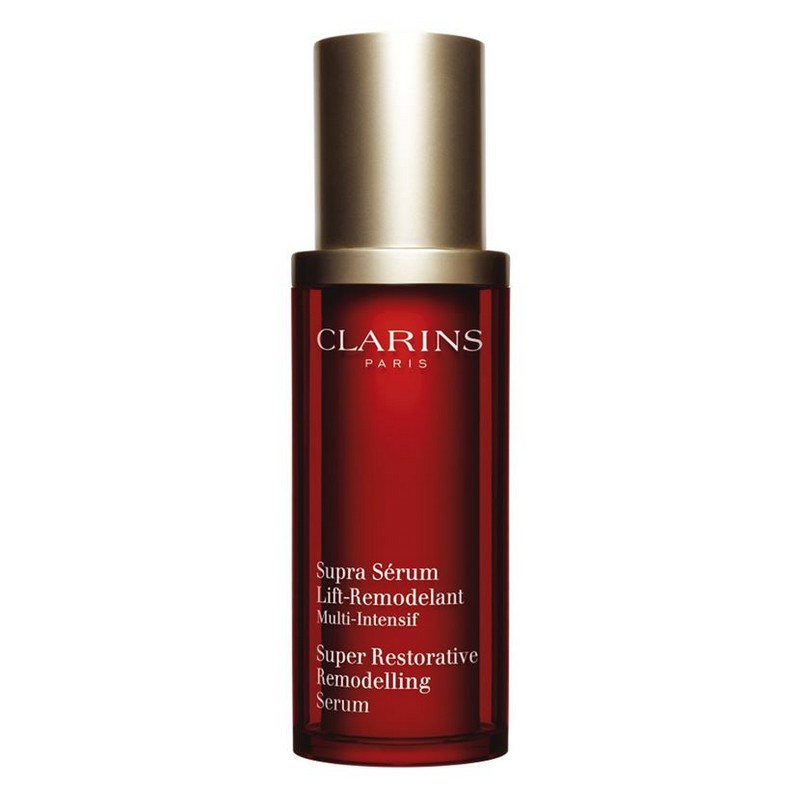
A new wonder-product revealed by Clarins aims to make the faces of women over 50 more alluring than ever. Clarins’ Super Restorative range has a new member called Super Restorative Remodelling Serum. The mission of the new anti- aging product is to lift, replenish, reshape, redefine the skin, and reduce the appearance of age spots. Let’s see how this serum is defying gravity and is putting a smile back on our faces.

clarins supra serum

This new serum simultaneously combines three key “rejuvenating” actions: the resculpting of facial contours, a replenishing action and protection against age spots. It is the expert solution to the main visible signs of ageing which gives spectacular results.

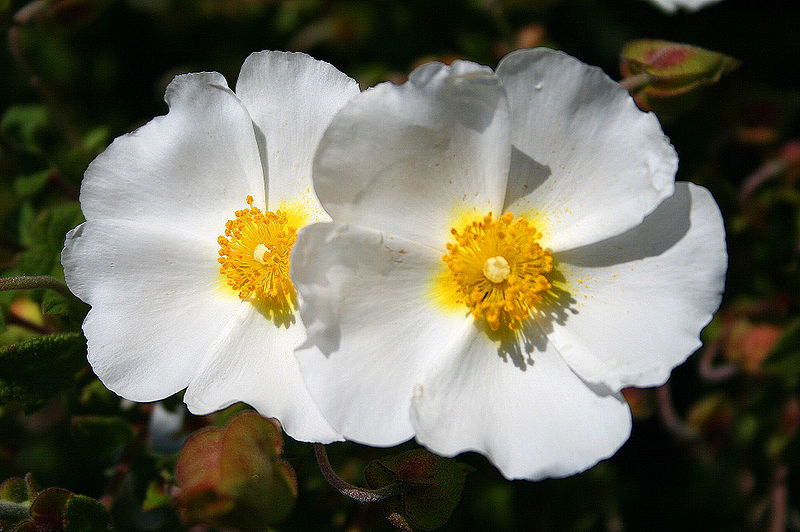
Even skin lacking in vitality due to fatigue or age-related hormonal changes still has the inbuilt capacity to recover and bounce back. The Super Restorative Remodelling Serum combines three plant extracts that target the three main causes of skin ageing: Narrow-Leaf Plantain, Harungana and The Organic Montpellier Rock-Rose.

Narrow-Leaf Plantain extract preserves harmonious facial contours and has the ability to limit the melting of adipose tissue caused by ageing fibroblasts. The plant will slow the sagging of adipose tissue by preventing the degradation of the support network of adipocytes. The key ingredient in the Super Restorative range, organic harungana extract has the capacity to reactivate mature fibroblasts to visibly restore the skin’s density and youthful look. The production of collagen is stimulated and skin structure is gradually strengthened. The organic Montpellier rock-rose extract targets the main causes of age spots linked to changes in skin structure, while hexylresorcinol, a leading age spot correcting ingredient, is an effective action on the source of melanin production which has been proven in rigorous clinical tests.

The Super Serum combines effectiveness and pleasure through its texture that forms a network on the skin surface: it veils the skin, leaves behind a velvety finish, and comfortably reshapes facial contours.

clarins montpellier rock rose