At the beginning of a relationship, it’s easy to come up with new date ideas right off the back. Maybe you’ll go to your favorite, expensive restaurant a couple of times, or even go shopping together. However, eventually, it’s easy to have a hard time coming up with new date ideas for you and your … Read more
The desire for personalized travel experiences and Instagram-worthy design continues to drive the popularity of boutique hotels, says the global network of luxury travel agencies Virtuoso in its new 2017 Best of the Best directory. The 2017 directory is featuring Virtuoso’s exclusive collection of hotels and new experiential itineraries. The largest collection to date includes … Read more
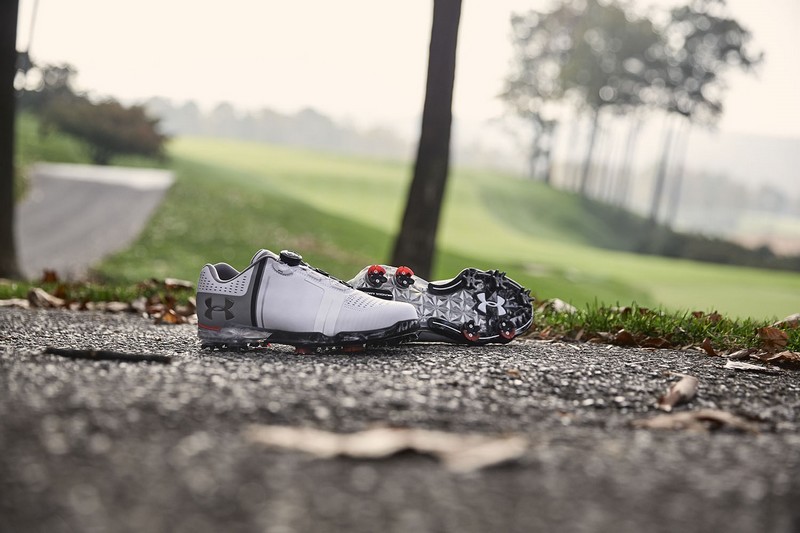
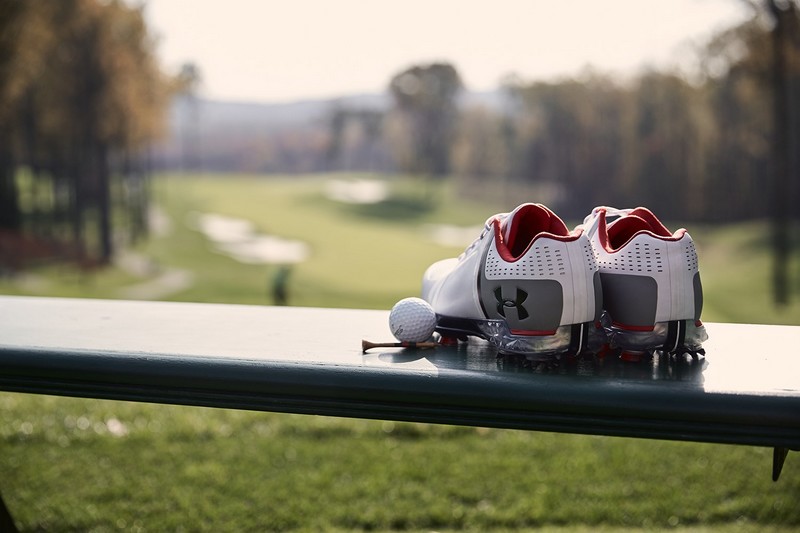
Jordan Spieth, the American professional golfer on the PGA Tour, and former world number one in the Official World Golf Ranking, debuts his first signature Under Armour golf shoe, the Spieth One. The innovative shoe is grounded in the details of Spieth’s game.
The Spieth One is being introduced as engineered “Down to a Science;” a nod to the concentrated level of detail by which the shoe was designed. The sport shoe features a number of technical design elements that were dictated by Jordan and his game.
The professional golfer is a two-time major winner and the 2015 FedEx Cup champion. In April 2016 Time magazine named Spieth to its list of the “100 Most Influential People”, noting that he “exemplifies everything that’s great about sports.
The golf shoe has a breathable, waterproof upper to ensure world-class performance even in the toughest golfing conditions—preventing water from entering the shoe, but allowing perspiration to escape.
The shoe features groundbreaking “Rotational Resistance Traction”, which prevents the rotation of the foot during the swing from load up to impact. The upper of the Spieth One is composed with a single seam, reducing layers and weight while enhancing the overall fit and feel.
The outsole of the Spieth One has a softer forefoot for flexibility, paired with a firm heel for stability and support.
The Spieth One Global Tour kicks off today with a launch event in Tokyo where Jordan will unveil the Spieth One to hundreds of fans, media and consumers. After a whirlwind 48 hours in Tokyo, Jordan will head to Seoul, where he will participate in the grand opening of Under Armour’s first Brand House retail location in the market. Jordan and Under Armour will also visit Los Angeles and Mexico City in the coming weeks.
Fans can follow the Tour experience on Twitter, Instagram and Snapchat.
Hainan Island is one of the most exciting emerging destinations in Asia-Pacific today. In the golfer’s paradise of Hainan Island, The Ritz-Carlton Hotel is opening its first Golf Resort in China. The Ritz-Carlton, Haikou ushers in a new era of luxury leisure experiences, situated on the world-class golf resort of Mission Hills which boasts ten … Read more
Audrey Kabla, author of the new book Marque & Luxe, is not the usual high-flyer that one usually encounters from the rank and file in the field. She got off to a good start whilst studying for her business degree by having a 6 month stint at Christian Dior Couture followed by an international marketing and sales assistant job at Hilton in Chicago , completed a Luxury MBA at the ESG in Paris and landed a job at Smartbox as a product development manager to create luxury gift boxes before joining Tellus watches as an International Sales and Marketing Manager. Before the year was out, she found herself in the position of International Brand Manager for the Timex Group and two years later as Head of the Luxury marketing & communication Master of Sup de Pub, a leading Paris business school that prepares students for the advertising world whilst simultaneously founding Epykomène, a ‘House of Luxury marketing & French know-how worldwide’.
The secret of her quick rise can perhaps be attributed mostly to her creation of what she calls, “the YUXA concept” which is primarily the application of yoga principles to brands. Let us keep in mind that the Ig® Nobel Prize * for Economics was recently awarded to a team of New Zealand scientists who investigated brand personality tests and proved that respondents can attach human characteristics to rocks in their paper “The Brand Personality of Rocks” (1)
Of course, to a scientist, a rock cannot possibly have a personality, let alone a bottle of shampoo or a fragrance, however one only needs to speak to jewellers and stone sculptors to see that they indeed try to understand a rock before cutting it into something. A perfumer certainly aims to create a brand with ‘character’ just as architects aim to create hotels packed with personality. The human being relates to the world around him in a way he can relate to, a human way, so he may see his car as having a personality as much as he may identify with the personality of his dog.
“We humans have made some Luxury brands iconic”, Audrey argues. “We are loyal clients, we are promoters, we are lovers and believers. Some brands are way closer to us than other human beings, we trust them more. A few of them, we even consider like family, like close friends, like someone who won’t disappoint us. We use brands to dream, feel better, feel less lonely, feel driven… This is a fact, we have sacralised Luxury brands to compensate on some social pillars links that are suffering a bit today (religion, marriage, family)”.
Radiatereal.com offers to show how “the seven brand chakras” can apply in “a personal branding and business development program for heart-centred entrepreneurs” and Dr. Kunal Banerji of brandchakra.com offers “management therapy” to “explore new branding opportunities through new age brandology modules”. Even in Australia, Soulspace, Brisbane are offering Business Chakra Workshops as is Brianna Rose Branding who offers “business chakra healing” which only goes to show that Audrey could be onto something indeed.
“A brand is like a human being”, Audrey continues, “It has a name, values, history, dreams, ambitions, personality… so it behaves like a human being. In 2016, what people are looking for is being themselves, being happy and building something pure and unique and so do Brands. Instead of being focused on our image, let’s cherish our inner self: in a company it can be embodied by our brand, our products but also our collaborators and clients.”
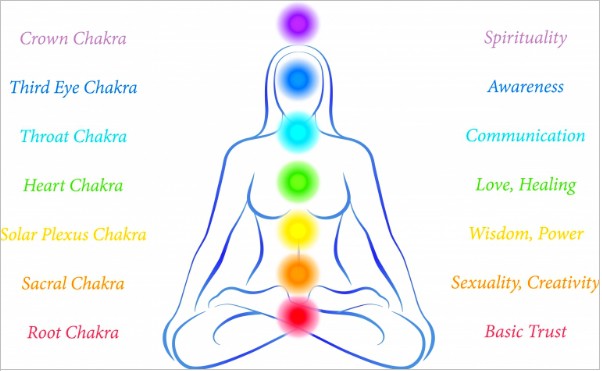
Yogapassion.com offers an interesting diagram to illustrate the “qualities associated with the chakras (see below) in which one can see words familiar with the marketing profession such as Awareness and Communication although clearly the meanings are very different i.e. awareness of self is not the same as aiming for brand awareness amongst consumers. Yoga is very inner-directed whilst marketing tends to be outer-directed. Branding used to be a part of marketing. Today one can argue that marketing is merely a part of branding. Contemporary brands, not luxury brands alone, are expected to have a sense of purpose, a philosophy, be meaningful, and therefore project a heart and a soul.
“Yoga is a very good way to do that”, Audrey explains. “People find happiness, balance & creativity in taking care of themselves. While aligning their body with their soul and heart, we are in movement while celebrating the present moment. We are focusing on who we are, who/what makes it happen and our very own pleasure of practice via meditations, postures and chakras opening. I have applied the precepts of Yoga into luxury marketing like an everyday way of life, way of work, way of love. That became the YUXA”.
“In the book the brand will have the practice for opening the Brand chakras as described under the 7 shades of Luxury. Every practice is unique as every brand is, and those 7 shades of Luxe with their codes and meditative advice can be applied to any Luxury brand that is looking to treat herself and everyone that believes and loves it”, she adds.
In the Book, the first “shade of YUXA” is in fact the crown chakra or “tiara” that Audrey links to the ‘heritage’ of a luxury brand. Shade 2 is the third eye that Audrey links to a luxury brand’s “know-how”. Shade 3, the voice or throat chakra, she links to the brand’s “emotions”. Shade 4, the heart, she links to the “service’ aspect of the brand. Shade 5, the stomach or solar plexus, she links to the ‘exclusivity’ aspect of the brand, whilst Shade 6, the sacral chakra she associates with the ‘avante-gardiste’ or innovative trait. Finally, Shade 7 the base or root, she links to ‘prestige’. One can wonder why Prestige is not the first Shade and Heritage or Pedigree the 7th Shade?
“My points are”, she states, ”How can Luxury brands activate their role as objects of cult (that WE have make them as)? How can they empower us in a timeless and genuine way? How to make sure Luxury brands can sustain their success as well as the dreams of their believers.”
Surely there can be no harm in trying to apply the chakras to brand analysis and strategy. Should it apply to luxury brands only? Clearly luxury brands lend themselves more to this on the grounds that they are expected to be primarily handcrafted with passion, as opposed to industrial brands. Applying chakra principles could certainly help to improve the inner-brand but its hard to see how they apply to building relationships with the clients. Aspects of love are not inner-directed emotions, but are fundamentally linked to sharing. A true luxury brand generously considers its clients first as with gift-giving or offering a selfless gesture.
No doubt the yoga approach will be more attractive to brand directors who practice yoga whilst it is likely to deter those that are not yoga-orientated. If however, the trend is towards chakra-analysis, we should certainly expect to see yoga teachers evolving into brand consultants and specialized brand practitioners having to learn about yoga. I know that I won’t be one of them.
* The Ig Nobel Prizes honor achievements that first make people laugh, and then makes them think. The prizes are intended to celebrate the unusual, honor the imaginative — and spur people’s interest in science, medicine, and technology. (1) https://www.marketingscience.info/4129-2/