
New Fiat 500 “la Prima”. All-new, all 500, all-electric, all-in. Starring Leonardo di Caprio.
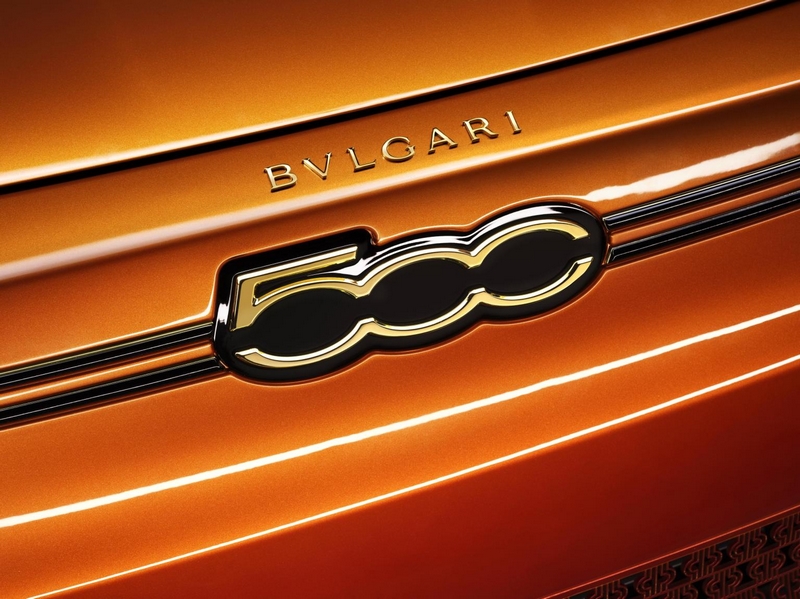
Fiat debuts the new Fiat 500, the first fully electric FCA car. The third generation of the Fiat 500 is completely new: more space, higher technology, a new style, but still a Cinquecento. Fiat also launched three one-offs to be auctioned for charity: the Fiat 500 Giorgio Armani, the B.500 ‘Mai Troppo’ (Never Too Much) by Bvlgari and the Fiat 500 Kartell. Leonardo di Caprio is the ambassador of the project.
All the proceeds from the sale of the three unique models – the 500 Giorgio Armani, the B.500 “MAI TROPPO” by Bvlgari and the 500 Kartell – will go to one of Leonardo Di Caprio’s environmental organizations.
https://www.youtube.com/watch?v=j9_upuvzDIY
Created with a common desire to increase sustainability and make a change, the project celebrates the arrival of the first fully electric FCA car from the outset.
The 500 has always been an Italian icon and is the best-selling FCA car globally. Fiat has selected the very best in Italian excellence for the New 500 project – Armani, Bvlgari and Kartell. Bringing together their values has brought to life three very special one-off creations, marked out in particular by their style, creativity and craftsmanship, based on the use of natural, recycled and regenerated materials.
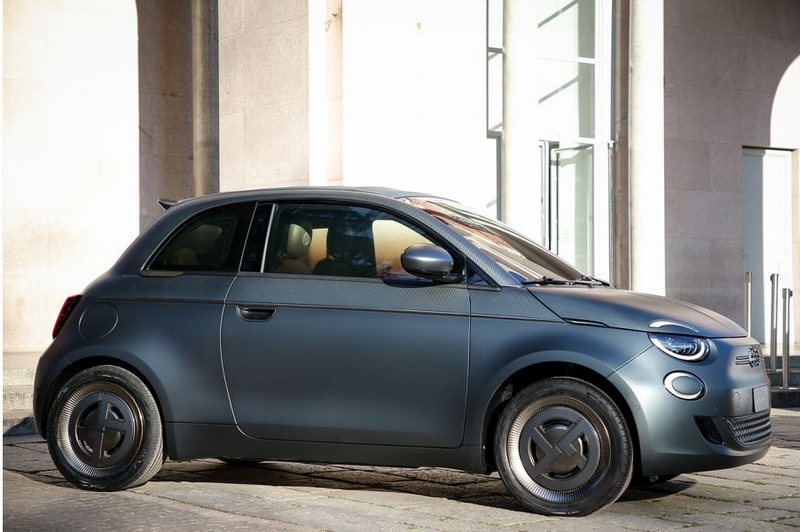
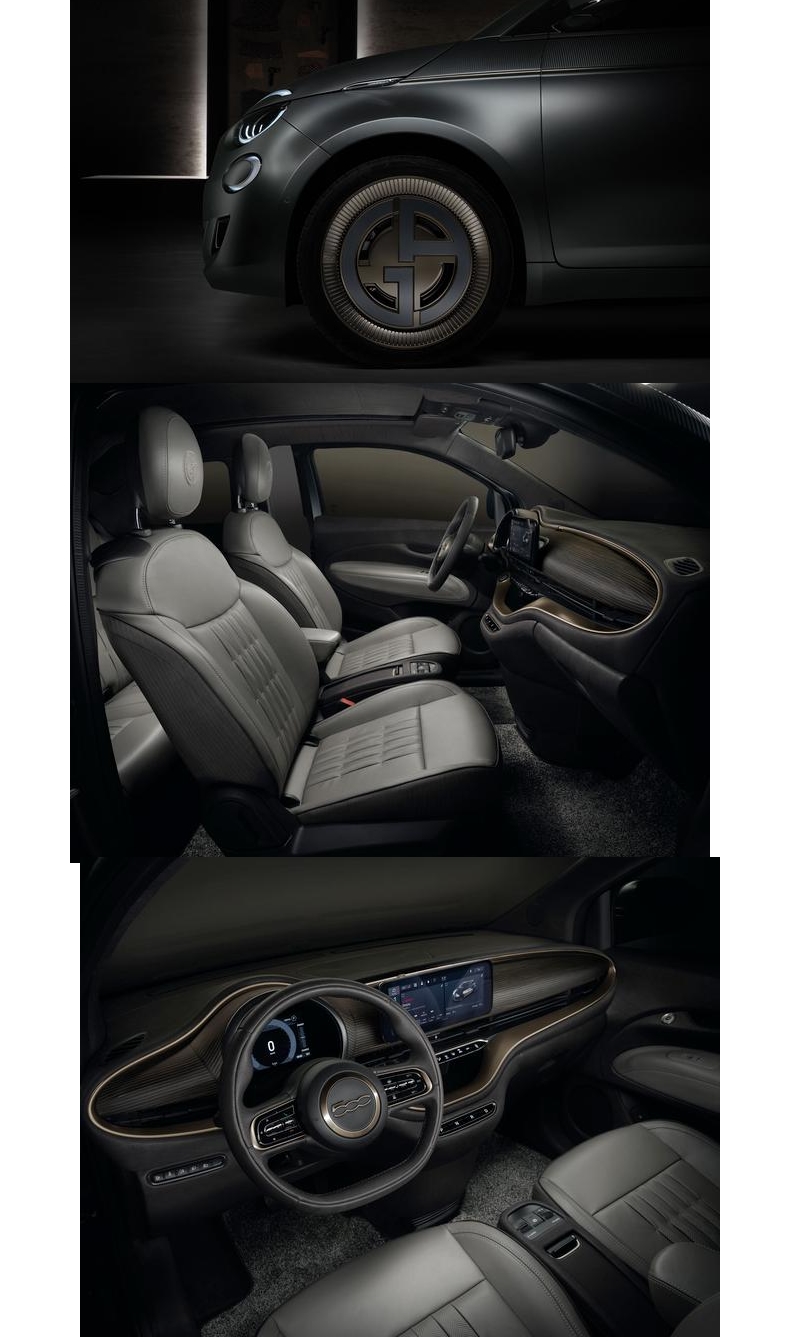
2020 Fiat 500 by Giorgio Armani
Only Giorgio Armani, the undisputed king of Italian elegance, could interpret the style of New 500 with timeless tailoring and sustainability at its core. Using laser technology, Armani shaped the metal covering of the car’s bodywork with exclusive micro-chevron engraving, bringing it as close as possible to the texture of fabric. The result is further enhanced by an Armani grey-green “silk effect” colour. Even more so, the paint used for the exterior is innovative “top coat airlite”, made up of titanium oxide, which absorbs pollutants.
In addition, the “GA” logo is a strong feature of the wheel design and is also featured on the fabric of the soft top, while the amber-coloured windows raise the car’s level of sophistication.
The neutral and elegant nuances continue in the interior: the seats are upholstered in certified full-grain natural leather, sourced from Poltrona Frau, in a “greyge” colour with micro-chevron wool piping, embellished with details inspired by the craftsmanship of leather goods.
The natural materials are also emphasised by the sculptured dashboard insert, covered with reconstituted open-pore wood and embellished with thin layers of aluminium, inspired by the elegance and modernity of the Armani/Casa line.
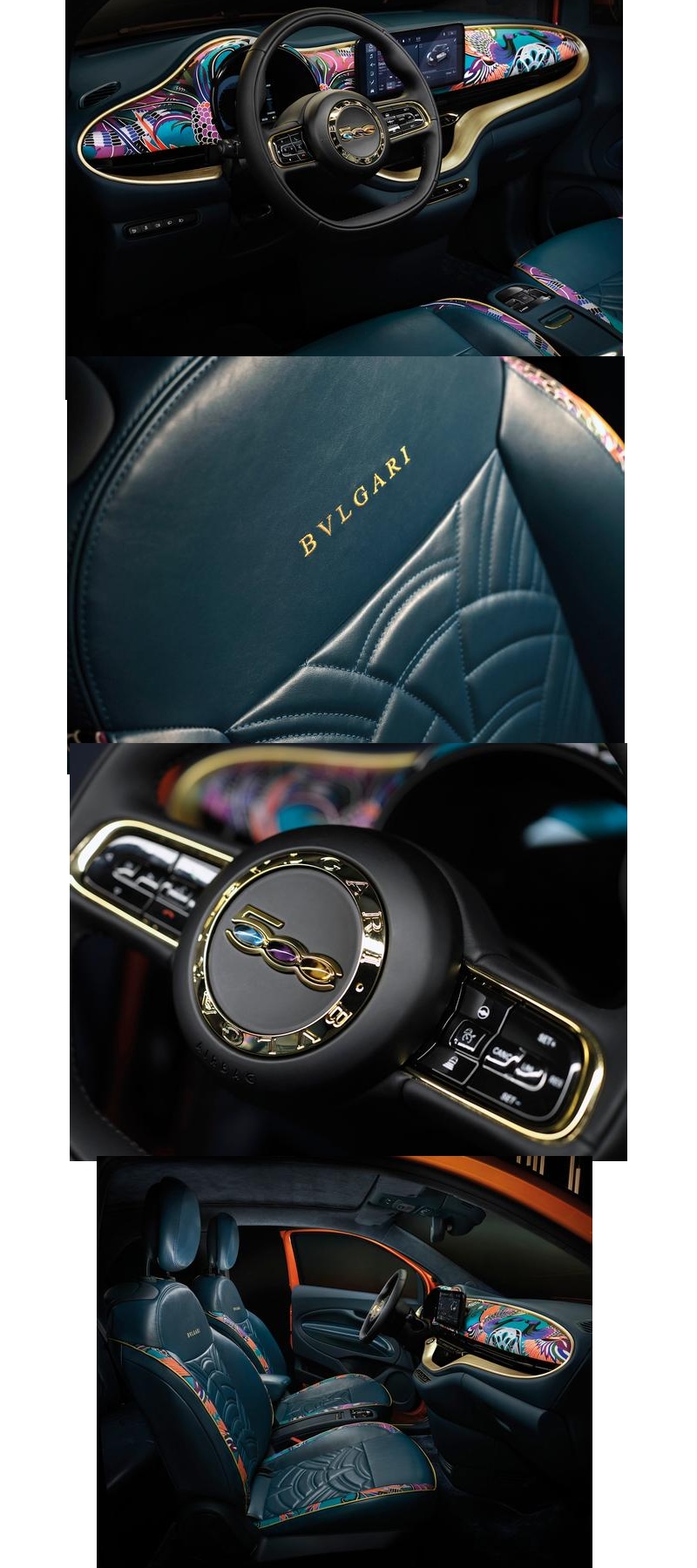
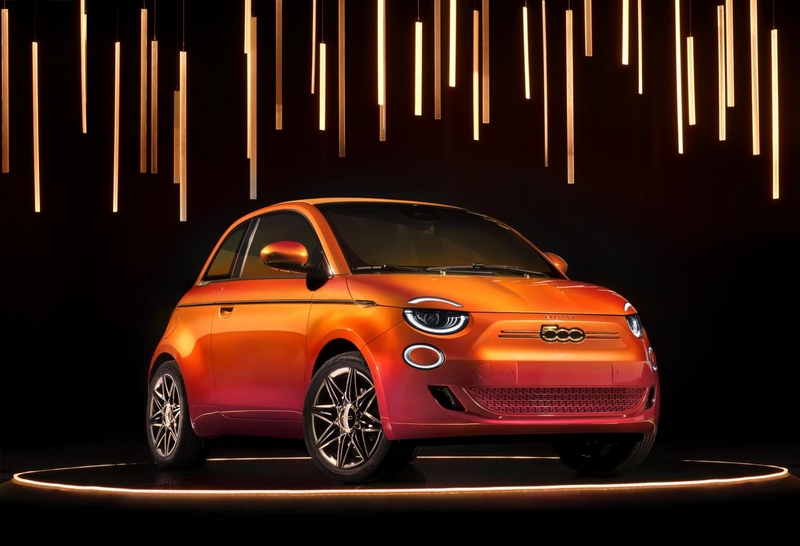
Bvlgari Fiat B.500 Mai Troppo
Bvlgari’s B.500 is an homage to craftsmanship and beauty. 500 has always played a role in La Dolce Vita, an Italian icon born out of the love for beauty and art. The new interpreter of these values is Bvlgari, an emblem of Italian excellence, innovating over the years by rewriting the rules of jewellery and launching new trends that have become icons of contemporary design.
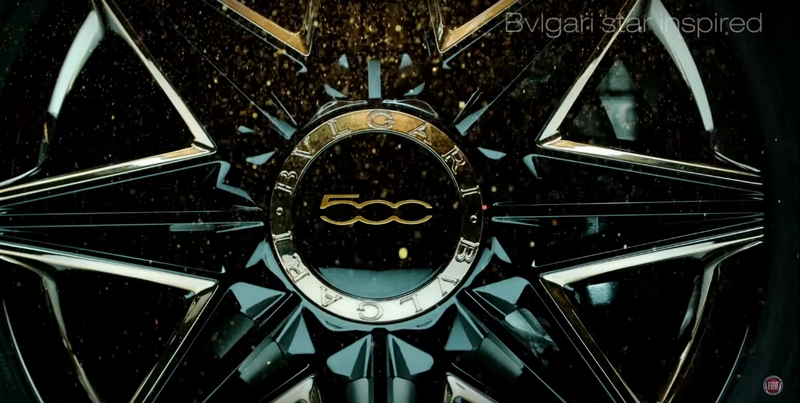
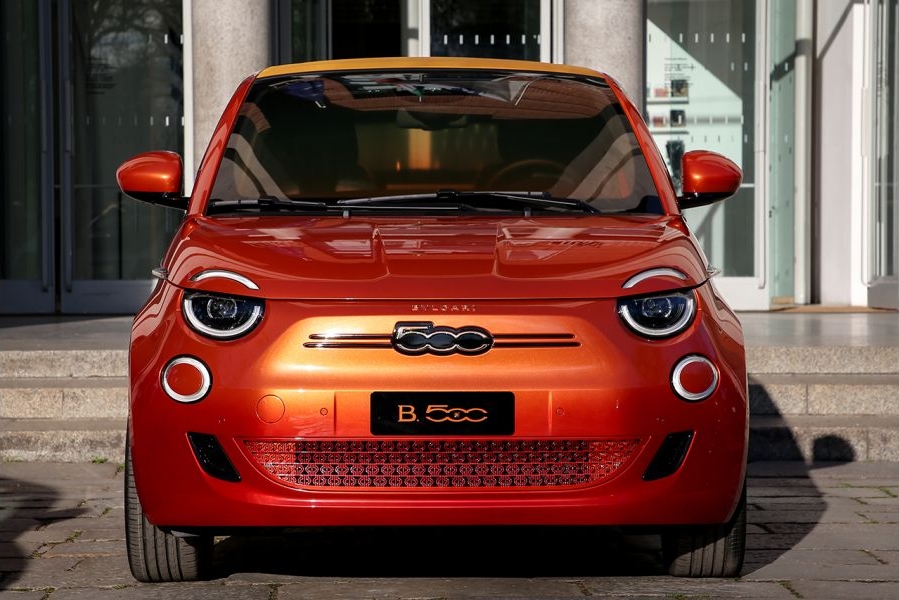
The creation features a golden pearlescent paint, an iconic shade at Bvlgari inspired by the chromatic variegation of Roman sunsets. The “saffron” paint emphasises the character of the car as a “jewel”, based on the inclusion of gold powder, recovered from the scraps of the brand’s jewellery production. In addition to the “saffron” paint, the B.500 has side sills and front mouldings processed using a glazing technique; specifically designed wheels in the form of a star, the historical symbol of Bvlgari, along with black lacquer with gold trim and a side “jewel” badge in polished gold, with a diamond-paved B.500 logo.
The philosophy of re-use continues in the interiors, with a dashboard fascia made even more elegant by its upholstery with heritage Bvlgari silk scarves from the collections of the past. The seats are in teal embroidered leather, gold details and scarf inserts. The true jewel of the interior is three semi-precious stones – amethyst, topaz and citrine – set in a removable brooch, made by the master goldsmiths at Bvlgari and placed in the centre of the steering wheel.
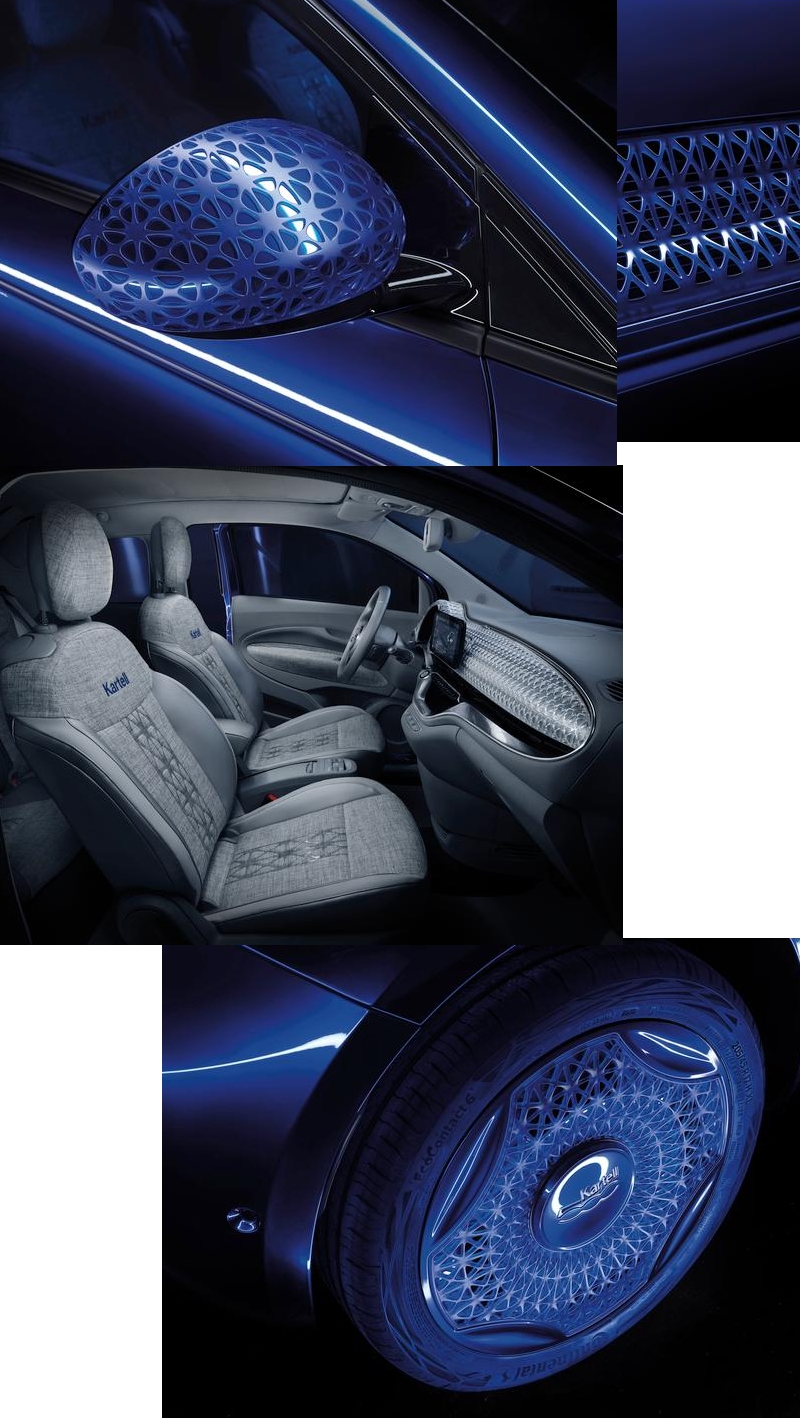
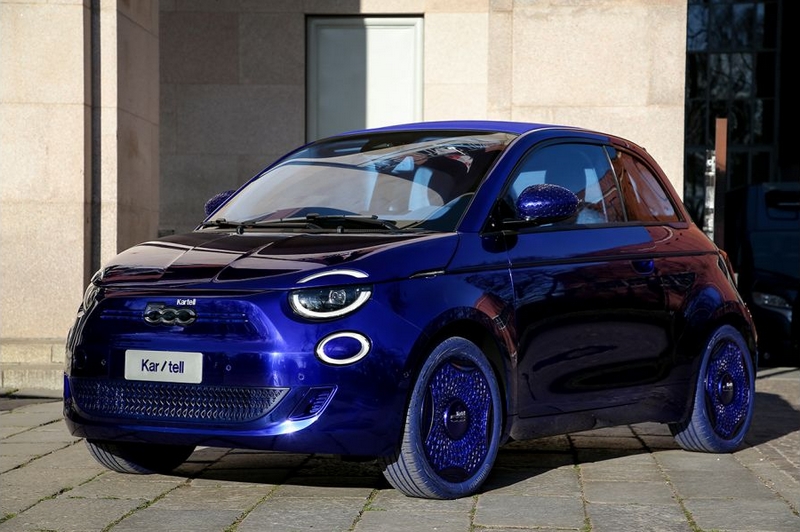
2020 Fiat 500 Kartell
Creativity and innovation are the elements of inspiration for the Fiat 500 Kartell, from the iconic brand of Italian industrial design, which constantly experiments and researches new aesthetic and functional values for plastics. In recent years, Kartell has been involved in developing increasingly sustainable plastics.
The exterior features a “monoblock colour” concept where the different types of materials – metal, glass, rubber, plastic and fabric – are interpreted in the same colour: Kartell blue, derived from Yves Klein blue, an iconic hue of the brand. The surfaces of the bodywork are mirror-effect Kartell blue, obtained with environmentally friendly chrome paint. The two brands’ logos stand out from the bodywork thanks to treatment with a sandblasted polycarbonate, to convey a sense of depth.
The most symbolic elements of the exterior are the components made of recycled polycarbonate from end-of-life parabolic projectors, used in the front grille, wheels and mirror caps. These objects feature a unique design inspired by the pattern of Kartell’s Kabuki lamp, created and developed as a motif to lead the new car’s identity, with unique details that recall the texture of the lamp and become special elements of the car. The Kabuki pattern can be found throughout the interior, with a polycarbonate cover on the dashboard insert and on the seats.
The contrast between the Kartell blue of the exterior and the brightness of the interior is striking, providing a clear and light environment and combining warm and cool tones. The tactile plastics used in the interior are 100% recycled polypropylene, just like the chairs from the latest Kartell collection. The fabrics take on a natural, cosy look created using fully recycled polyester.
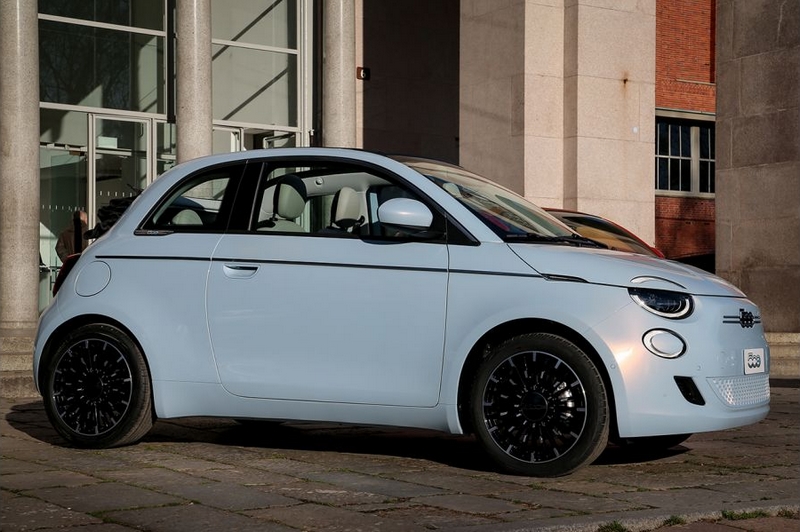
Range and charging times are two key issues for electric car customers.
The lithium-ion batteries with a capacity of 42 kWh give the New 500 a range of up to 320 km in the WLTP cycle.
To optimize charging time, the New 500 is equipped with an 85 kW fast charger system to charge the battery very quickly. For example, it takes only 5 minutes to build up a sufficient energy reserve to travel 50 kilometers, more than is needed for average daily use. And the fast charger can also charge the battery to 80% in just 35 minutes. The Combo 2 socket located on the rear right-side panel of the car powers the fast charger, for both AC and DC charging.
The engine has an output of 87 kW, providing a maximum speed of 150 km/h (self-limited) and acceleration from 0-100 km/h in 9.0 seconds and 0-50 km/h in 3.1 seconds.