Michael Kors steers cozy towards chic with equestrian collection

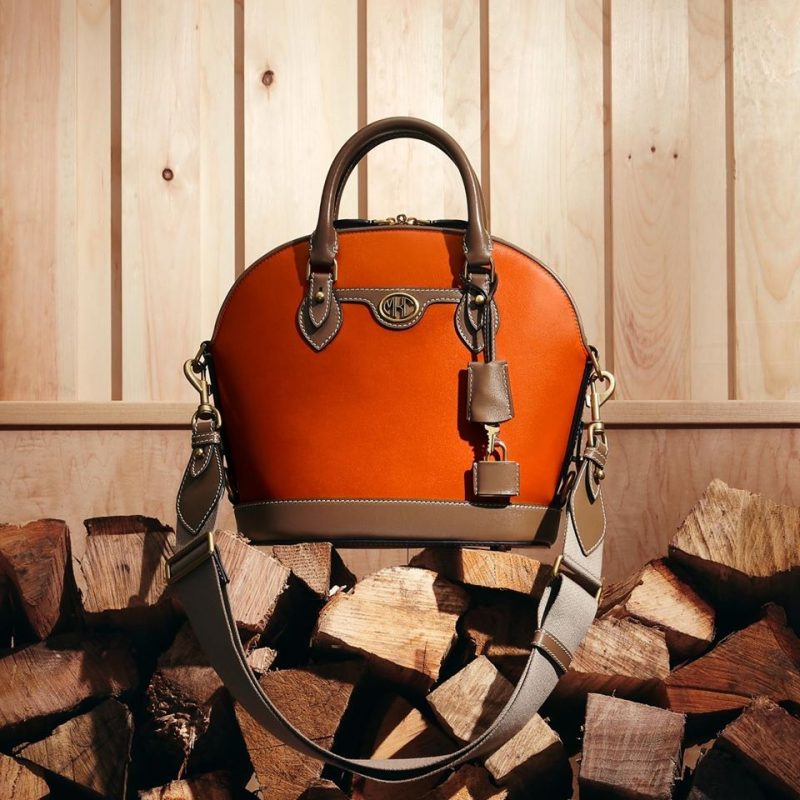
Michael Kors MKC Monogramme bowler bag make its debut. @Michael Kors


Powered by Guardian.co.ukThis article titled “Michael Kors steers cozy towards chic with equestrian collection” was written by Jess Cartner-Morley in New York, for theguardian.com on Wednesday 12th February 2020 18.04 UTC

“Don’t get me wrong, I am all for comfort, but I like a little polish too. These days I see women on the city streets wearing jogging bras,” lamented Michael Kors before his New York fashion week show. “I’m thinking of getting ‘chic is not a dirty word’ printed on a T-shirt.”

If he did, it would undoubtedly sell. Michael Kors is the man who brought the It bag to the masses, inventing a new category of “affordable luxury”, and his success has made billionaires of Kors and two of his early business partners. His commercial mindset was evident in the audience for his latest catwalk show – staged, appropriately, at the former American Stock Exchange headquarters in Manhattan’s financial district – where 10% of invitations were reserved for his biggest spending clients.

Next season, Kors wants to sell women a chic alternative to athleisure. “The best clothes make you feel like you are in a chic security blanket,” he said. “You should feel cosy, you should feel relaxed. And you know what always works, when you want to be chic but also be comfortable? Equestrian!”

Expensive-looking and erotic-adjacent, equestrian chic has long been a go-to for Michael Kors. This time around, he revisited looks from a 1999 collection. “That season, Naomi Campbell wore a stripe blanket cape on the runway, and the next day I got a phone call from Joan Didion, and Joan loved that cape, so of course we got her a cape. I’ve got a great photo of Joan in that cape.” A new version of the cape walked the catwalk on Wednesday morning, in camel with wide bands of clementine and chocolate brown at the hem, worn over a sweater dress with flat riding boots in rich suede. Other equestrian-tilted looks included a quilted grey cashmere half-zip hoodie, layered over a chunky polo neck and midi-length skirt. Like most outfits in the show, they were accessorised with a handbag. “Every bag in this collection can be carried hands-free”, Kors noted. “That’s just how we live now.”

As Kors approaches his 40th anniversary in business next year, he has been attempting to retroactively build up his archive. “When I started I didn’t keep archives. I was young, I didn’t think about it. So I often contact vintage stores and ask that if they get any of my clothes come in from the 1980s or early 1990s to let me know so that I can buy them. But they always tell me they don’t have anything – because women don’t get rid of my clothes. My clothes last, and women wear them for ever. Isn’t that great?” Now he is keen to teach “my new 22-year-old customers, who grew up with fast fashion, about the pride of owning something that lasts”.

Model Bella Hadid shows off an evening gown made of sustainably manufactured sequins at Michael Kors show.
Model Bella Hadid shows off an evening gown made of sustainably manufactured sequins at Michael Kors show. Photograph: WWD/Rex/Shutterstock

Top of Kors’ personal best-dressed list right now is Billie Eilish, the 18-year-old singer currently disrupting the norms of red carpet fashion by wearing voluminous, baggy clothes rather than bare, form-fitting dresses. At the Oscars on Sunday, Eilish’s custom-made Chanel look was an oversized trousersuit with a high collar. “I love what Billie Eilish is doing,” said Kors. “She’s sending a fabulous message. She’s saying, ‘This is about my talent, not my body.’ I’ve always loved knitwear for night. You shouldn’t have to be naked and miserably uncomfortable in eveningwear.”

Next season’s comfortable evening dresses come, naturally, with a generous dash of glamour: an ebony gown was entirely covered in sequins, sustainably manufactured from recycled plastic bottles.

Lisane and Jeanine Basquiat, younger sisters of the late Jean-Michel Basquiat, were guests of honour at the Coach catwalk show, which featured the artist’s niece Jessica among the models. The collection was inspired by Basquiat, who “has always been a hero of mine, for his work and his style and as the ultimate icon of the unorthodox creativity of New York”, said Stuart Vevers, the British designer of Coach. Basquiat’s artwork appeared on several pieces in the collection.

The Coach show was a celebration of New York, in a fashion week which has been left threadbare by several marquee-name defections. Tom Ford staged his show in LA this season, Tommy Hilfiger will present his in London and Ralph Lauren is sitting out fashion week in favour of a stand-alone show in April.

As well as the Basquiat family, the show featured a live performance by New York icon Debbie Harry. “In the seven years I’ve been at Coach, I don’t think I’ve ever put together a mood board that didn’t have a photo of Debbie Harry on it,” said Vevers. “When I found this venue, which is such a classic New York industrial loft, and started visualising how it would all come together, I had the idea of having her sing so I thought – well, I might as well ask. And amazingly, she said yes.”

guardian.co.uk © Guardian News & Media Limited 2010

Published via the Guardian News Feed plugin for WordPress.
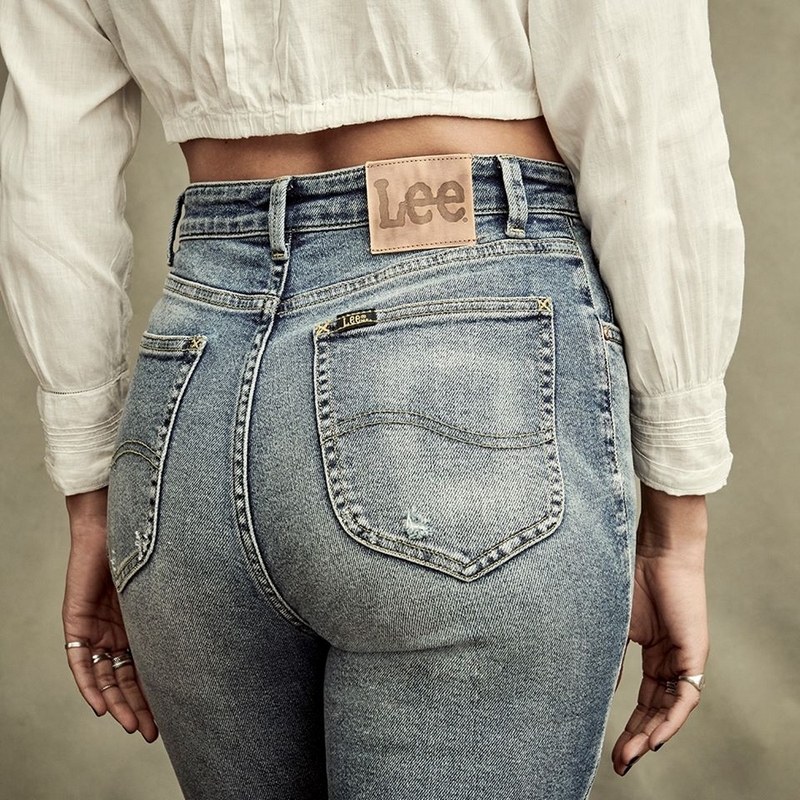
Choose vintage, avoid stretch: how to wear jeans sustainably

@lee jeans

Powered by Guardian.co.ukThis article titled “Choose vintage, avoid stretch: how to wear jeans sustainably” was written by Tamsin Blanchard, for theguardian.com on Wednesday 5th February 2020 15.04 UTC

Why are jeans so controversial? Is it the estimated 10,000 litres of water needed to grow the cotton for every pair? The dark blue lines of toxic pollution in China’s Pearl River that can be seen from space? The potassium permanganate, widely used to make new jeans look old and distressed, that may cause lung damage in workers? Or is it because there is no guarantee that those workers are paid a living wage, never mind being paid for the overtime they are forced to do?

“The denim industry is at a pivotal moment,” says Roian Atwood, senior director of global sustainable business at Kontoor Brands, which owns Wrangler and Lee, when we met at ART (Art Repair Transform), a denim upcycling and mending workshop at the Copenhagen international fashion last month. Lee are among the 30 brands contributing to the Ellen MacArthur Foundation’s Jeans Redesign project, a new initiative governing all aspects of jean production from regeneratively farmed fibres to washing and finishing techniques – potassium permanganate, for example, is not allowed. Jeans must be made with rivets and hardware that can easily be removed after the jeans are no longer fit for purpose, allowing them to be recycled into something new. The first products bearing the Jeans Redesign logo will go on sale in the autumn.

The industry is working hard to make itself cleaner and more sustainable, investing in new technology such as the innovative dry foam to dye Lee’s Indigood jeans – the use of water is pretty much eliminated, as well as reducing energy and chemicals and hopefully ending the rivers of toxic blue effluent. Already in operation at three denim mills in Spain, Mexico and India, Lee is also launching “compostable” jeans this spring. “They will fully decompose,” says Atwood. “We believe it will take 200 days.”

Denim upcycling and mending workshop A.R.T at the Copenhagen International Fashion Fair.
Denim upcycling and mending workshop A.R.T at the Copenhagen International Fashion Fair. Photograph: Gio Staiano

There is still a long way to go. According to Atwood, there is “a new and emerging environmental issue we are not quite ready to talk about yet, which is that denim has become integrated with a lot of synthetics. The comfort and the stretch movement, athleisure and the omnipresence of the yoga pant have given rise to a lot more stretch in denim. It’s plastic,” he says. And as such, your skinny jeans are responsible for shedding microplastics.

Appropriately enough, we meet in the “confessional booth” designed for visitors to confess their fashion sins and record them for a podcast. “If we are confessing our sins, I am here to say I like to wear light jeans,” he says. “A dark pair of denim uses less water in the wash-down process.” The lighter the denim, the more washing processes it has been through and the more water it has used.

The designer Duran Lantink, who was commissioned to work with Lee’s deadstock to create a small collection of upcycled denim, wears jeans every day (he switches between two vintage pairs) but is aware of the issues. “I think that, by buying a pre-washed jean, it is ruin in reverse,” he says. “I don’t get that.”

For rent … Mud jeans.
For rent … Mud jeans. Photograph: PR

Lantink is part of a growing band of designers who are not just concerned about the environmental impact of the industry but also its waste. Bethany Williams, who has perfected the art of unpicking and upcycling unwanted jeans, has grown a cult following. Brands such as E.L.V. Denim (short for East London Vintage), which is sold at a range of stockists including Net-a-Porter, are building healthy businesses using secondhand denim as their raw material. “There are more jeans than people in the world,” says founder Anna Foster. At her studio and showroom, clients can choose from off-the-peg or custom-made jeans, ingeniously spliced together a few miles away at the Blackhorse Lane Ateliers in Walthamstow.

But slowing down production is not on the agenda for the big denim brands, who would prefer to cut their environmental impact by reducing water and chemical consumption while continuing to produce at the same levels. However, there are some smart and potentially highly disruptive initiatives coming from smaller independents. Netherlands-based Mud Jeans offers a subscription system that allows you to lease your jeans for €7.50 per month, including free repairs. Once you are finished with your jeans, you send them back and they will be recycled. Hiut Jeans, which has revitalised the denim industry in Cardigan, Wales, makes just 100 pairs of jeans per week. “We are here to try and make the best jeans we can and not the most jeans we can,” it says. It also offer free repairs for life.

How to shop sustainably for jeans

Start with vintage

Whether you are a denim aficionado or a student on a budget, you can find jeans to suit your budget and your style if you shop secondhand.

Raw is best

Raw denim hasn’t been washed and treated multiple times. This is what denim used to look like before we started to sandblast, bleach and rip it to make it look old. Buy a pair of unwashed jeans and let them age with you.

Avoid stretch

Let leggings be leggings and jeans be jeans. One hundred per cent means the denim in your jeans can eventually be recycled.

Look at the label

If you are buying new, check the fabric composition. You might want to do some research online first. Look for recycled cotton, GOTS certified organic cotton, Better Cotton Initiative cotton, or G-Star’s Cradle 2 Cradle Gold certification, which means it is 98% recyclable, 100% organic and uses the minimum amount of water.

Wash cold, if at all

One of the biggest sources of water impact and energy use is during the consumer use phase. Roian Atwood advises a cold wash. Hiut Denim has a No Wash Club.

Repair your jeans

A good pair of jeans can last for decades if you look after them and repair them. Ask your denim brand where you can have your jeans repaired. Levi’s has a number of tailor shops where you can customise or repair jeans. Nudie Jeans offers free repairs for life in their shops or, if you can’t get to one, they will send you a free repair kit. Hiut Jeans also offer free repairs.

guardian.co.uk © Guardian News & Media Limited 2010

Published via the Guardian News Feed plugin for WordPress.

Makeover: Copenhagen fashion week announces ‘radical’ sustainability goals

The chief executive of Danish fashion week hopes to transform it into a ‘platform for advocacy’ with tough new environmental requirements for participating brands

Prada works commuter chic at Milan men’s fashion week

A surreal take on tailoring echoed masculine workwear themes seen elsewhere