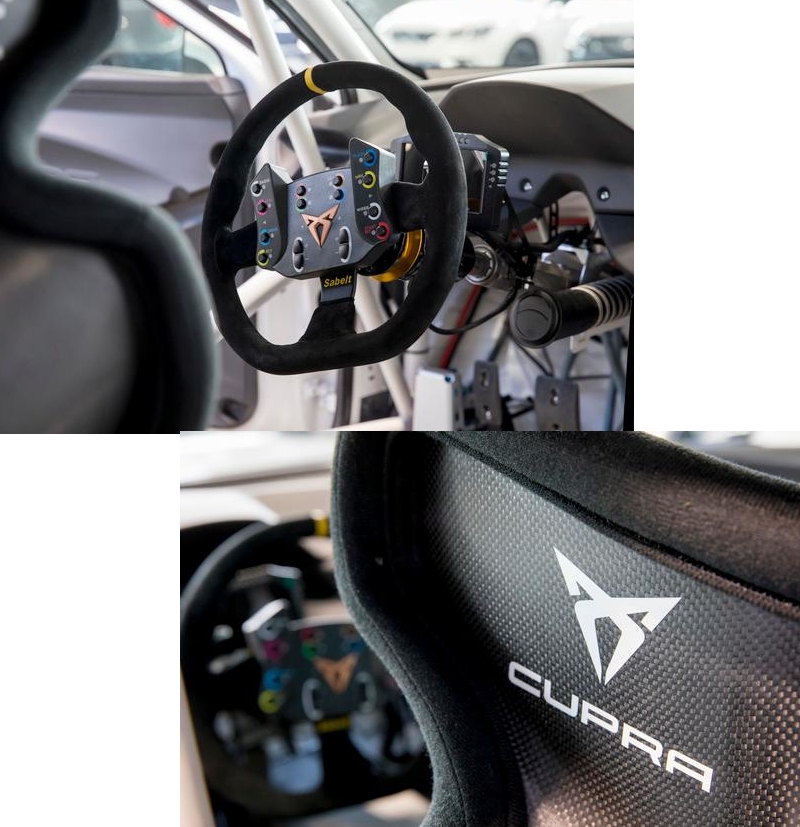
Cupra Leon Competicion made its racing debut

      Following its presentation last February, the Cupra Leon Competicion landed on the track las weekend. CUPRA’s new touring racecar made its world debut at the 2020 TCR Italy Championship at the Mugello circuit. Modeled after the new Cupra Leon, the first two units of the Cupra Leon Competicion made their debut with … Read more

Similarities and differences of production Acura NSX and race-bred NSX GT3 Evo


Acura NSX was born to be made into a brilliant race car.

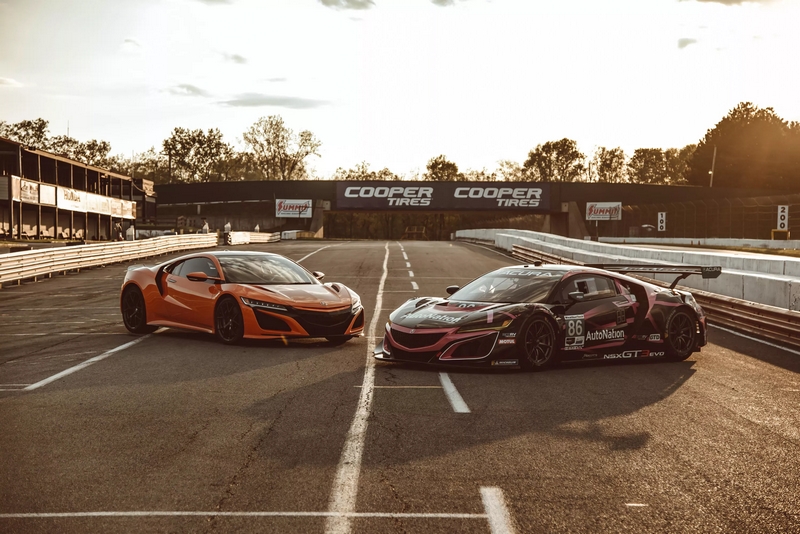
Acura NSX and race-bred NSX GT3 Evo share more than 80-percent of their underlying component parts, reflecting the fact that racing was an essential part of the plan from the earliest stages of the NSX development.
Acura NSX vs NSX GT3 Evo
@acura

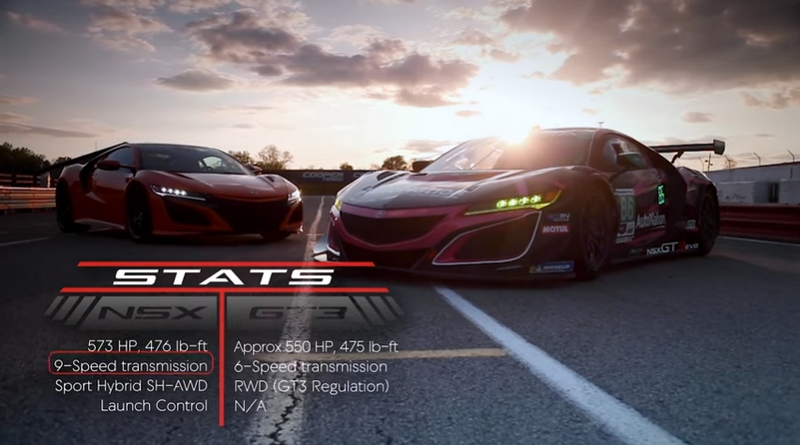
Just how identical are the Acura NSX and NSX GT3? Watch and find out!

A new video from Acura explores the relationship between the Acura NSX supercar and its race-winning counterpart, the NSX GT3 Evo. Currently #1 in the IMSA GT Daytona (GTD) point standings, NSX GT3 Evo driver Trent Hindman of Meyer Shank Racing demonstrates the distinctive approaches to performance of the two cars in 0-60 runs, braking tests, ease- of-use evaluations and, of course, ultimate lap times at the Mid-Ohio Sports Car Course. The production NSX showcases its strengths as a supercar designed to run with the world’s best exotics, while the NSX GT3 Evo demonstrates its chops as a purpose-built, razor-sharp race machine. Hindman’s conclusion: the NSX was born to be made into a brilliant race car.

“We knew from the outset that the second generation NSX would be tested at the highest limits on track,” said Ted Klaus, who served as global development leader for the second generation NSX and was recently named president of Honda Performance Development, the North American race engineering arm of Acura Motorsports. “Competitive racing was an essential consideration during NSX development, which influenced critical decisions we made regarding the car’s fundamental design.”
Acura NSX vs NSX GT3 Evo-
Acura NSX vs NSX GT3 Evo; @acura
THE NSX GT3 RACECAR WAS ALWAYS PART OF THE PLAN
THE NSX GT3 RACECAR WAS ALWAYS PART OF THE PLAN; @nsx.acura.com

A next-generation supercar is worthy of a next-generation powertrain.

The NSX road car combines a bespoke 3.5-liter twin-turbo V6 and world’s only 9-speed dual clutch transmission (DCT) with a three motor Sport Hybrid SH-AWD system, working in concert to produce 5732 horsepower and 476 lb-ft of torque.

Unlike other hybrid supercars, not only is electric power used to fill the “torque well” of a turbocharged engine, the NSX’s front-mounted Twin Motor Unit (TMU) is capable of delivering both positive and negative torque independently to the front wheels. In this respect, the production NSX stands alone in the universe of supercars past and present: the only exotic using electric motors to enhance every element of dynamic performance – acceleration, braking and cornering.
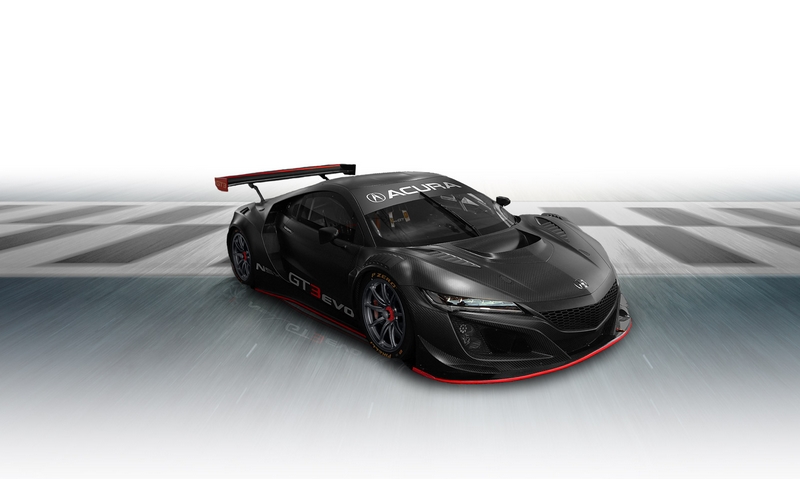
Since its debut in early 2017, the NSX GT3 and GT3 Evo have tackled some of the world’s most iconic GT races, including the 24 Hours of Daytona and Spa; the 12 Hours of Sebring; Petit Le Mans; and the FIA GT World Cup in Macau. Currently, the NSX GT3 Evos campaigned by Meyer Shank Racing in the IMSA WeatherTech Sports Car Championship lead the
points for both Manufacturers’ and Drivers’ Championships in the GTD class. In the Blancpain GT World Challenge America series, the NSX GT3 Evo has earned six pro-am wins with three different teams (3-Racers Edge, 2-RealTime Racing, 1-Gradient Racing).

Around the world, the NSX GT3 Evo driven by Autobacs Racing Team (ARTA) leads the GT300 class in the Japanese Super GT series with two podium finishes. Additionally, the NSX GT3 Evo has competed in the Blancpain GT Series Asia, China GT Championship, select events in the Intercontinental GT Challenge, the Blancpain GT Sports Club and GT Series in Europe, and the ADAC GT Masters in Germany.
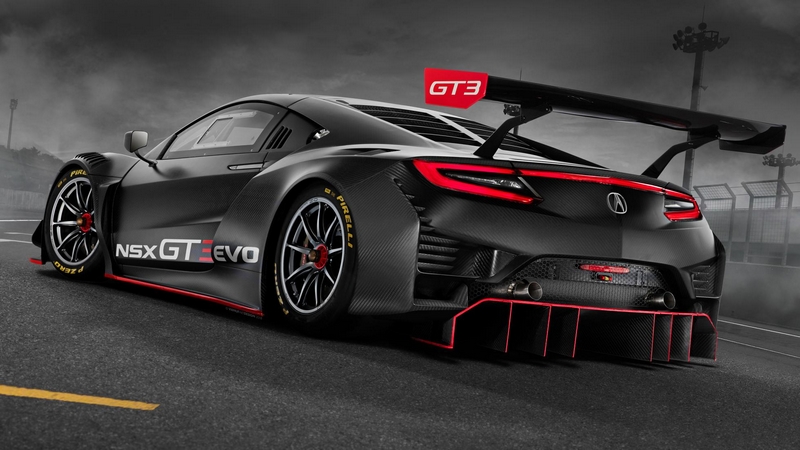
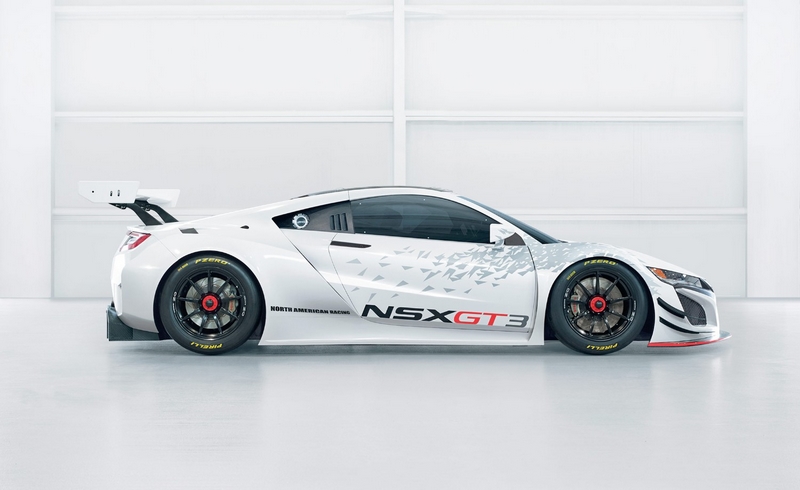
Honda NSX GT3 Evo
Honda NSX GT3 Evo @nsx.acura.com
THE NSX GT3 RACECAR
THE NSX GT3 RACECAR; @nsx.acura.com


From racecar to electric power boat: Jaguar Vector V20E Break World Electric Speed Record


New world and national records of 88.61mph set by Jaguar Vector Racing V20E at Coniston Water.

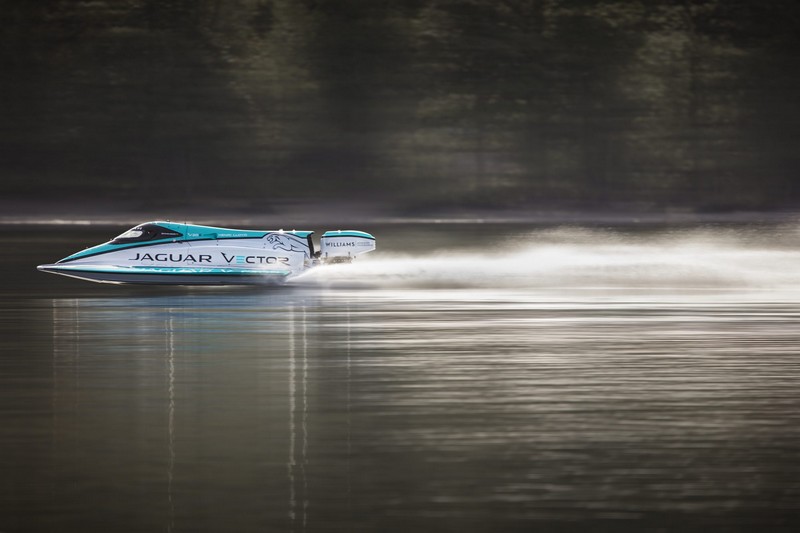
Jaguar is bringing the power and versatility of electrification to the boating industry. The automotive manufacturer is transferring the technology the company is using in Formula E with Panasonic Jaguar Racing from racecar to power boat. Jaguar Vector Racing have broken the outright world and national electric speed records in a battery-powered boat.

Jaguar Vector V20E Break World Electric Speed Record
Jaguar Vector V20E Break World Electric Speed Record; photo: jaguarvectorracing


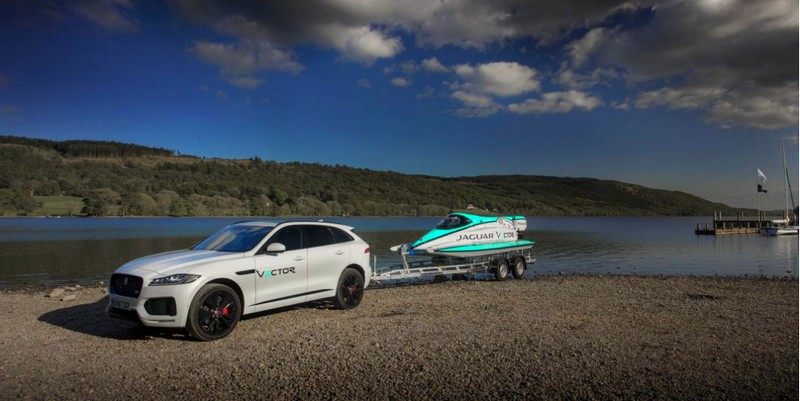
The unique Jaguar Vector V20E recorded an average speed of 88.61mph across the two legs of the famous 1km course on Coniston Water, England. The electric boat was designed and constructed by Jaguar Vector in partnership with Jaguar Racing’s technical partner Williams Advanced Engineering. Jaguar Vector co-founder and technical director Peter Dredge piloted the V20E.

Following Jaguar’s announcement in October 2017 to become the exclusive title partner of Vector, the team will attempt further world and national records over the next 18 months as part of a major initiative to push the boundaries of performance and to showcase British engineering.

“Congratulations to Jaguar Vector Racing for setting a new benchmark for an electric boat with this world record. Jaguar is at the forefront of electrification technology and our mission is to ‘Race To Innovate’ on track and on the water,” said Mark Cameron, Director of Experiential Marketing, Jaguar Land Rover.

Jaguar Vector V20E Break World Electric Speed Record-2018
Jaguar Vector V20E Break World Electric Speed Record; photo: jaguarvectorracing
Jaguar Vector V20E Break World Electric Speed Record--
Jaguar Vector V20E Break World Electric Speed Record; photo: jaguarvectorracing
Jaguar Vector V20E Break World Electric Speed Record-
Jaguar Vector V20E Break World Electric Speed Record; photo: jaguarvectorracing


2019 Corvette ZR1 is the fastest production Corvette to date

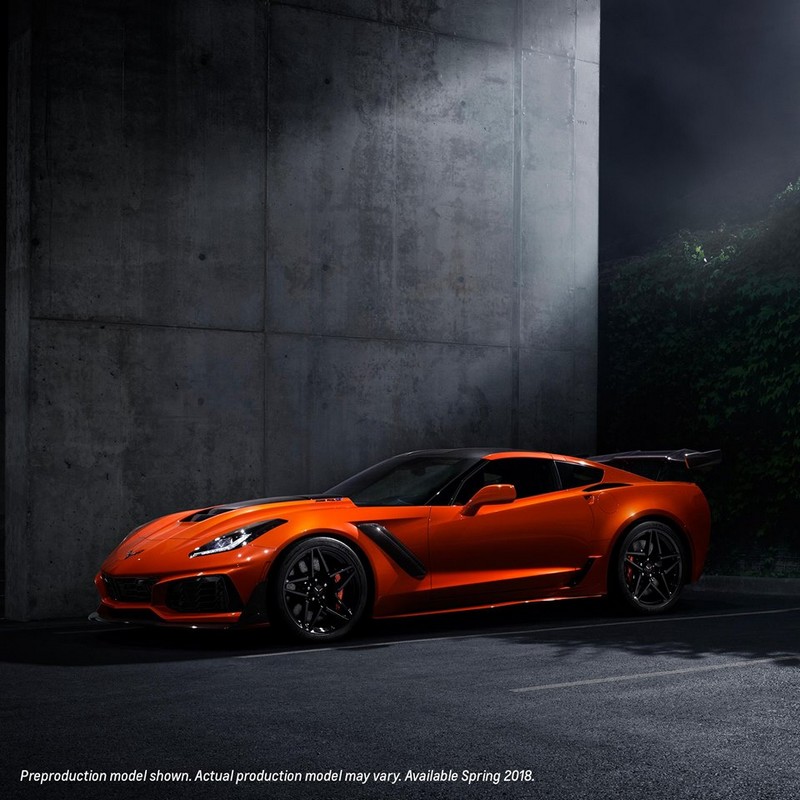
Chevrolet introduced the 2019 Corvette ZR1, a supercar that pushes Corvette’s performance legacy with the highest power, greatest track performance and most advanced technology in its production history. The supercar goes on sale next spring. The Corvette ZR1’s exclusive LT5 supercharged engine, which is rated at an SAE-certified 755 horsepower (563 kW) and 715 lb- … Read more

BR V2-94 Bellytanker: When a machine is a key source of inspiration

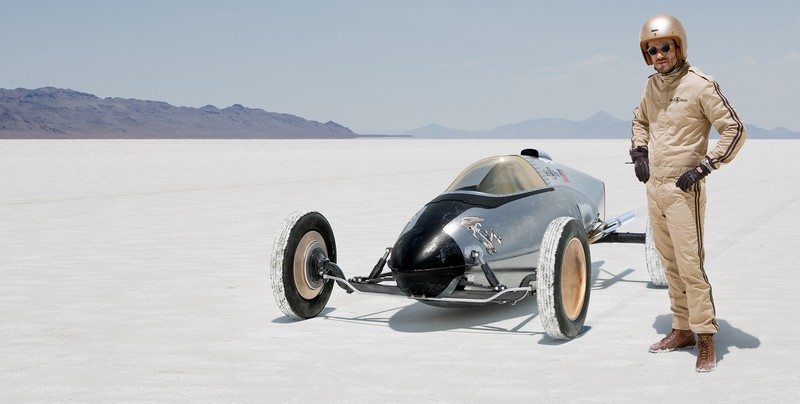
The Parisian watchmakers from Bell & Ross pay homage to the Bellytanker vintage racecar. Speed provides the one genuinely modern pleasure. Originating in the forties and fifties, the term “Bellytank” initially referred to the emergency drop tank fitted in the belly of fighter planes. “Bellytanker” is now mainly used for the high-speed race cars manufactured … Read more

Stanford’s Xenith 100% solar powered racecar

STANFORD SOLAR CAR PROJECT Drive at highway speeds while only consuming the power equivalent of a toaster Xenith is a 100% solar powered racecar designed and built by the Solar Car Project at Stanford University. When the team began designing Xenith they decided to break the global tradition of using polymer encapsulated solar panels in … Read more