‘It’s a little worn out’: Parisians unveil plan for €250m Champs-Élysées makeover

Comité Champs Élysées - La plus belle avenue du monde
@Comité Champs Élysées – La plus belle avenue du monde; @.facebook.com/ComiteChampsElysees/

Powered by Guardian.co.ukThis article titled “‘It’s a little worn out’: Parisians unveil plan for €250m Champs-Élysées makeover” was written by Kim Willsher in Paris, for The Guardian on Wednesday 18th December 2019 18.22 UTC

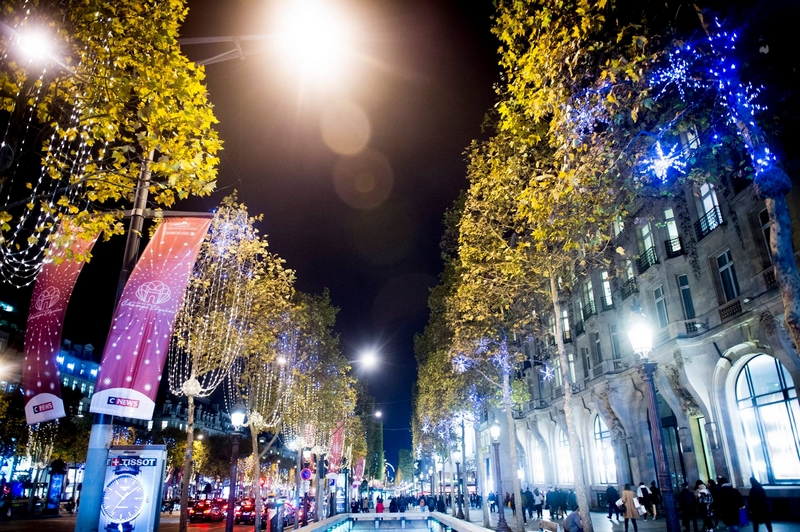
The Champs-Élysées, often called the “most beautiful avenue in the world”, is not what it was. The pavements are cracked, the trees that line the cobbled, traffic-clogged road struggle to survive in one of Paris’s most polluted areas, and Parisians stay away.

Now local community leaders have unveiled an ambitious €250m (£212m) project to restore the celebrated 1.2 mile (1.9km) long avenue to at least some of its former glory.

“It’s often called the world’s most beautiful avenue, but those of us who work here every day are not at all sure about that. The Champs-Élysées has more and more visitors and big name businesses battle to be on it, but to French people it’s looking worn out,” Jean-Noël Reinhardt, president of the Champs-Élysées committee said.

Reinhardt says his association, which represents those who live, work and trade on the avenue running from the Arc de Triomphe on Place Charles de Gaulle to Place de la Concorde, will present their plans to the candidates standing in next year’s municipal elections in January.

The Champs-Élysées makeover would need public and private investment, he told journalists.

“The last renovation of the Champs-Élysées was 25 years ago. We must bring the Champs-Élysées into the 21st century,” Reinhardt said. “We need to modernise, de-stress [the avenue] and encourage Parisians to come back”.

On May 8, 1945, Parisians gather on the Champs-Élysées to celebrate the German surrender in the second world war.
On May 8, 1945, Parisians gather on the Champs-Élysées to celebrate the German surrender in the second world war. Photograph: AFP/Getty Images

The Champs-Élysées was originally a mixture of swamp and kitchen gardens when André Le Nôtre, gardener to Louis XIV the Sun King, first laid out the wide promenade lined with a double row of elm trees on each side, called the Grand Cours. In 1709, it was renamed the Champs-Élysées and extended, and by the end of the century had become a popular place to walk and picnic.

The city celebrated its liberation from the Nazis in 1944 on the Champs-Élysées and World Cup victories still bring out the crowds, but its famous charm has faded. Today it is known for its expensive cafes, luxury shops, high-end car salesrooms and commercial rents that are among the highest in the world, as well as the annual Bastille Day military parade. More recently it was the scene of some of the most violent clashes between gilets jaunes and riot police.

Its name is French for the mythical Greek paradise, the Elysian Fields; but Parisians largely shun it.

Crowds celebrate in the Champs-Élysées after France won the football World Cup in 1998.
Crowds celebrate in the Champs-Élysées after France won the football World Cup in 1998. Photograph: Gabriel Bouys/AFP via Getty Images

Architect Philippe Chiambaretta, whose firm PCA-Stream drew up the plans, said research showed that of the estimated 100,000 pedestrians on the avenue every day, 72% are tourists and 22% work there. The eight-lane highway is used by an average of 3,000 vehicles an hour – most passing through – and is more polluted than the busy périphérique ring road around the French capital.

Chiambaretta said it needed to be developed to be “ecological, desirable and inclusive”.

“It was always designed for the people and shouldn’t just be a luxury avenue,” Chiambaretta said.

He admitted the Champs-Élysées had become a place that summed up the problems faced by cities around the world: “Pollution, the place of the car, tourism and consumerism.”

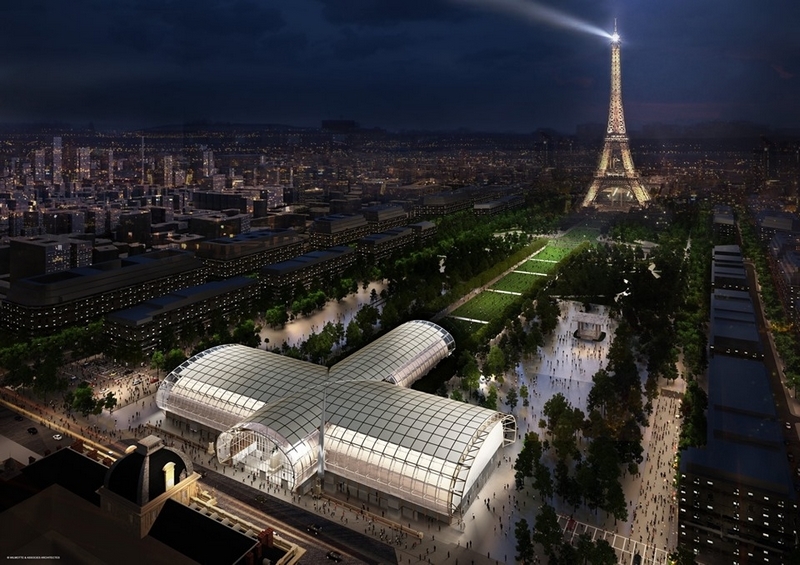
The ambitious plans include reducing the space for vehicles by half, creating tunnels of trees and encouraging more aesthetic use of commercial spaces such as terraces. The committee also wants a major rethink of the area all around the Champs-Élysées to make it more pedestrian friendly up to and including the nearby River Seine, with traffic diverted into a tunnel.

“We work here every day so we know we have to profoundly change things. We can’t just say it’s the responsibility of the public authorities. We want the Champs-Élysées to remain a centre of attraction in the world, we want tourists to keep coming but we want the Parisians who used to come here 100 years ago to come back,” Reinhardt said.

A  reimagining of the Champs-Élysées
A reimagining of the Champs-Élysées. Photograph: PCS-Stream

Plans to improve the Champs-Élysées are not new, but as Paris prepares to host the 2024 Olympics, there is an impetus to spruce up the city’s most celebrated street before the world descends.

A Paris city hall spokeswoman said the Champs-Élysées is already closed to traffic one Sunday every month and the city authorities had already carried out work including a cycle lane on the avenue.

Chiambaretta says some of the work could begin after next year’s elections, but the wider project would have to wait until after the games.

Futuristic sketches showing the Arc de Triomphe surrounded by sand and water or transformed into an ice rink are, Chiambaretta admits, probably a pipe dream.

Giving the Champs Élysées and its surroundings a makeover is not, he says. “We have to think big and not just about the Champs-Élysées, but all around it,” he says.

The proposals are in the early stages and would need the approval of the Paris authorities and public investment. City Hall did not wish to comment on the plans drawn up by the committee.

guardian.co.uk © Guardian News & Media Limited 2010

Published via the Guardian News Feed plugin for WordPress.
Trade war: France hits back over US tariff threat on cheese and champagne – business live

Rolling coverage of the latest economic and financial news, as US proposes steep new tariffs on French food, drink, handbags and porcelain

Gaze, don’t glance: Leonardo da Vinci, the immersive show, opens at National Gallery


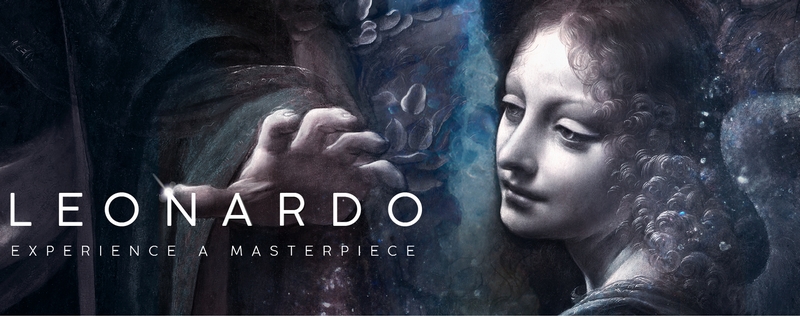
leonardo experience a masterpiece 2019-2020
“Leonardo: Experience a Masterpiece” is at the National Gallery from 9 November to 12 January. Standard weekday admission £18. @national gallery

Powered by Guardian.co.ukThis article titled “Gaze, don’t glance: Leonardo da Vinci, the immersive show, opens at National Gallery” was written by Mark Brown, Arts correspondent, for The Guardian on Thursday 7th November 2019 16.33 UTC

An experimental exhibition will this weekend open at the National Gallery in London with a simple aim – to encourage people to spend minutes rather than seconds looking at a masterpiece.

“This whole exhibition is about getting slower looking,” said Caroline Campbell, the gallery’s director of collections and research, ahead of a show which, boldly, has just one work of art: Leonardo da Vinci’s The Virgin of the Rocks.

She added: “We want to get people to spend more time looking at a really great work of art because we feel that people sometimes spend 15 seconds looking at a painting in the gallery.”

Campbell said the gallery had purposefully set out to do something no other gallery had done with the immersive exhibition. “The purpose of this project … is that you understand and enjoy and appreciate one of the National Gallery’s great masterpieces even better.”

Detail of Leonardo’s The Virgin of the Rocks projected into a room at the National Gallery presented as a conservation studio.
Detail of Leonardo’s The Virgin of the Rocks projected into a room at the National Gallery presented as a conservation studio. Photograph: Tolga Akmen/AFP/Getty

The show has been created by 59 Productions, the company behind the video design used for the opening ceremony of the 2012 Olympics.

Visitors to the National Gallery, using timed entry, will walk through multi-sensory rooms which explore various aspects of the Leonardo painting. One room invites visitors to play around with light, illuminating various angles of an object, a subject endlessly explored by Leonardo. Another room attempts to bring to life the modern conservation studio.

The final room hosts the painting, which has been set in a model of the altarpiece that housed it, in 1508, in the chapel of the Confraternity of the Immaculate Conception in the church of San Francesco Grande, Milan, Italy. That room has a seven minute audio-visual loop.

Richard Slaney, managing director of 59 Productions, said visitors so far had been staying the course. “People have become mesmerised by the painting,” he said. “The idea of a show like this, with only one painting, is a big experiment but it’s nice to be able to part of that and see what people make of it.”

The show is the National Gallery’s contribution to celebrations marking the 500th anniversary of Leonardo’s death.

The main event is the huge Leonardo show at the Louvre, in Paris, running until 24 February next year, to which the National has lent its other Leonardo, the Burlington House Cartoon. The Louvre, which has in its collection an earlier version of The Virgin of the Rocks, had not asked to display the London painting because they knew it could not travel, said Campbell.

Leonardo: Experience a Masterpiece is at the National Gallery from 9 November to 12 January. Standard weekday admission £18.

guardian.co.uk © Guardian News & Media Limited 2010

Published via the Guardian News Feed plugin for WordPress.
Luxury player: why Bernard Arnault is making a blockbuster bid for Tiffany’s

France’s richest man has turned LVMH into a leviathan: this move will be the crowning glory of a calculating career

Paris art scene roars back to life … with a little help from Brexit

A reinvigorated contemporary art fair, opening this week in the Grand Palais, is one sign of a renaissance for the French capital