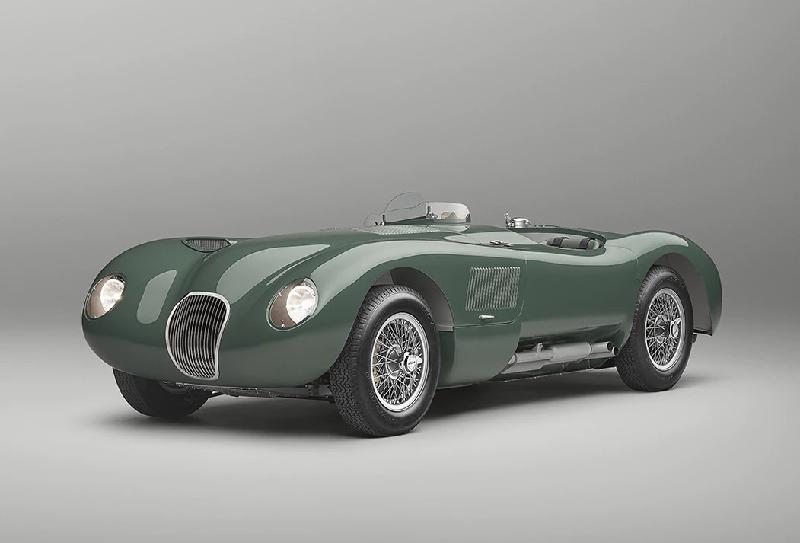
Jaguar Classic has revealed two exclusive C-type Continuations to celebrate the vehicle’s pioneering achievements in 1953. Each ‘70-Edition’ features distinctive specifications and will be built at Jaguar’s state of the art Classic Works facility in Coventry. The two Jaguar C-type Continuations have been revealed seventy years after C-types, equipped with pioneering disc-brakes were at the … Read more
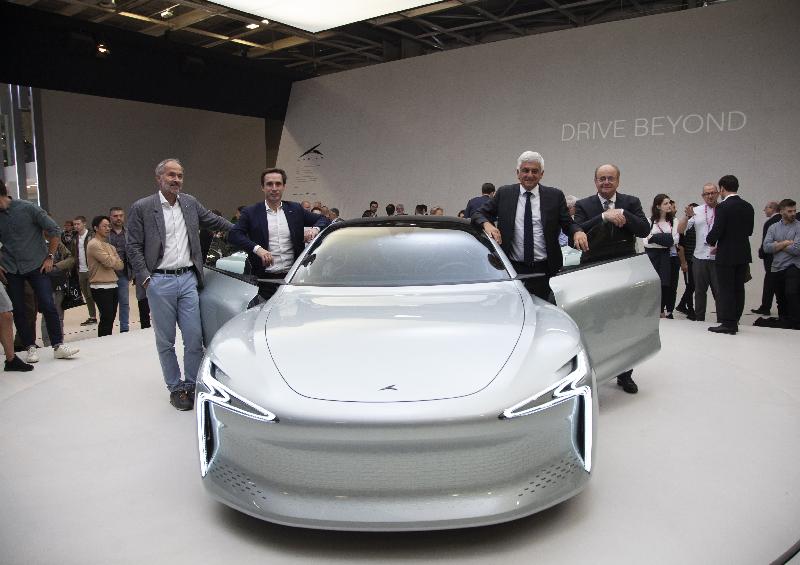
Hopium, French manufacturer of high-end hydrogen-powered vehicles, unveils the Hopium Machina Vision, the world’s first-ever hydrogen-powered sedan. A showcase of performance, innovation and technology, intended to reshape the standards of mobility.
At the Paris Automotive Week 2022, Hopium announced the reopening of the Hopium Machina Vision order book. First deliveries are scheduled for the end of 2025.
Conceived by automotive designer Felix Godard, the Hopium Machina Vision displays a notchback silhouette, that is both athletic and elegant, with a clever balance of proportions. The ascending fuselage and the kinetic grille are both optimized for fuel cell system cooling and vehicle aerodynamics. At the front, the light signature is reminiscent of the stratification of the fuel cell stack, and waves on the surface of the water.
@Hopium Machina Vision, the world’s first-ever hydrogen-powered sedan
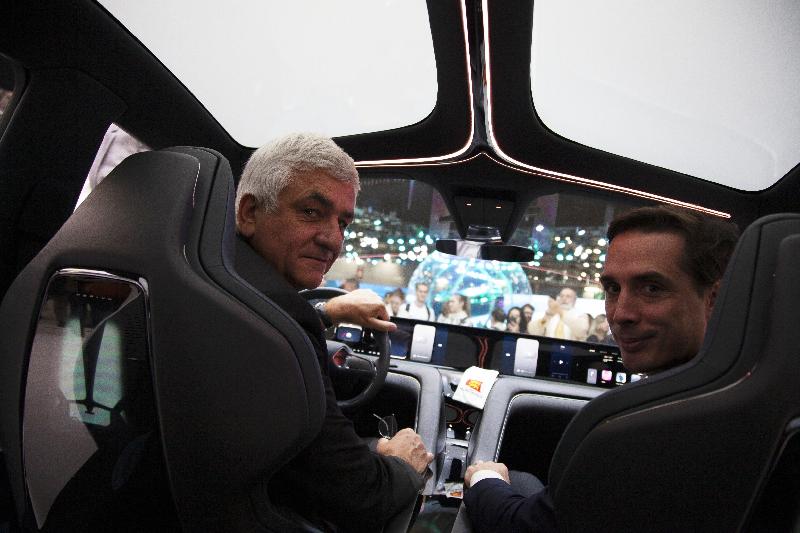
Inside, Hopium users can enjoy the uncompromising comfort of a spacious cabin and an unparalleled sky view. With a simple hand gesture running through the central spine, passengers can either opacify or turn the glass expanse into a panoramic window with the active shading function. The vehicle offers the user a new sensory connection with the interface through the haptic console, which allows navigation through main menus and control of settings, in a unique digital choreography.
At the front, the pillar-to-pillar display provides a digital landscape of information. It can transform into a full or minimized layout as desired, in a wave-like motion.
Hopium is the first French manufacturer of high-end hydrogen-powered cars and a key player in the field of zero emission mobility. Established in 2019, Hopium was founded by racing driver Olivier Lombard, winner of the 2011 edition of the 24 Hours of Le Mans competition and the most experienced hydrogen racer in the world. The race acted as an open-air laboratory which made it possible for Olivier Lombard and his team to reflect on new mobility solutions to meet contemporary environmental challenges. Bringing together leading partners and experts in the sectors of fuel cells, automotive engineering and advanced technologies, Hopium aims to restore the dialogue between mankind, nature and technology, in a search for a perfect balance.
Hopium Machina Vision, the world’s first-ever hydrogen-powered sedan, world premiere at @mondialdelauto .
To celebrate 120 years of its Art Nouveau heritage, Maison Perrier-Jouët presents its collaboration with artist Garance Vallée at Unique Design x Paris and offers an exclusive experience at the Hôtel de Crillon. Garance Vallée is an artist, architect and designer based in Paris. She merges the domains of art, architecture and design in order … Read more
Limited edition watches are a must for iconic luxury cars. The iconic Porsche Carrera RS is now paired with TAG Heuer chronographs. TAG Heuer celebrates 50th anniversary of Porsche 911 Carrera RS 2.7 This distinctive pair of limited-edition TAG Heuer chronographs pays homage to the iconic red and blue versions of the legendary Porsche 911 … Read more
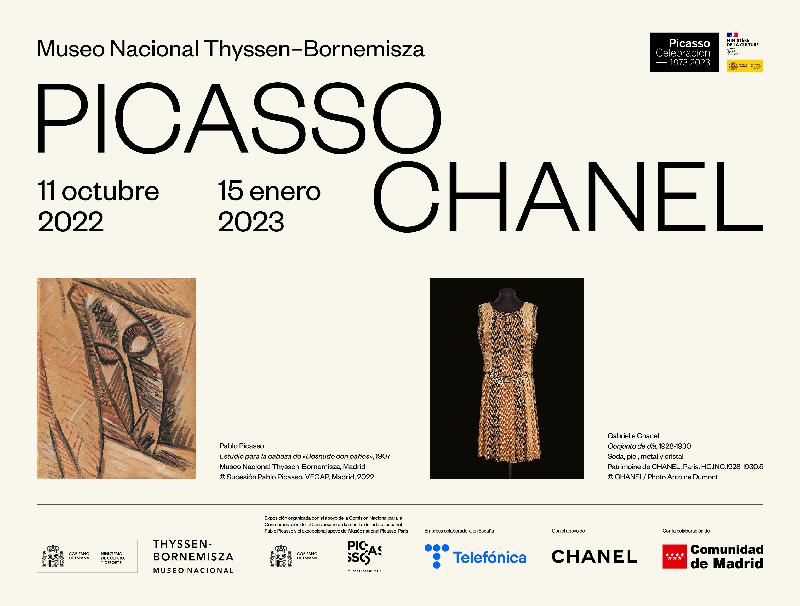
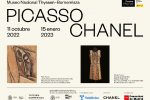
Picasso/Chanel exhibition commemorates the 50th anniversary of the death of the Spanish artist Pablo Picasso. CHANEL supports the exhibition ‘Picasso/Chanel’, highlighting the relationship of mutual admiration and respect between these two major figures of modernity. From October 11th 2022 to January 15th 2023 at the Museo Nacional Thyssen-Bornemisza in Madrid.
“Picasso and Chanel coincided in a particular time and place but, more importantly, they shared the same aesthetic and conceptual vision” – Paula Luengo, curator of the exhibition.
Once again bringing art and fashion together, the Museo Thyssen in Madrid, Spain is presenting an exhibition that explores the relationship between two creative geniuses of the 20th century: Pablo Picasso and Coco Chanel. Structured into four principal sections, Picasso/Chanel exhibition follows a chronological order approximately spanning the decade between 1915 and 1925.
Pablo Picasso and Gabrielle Chanel worked together on two occasions, both with Jean Cocteau: on Antigone (1922), and on Serge Diaghilev’s Le Train Bleu (1924) for his Ballets russes. The artist and fashion designer first met in the spring of 1917, probably through Cocteau or Misia Sert, and Chanel became close and long-lasting friends with both, who introduced her to the Picasso’s circle. She socialised with the artist and his wife at a time when he was actively involved with Diaghilev’s company. Chanel became closely associated with the Parisian artistic and intellectual world of the day, to the extent of declaring that “it is artists who have shown me how to be exacting.”
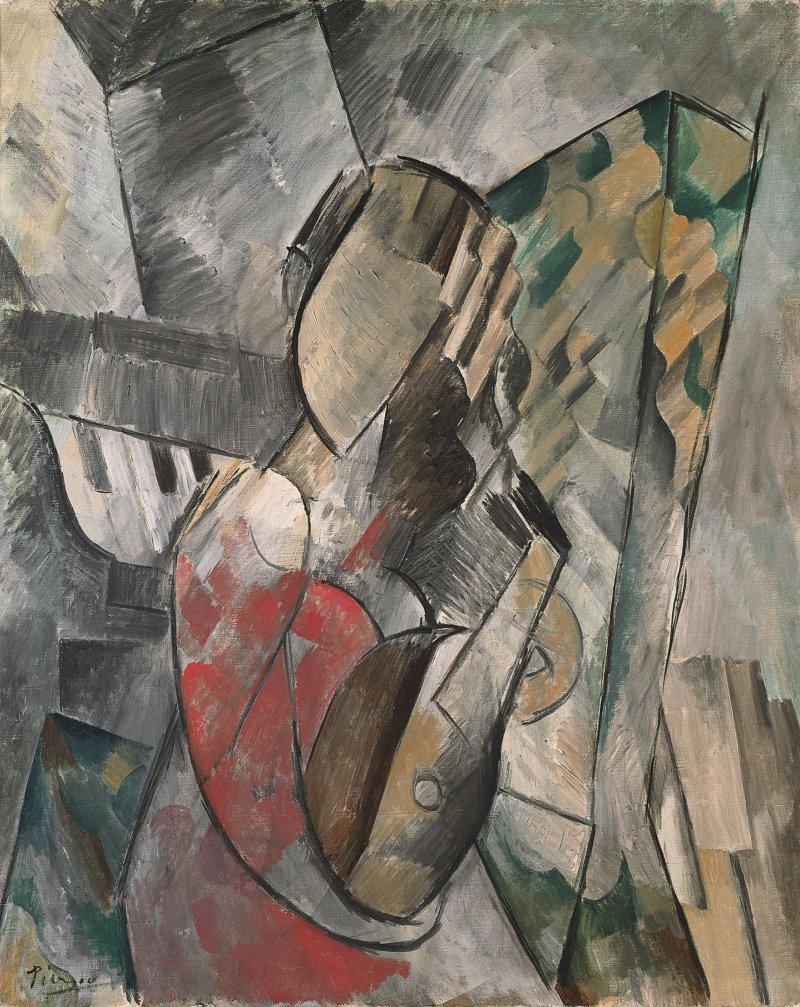
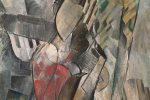
The Chanel style and Cubism reveals the influence of that art movement on Chanel’s creations from her earliest, innovative designs: her use of a geometrical formal language, chromatic restraint and the Cubist aesthetic of the collage, expressed in clothes with straight, angular lines: her preference for black, white and beige; and her use of inexpensive fabrics with austere textures.
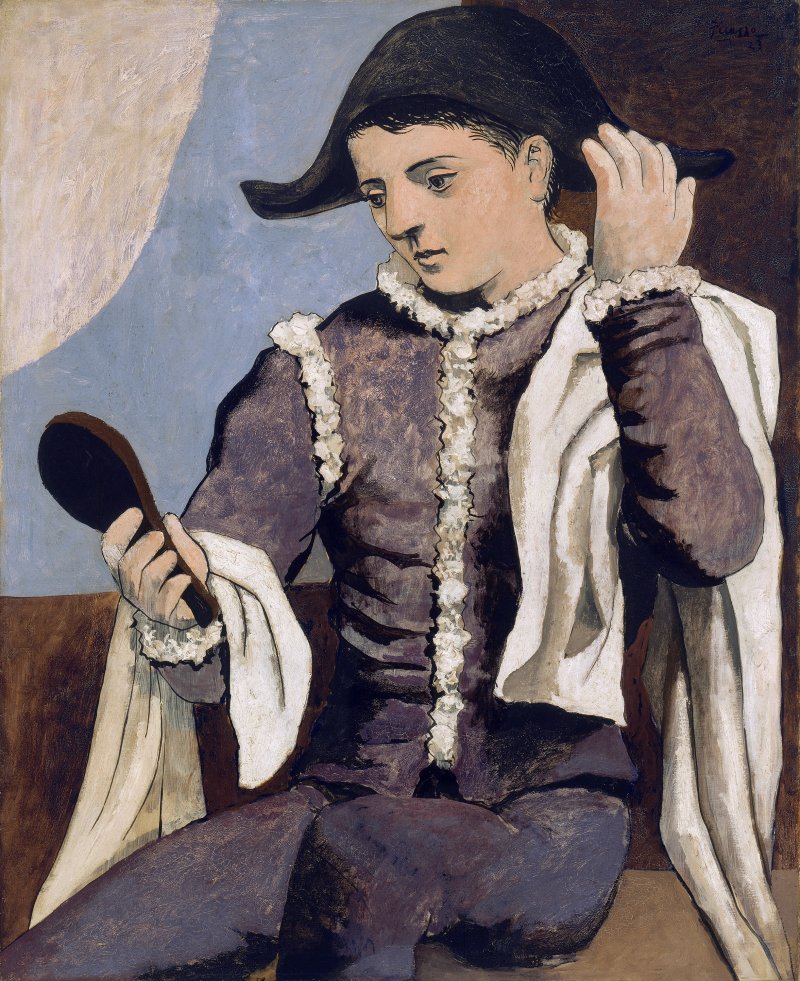
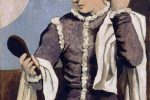
The second section, entitled Olga Picasso, focuses on Picasso’s numerous, beautiful portraits of his first wife, the Russian ballerina Olga Khokhlova who was one of Chanel’s devoted clients. Shown alongside these works are various ensembles from the designer’s early period, of which few examples survive. Antigone, a modern-day adaptation by Cocteau of Sophocles’s play, was first performed in Paris in 1922 with sets and masks by Picasso and costumes by Chanel, both of whom were inspired by classical Greece, as this section reveals.
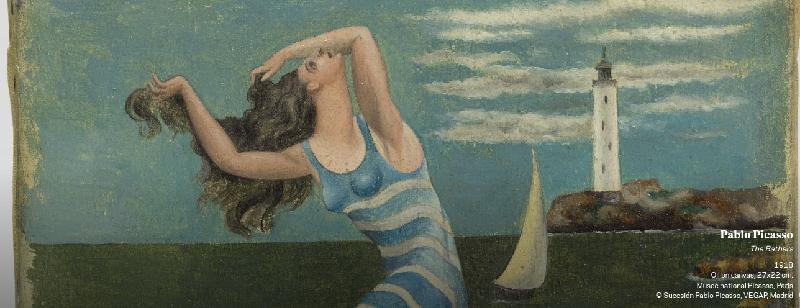
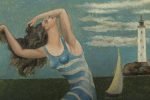
Le Train Bleu is the title of the fourth section and of the ballet created by Diaghilev in 1924 with a scenario by Cocteau, inspired by activities that were fashionable in the early 1920s, such as sunbathing and sport. Two Women Running along the Beach (The Race), a small gouache which Diaghilev encountered in Picasso’s studio, was transformed into the image for the work’s front cloth and the artist also accepted the commission to illustrate the programme. For her part, Chanel created costumes for the dancers, inspired by the sport outfits she created for herself and for her clients.
Lecture cycle Picasso/Chanel (Lecture. 16, 23 and 30 November 2022)
In conjunction with the exhibition Picasso/Chanel and in collaboration with Patrimoine de CHANEL, Paris, the Thyssen-Bornemisza National Museum is organising a cycle of three lectures devoted to Gabrielle Chanel and her relationship with Pablo Picasso. Following their initial encounter around the premiere of the ballet Parade in 1917 the two collaborated on Jean Cocteau’s adaptation of Sophocles’ classical drama Antigone in 1922 and subsequently in 1924 on Cocteau and Serge Diaghilev’s ballet Le Train Bleu.
Paula Luengo, the exhibition’s curator and head of exhibitions at the museum, will launch the cycle with a lecture in which she discusses her research on Picasso and Chanel and the development of this project. The other two lectures will be given by Hélène Fulgence and Marika Genty, director and head of historical heritage of Patrimoine de CHANEL, Paris, respectively.
Chanel also announced a fragrance exhibition coming soon to Paris: LE GRAND NUMÉRO DE CHANEL.
Spectacular scents, marvelous magic tricks, unexpected discoveries, highly anticipated encounters and many other sensational acts: Don’t miss LE GRAND NUMÉRO DE CHANEL, running from December 15, 2022 to January 9, 2023 at the Grand Palais Éphémère in Paris, France.
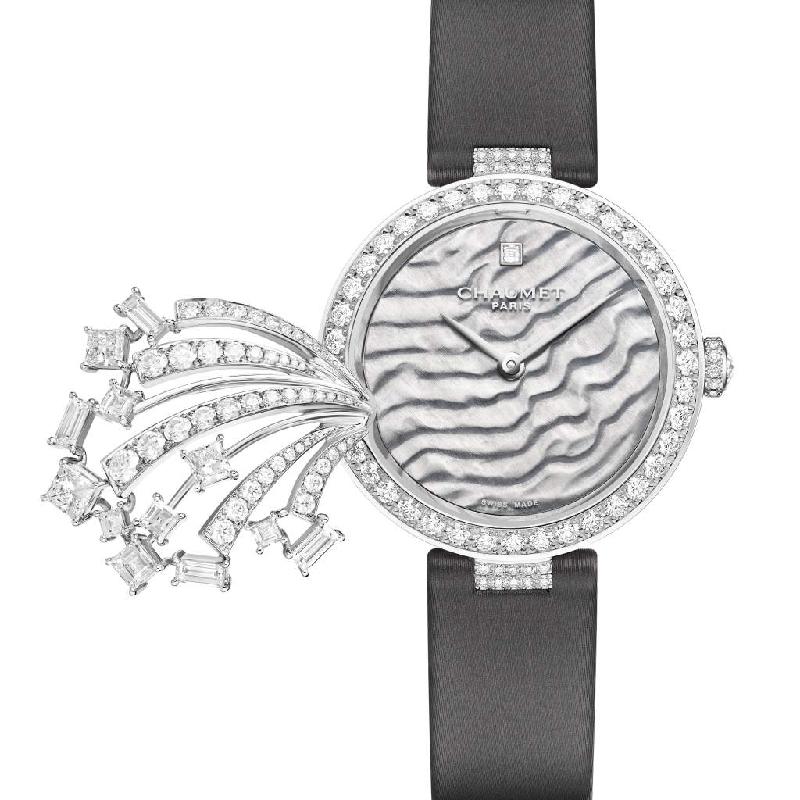
These High Jewelry Watches for Ladies are in the running for one of the 20 awards, including the prestigious “Aiguille d’Or” Grand Prix best-in-show award which will be presented on 10 November in Geneva at the 22nd GPHG awards ceremony. At the start of September, the international Academy of the GPHG (The Foundation of the … Read more