‘The waste and excess is more visible’: how coronavirus is shaking up fashion

The industry has been taken apart at the seams. Is this the end of lavish shows and packed front rows?

UK universities fear huge budget holes as Chinese students stay home

Overseas students, who represent a third of all tuition fee income, cancel plans amid coronavirus outbreak

10 Covid-busting designs: spraying drones, fever helmets and anti-virus snoods

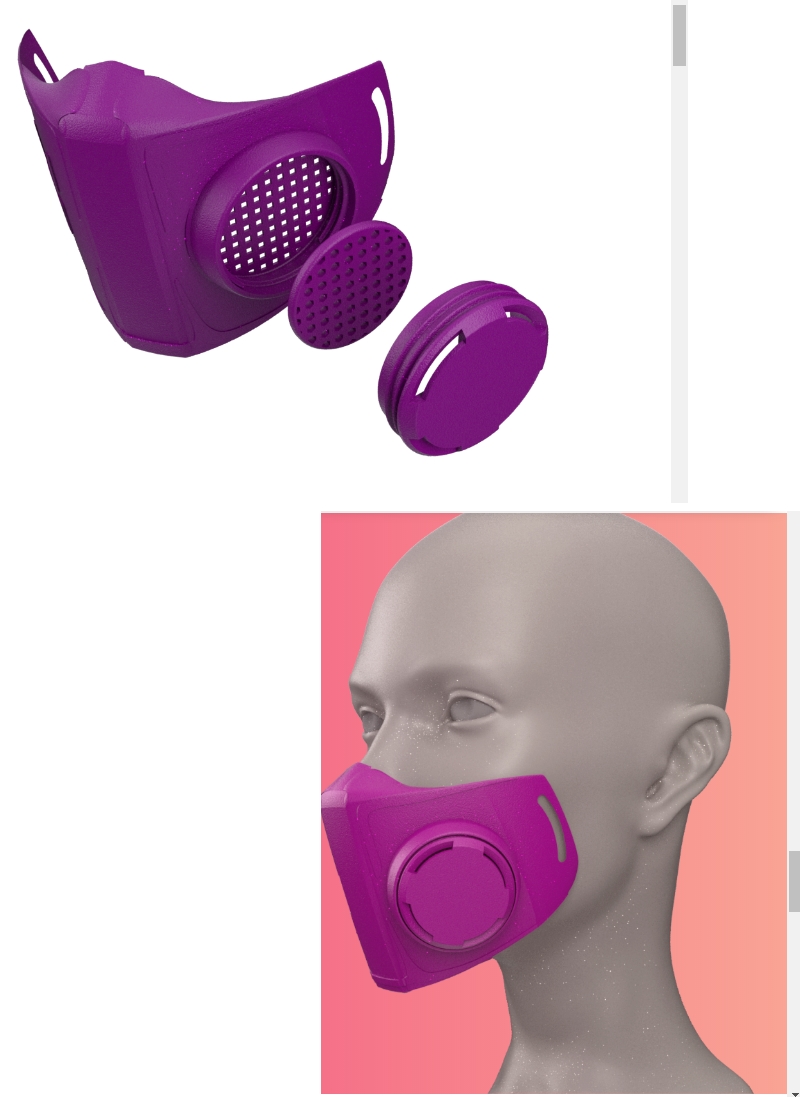
Nanohack; @copper3d.com/hackthepandemic/

Powered by Guardian.co.ukThis article titled “10 Covid-busting designs: spraying drones, fever helmets and anti-virus snoods” was written by Oliver Wainwright, for theguardian.com on Wednesday 25th March 2020 15.59 UTC

Designers, engineers and programmers have heard the klaxon call. The last few weeks have seen a wave of ingenuity unleashed, with both garden-shed tinkerers and high-tech manufacturers scrambling to develop things that will combat the spread of Covid-19.

Many of their innovations raise as many questions as they answer, though. Could 3D printing now finally come into its own, with access to open-source, downloadable designs for medical parts? If so, will intellectual property infringements be waived, or will altruistic hacktivists still face costly lawsuits? Could mobile phone tracking map the spread of infection like never before, keeping people away from virus hotspots? If so, might governments use the pandemic as an excuse to ramp up surveillance measures post-crisis?

From 3D-printed respirator valves to UV-sanitising robots, here are 10 inventions that the battle against coronavirus has spawned so far.

Anti-virus snood

The Virustatic Shield snood.
The Virustatic Shield snood. Photograph: Virustatic Shield

Biochemists at Manchester University have developed a snood with “germ trap” technology. The result of a 10-year project with biotech firm Virustatic, the snood has now been hurried into production. Its creators say the fabric coating has a similar formation to the carbohydrate structures on the surfaces of the cells that cover the oesophagus. They created the technology by attaching glycoproteins to carbon cloth, then to other cheaper materials such as cotton.

Their tests have shown that it traps 96% of airborne viruses. According to inventor Paul Hope, the snood is more breathable and flexible than a conventional mask, meaning patients can also wear them. “The biggest spreader of viruses, the people you are treating, can’t wear existing masks,” he says, “because of issues with breathability. If they could, that would reduce the virus within the hospital environment. Our snood mask moulds to your face, and it’s all the way round, not just your nose and mouth. It fits everyone.” The company hopes to make as many as a million a week, reserving a portion for the NHS.

Fever-finding smart helmet

Police officers in Chengdu, China, wearing smart helmets fitted with infrared cameras to detect citizens with high body temperatures.
Police officers in Chengdu, China, wearing smart helmets fitted with infrared cameras to detect citizens with high body temperatures. Photograph: China News Service via Getty Images

Our Robocop future just got one alarming step closer thanks to Chinese tech firm Kuang-Chi Technologies. The Shenzhen-based company has developed a smart helmet that can detect people with a fever up to five metres away, sounding an alarm when anyone with a high temperature comes close.

The headset, which is already used by police in Shenzhen, Chengdu and Shanghai, features an infrared temperature detector, an augmented-reality visor, a camera that can read QR codes, plus wifi, Bluetooth and 5G so it can beam data to the nearest hospital. Equipped with facial recognition technology, the helmet can also display the subject’s name on the AR visor, as well as their medical history.

According to the developer, it would only take officers two minutes to scan a queue of more than 100 people with the help of the helmets, while one big hospital would only need 10 such helmets to cover every corner of its site. Reassuring in a pandemic, perhaps, but a terrifying prospect the rest of the time.

3D-printed ventilator valves

3D-printed valves help hospitals in Italy keep up with demand.
3D-printed valves help hospitals in Italy keep up with demand. Photograph: Filippo Venezia/EPA

An Italian company came to the rescue after a hospital ran out of crucial valves for its ventilators. The hospital in Chiari, in the Brescia area of northern Italy hit hard by the virus, had 250 coronavirus patients in intensive care, and was short of venturi valves – which connect the ventilator to a patient’s face mask, and need to be replaced for each patient.

After the original supplier was unable to provide new valves quickly enough, the hospital put out a call for help. Isinnova contacted the manufacturer, Intersurgical, but was unable to obtain a digital model of the part, so its team decided to reverse-engineer its structure themselves. The first prototype was ready within six hours, with 100 working valves printed and supplied to the hospital within a day.

Isinnova CEO Cristian Fracassi told the BBC : “The valve has very thin holes and tubes, smaller than 0.8m – it’s not easy to print the pieces … Plus you have to respect not [contaminating] the product – really it should be produced in a clinical way.” His team has since developed a 3D-printed adapter to turn a snorkelling mask into a non-invasive ventilator for coronavirus patients, to help to address the possible shortage of oxygen masks.

Coronavirus testing booths

South Korea has been leading the way in testing its citizens for Covid-19, with nearly 20,000 people tested every day, more people per capita than anywhere else in the world. As well as pioneering drive-through centres, where people with symptoms can check their health status, one hospital in Seoul has introduced new testing booths that allow medical staff to examine patients from behind the safety of a plastic panel.

The phone box-like cubicles use negative air pressure to prevent harmful particles from escaping outside. Each patient steps into the booth for a rapid consultation via an intercom, while samples can be safely taken by swabbing their nose and throat using arm-length rubber gloves built into the panel. The whole process takes about seven minutes and the booth is then disinfected and ventilated.

“We used to collect samples inside a large negative-pressure room,” says Kim Sang-il, president of the H Plus Yang hospital where the booths are in use. “It took a long time to disinfect the place. We used to take eight to nine samples per day, but we can now take 70 to 80.”

Hands-free door opener

door opener.
Armed and less dangerous … Materialise’s door opener. Photograph: Paolo Vergalito/Materialise

Tired of pulling your sleeve over your hand to touch the door handle? Belgian 3D printing company Materialise has designed a hands-free door handle attachment. Under the slogan “Do less harm, use your arm!”, the design, which has been made available to download for free, consists of two simple parts that can be screwed either side of a handle, allowing you to use your arm or elbow to turn the handle.

“Door handles are said to be among the most contagious places in a building,” says the company’s CEO, Fried Vancraen. “We call upon everyone who has access to a 3D printer to print the part and make it available to their local community.”

UV-sanitising robots

the disinfecting UVD robot.
Virus killer … the disinfecting UVD robot. Photograph: UVD Robots

Looking like a cluster of lightsabers on wheels, a sterilising robot has been developed by a Danish company. It can kill virus cells and sanitise hospital wards without the need for chemicals. The eight bulbs on each roaming robot emit concentrated UV-C ultraviolet light, which destroys bacteria, viruses and other harmful microbes by damaging their DNA and RNA, so they can’t multiply.

This could reduce dependency on chemical-based disinfectants such as hydrogen peroxide, which require rooms to be left empty for several hours during sterilisation, making them impractical for many parts of hospitals.

The robot was launched in early 2019, following six years of collaboration between parent firm, Blue Ocean Robotics and Odense University Hospital, but recent demand has seen production accelerate, so it now takes less than a day to make one robot.

A similar device has been developed by Chinese firm YouiBot, which took its existing robot base and added thermal camera and UV-C bulbs. It has supplied factories, offices and an airport, and a hospital in Wuhan. “It’s running right now in the luggage hall,” says YouiBot’s Keyman Guan, “checking body temperature in the day, and it goes virus killing during the night.”

3D-printed isolation wards

Quick care … 3D-printed isolation wards have been put into use at Xianning Central Hospital, China.
Quick care … 3D-printed isolation wards have been put into use at Xianning Central Hospital, China. Photograph: Winsun

Chinese company Winsun has deployed its rapid 3D-printing powers on an architectural scale, manufacturing 15 coronavirus isolation wards in a single day. The little concrete cabins were originally designed to be used as holiday homes, but the company ramped up production to cope with demand from overcrowded Chinese hospitals at the height of the epidemic.

The buildings, which have showers and eco-toilets, were printed through an extrusion process, with a robotic arm mounted on rails, gradually depositing layers of concrete to build the walls. The company says it uses recycled construction rubble in the process and claims its structures are twice as strong as a conventional concrete construction.

Corona 100m app

The Corona 100m app from South Korea.
The Corona 100m app from South Korea. Photograph: PR

Coders have joined the battle against coronavirus, racing to develop apps. In South Korea, virus-tracking apps make up six of the most popular 15 downloaded apps, by far the most popular being Corona 100m. Using the wealth of data collected by the government’s testing programme, the app alerts users when they come within 100 metres of a location visited by an infected person.

It also allows people to see the date a coronavirus patient was confirmed to have the disease, along with that patient’s nationality, gender, age and the places the patient visited. Launched on 11 February, the app had a million downloads in its first 17 days.

Other initiatives include the Coronamap website, which shows the travel histories of confirmed Covid-19 patients and Coronaita, which functions like a search engine for information on coronavirus-hit areas. Other states, including Singapore and Israel, have also deployed apps that can help the authorities track who users have come into contact with, to help model the spread of the virus, while Taiwan has introduced an “electronic fence” system that alerts the local police if a quarantined user leaves their home.

Discussions are under way about a tracking app in the UK, sparking a debate about privacy. An open letter from a group of “responsible technologists” highlighted concerns “that data collected to fight coronavirus could be stored indefinitely or for a disproportionate amount of time, or will be used for unrelated purposes”. They added: “These are testing times, but they do not call for untested new technologies.”

3D-printed face shield

A prototype Prusa face shield.
A prototype Prusa face shield. Photograph: Prusa Printers

Czech company Prusa, which claims to have the largest 3D printing farm in the world, with more than 500 printers, has started mass-producing protective face shields, used by medics. It is manufacturing over 800 a day, and has donated 10,000 to the Czech ministry of health.

“The materials required to manufacture one unit are less than $1 and that is without any quantity discounts when buying,” says the company’s founder, Josef Průša. “We literally got materials around Prague during one afternoon.”

Chilean/US company Copper3D developed a 3D-printed N95 mask called NanoHack, designed to filter out airborne particles that could carry the virus, with plans available to download online.

Another firm, Stratasys, has also developed a 3D-printed face shield and masks. According to its CEO, Yoav Zeif: “The strengths of 3D printing, be anywhere, print virtually anything, adapt on the fly, make it capable for helping address shortages of parts related to shields, masks, and ventilators, among other things.”

Virus-fighting drones

Eye in the sky … a Chinese police officer employs a drone in Shenzhen to track vehicle movements.
Eye in the sky … a Chinese police officer employs a drone in Shenzhen to track vehicle movements. Photograph: Chine Nouvelle/Sipa/Rex/Shutterstock

In a world where we are forbidden from leaving the house, it looks like drones might finally come into their own. In China, the world leader in drone manufacturing, the mini choppers have been mobilised for everything from fever detection in crowds to disinfecting public spaces, to delivering supplies to far-flung locations.

Agricultural drones, designed to spread fertiliser, have been repurposed to spray disinfectant across pavements and public squares, as well as deliver groceries to remote island communities. Drones have also been used to deliver test samples, dramatically cutting journey times.

In France, the police have started using drones to help enforce its lockdown, monitoring parks and public spaces to make sure people are not leaving their homes for non-essential trips, while, in the UK, Northamptonshire police are planning to increase their fleet of drones, which will be equipped with speakers to transmit public information messages and tell people to get back indoors. No nipping out to get those non-essential items, now – the drones are watching.

guardian.co.uk © Guardian News & Media Limited 2010

Published via the Guardian News Feed plugin for WordPress.
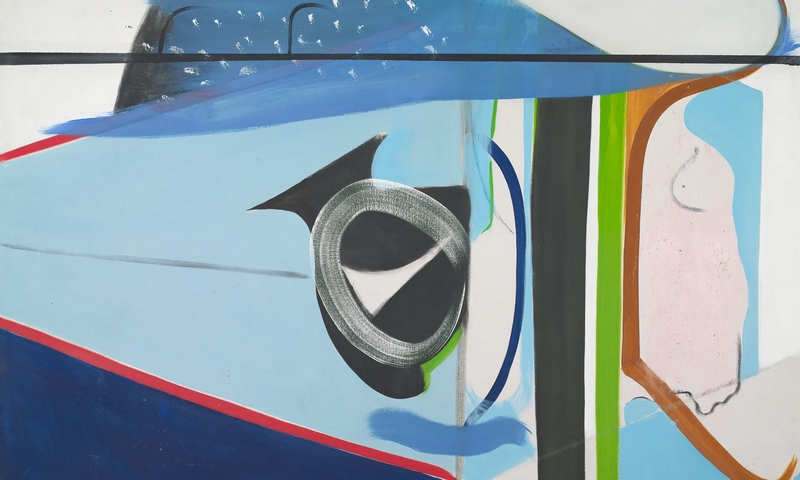
Three Peter Lanyon artworks acquired in lieu of inheritance tax

Two gouaches and landscape allocated to settle £900,000 owed on Cornish artist’s estate

Dreamers and disrupters: the best art and architecture of autumn 2018

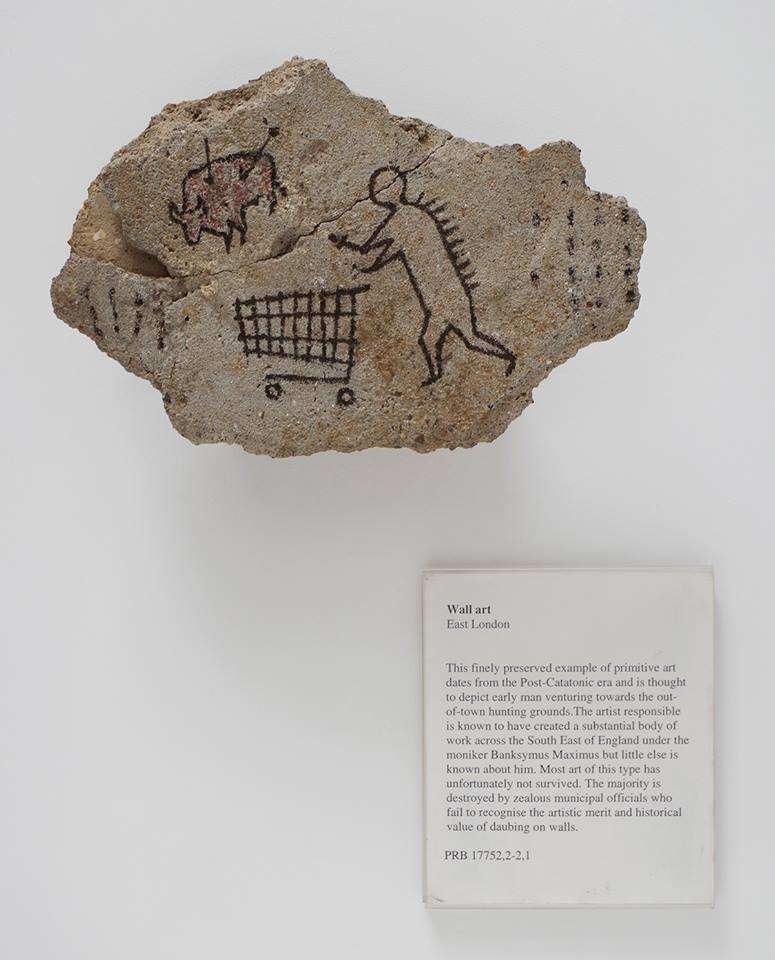
bansky cave painting
In 2005, Banksy installed this ‘cave painting’ in one of British Museum’s galleries without permission, and without anyone noticing. He gave it a fake identification number and label, and it remained on the wall for three days before the British Museum was alerted to the prank via Banksy’s website. photo: British Museum I Object Exhibition


Powered by Guardian.co.ukThis article titled “Dreamers and disrupters: the best art and architecture of autumn 2018” was written by Jonathan Jones, Sean O’Hagan , Adrian Searle and Oliver Wainwright, for The Guardian on Monday 27th August 2018 05.00 UTC

I Object

British Museum, London

Art is usually paid for by rulers and elites yet somehow artists have never been able to stop biting the hand that feeds. The British Museum’s world-spanning collections prove satire is a universal impulse. Private Eye editor Ian Hislop has delved deeper in search of the snarky for this exhibition, turning up angry artefacts, from graffiti on an ancient Babylonian brick to a Pussyhat worn on a women’s march. As they said in Babylon: “Up yours, Nebuchadnezzar.”
6 September-20 January

Masahisa Fukase: Private Scenes

Foam, Amsterdam

The highlight of the autumn photography season is this major retrospective of the troubled genius of postwar Japanese photography, the late Masahisa Fukase. The exhibition chronicles his extensive body of work from the early 1960s to 92, when a fall left him in a coma for the remaining 20 years of his life. Prints, publications and personal documents, including previously unseen material, trace the life and work of a radically experimental and often obsessive artist.
7 September12 December

Goldsmiths Centre for Contemporary Art

By Assemble

Radically different spaces … Goldsmiths Centre for Contemporary Art.
Radically different spaces … Goldsmiths Centre for Contemporary Art. Photograph: Assemble

Marking the first major permanent building by the young Turner prize-winning architecture collective, Assemble, all eyes will be on Goldsmiths’ new £4m Centre for Contemporary Art, to see how the pop-up prodigies have become grownup architects. Housed in a former Victorian swimming baths complex next to Goldsmiths art college, the birthplace of the young British artists, the galleries will take over radically different spaces, from airy top-lit rooms to the atmospheric cast-iron water tanks. It opens with a solo show by the provocative Argentine video artist Mika Rottenberg.
Opens 8 September

Three European photography festivals

In Europe, September is a busy month for photography festivals. Unseen Amsterdam once again occupies the former industrial site, Westergasfabriek, for its seventh edition. If you want to take the temperature of contemporary photography, the book market and the Living Room, where talks are held, are the best places. The scenic town of Vevey, Switzerland, becomes a big free photo festival with outdoor and indoor sites showing work by 60 artists including Daidō Moriyama, Christian Marclay, Erwin Wurm and Clare Strand. In Zagreb, the 10th Organ Vida festival is titled Engaged, Active, Aware – Women’s Perspectives Now, and features participants selected from an open call alongside an exhibition that includes work by activist artists such as Zanele Muholi and Sandra Vitaljić.
Images Vevey, Switzerland, 8-30 September; Organ Vida, Zagreb, 10-16 September, Unseen, Amsterdam, 21-23 September

Charleston Barns

By Jamie Fobert

This Sussex farmhouse was country base of the Bloomsbury Group, on the edge of the South Downs. The home of artists Vanessa Bell and Duncan Grant, it was a lively meeting place for their circle of writers, painters and intellectuals, stuffed with an eclectic collection of furniture, textiles, books and ceramics. The bucolic complex in Sussex will see its first exhibition space open this autumn, in a new building by Jamie Fobert, architect of Tate St Ives, along with a restaurant and events space in a pair of 18th-century farm buildings, restored and redeveloped by Julian Harrap Architects.
Opens 8 September

Video Games: Design/Play/Disrupt

V&A, London

Grand design … No Man’s Sky
Grand designs … No Man’s Sky Photograph: 2016 Hello Games Ltd

From the beguiling pastel landscapes of Monument Valley to the cinematic crime scenes of Grand Theft Auto, computer games have come a long way since the innocent days of a chubby Italian plumber jumping around to get coins. This exhibition will explore the medium since the mid-00s, charting how technology – from super-fast broadband and smartphones to open source design methods and social media – have changed the way video games are designed, discussed and played.
8 September-24 February.

V&A Dundee

By Kengo Kuma

Standing like a stone galleon run aground on the banks of the river Tay, the V&A’s Scottish outpost will finally open to the public in September, after years of delays and ballooning costs. Designed by feted Japanese architect Kengo Kuma, the angular concrete forms are clad with 2,500 cast stone panels, giving them the look of rugged boulders that have tumbled down from the cliffs. Its galleries will showcase the best of Scottish design, from paisley fabric and Fair Isle sweaters to the Dundee-designed computer game Grand Theft Auto.
Opens 15 September

Renzo Piano: The Art of Making Buildings

Royal Academy, London

The Whitney Museum of American Art, New York.
The Whitney Museum of American Art, New York. Photograph: © Nic Lehoux © RPBW

Renzo Piano doesn’t have an architecture practice – he has a “building workshop”. Coming from a family of builders, the suave octogenarian is very proud of how he crafts his buildings from his Genoa atelier, and this monographic exhibition promises to shed light on some of the magic behind the making. Focusing on 16 of his most significant projects, the show will range from his early career experimenting with lightweight structural systems to recent goliaths, including London’s Shard and New York’s the Whitney Museum.
15 September-20 January

Turner prize

Tate Britain, London

Politics dominate this year’s shortlist, with four radical visions competing for the world’s most prestigious art prize. Forensic Architecture is a team including lawyers and scientists who offer an alternative take on human rights cases. Naeem Mohaiemen uses film to explore the history of revolutionary movements. Luke Willis Thompson has made video portraits that bring Warholian gravitas to our media age. Charlotte Prodger explores queer identity with film, writing and performance. The exhibition will be a snapshot of political art now, whoever wins – but Willis Thompson is the most artistic artist of the bunch.
26 September6 January

Space Shifters

Hayward Gallery, London

Art that messes with your head is the theme of what should be a discombobulating delight of an exhibition. The artists here have ways of confusing your sense of space, undermining the apparently solid foundations of reality, luring you into a world of mirrors and uncertainty. Manipulators of the mind on a colossal scale such as Anish Kapoor and Richard Wilson are among the stars in this show, yet there is also space for the more homely subversions of Felix Gonzales-Torrez. Also on hand to warp basic assumptions about the world are Robert Irwin, Larry Bell and Roni Horn.
26 September-6 January

Ribera: Art of Violence

Dulwich Picture Gallery, London

Jusepe de Ribera died in 1652, and this will be the first London show of the astonishing and mordant Valencian painter and printmaker, who spent most of his career in Naples. Violence and martyrdom, crime and punishment and the bound male figure feature in this thematic overview of 40 works, including eight monumental paintings, figure studies and closeups of noses and mouths and, the gallery informs us, “an example of human remains in the form of tattooed skin”. Can’t wait.
26 September-27 January.

Elmgreen & Dragset: This Is How we Bite Our Tongue

Whitechapel Gallery, London

This Is How We Bite Our Tongue … drollery from Elmgreen & Dragset
This Is How We Bite Our Tongue … drollery from Elmgreen & Dragset Photograph: Courtesy of the artist and Whitechapel Gallery

Michael Elmgreen and Ingar Dragset have been working together for more than 20 years. They are still very naughty boys. Previous exhibitions have turned galleries into collector’s houses and gay saunas, airport baggage lounges and the lair of a fictional architect. Often mixing figurative sculpture and live actors, art gags and political points, their chief concern is the social world, private life and freedoms and civic responsibility. How Scandinavian of them.
27 September-13 January

The Atlantic Project: After the Future

Various venues, Plymouth

A pilot programme for a new biennial based around the multimillion-pound renovation of Plymouth City Museum and Gallery (opening as the Box in 2020). German artist Hito Steyerl, Superflex and Tommy Støckel from Denmark, Angolan artist Kiluanji Kia Henda and the late Donald Rodney are among the artists whose works will be located across the city, many in spaces not usually accessible to the public.
28 September–21 October

Oceania

Royal Academy, London

A canoe prow figure from Oceania.
A canoe prow figure from Oceania. Photograph: Museum der Kulturen Basel

The art of the Pacific was first collected by Europeans when Captain Cook set sail for Tahiti and beyond. It fascinated artists including Gauguin and Picasso – and they were right to be beguiled. The islands of Polynesia, Melanesia and Micronesia have produced some of the world’s most compelling and dreamlike images, from angry war gods and painted canoes to enigmatic faces. This is a blockbuster survey of a stupendous cultural tradition, with many well-preserved historical masterpieces. This show glories in them.
29 September
10 December.

Berlinde de Bruyckere

Hauser & Wirth, Somerset

The work of Belgian sculptor Berlinde de Bruyckere continually returns to the natural world, revealing her themes of suffering and protection, vulnerability and decay. Rotting blankets and wax casts of animal skins fill two galleries at Hauser & Wirth Somerset. With gloomy echoes of Beuys and Beckett, her work is creepy but very memorable, at once theatrical and earthy – and as insidious as a stain.
29 September-1 January.

Mantegna and Bellini

National Gallery, London

This is a family saga set in Renaissance Italy that casts light on two stupendous artists. The great painters Giovanni Bellini and Andrea Mantegna were competitive brothers-in-law with very different ideas about art. Bellini’s sensitive style is a play of light, shadow and rapturous colour. Mantegna is much sharper and bristles with classical erudition. They displayed their differences in friendly rivalry when they each painted versions of The Agony in the Garden. Mantegna’s is bold and full of detail, but the salmon-coloured sunrise Bellini painted is a knockout. A double helping of beauty.
1 October-27 January.

Richard Mosse: The Castle

Mack Books

Richard Mosse continues his exploration of the refugee experience with a book that gathers images taken from above using a thermographic video camera attached to a moving robotic arm. Following the migration routes into Europe from the Middle East and Central Asia, Mosse’s futuristic images document reinforced fences, security gates and loudspeakers as well as food queues and temporary shelters. They contrast the almost medieval conditions of the camps with the technology used to track and monitor those held in Fortress Europe.
Published 1 October.

Tania Bruguera

Turbine Hall, Tate Modern, London

Cuban artist Tania Bruguera sees art as a tool for social change. A controversial figure in her homeland, where her father was a diplomat in Fidel Castro’s government, she has been lauded abroad and detained by Cuban authorities. She also proposed herself as a presidential candidate in the 2018 Cuban presidential election. Bruguera has eaten dirt and, previously at Tate, two mounted police officers performed crowd control exercises in the gallery. For her, art and activism are inseparable – her art calls for active engagement.
2 October-24 February.

Pierre Huyghe

Serpentine Gallery, London

Ecosystems and artificial intelligence, human brainwaves and machine learning collide in French artist Pierre Huyghe’s latest project. Huyghe grapples with the world’s complexity, this time aided by an AI laboratory in Kyoto. There will be ambient noise, there will be biosemiotics, there will be LED screens and mental images. Huyghe, who can be very funny, treats the Serpentine Gallery as a living organism: it lives, it breathes, it is out of control.
3 October-10 February.

Living With Buildings

Wellcome Collection, London

An exhibition at the Wellcome Collection promises to shed light on the impact the built environment has on our health, for better and worse. From the slums of 19th-century London to the utopian experiments of postwar urban planners, to therapeutic spaces for people affected by cancer, the show will chart architects’ relationship with human wellbeing – and how their best intentions don’t always pan out.
4 October-3 March

Anni Albers

Tate Modern, London

Eclat, 1974, a textile design by Anni Albers.
Eclat, 1974, a textile design by Anni Albers. Photograph: 2018 The Josef and Anni Albers Foundation / Artists Rights Society (ARS), New York/DACS, London

For a long time, the hand-woven textile work of Anni Albers was overshadowed by her painter husband, the Bauhaus theorist Josef Albers. Like Sonia Delaunay, married to Robert, it is time her own significance is recognised. This major exhibition of more than 350 works – from small-scale studies to large wall hangings intended to interact with architecture, not to mention pictorial weavings and jewellery made from everyday objects – promises to be a ravishing and unmissable encounter with a pioneer of modernism.
11 October-27 January.

Auckland Tower

By Níall McLaughlin

Designed to resemble a great wooden siege engine drawn against the walls of Auckland Castle, in County Durham, Níall McLaughlin Associate’s Auckland Tower will provide a striking public entrance to a sprawling gothic stately home that has remained private residence for 900 years. Once the seat of the Prince Bishops of Durham, the estate is being converted into an international arts, faith and heritage centre by former investment banker Jonathan Ruffer, who has also boldly commissioned Japanese architects Sanaa to design a restaurant in a series of glass bubbles in the walled garden, due to start construction next year.
Opens 20 October

Nashashibi/Skaer

Tate St Ives

A film still from Why Are You So Angry? by Nashashibi/Skaer.
A film still from Why Are You So Angry? by Nashashibi/Skaer. Photograph: Nashashibi / Skaer

A recent collaboration between artists Rosalind Nashashibi and Lucy Skaer took them to Tahiti, following in the footsteps of Paul Gauguin, to look at the role and mythology of women in French Polynesia. Their earlier collaborations have used works by Henri Matisse and Paul Nash as inspiration. Matisse and Gauguin, Nash, Winifred Nicholson and others hang alongside Nashashibi and Skaer’s films, in a show that is a conversation across generations, a shared examination of histories and attitudes.
20 October-6 January

Hepworth prize for sculpture

The Hepworth, Wakefield

Michael Dean’s barbed, political and physical entanglements, Mona Hatoum’s meditations on the world, Phillip Lai’s mixes of real and unreal objects, Magali Reus’s highly crafted physical and metaphorical encounters and Cerith Wyn Evans’ poetry of light and space, signs and language give this biannual sculpture prize a surprising cohesion as an exhibition. Who might win? Wyn Evans is your man.
26 October-20 January

Roman Vishniac Rediscovered

Photographer’s Gallery and Jewish Museum, London

Between the two world wars, Russian born Vishniac created one of the most widely known photographic records of Jewish life in eastern Europe. In 1920, he settled in Berlin, where he recorded the ominous changes in German society, including the rise of nazism and the increasing persecution of German Jews in the city. Alongside his iconic works, this retrospective, which takes place across two galleries, includes recently discovered prints from the early 1920s to the late 70s.
26 October-24 February

Klimt/Schiele

Royal Academy, London

Sex and death in Sigmund Freud’s Vienna should make for a sumptuous display of dreams, desire and desperation. Gustav Klimt was the emperor of Viennese modern art around 1900, creating unrepressed visions of goddesses and gold. He helped the enfant terrible Egon Schiele to make his way. This show juxtaposes their drawings to reveal very different revolutionaries. Klimt’s eroticism is joyous, while Schiele portrays a darker world in which the naked human being is exposed and alone. With loans from Vienna’s Albertina Museum, Klimt/Schiele is a look at the birth of modernism.
4 November3 February

Lorenzo Lotto: Portraits

National Gallery, London

This will surely be one of the exhibitions of the year. Italian Renaissance painter Lorenzo Lotto created some nice altarpieces, but his real genius was for painting people. His portraits have an engrossing frankness and intimacy. He sometimes uses a landscape format, so he can dramatise individuals on a wider stage. His great Portrait of Andrea Odoni, for instance, places a passionate man with hand on heart among his collection of sensual sculpture. Lotto is one of the supreme portrait painters of all time. Seeing his subjects is just like meeting Shakespeare’s characters up close.
5 November-10 February

I Am Ashurbanipal

British Museum, London

Ancient Assyrian art is like a slab of bleeding lion meat thrown before you to eat raw. In fact, Lion hunting is a favourite theme. Others include besieging cities and torturing prisoners. Not a gentle empire, but the chunky, determined figures who march and even swim through its mighty art are dynamic and strong. The British Museum has the best collection of this art in the world. This exhibition brings it to life by setting it against the story of Ashurbanipal, greatest of Assyrian kings and one hell of a lion hunter. A guaranteed blockbuster blast.
8 November-24 February

Paris Photo

Europe’s biggest photo fair takes over the Grand Palais for four days. If you need a break from the commercialism of the main event, there is the indie book fair, Offprint, at Beaux-Arts de Paris as well as various events, including a curated walk though Paris that retraces the history of photography in the city “through the prism of women”. There will also be a host of book signings by the likes of Roger Ballen, Sophie Calle, Susan Meiselas, Alec Soth and David Lynch.
8-11 November

Gainsborough’s Family Album

National Portrait Gallery, London

The Painter’s daughters chasing a butterfly, by Thomas Gainsborough, c.1756.
The Painter’s daughters chasing a butterfly, by Thomas Gainsborough, c.1756. Photograph: The National Gallery, London/PA

Perhaps not many artists are such keen parents as the 18th-century portrait master Thomas Gainsborough. In an age of the profoundest patriarchy, Gainsborough wanted his two daughters to become artists. He painted them again and again, marvelling at their growing minds as they discovered the world around them in his most moving work, The Painter’s Daughters Chasing a Butterfly. Gainsborough’s love for his daughters is at the heart of this revelatory look at his private world, which includes portraits of his wife and himself.
22 November-3 February

Fernand Léger

Tate Liverpool

The mechanised new world he saw on the western front in the first world war convinced Fernand Léger that art also should be machine-like. Before then he was a cubist, seeing reality in shards. When he got his new vision of a cybernetic modernity he started to paint in a unique tubular style that celebrates modern life, and feature art deco interiors and beautiful robotic people. As the Tate Liverpool exhibition stresses, he also made films and collaborated with architects in pursuit of his quirky utopia. Léger saw the digital age coming. His optimism has a lot to teach us.
23 November17 March

guardian.co.uk © Guardian News & Media Limited 2010

Published via the Guardian News Feed plugin for WordPress.
Industry looks to graduate fashion week for sustainable heroes

Sustainability is intrinsic and not an afterthought for many designers taking part in this year’s event