Vogue centenary exhibition styles fashion bible as cultural record

vogue100exhibition vogue100- vogue100


Powered by Guardian.co.ukThis article titled “Vogue centenary exhibition styles fashion bible as cultural record” was written by Hannah Marriott, for The Guardian on Monday 7th September 2015 16.19 UTC

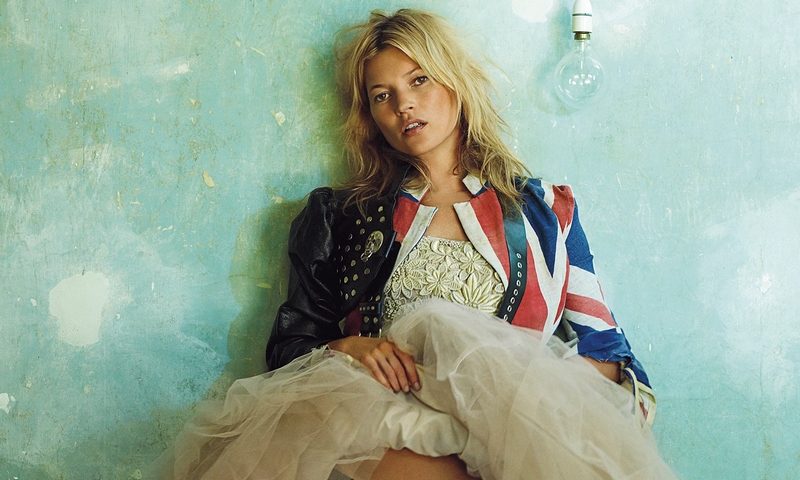
At first glance, it’s all chiffon and glamour: Kate Moss in a huge hooped skirt, photographed by Mario Testino in 2008; David Hockney posing with a sequin-clad Maudie James in 1968, as captured by Cecil Beaton; Anne Gunning, swathed in pink in Jaipur in the 50s, looking away from Norman Parkinson’s lens.

But the National Portrait Gallery’s major spring exhibition, celebrating 100 years of British Vogue, will argue that it is much more than a style magazine.

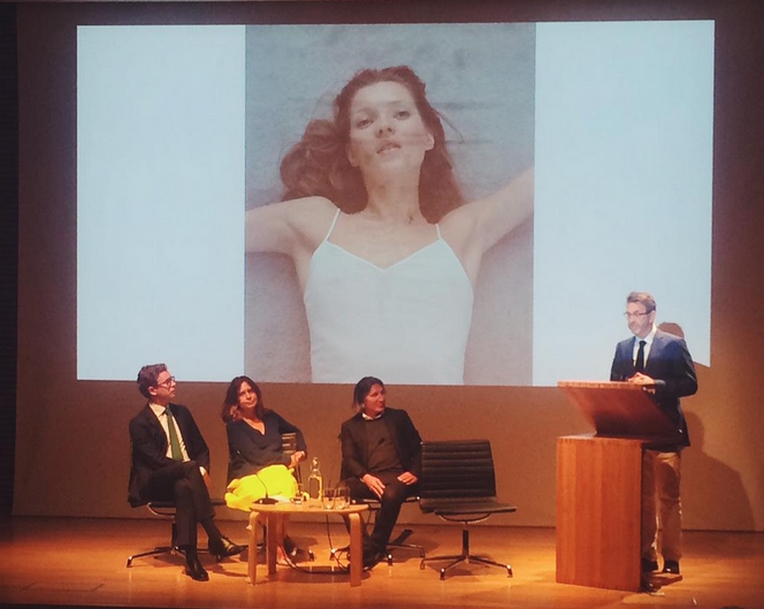
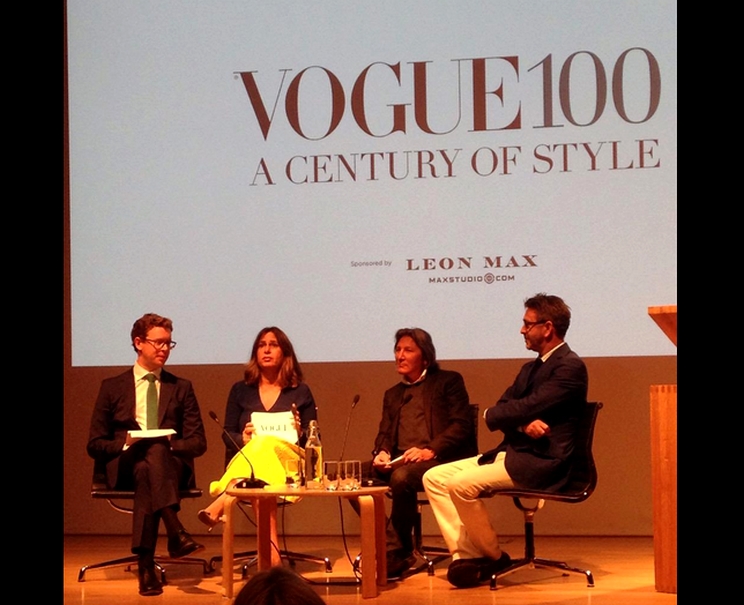
“As well as the fashion bible it has now become, it is a cultural record of the times,” said current editor Alexandra Shulman at a launch event for Vogue 100, A Century of Style, on Monday. The exhibition, opening on 11 February next year, will launch the magazine’s centenary celebrations, which also include a behind-the-scenes BBC2 documentary.

A preview of the exhibition

British Vogue first hit newsstands in 1916 and – as with many desirable fashion brands – the ability to leverage this illustrious heritage has been key to the magazine’s success.

The exhibition will highlight British Vogue’s work with “the greatest photographers in modern history”, said curator Robin Muir, including Edward Steichen, Helmut Newton, Man Ray and Irving Penn, and will include portraits of Marlene Dietrich, Henri Matisse, Francis Bacon and Fred Astaire.

The show will also incorporate moments of recent fashion history, such as the 1990 Peter Lindbergh cover – featuring Naomi Campbell, Linda Evangelista, Tatjana Patitz, Christy Turlington and Cindy Crawford – widely regarded as defining the supermodel era, and the notorious 1993 Corinne Day shoot that helped introduce Kate Moss, and so-called “heroin chic”.

Photograph by Cecil Beaton titled The Second Age of Beauty.
Photograph by Cecil Beaton titled The Second Age of Beauty is Glamour. Photograph: Cecil Beaton/Conde Nast Publications

Tellingly, as printed magazines fight to underline their relevance in the digital age, Vogue 100 will begin in the present day, with a room devoted to digital fashion film. Visitors will then “travel back in time to the 90s, with Herb Ritts and Corinne Day; to the 80s with Bruce Weber and Peter Lindbergh; to the 70s with Helmut Newton and Guy Bourdin,” said Muir.

Finally, they will reach “the year zero and the quieter, beautiful, more meditative vintage masterworks of photographers such as Steichen and Man Ray,” he said.

Dr Nicholas Cullinan, director of the National Portrait Gallery, said that the show would represent “a panoramic image of the last century”.

That view is, however, undeniably well-heeled and overwhelmingly white. Questioned about a lack of racial diversity, Shulman said: “[British Vogue] has been a reflection of our culture for 100 years and it has been predominantly white culture. I think we just have to accept that. Though there certainly are a number of non-white people in the exhibition.”

As Britain became a more multicultural society, that shift was reflected in the photography, Cullinan said.

“Something we should be very proud of, and which I have included in the exhibition, is that British Vogue was the first mainstream magazine to have a black cover model, Donyale Luna, shot by David Bailey in 1966,” said Muir.

David Hockney, Peter Schlesinger and Maudie James appear in the major exhibition celebrating 100 years of British Vogue.
David Hockney, Peter Schlesinger and Maudie James appear in the major exhibition celebrating 100 years of British Vogue. Photograph: Conde Nast Publications

“It’s not all rarefied clouds of pink chiffon,” said Muir, adding that unexpected exhibits would include “extraordinarily graphic depiction of war” taken during the 1940s by Lee Miller.

“Those are not the sort of images anyone ever expected to be commissioned by a magazine like Vogue – but Vogue did have its own war photographer,” he said. “Real life intrudes – particularly at the magazine’s start, during the first world war, and during the second world war and the 1960s, when you can see class barriers being broken down in its pages.”

Muir added that Vogue was as much about creating magic and fantasy as it was about reflecting reality. “Cecil Beaton once said, ‘when I die I want to go to Vogue’ – and without wishing to dismiss the competition, saying ‘when I die I want to go to Marie Claire’ does not have the same kind of resonance.”

guardian.co.uk © Guardian News & Media Limited 2010

Published via the Guardian News Feed plugin for WordPress.

The Art Fund charity launches a line of luxury holidays

Secret doors will open, champagne will flow and VIP access to the art world will be afforded the wealthy. But it’s a curious departure for a charity that champions free museum admission

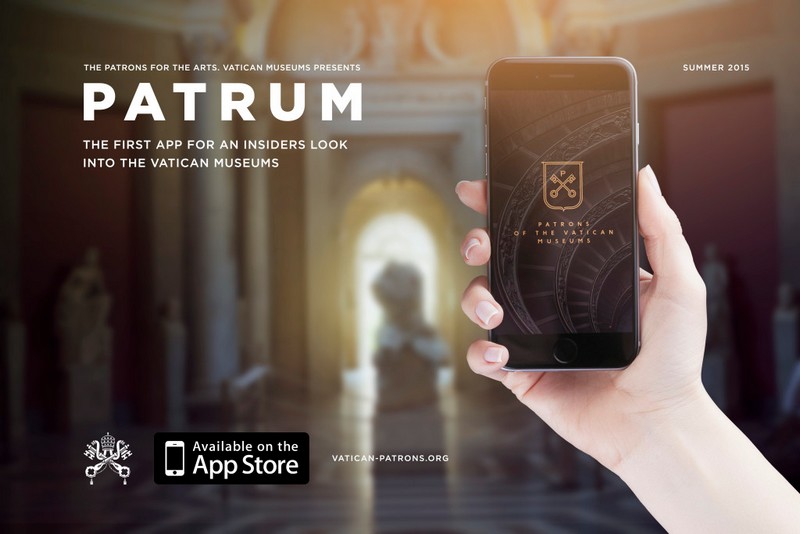
The Vatican’s new philanthropy app could ruin everything

The last time wealthy art fans did a Vatican restoration, they nearly destroyed the Sistine Chapel. The new Vatican app is elitism 2.0 – and will only endanger more masterpieces

This week’s new exhibitions

Massouras, Souvenir Pompeii Scavi


Powered by Guardian.co.ukThis article titled “This week’s new exhibitions” was written by Robert Clark & Skye Sherwin Sherwin, for The Guardian on Friday 14th August 2015 12.15 UTC

Alexander Massouras, Nottingham

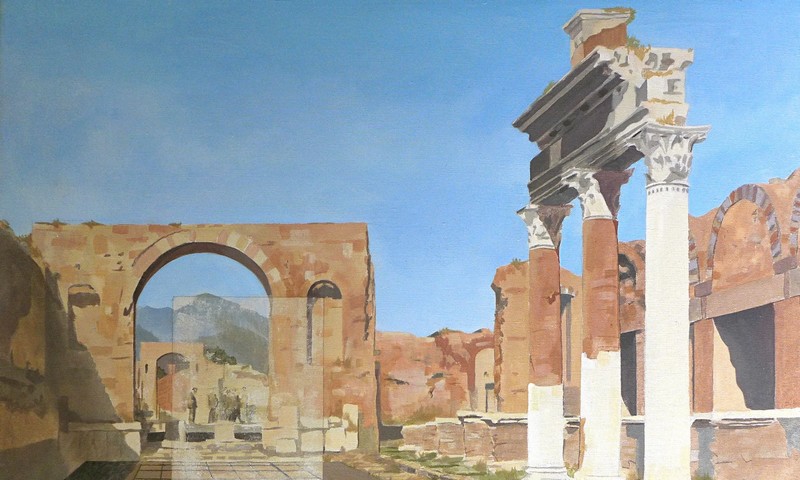
Alexander Massouras is an Oxford University fellow, art historian and collector, as well as an artist. And it shows – but not in any unfavourable fashion. While it might be presumed that artists intuitively indulge in getting their hands dirty, whereas academics reflect on the outcomes of their struggles, Massouras is unashamed to present himself as an artist who spends as much time in the library as the studio. Accordingly, his paintings, as translucent as projected lecture slides, always seem critically reflective. An image of a sun-drenched classical facade is created with paint stripper as well as oil on linen. Drawings are semi-erased and figures set against blackout backgrounds. Whether working from archaeological plans or holiday snaps, his images are not just pictures but also meditations on the contrivances of memory and the manipulations of reproduction.

Syson Gallery, to 19 Sep

RC

Performance Art + Northern Ireland, Belfast

Given that performance art has flourished in Northern Ireland over the last few decades against the background of the Troubles, there has been very little art historical recognition of the fact. This exhibition aims to redress that oversight with live performances, video and photographic documentation, and assorted archival memorabilia. Intriguingly, it stresses how suited performance art has been to addressing the social uncertainties of political problem zones. The renowned likes of Alastair MacLennan, Sandra Johnston and André Stitt are seen to have infiltrated a divided society with acts of painful endurance, existential rage and the occasional, disarming relief of hilarity.

Golden Thread GLuxury Designer Shoeallery, to 30 Sep

RC

Rick Copsey, Manchester

From Turner to De Kooning, wild-at-heart artists have forced the raw matter of paint, with its quick liquidity and viscous malleability, into artworks that reflect the rhythms of nature, their tactile sensuality differentiating them from the clinical gloss of landscape photography. Against this backdrop, Rick Copsey’s recent work confounds. On the face of it, these are proper photographs, Digital C-type metallic prints mounted on aluminium. Yet their imagery evokes universes of Romantic wonderment alien to the forensic exactitude of the camera. In fact, what we are looking at are blown-up photographs of minute details of the surface of the artist’s paintings. The common assumptions about photographic verity are brushed aside in Copsey’s trompe l’oeil shadows, perilous ridges and ambiguous refractions of abstract light and dark.

Object / A, Sat to 19 Sep

RC

Caroline Locke, Scunthorpe

Caroline Locke brings her evocative sound and image cross-associations to Scunthorpe. Across five porthole screens, intricately rippling water is triggered into motion by sounds reminiscent of pounding heartbeats, amoebic breathing and an eerily distant foghorn. Across the gallery floor, industrially constructed tanks, collectively arranged to resemble a gothic arch, contain pools of shimmering liquid light, driven by submerged motors. A flatscreen monitor shows a tuning fork vibrating. The overall effect is to summon some kind of numinous presence lying just beyond recognition.

20-21 Visual Arts Centre, to 19 Sep

RC

Towards An Alternative History Of Graphic Design, Bexhill-on-Sea

This show of 1960s and 1970s artists’ books has plenty for print junkies. It focuses on four self-publishers: German pop artist Wolf Vostell, whose magazine Pop Und Die Folgen is packed with hectic collages of consumer culture dreams and symbols; Beau Geste Press, which spread mail art and Fluxus via art mag Schmuck; Assemblings, with its madcap mix of paper and typography; and Hansjörg Mayer’s bRIAN, influenced by the visual text games of concrete poets.

De La Warr Pavilion, to 4 Oct

SS

Holly Blakey: Some Greater Class, London

When it comes to music promos, Holly Blakey is one of the hottest young choreographers out there. She’s responsible for the statuesque silhouettes in Jessie Ware’s Night Light and the bloody-nosed lad letting rip in Young Fathers’ Shame. She has also been making headway in the art world, working with Hannah Perry on steamy, youth culture-infused performances. This Friday marks her first solo gallery effort, with dancers set to explore the territory in which she’s got plenty of expertise: pop video moves, sexualised bodies and consumerism.

Hales Gallery, E1, Fri

SS

Lucky Dragons, Southend-on-Sea

In one of the art world’s more incongruous pairings, linchpins of Los Angeles’s avant-garde music scene, art band Lucky Dragons, are staging their psychedelic, electronic experiments between the US west coast and Southend-on-Sea this summer. One half of the duo, Luke Fischbeck, has gone to work in a specially created studio-cum-project space, The Bear Pit, within the seaside town’s ground-breaking gallery Focal Point. Here, overseen by audiences from the viewing gallery, he’s working up feedback loops of images and sound sent by his bandmate Sarah Rara. Lucky Dragons aren’t the kind of laptop noiseniks who stand aloof on a stage. Their live shows have seen music improvised via the audience, hooked up with wires or playing percussive technology. You can expect both their gallery time and a special mid-residency performance next Saturday to rewrite the usual performer/spectator divide and go big on audience collaboration.

Focal Point Gallery, to 29 Aug

SS

guardian.co.uk © Guardian News & Media Limited 2010

Published via the Guardian News Feed plugin for WordPress.
Glenda Nicholls wins 2015 Deadly art award for A Woman’s Rite of Passage

Overall winner at 2015 Victorian Indigenous art awards is sculptural work representing the role of Indigenous women in Welcome to Country ceremonies

Jukuja Dolly Snell awarded national Indigenous art prize

Superhouses: the allure of fantasy homes where money is no object

As our homes increasingly reflect identity, financial security and status, a new book about some of the world’s most striking designs taps into our daydreams

Inside the world’s superhouses – in pictures