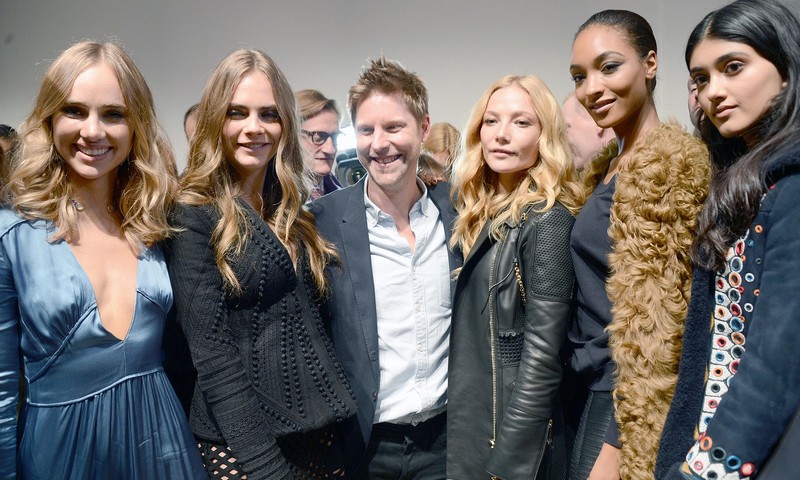


London fashion week: Burberry and Christopher Kane look to the stars

Christopher Bailey’s show took Burberry street while celebrities looked on, and Kane made light of a dark period in his life

London fashion week launches in quirky new home – a multistorey car park

Star-studded event moves from Somerset House to concrete landmark as practicality and accessibility take centre stage

Vogue centenary exhibition styles fashion bible as cultural record

vogue100exhibition vogue100- vogue100


Powered by Guardian.co.ukThis article titled “Vogue centenary exhibition styles fashion bible as cultural record” was written by Hannah Marriott, for The Guardian on Monday 7th September 2015 16.19 UTC

At first glance, it’s all chiffon and glamour: Kate Moss in a huge hooped skirt, photographed by Mario Testino in 2008; David Hockney posing with a sequin-clad Maudie James in 1968, as captured by Cecil Beaton; Anne Gunning, swathed in pink in Jaipur in the 50s, looking away from Norman Parkinson’s lens.

But the National Portrait Gallery’s major spring exhibition, celebrating 100 years of British Vogue, will argue that it is much more than a style magazine.

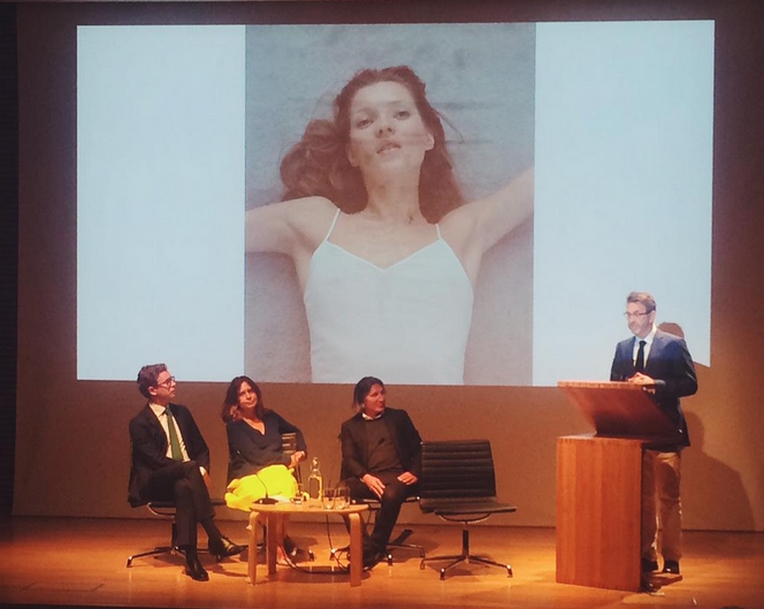
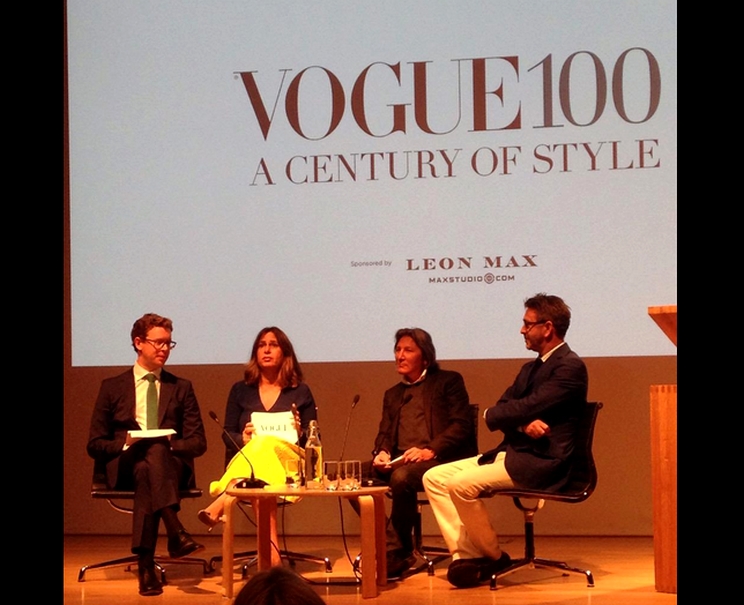
“As well as the fashion bible it has now become, it is a cultural record of the times,” said current editor Alexandra Shulman at a launch event for Vogue 100, A Century of Style, on Monday. The exhibition, opening on 11 February next year, will launch the magazine’s centenary celebrations, which also include a behind-the-scenes BBC2 documentary.

A preview of the exhibition

British Vogue first hit newsstands in 1916 and – as with many desirable fashion brands – the ability to leverage this illustrious heritage has been key to the magazine’s success.

The exhibition will highlight British Vogue’s work with “the greatest photographers in modern history”, said curator Robin Muir, including Edward Steichen, Helmut Newton, Man Ray and Irving Penn, and will include portraits of Marlene Dietrich, Henri Matisse, Francis Bacon and Fred Astaire.

The show will also incorporate moments of recent fashion history, such as the 1990 Peter Lindbergh cover – featuring Naomi Campbell, Linda Evangelista, Tatjana Patitz, Christy Turlington and Cindy Crawford – widely regarded as defining the supermodel era, and the notorious 1993 Corinne Day shoot that helped introduce Kate Moss, and so-called “heroin chic”.

Photograph by Cecil Beaton titled The Second Age of Beauty.
Photograph by Cecil Beaton titled The Second Age of Beauty is Glamour. Photograph: Cecil Beaton/Conde Nast Publications

Tellingly, as printed magazines fight to underline their relevance in the digital age, Vogue 100 will begin in the present day, with a room devoted to digital fashion film. Visitors will then “travel back in time to the 90s, with Herb Ritts and Corinne Day; to the 80s with Bruce Weber and Peter Lindbergh; to the 70s with Helmut Newton and Guy Bourdin,” said Muir.

Finally, they will reach “the year zero and the quieter, beautiful, more meditative vintage masterworks of photographers such as Steichen and Man Ray,” he said.

Dr Nicholas Cullinan, director of the National Portrait Gallery, said that the show would represent “a panoramic image of the last century”.

That view is, however, undeniably well-heeled and overwhelmingly white. Questioned about a lack of racial diversity, Shulman said: “[British Vogue] has been a reflection of our culture for 100 years and it has been predominantly white culture. I think we just have to accept that. Though there certainly are a number of non-white people in the exhibition.”

As Britain became a more multicultural society, that shift was reflected in the photography, Cullinan said.

“Something we should be very proud of, and which I have included in the exhibition, is that British Vogue was the first mainstream magazine to have a black cover model, Donyale Luna, shot by David Bailey in 1966,” said Muir.

David Hockney, Peter Schlesinger and Maudie James appear in the major exhibition celebrating 100 years of British Vogue.
David Hockney, Peter Schlesinger and Maudie James appear in the major exhibition celebrating 100 years of British Vogue. Photograph: Conde Nast Publications

“It’s not all rarefied clouds of pink chiffon,” said Muir, adding that unexpected exhibits would include “extraordinarily graphic depiction of war” taken during the 1940s by Lee Miller.

“Those are not the sort of images anyone ever expected to be commissioned by a magazine like Vogue – but Vogue did have its own war photographer,” he said. “Real life intrudes – particularly at the magazine’s start, during the first world war, and during the second world war and the 1960s, when you can see class barriers being broken down in its pages.”

Muir added that Vogue was as much about creating magic and fantasy as it was about reflecting reality. “Cecil Beaton once said, ‘when I die I want to go to Vogue’ – and without wishing to dismiss the competition, saying ‘when I die I want to go to Marie Claire’ does not have the same kind of resonance.”

guardian.co.uk © Guardian News & Media Limited 2010

Published via the Guardian News Feed plugin for WordPress.

The new Nine Elms might be a rich man’s playground, but I hope it works

Despite the swimming pool bridge, general architectural extravagance and Donatella Versace fixtures, this part of London could be dynamic and interesting

Humans have already used up 2015’s supply of Earth’s resources – analysis

Earth Footprint Network 2015 - Earth Overshoot Day 2015


Powered by Guardian.co.ukThis article titled “Humans have already used up 2015’s supply of Earth’s resources – analysis” was written by Emma Howard, for theguardian.com on Wednesday 12th August 2015 21.00 UTC

Humans have exhausted a year’s supply of natural resources in less than eight months, according to an analysis of the demands the world’s population are placing on the planet.

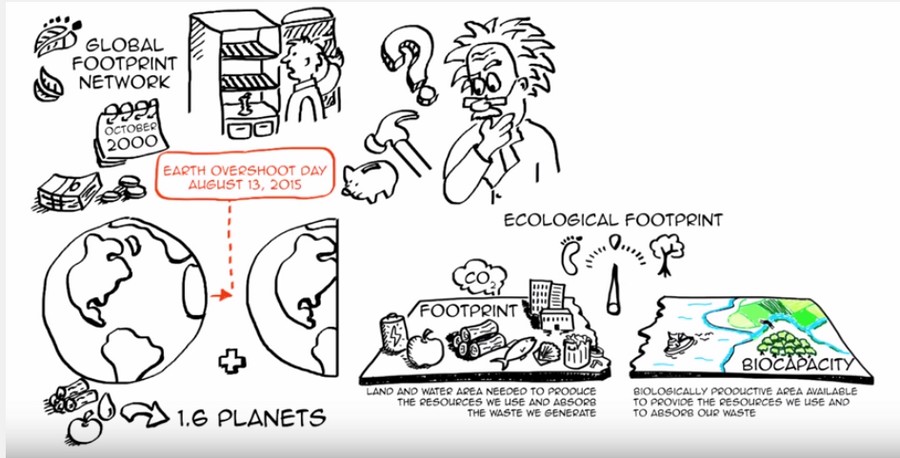
The Earth’s “overshoot day” for 2015, the point at which humanity goes into ecological debt, will occur on Thursday six days earlier than last year, based on an estimate by the Global Footprint Network (GFN).

The date is based on a comparison of humanity’s demands – in terms of carbon emissions, cropland, fish stocks, and the use of forests for timber – with the planet’s ability to regenerate such resources and naturally absorb the carbon emitted. That implies the excess demands being placed on natural systems are doing more permanent harm that cannot be easily undone.

The GFN estimates that human consumption first began to exceed the Earth’s capacity in the early 1970s and the overshoot day has been falling steadily earlier ever since, due to the growth in the global population alongside the expansion of consumption around the world.

Fossil fuel ticker

Mathis Wackernagel, president of the GFN told the Guardian: “The big problem is not that our deficit is getting bigger, it is that it cannot be maintained in the long-run. Even though we are in a deficit equation we are not taking measures to take us in the right direction. The problem is psychological – somehow we are missing this basic physical law. It is obvious to children, but for 98% of economic planners it is a minor risk not worth our attention. In the end the question is – does it matter to the government?”

The GFN estimate that the world’s population currently consumes the equivalent of 1.6 planets. This figure should rise to two planets by 2030 based on current trends. On a per capita basis, the UK consumes around three times more than the equivalent level that ecosystems can renew, but its relative share is dropping as developing economies grow and consume more.

The impact of this “ecological deficit” can be witnessed through deforestation, soil erosion, depletion of water resources and the accumulation of greenhouse gases in the atmosphere.

Wackernagel added that the UN’s crunch international climate change conference in Paris in December and global diplomatic efforts were providing hope for change.

“The conference in December is sparking conversations and we are seeing unheard of agreements between the US and China,” he said.

“The two biggest emitters are starting to co-operate and the G20 leaders have recognised we have to move out of fossil fuels by the end of this century – although this is a bit too slow in my opinion.”

guardian.co.uk © Guardian News & Media Limited 2010

Published via the Guardian News Feed plugin for WordPress.
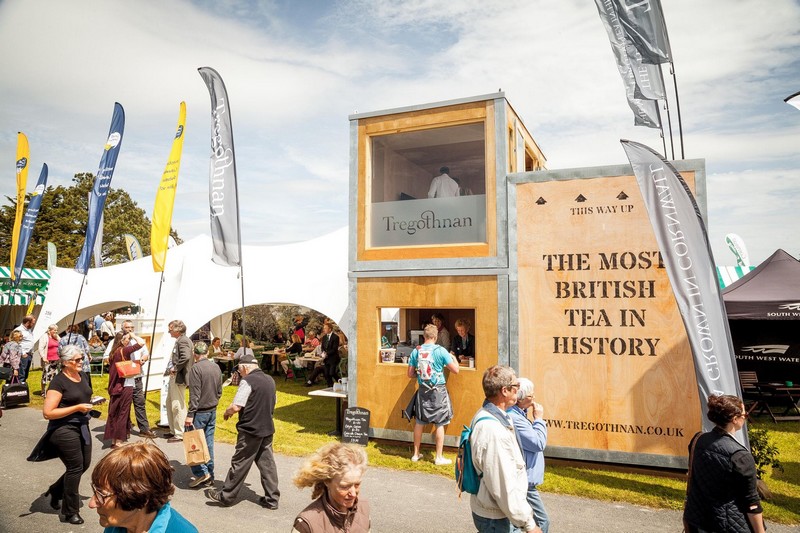
Brewing up a storm: British-grown luxury tea brands go from strength to strength

Sales of standard teabags may be falling but our best growers are even exporting to China