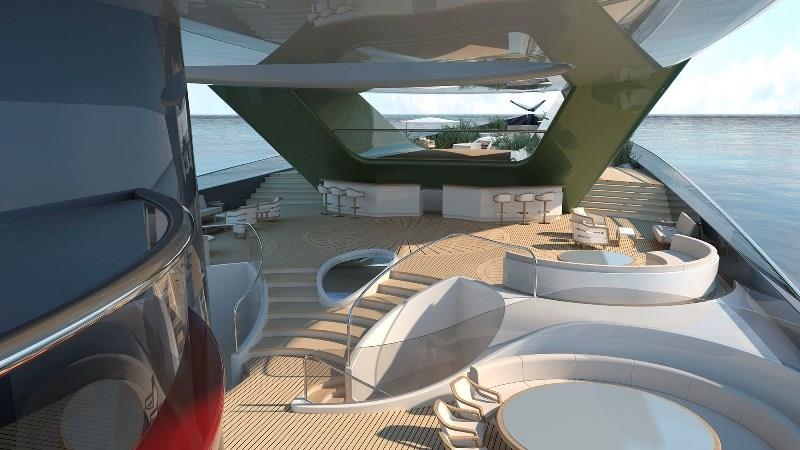
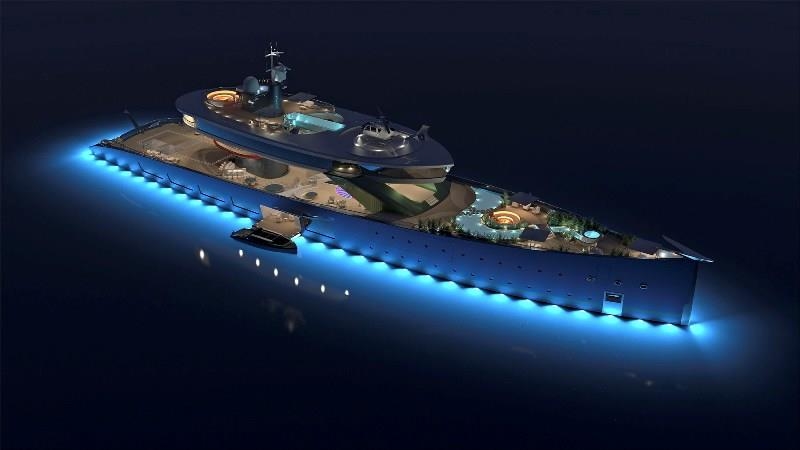
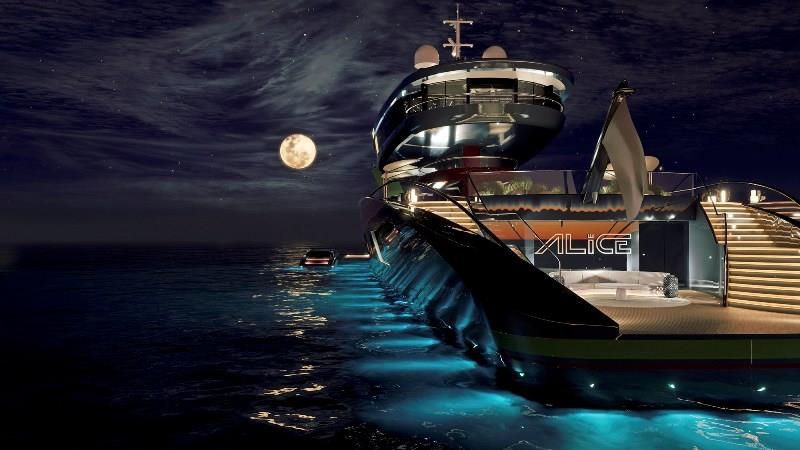
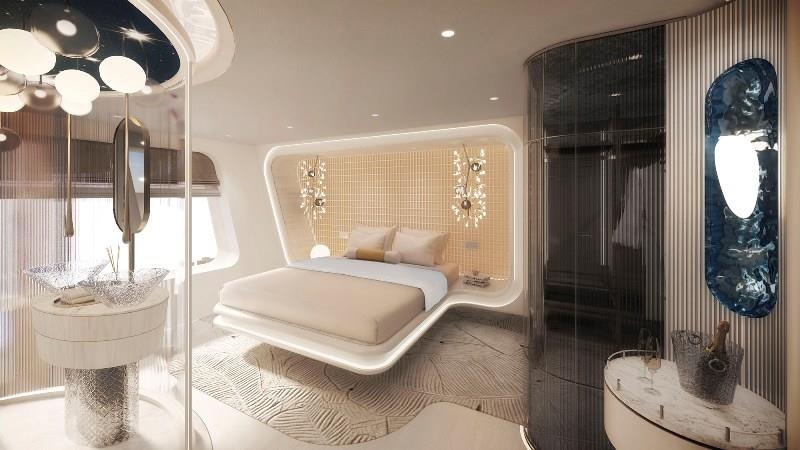
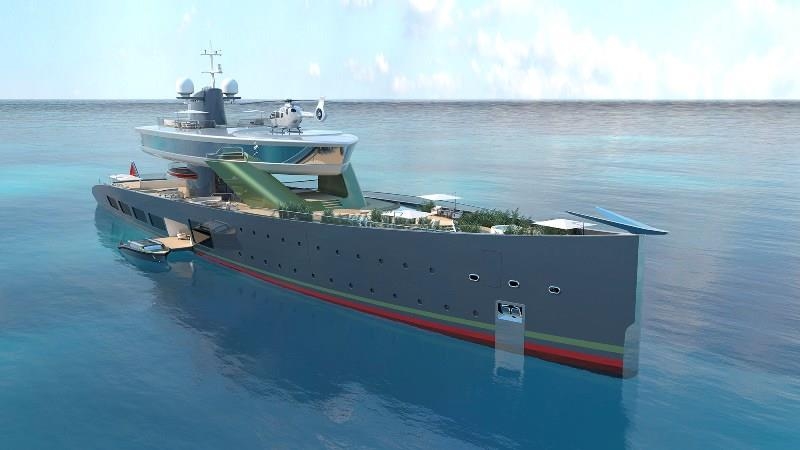
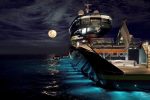
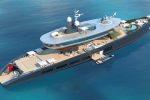
Alice is an emergence into a new era. Right now she remains a model, but one that paves the way. Alice is a fraction of reality in movement.
The German yacht builder Lürssen has earned an international reputation as the specialist in exclusive, bespoke yachts of outstanding engineering mastery.
The privately run company was founded in 1875 and remains solely in the hands of the fourth generation of the Lürssen family. Innovation has always been one of the most important driving forces in the company’s history. In 1886 Lürssen built the first motorboat of the world together with Gottlieb Daimler. It is, therefore, not surprising that Lürssen is now also building the first Lürssen yacht with fuel cell technology for a pioneering and technology driven client.
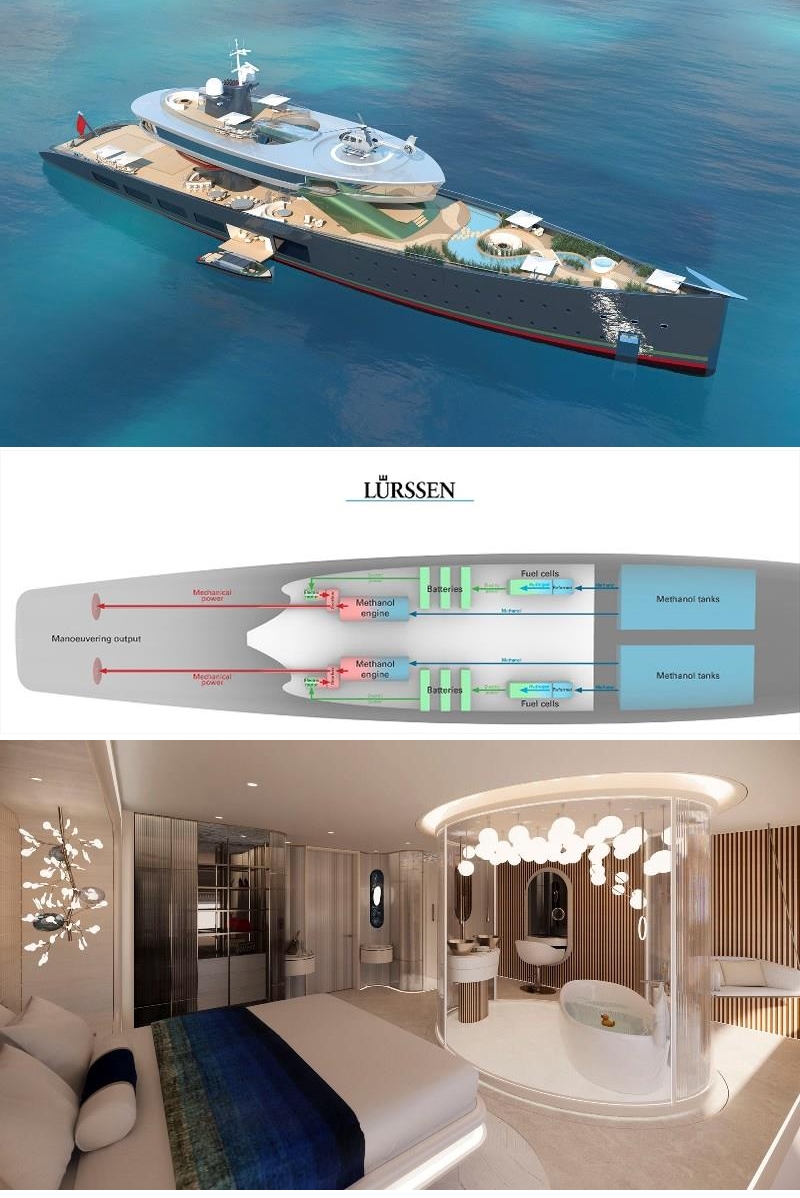
The fuel cell flanks the conventional generators and represents a giant step towards launching an emission free Lürssen yacht. This innovative technology makes it possible to anchor emission-free for 15 days or cruise 1000 miles at slow speed.
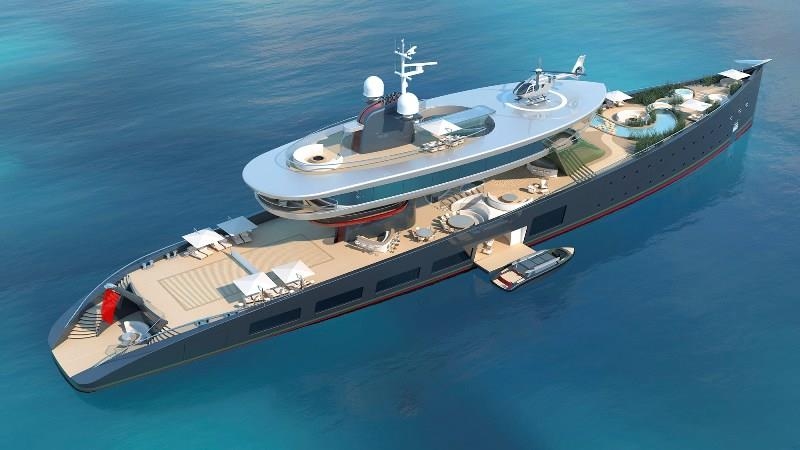
Lürssen remains very discreet when it comes to yachts under construction or its clients. To promote the sustainable technology of the future, Lürssen has developed an innovative, climate-neutral yacht model called Alice.
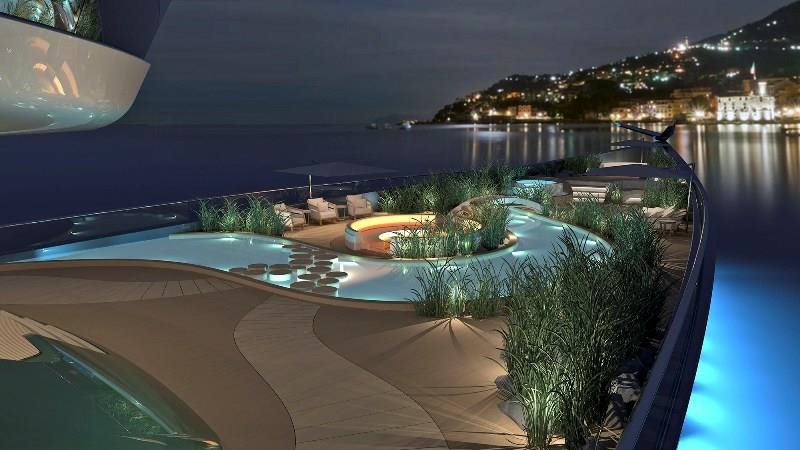
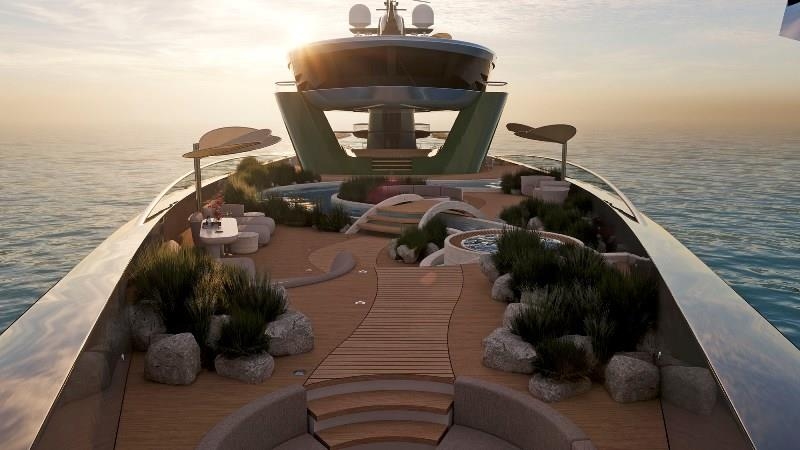
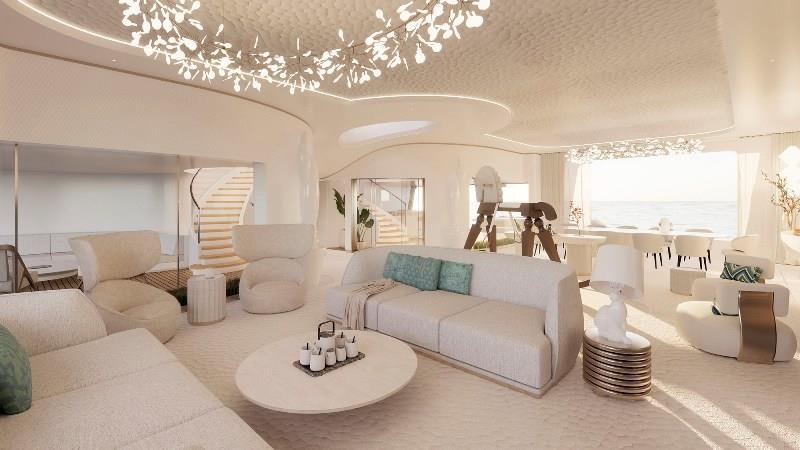
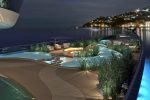
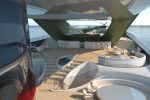
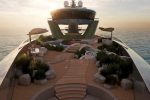
The yacht concept of tomorrow’s wonderland is driven by state-of-the-art design as well as honest and heartfelt ecological responsibility. The ponds transform the yacht’s deck into a sea paradise, which when combined with the living walls in the interior, create a unique ecosystem on board. Nature’s crisp perfume surrounds Alice in its own atmosphere, and teak is replaced by fast-growing and lightweight organically farmed wood that meets the high standards for yachts with the same exquisite look and feel.
An emission-free fuel cells generates electrical energy based on hydrogen reformed from green methanol. The fuel cell replaces the conventional diesel generators on board. For higher speed and energy demands, an additional methanol engine is added.
Energy saving technologies, such as waste heat recovery utilisations, recover heat emissions for use within the HVAC system, for both heating and cooling- purposes. This is complemented by mirrored glass windows around the owner’s deck where reflecting the heat serves for thermal insulation and reduces energy load of the air conditioning systems.
Lürssen Alice
Length over all: 98 m / 321’5”
Beam overall: 17 m / 55’8”
Builder: Lürssen
Exterior Designer: Lürssen
Interior Designer: Dasha Moranova Designs.
Mazzanti Automobili x MIEEG to move hybrid hyper cars on to the next level with new Evantra MMH hypercar Mazzanti Automobili and Mieeg (Micro Electric Energy Generator) have signed a collaboration agreement to jointly develop an innovative project, a new jewel from the Tuscan Atelier delivering maximum performance and combining pure Italian craftsmanship with the … Read more
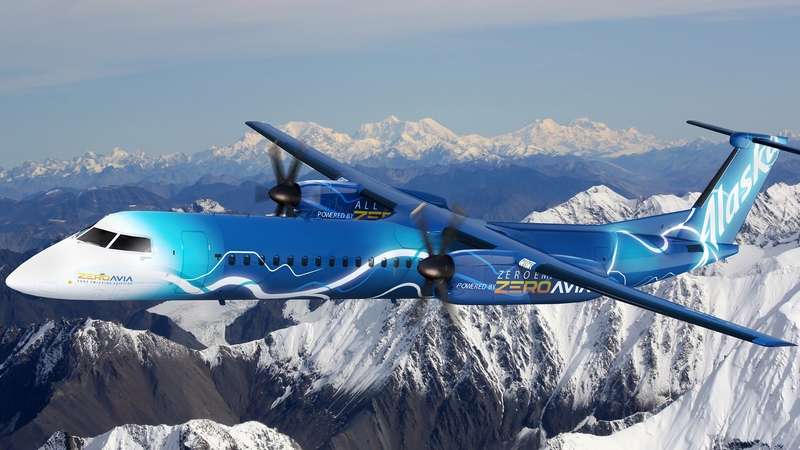
Imagine a future where flying an aircraft between Seattle and Portland produces zero emissions. Alaska Air Group Collaborating with ZeroAvia to Develop Hydrogen Powertrain for 76-Seat Zero-Emission Aircraft. ZeroAvia is gaining altitude as the leader in zero-emission passenger aircraft as it announces a development collaboration with Alaska Air Group, the parentcompany of Alaska … Read more
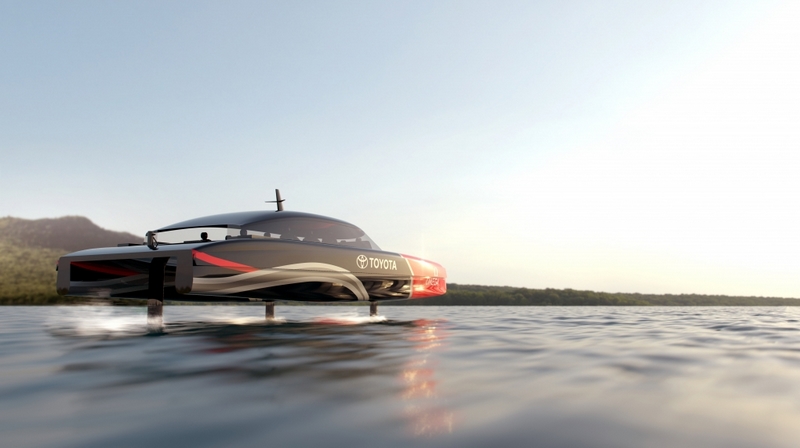
With so much investment in hydrogen across the world, shifting to foiling chase boats, powered by hydrogen could well prove to be a sustainable and practical solution for the future of the marine industry. For nearly two centuries the America’s Cup has pushed the boundaries in design and engineering, whilst ensuring innovation benefits … Read more
Monaco Energy Challenge 2021/ @Monaco Yacht Club; @energyboatchallenge.com
Monaco Energy Challenge 2021: Monaco Yacht Club hosts the first competition between green energy boats.
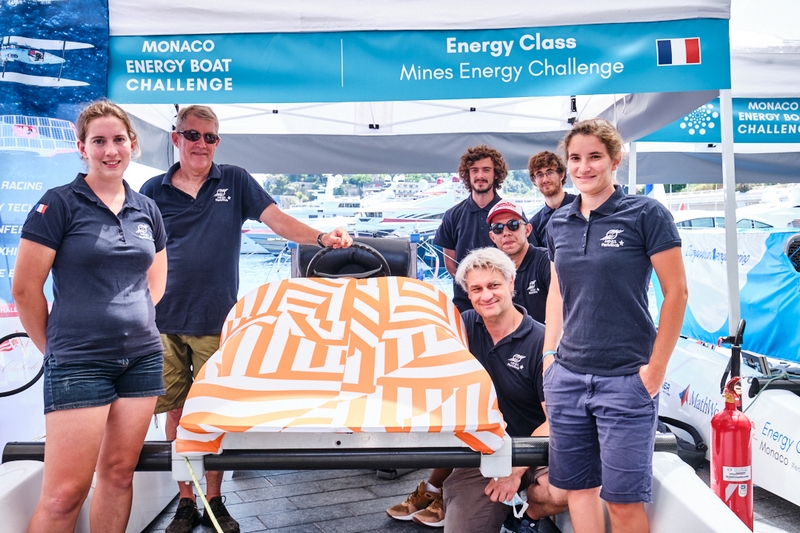
Teams from around the world gather in Monaco this week in preparation to race their boats during the Monaco Energy Challenge, a competition that “aims to stimulate the creativity of tomorrow’s engineers and the industry to develop propulsion methods using clean energy.”
The Monaco Energy Challenge is the world’s biggest green energy boat race with 35 teams from 20 countries entering electric, solar and hydrogen boats that compete in three different categories. A wide variety of teams – from university engineering students to commercial electric boat makers – will race in the Solar, Energy and Open Sea classes.
After a year of restrictions due to the pandemic, the 22 universities from Europe and rest of the world were finally able to show off the fruits of their research. It was their first confrontation on the water off Quai Rainier III, starting with the parade, followed by sea trials and an afternoon of qualifying heats for the green races. There was little room for error in the three categories in competition: Energy Class and its 19 protagonists, Solar Class (10 boats) and Open Sea Class (5 boats). The sun shone and sea and wind conditions were ideal for these prototypes of the future which tomorrow will have to demonstrate their seaworthiness, speed, endurance, manoeuvrability and above all reliability.
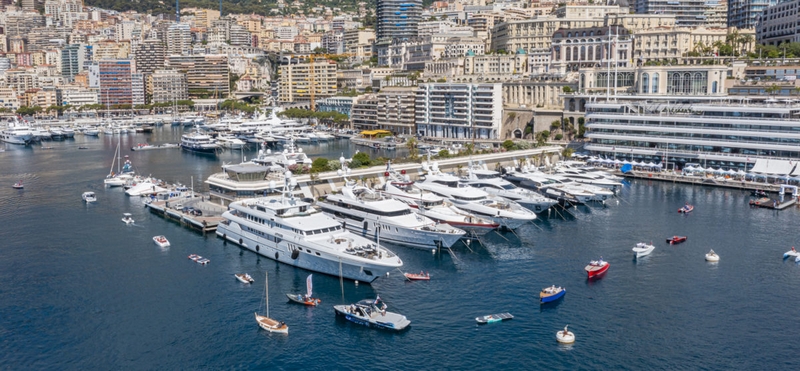
The three classes of futuristic boats in Monaco were invited to show off their advantages, silence, performance and economy, in bespoke events for each, the Energy and Solar classes racing round a half nautical mile course, aiming to do as many laps as possible off the main harbour wall. Before the big 16 nautical mile Monaco-Ventimiglia-Monaco race, they also had to prove how well their vessels manoeuvre in a restricted space. Docking, reversing, mooring recovery, 360°, buoy recovery – all the seamanship exercises required of a mariner, under the merciless sanction of the stopwatch. Lanéva Boat won ahead of Candela and Tenderworks.
Meanwhile in the Solar Class the Dutch Sunflare Solar Team who peaked at 14.37 knots look like serious contenders ahead of their compatriots from TU Delft Solar Boat de HAN Solar Boat, both posting speeds above 14 knots. But it was the Swiss from Swiss Solar Boat who was on the second step of the podium on the first day. In the Energy Class, the Italians from Bologna and their UniBoat set the best qualifying times, while the Polish from E-Racing Team, although over a minute adrift, seem well placed, as do the French from Mines Energie Challenge.
Monaco Energy Challenge 2021/ @Monaco Yacht Club; @energyboatchallenge.com; photo @YCM/ Studio Borlenghi
Three separate classes – sport, performance and experimentation
Energy Class
This is in effect a one design class, launched in 2018 by Yacht Club de Monaco which supplies each team with an identical 5m catamaran hull. Working with manufacturers, the students have to design the most effective and durable cockpit and propulsion system from a renewable energy of their choice, using a given amount of energy. These small 250kg prototypes are like mini-laboratories of innovation experimenting with a host of different approaches: fuel cell, heat recovery to optimise propulsion and artificial intelligence to name a few.
Solar Class
Boats must comply with a set of rules covering technical dimensions and power systems. In the Solar Class, a prototype is drawing energy from an onboard reserve continuously being recharged by solar panels on the deck. A match race (duel), slalom challenge and endurance course face this category that has been attending since the event was launched in 2014. With a length of 7m, these prototypes are capable of carrying their 140kg weight at nearly 25 knots!
Open Sea Class
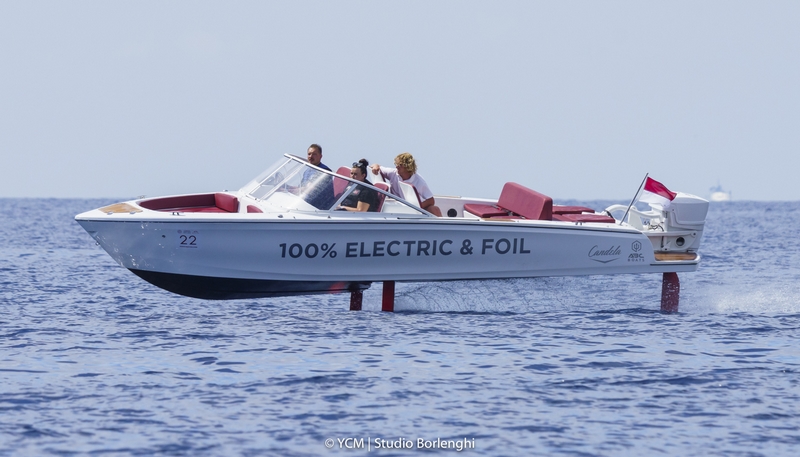
Formerly called the Offshore Class, the Open Sea Class is open mainly to boats either on the market or about to enter it, and face a rally to Ventimiglia in Italy from Monaco and back, a coastal course of 16 nautical miles (29.6km). These boats are already impressing with their performance, as evidenced by Vita X which racked up 44 knots in absolute silence, apart from the sound of water flowing along its 10m length hull. The foil-equipped Candela C-7 meanwhile takes off fast and planes above any small chop.
A full day of talks and discussions on energy transition in yachting
While the 400+ international students were testing tomorrow’s solutions out on the water, Yacht Club de Monaco devoted this first day of action to a conference on energy transition for the yachting sector. Twelve speakers took turns during four session to give a broad overview of the environmental solutions available now for the industry and the avenues they can go down to reduce carbon emissions. Specialists, ecologists and economists all spoke of a solution that has the wind in its sails. Hydrogen is the object of much speculation and numerous studies and analysis. A round table will be devoted to it at the event, an opportunity for Monaco government representatives, and institutions from the Principality and neighbouring states to discuss the development and potential of hydrogen projects adapted to maritime and land mobility issues.
Innovations right down to the propeller
At the Monaco Boat Energy Challenge there is no limit set on innovation as long as it is working towards saving resources. The teamfrom Mines ParisTech have been working hard with Ferme 3D to develop a revolutionary propellor both in terms of its design and rate of return, printed in 3D, to take advantage of the flexibility this technology offers engineers.
Monaco Energy Challenge 2021/ @Monaco Yacht Club; @energyboatchallenge.com
A world first – a solar powered foiling prao.
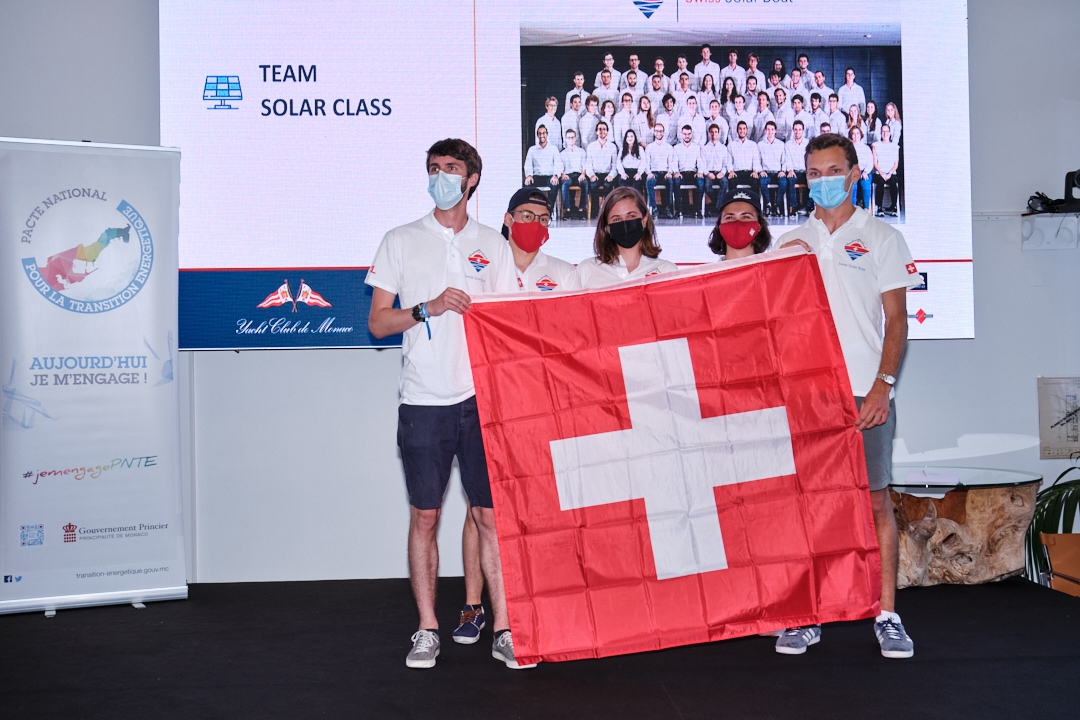
Seven metres in length, with solar panels and complex outrigger, that is expected to top 30 knots, the Swiss Solar Boat is no ordinary boat. Its asymmetrical aspect has earned it the name “Dahu”. Students from EPFL in Lausanne had the idea to develop and build it in the shape of a prao, an asymmetrical multi-hull inspired by Polynesian dugout canoes. The 60 students involved in this project made a good impression on the first day of the green boating event, their foiler “flying” at a respectable 17 knots round the course.
Monaco Energy Challenge 2021/ @Monaco Yacht Club; @energyboatchallenge.com
First hydrogen-powered commercial aircraft to arrive in airports by 2035 A partnership between an aircraft manufacturer, an airport authority and a hydrogen expert is an important and necessary step to prepare for the entry-into-service of a zero-emission aircraft by 2035. Air Liquide, Airbus and Groupe ADP Partner to Prepare Paris Airports for the Hydrogen Era. … Read more