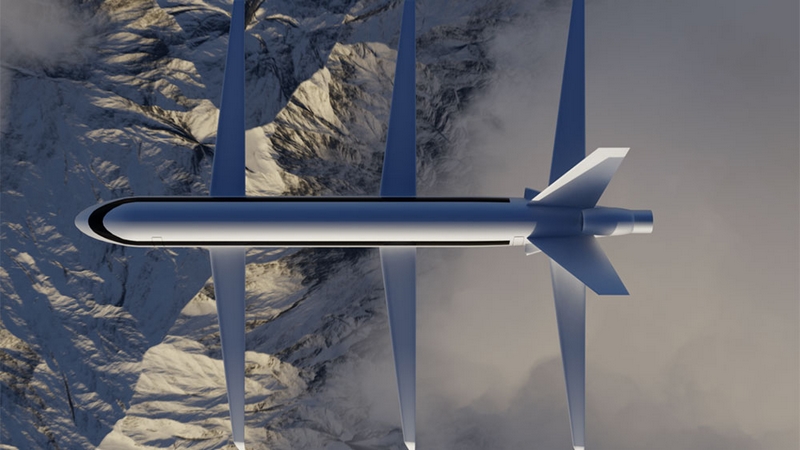
Meet the green SE Aeronautics 200 – the super-efficient subsonic jet with significantly fewer emissions


@SE Aeronautics/ seaeronautics.com/

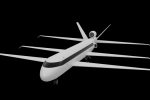
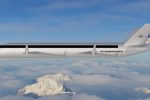
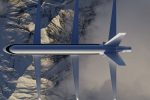
SE Aeronautics’ 100% molded composite aircraft includes revolutionary new breakthroughs like super-efficiency, 500+ PMPG and significantly fewer emissions (80% Less CO2 Emissions).

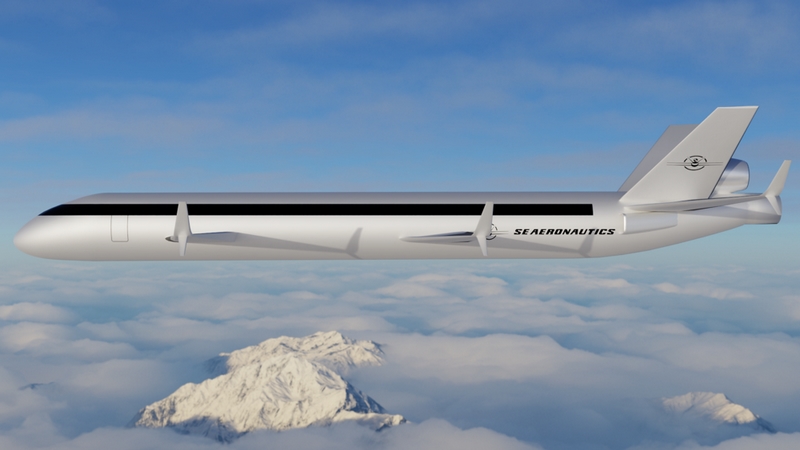
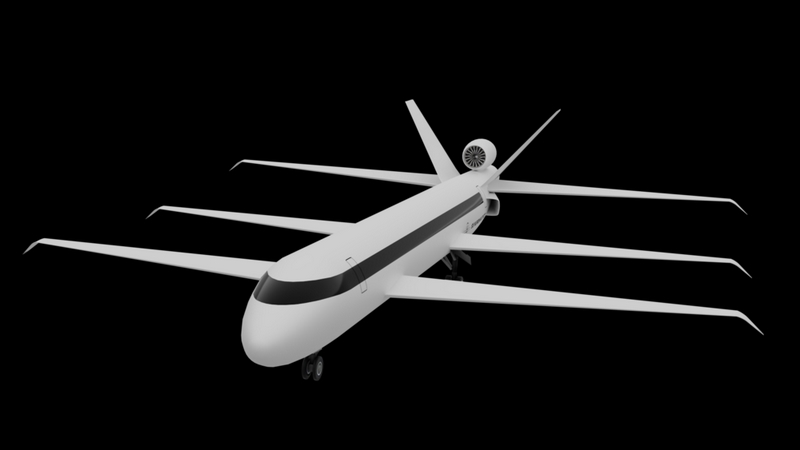
This super-efficient subsonic jet can carry 264+ passengers at a speed of Mach .9 with a range of 10,560 miles at
500+ PMPG. SE Aeronautic’s new SE200 prototype is tri-wing aircraft with double tail fin and two engines mounted
to the rear.

SE Aeronautics designed 200 series aircraft will be the mid-size passenger aircraft, outperforming every aircraft in its class. Range, speed, payload, safety, block hour cost, PMPG and TMPG will make these planes the most
productive planes ever built, says SE Aeronautics team.

The growth in air transportation has doubled every 15 years, which would bring air traffic to 16 billion passengers
and 400 million tons of cargo for the year 2050. This growth has been unwavering despite many financial and world
crises of this past century. Evident by extremely large order backlogs for Boeing and Airbus produced aircraft.
@SE Aeronautics/ seaeronautics.com/

The Covid crises will be no different, the world will rebound and flying will return with a vengeance.

When this takes place, SE Aeronautics will be there to change the aviation industry. The poorly designed and manufactured aircraft will be a thing of the past. The SE200 aircraft will reduce CO2 production by 80%-90% per seat kilometer and reduce fuel use by 70%.

“This means we will go from using 100 billion gallons of fuel (2019) to 20 billion gallons of fuel when our airframes are fully implemented. This design will literally outperform every aircraft in its class. We are talking about range, speed, payload, safety, block hour cost, passenger mile per gallon (PMPG), and ton-miles per gallon (TMPG). Not only will we outperform in all these metrics, but we will also be able to build these aircraft in less than half the time it takes to normally build an aircraft of its size. Couple all these attributes with a plane that also has a useful life that is twice as long, 50 years, our plane is THE plane for the twenty-first century.” – SE Aeronautics.

Additionally, as other alternative forms of propulsion systems make their debut, SE Aeronautics airframes will be
best suited to implement those systems. Electric or hydrogen engine systems will work the absolute most efficiently
when using SE Aeronautics’ designed airframe, guaranteed.

Jet engines on wings more easily ingest birds, causing engines to fail. SE engines are mounted in the rear of the
aircraft.

If only one wing engine fails, because they are far apart in relation to the centered tail rudder, the airliner is harder to control, which also makes training difficult and a crash much more likely. SE engines are in parallel, which also enables a final boost in efficiency possible.

To maximize production, builders bolt together large sections called barrels. This is usually where fuselages break
apart in an accident and where people can get badly hurt. SE will build a single piece (monocoque), tough
composite fuselage.

New clean sheet Jets are heavier per seat now than before. SE intends to build a lighter, streamlined airliner that
maximizes L/D to make our airliner the most efficient ever built.
@SE Aeronautics/ seaeronautics.com/

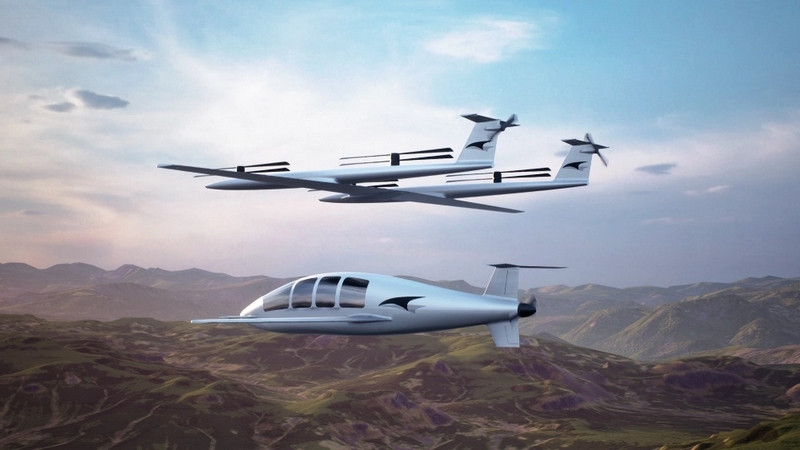
Jetoptera flying car’s unique propulsion system is turning the air around the craft into powerful thrust


@Jetoptera

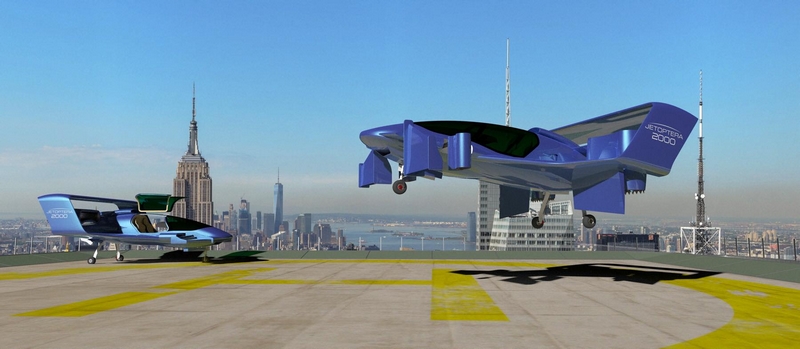
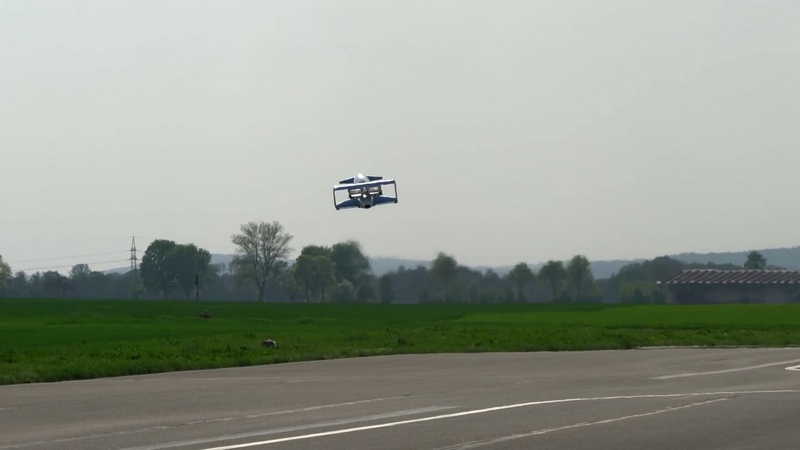
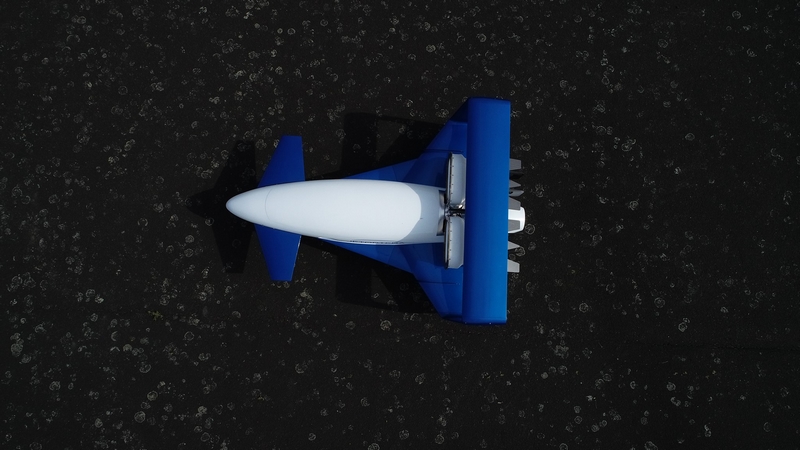
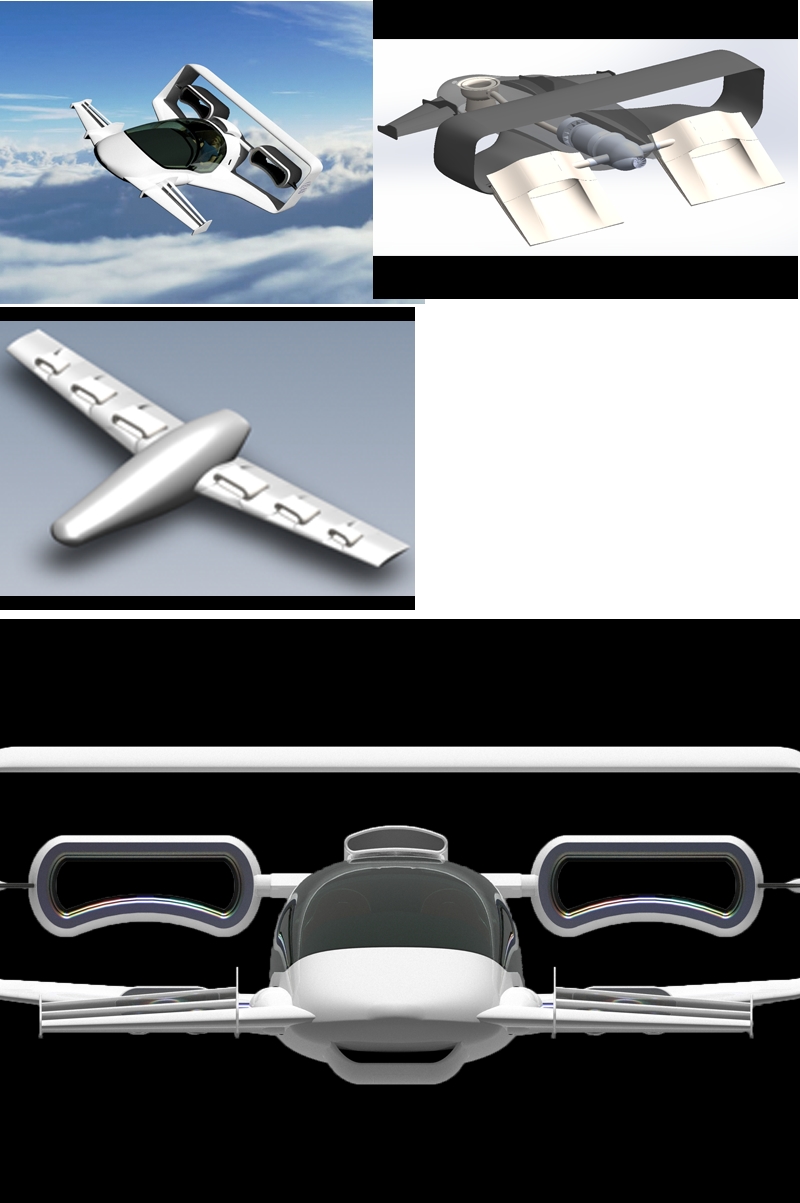
Jetoptera’s vision is to create a world where aerial mobility is commonplace for both cargo and people. Jetoptera J-2000 is powered by a new system called fluidic propulsion system (FPS).

The Seattle startup has developed a unique propulsion system integrated with a novel bladeless airframe. This
allows Jetoptera to create lighter, more efficient, and less complex aircraft. This innovative technology enables vertical and short takeoff and landing (V/STOL), high speeds, sizable payloads and range, and maneuverability.

“Our planes can take off from and land almost anywhere without the fear of a rotor strike and fly like a real plane! A scalable solution for unmanned and manned aerial vehicles up to 4 passengers.” – Jetoptera.

@Jetoptera / @jetoptera.com

Jetoptera design

Jetoptera’s design is a true distributed propulsion that is integrated into a novel airframe. It improves propulsive
efficiency by more than 10% while lowering fuel consumption by more than 50% compared to small turbojets. The
propulsion system saves approximately 30% in weight compared to turbofans or turboprops and also significantly
reduces complexity. The integrated aircraft is capable of hovering and VTOL.

The complete propulsion system is a unique combination of a gas turbine and fluidic thrust augmentation that can
distribute thrust across the airframe. It can be implemented in various geometric shapes, can be embedded with the airframe, and has no propellers or rotating parts. The system is used in all phases of flight.

The combination of VTOL and high speed has proven elusive, especially in a compact, quiet, efficient, and safe
aircraft. The Fluidic Propulsive System enables all that and 200 mph speeds, say Jeloptera’s founders.

Direct turbofan through Fluidic Propulsive System for hover/low speed and transition to turbofan for high speed,
folding thrusters into the wing, resulting in 400+ mph cruise / 400 mi range. If the concept will come into production, Jetoptera will be the fastest commercial VTOL aircraft in the world.

The ability to give thrusters non-round shapes allows conformal integration with upper wing resulting in doubling of lift coefficient. This new design enables takeoff and landing over a 50 ft obstacle within 150 ft.

@Jetoptera

Jetoptera Gas Generator

Pairing the simple architecture of a gas generator with the advanced augmentation system results in significantly
superior efficiency versus typical small turbojets. It also guarantees great operability and low fuel burn at all stages of flight.

Thrust augmentation

Output of the gas generator is channeled through specially designed augmentation components. The exhaust gasses
entrain and accelerate ambient air. Augmentation and low exhaust temperatures enable VTOL and high
maneuverability.

In March, Jetoptera was awarded two 2021 Small Business Technology Transfer (STTR) contracts from the USAF
(United States Air Force) to further characterize the noise of its patented Fluidic Propulsive System (FPS™) in an anechoic chamber wind tunnel and to prove that the FPS™ used with an Upper Surface Blown Wing (USB)
configuration will produce specific lift force levels similar to those of a rotor-wing aircraft, yet without moving parts.

@Jetoptera

The 8-seat all-electric eFlyer 800 will have only one-fifth the operating costs of traditional airplanes


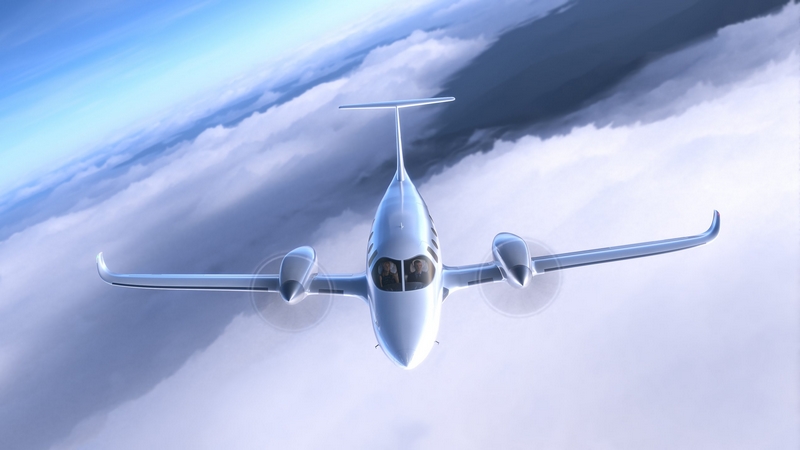
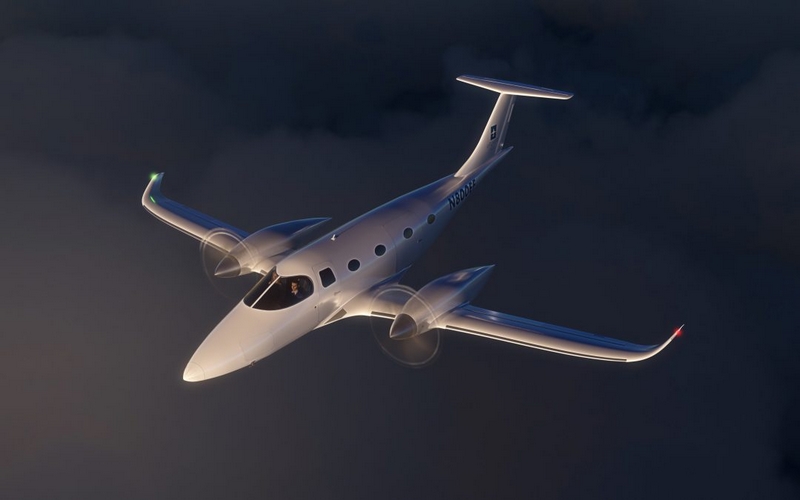
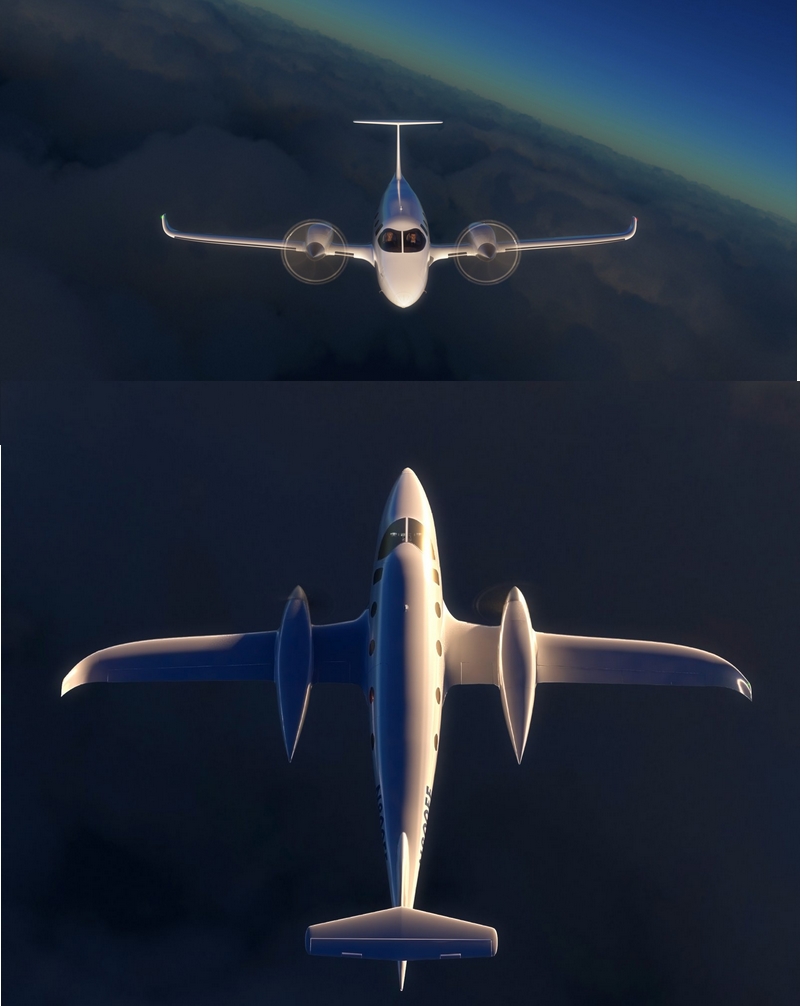
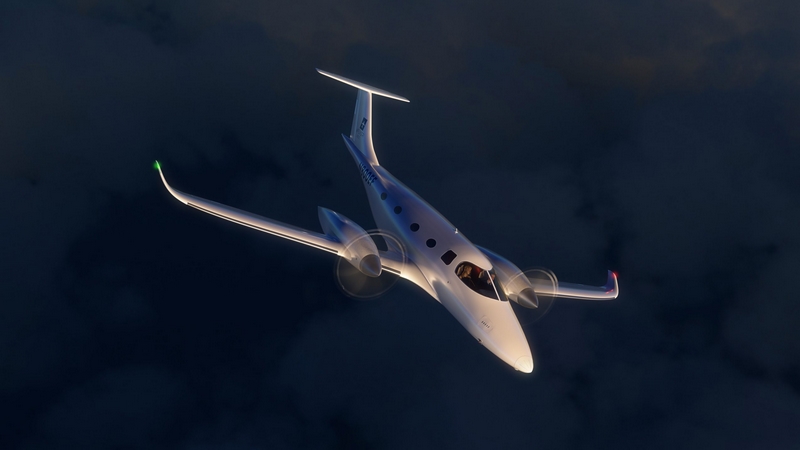
CAD engineering images of @Bye Aerospace eFlyer 800

Bye Aerospace Unveils 8-Seat All-electric eFlyer 800 with remarkable economy and performance.

Bye Aerospace has announced an eight-seat all-electric twin turbo-prop class airplane, the eFlyer 800, in response to growing demands for regional all-electric airplanes with significantly reduced operating costs, plus increased capacity and utility.

Performance estimates for the eFlyer 800 include up to 320 knot cruise speed, 35,000 feet ceiling and 500 nm range
with 45-minute IFR reserves at normal cruise speed of 280 knots. Safety features include two wing-mounted electric
motors, each with dual redundant motor windings, quad-redundant battery packs and a full airplane parachute.

Additional potential features include emergency auto-landing system, intelligent algorithm ensuring envelope
protection, terrain avoidance and routing for emergency auto-land, and also an option for supplemental power solar
cells and in-wheel electric taxi.

CAD engineering images of @Bye Aerospace eFlyer 800
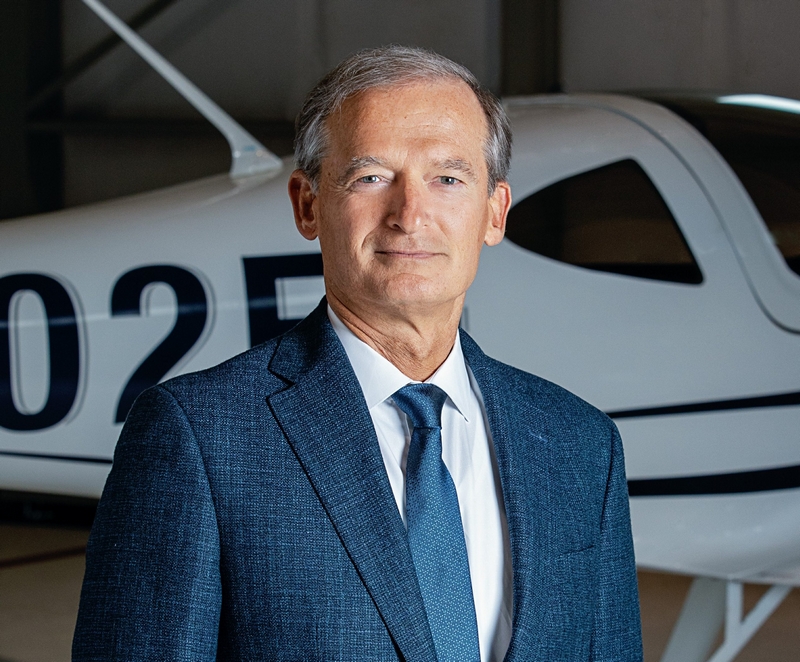
George E. Bye, CEO of @Bye Aerospace/ @byeaerospace.com

The airplane’s 8-seat configuration consists of up to seven passengers and one or two pilots. The eFlyer 800 will have only one-fifth the operating costs of traditional twin turboprops and is geared for the air-taxi, air-cargo, regional and charter aircraft markets.

“The eFlyer 800 is the first all-electric propulsion technology airplane that achieves twin-turboprop performance and safety with no CO2 and extremely low operating costs,” said George E. Bye, Bye Aerospace CEO. “This type of remarkable economy and performance is made possible by the electric propulsion system and advanced battery cell technology that results in significantly higher energy densities.”

Bye Aerospace and Safran are currently assessing the most efficient electric powertrain for the eFlyer 800 (dual
ENGINeUS electric motors and GENeUSGRID electric distribution and network protection system).

“Safran product lines with the ENGINeUS™ motors, rated from 50kW to 500kW/1MW and GENeUSGRID™ systems, perfectly fit with the Bye Aerospace portfolio of e-aircraft,” said Hervé Blanc, Executive Vice President and General Manager Power with Safran Electrical & Power.

Bye said eFlyer 800 customer deposit agreements are complete, and several are being developed with U.S. and
European air-taxi, air-cargo and air charter services. “Details about those agreements will be announced soon, and as they are finalized,” he said.

Bye Aerospace is in the process of obtaining FAA Part-23 certification for the eFlyer 2 for the professional flight
training mission and the four-seat eFlyer 4 for air taxi, cargo and advanced training uses. All the company’s current and future families of aircraft feature engineering, research and electric aircraft solutions designed to specifically address compelling market needs. Benefits include five-fold lower operating costs, no CO2 emissions, and decreased noise.

Bye Aerospace estimates the eFlyer aircraft will eventually eliminate the release of millions of metric tons of CO2 each year as its deliveries begin and the general aviation fleet is replaced.

CAD engineering images of @Bye Aerospace eFlyer 800

Talyn eVTOL can fly three times farther than most competitors

Talyn can take off and land anywhere in half the time. This new eVTOL is the fastest and greenest way to fly between cities. It skips the airports and flies straight to your destination. 100% battery electric flight with vertical take-off and landing. Talyn can take off and land anywhere, directly from your door to the … Read more

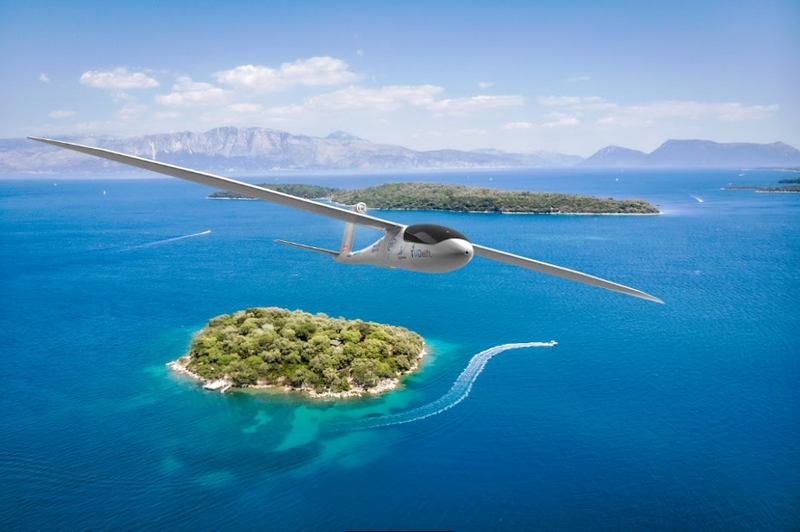
AeroDelft to fly world’s first aircraft with liquid-hydrogen fuel cells this summer

  AeroDelft team, just revealed a prototype called Phoenix PT. The brand new aircraft is bringing the team one step closer to achieving sustainable aviation. The student team AeroDelft has revealed the finished structure of their prototype airplane powered by liquid hydrogen, called ‘Phoenix PT’. The hydrogen airplane does not produce any harmful emissions to … Read more

Will the electric-powered flight be turned into an everyday reality? NASA’s X-57 Maxwell moves towards first flight

  X-57 Maxwell, NASA’s first all-electric plane moves from the prototype phase towards first flight. NASA to Begin High-Voltage Ground Testing on All-Electric X-57. Engineers, researchers, pilots, visual artists, and many other people from the four flight centers and business partnerships work together to make the X-57 Maxwell idea a reality. What is the X-57? … Read more