From exhilarating culinary competitions to chocolate happiness: Escoffier’s Ultimate Dish celebrates 50th episode

Popular Culinary-focused Podcast Features Deep Dive Talks with Industry Innovators; @escoffier.edu

ESCOFFIER’S ‘THE ULTIMATE DISH’ PODCAST CELEBRATES 50th MILESTONE.

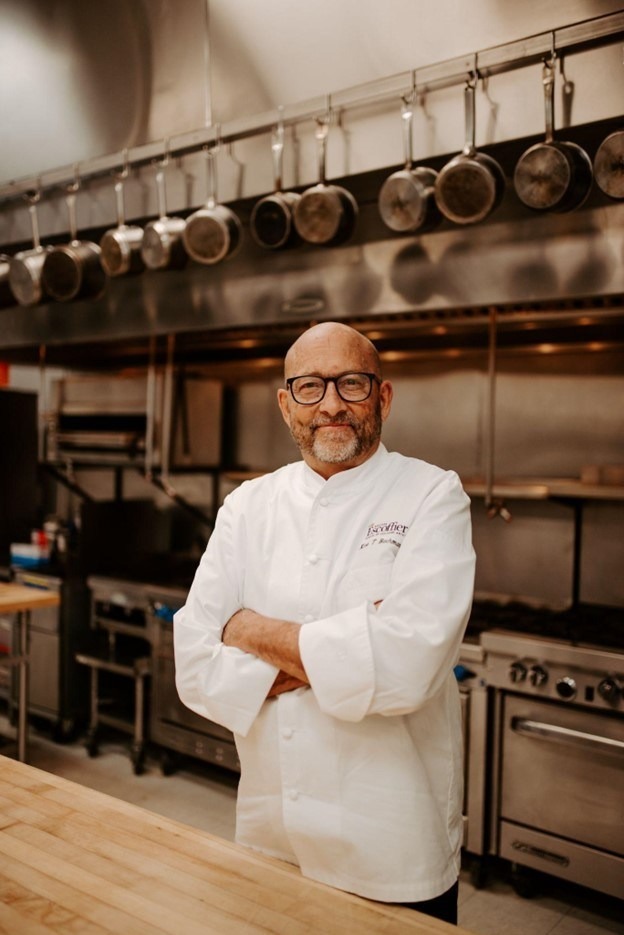
Auguste Escoffier School of Culinary Arts, the largest accredited provider of online and campus-based culinary training and education in the U.S., recently celebrated the 50th episode of its ‘The Ultimate Dish’ podcast. Launched in 2021, the popular weekly podcast continues to gain traction among foodies, entrepreneurs, and education aficionados, with a 62 percent increase in downloads in the past six months alone. Host, fourth-generation chef, and Escoffier Boulder campus president, Kirk Bachmann gives listeners an exclusive peek behind the culinary curtain with in-depth conversations from some of the world’s most innovative chefs, entrepreneurs, and thought leaders shaping the food industry today.

“In our first 50 episodes, ‘The Ultimate Dish’ has quickly become a master class and go-to resource for listeners on a rich range of topics spanning from exhilarating culinary competitions and the happiness that chocolate brings, to sustainability and art of making a great leader,”‘ said Bachmann. “We’re getting the inside scoop from some of the most established and brightest culinary, business and entrepreneurial minds around, and they’re sharing their inspirational stories with us. I’m inspired by them,” added Bachmann.

Popular podcast guests from the first 50 episodes include:

Curtis Duffy – Executive Chef and owner of two-Michelin Star restaurant Ever, talks about his philosophy on cooking, running a restaurant, and his journey to the top of the culinary industry.

Martin Yan – Cookbook author, host of the award-winning PBS-TV cooking show Yan Can Cook, and 2022 James Beard Lifetime Achievement Award recipient talks about Asian cuisine and building a food brand.

Daryl Shular – The world’s first African-American and minority chef to earn the prestigious title Master Chef, shares the principles that guided his success.

Elle Simone Scott – Chef Elle Simone, Culinary Media Expert, Co-Founder & President of SheChef, Inc. and Resident Food Stylist at America’s Test Kitchen talks passion for food, mentoring, and building a thriving career after surviving ovarian cancer.

Philip Tessier – Bocuse d’Or Silver Medalist shares his blueprint for becoming a great chef and building a winning team.
Farmer Lee Jones – Sustainable farming techniques from farming expert and founding family of “The Chef’s Garden, James Beard Foundation’s Who’s Who in Food and Beverage, “60 Coolest People in Food.”

Rip Esselstyn – Founder and CEO of PLANTSTRONG, an organization that is helping people lead healthier lives through plant-based nutrition.

Bobby Stuckey Bobby is the Master Sommelier and Co-Owner of Frasca Hospitality Group, a collection of four Colorado restaurants, one of which, Frasca Food and Wine, won the 2019 James Beard Foundation Award for Outstanding Service.

Ed Leonard – Edward Leonard, an award-winning Certified Master Chef, a Culinary Olympic gold medalist, author, and international lecturer shares his inspirational story.

Kirk Bachmann @”The Ultimate Dish” podcast; @escoffier.edu

“Our podcast listeners are treated to unfiltered access to some of the most innovative, disruptive and talented leaders in their industries,” said Auguste Escoffier School of Culinary Arts president and CEO Tracy Lorenz. Upcoming episodes include:

Skip Lacey – A business, leadership, life and success coach talks serial entrepreneurship, pivoting careers, and what it takes to make great leaders. (Episode airs July 26, 2022)

Jake Plummer – Former Pro-Bowl NFL Quarterback turned CBD and medicinal marjuiana advocate recounts his athletic career and how functional mushrooms have reshaped his life, mindset, and purpose. (Episode airs August 2, 2022)

Ann Cooper – Internationally recognized author and healthy food for children advocate, also known as the “Renegade Lunch Lady” focuses on school food crises and how chefs can make a difference. (Episode airs August 23, 2022).

@ESCOFFIER’S ‘THE ULTIMATE DISH’ PODCAST CELEBRATES 50th MILESTONE

Can mushrooms solve the food industry’s biggest challenges? How Mushroom Tech Works in Food

Mushroom Tech Comes to CES 2022. Just when you thought you had seen it all, mushroom tech makes its debut at CES 2022. MycoTechnology, the company behind this mushroom fermentation technology, takes what mushrooms do in nature and applies their unique abilities to make foods healthier and  more accessible. MycoTechnology harnesses the metabolic engine of … Read more

How do you like your beef… old-style cow or 3D-printed?


Redefine Meat - Seeking The Holy Grail Of Alt-Meat
Redefine Meat – Seeking The Holy Grail Of Alt-Meat; @redefinemeat.com/

Powered by Guardian.co.ukThis article titled “How do you like your beef… old-style cow or 3D-printed?” was written by Gareth Rubin, for The Observer on Sunday 10th November 2019 06.18 UTC

After the success of the Greggs vegan sausage roll and the juicy-yet-meatless Impossible Burger, the next new food sensation is coming to a plate near you: 3D-printed steaks and chicken thighs.

Printed meat could be on European restaurant menus from next year as Israeli and Spanish firms serve up realistic beef and chicken produced from plant protein. And, within a few years, the printers are likely to be available to buy so that consumers can produce their own at home.

Layers of material are built up by 3D printers until there is a solid object conforming to very precise specifications. The meat can be produced either from vegetable matter or from animal cells grown in a lab. The printer uses these raw ingredients, which come in a Nespresso-style cartridge, to build up a steak or chicken fillet that tastes like the real thing.

Eshchar Ben-Shitrit, co-founder and CEO of Israeli firm Redefine Meat, said switching to printed meat would have huge ecological benefits. “The biggest reason for going to alternative meat is because of the future of our planet,” he said. “We love meat but we don’t have enough resources for it. Cows require a lot of water, a lot of food and a lot of land but we don’t have enough of any of these. We can recycle, drive electric cars, we can shower less, but these changes can’t compete with reducing consumption by one hamburger per week.”

Reducing beef production would result in a huge reduction in CO2 emissions and far less clearance of wild countryside for grazing land. Other meats, such as pork and fish, will soon be added to the menu, reducing the need for pig-rearing or fishing.

The health benefits are substantial too, said Ben-Shitrit. “If you eat meat, there are nutritional advantages and disadvantages. But definitely people consume too much. Plant-based products don’t contain cholesterol or the pathogens that exist in meat.”

They would therefore be attractive to many vegetarians who could gain the nutritional value without a moral dilemma. Poorer nations, where traditional meat is too expensive for most of the population, will also benefit in time.

Giuseppe Scionti, CEO of Novameat, with a prototype of his printer in 2019
Giuseppe Scionti, CEO of Novameat, with a prototype of his printer. Photograph: Giuseppe Scionti

Redefine Meat will pilot its plant-based meat in restaurants throughout Europe early in 2020, so British diners could have next year’s Christmas lunches printed for them. It has already served hundreds of people in Israel and conducted tastings in Europe. The products will initially be more expensive than traditional meat – the firm is aiming for a price point around £28 per kg, twice the cost of British supermarket sirloin steak – but this will come down over time and should, eventually, be cheaper than traditional meat.

“It’s really good, tasty meat that we produce here,” said Ben-Shitrit.

“The question is how to scale up so you can put it in a butcher’s shop in London day in, day out. So our business model is to sell the machines and the ingredients, not the finished meat.”

Worldwide, meat production is booming. According to UN figures, in the early 1960s, around 70 million tonnes of meat was produced. By 2017, that had multiplied to more than 330 million tonnes. Britons eat about 80kg of meat each per year.

The technology for 3D-printed meat is improving rapidly. Last month, another Israeli firm, Aleph Farms, printed meat produced from cow muscle cells on the International Space Station. The company says its meat will be on general sale a few years from now.

Before then, Spanish-based Novameat expects to have its plant-based printers in Spanish and Italian restaurants by the end of 2020, and in British restaurants soon after. Its CEO, Giuseppe Scionti, plans to have the machines in supermarkets in 2021 and in homes a year or two later.

Pea and rice proteins are fed into Novameat’s printers in capsules like those for an espresso machine. They contain a red paste that is turned into realistic steak or chicken. Salmon, lamb and pork capsules will be coming soon. Scionti believes the quality of what comes out – steaks and chicken fillets that mimic the taste and fibrous texture of meat – will be the key to its success.

The British market is a major target. “In Britain, the ‘flexitarian’ [largely vegetarian, but sometimes eating meat] movement is very big – around one third of the population,” he explained. “This way you can support biodiversity and avoid food waste because so much shop food is discarded.”

The technology is being closely watched by the food industry. Emma Lake, news editor of the Caterer, said: “The potential market for 3D-printed meat could be substantial; we’ve already seen dramatic growth in vegan meat imitations in response to more consumers cutting down on their consumption of animal products for environmental and health reasons. The launch of the Greggs vegan sausage roll in January demonstrated the interest in such products.”

guardian.co.uk © Guardian News & Media Limited 2010

Published via the Guardian News Feed plugin for WordPress.

The Future of Food: Asia’s 50 Best Restaurants to welcome all-star lineup

This February, the world’s greatest chefs will converge on Singapore for two days of gourmet food, culinary conversations and gala events at Asia’s 50 Best Restaurants. Attendees at Asia’s 50 Best Restaurants can expect a delicious mix ofspicy exchanges, full-bodied flavours and a hearty dose of star power. Held in conjunction with Asia’s 50 Best Restaurants … Read more