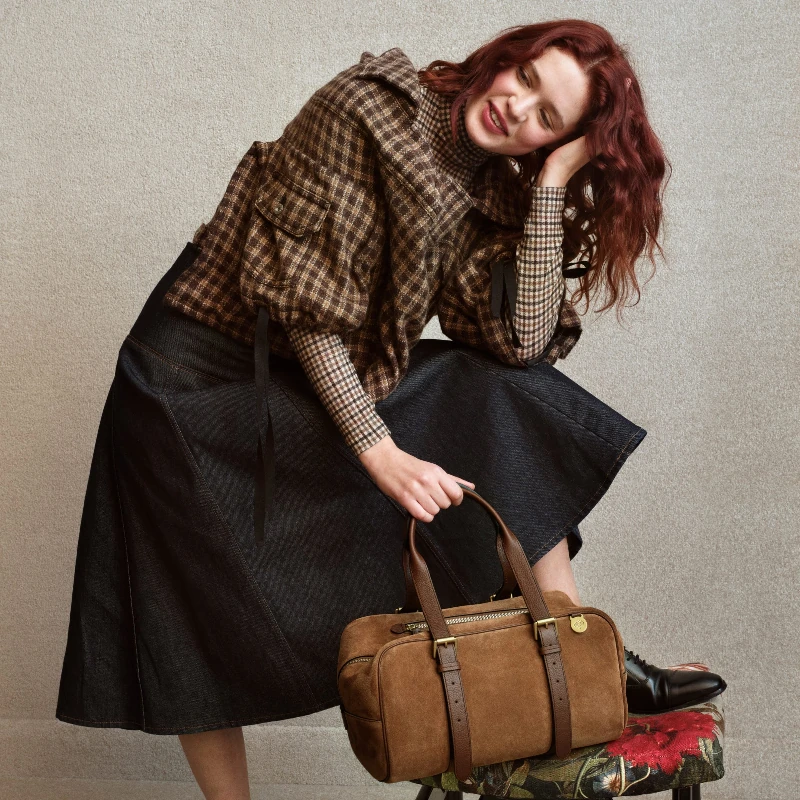
The Great British Comeback Starts Here.
Mulberry is back — and this time, it means business. With a chart-topping festive quarter, wholesale orders surging, and a bombshell creative appointment that has all of London talking, this storied Somerset house is rewriting its second act with extraordinary confidence.
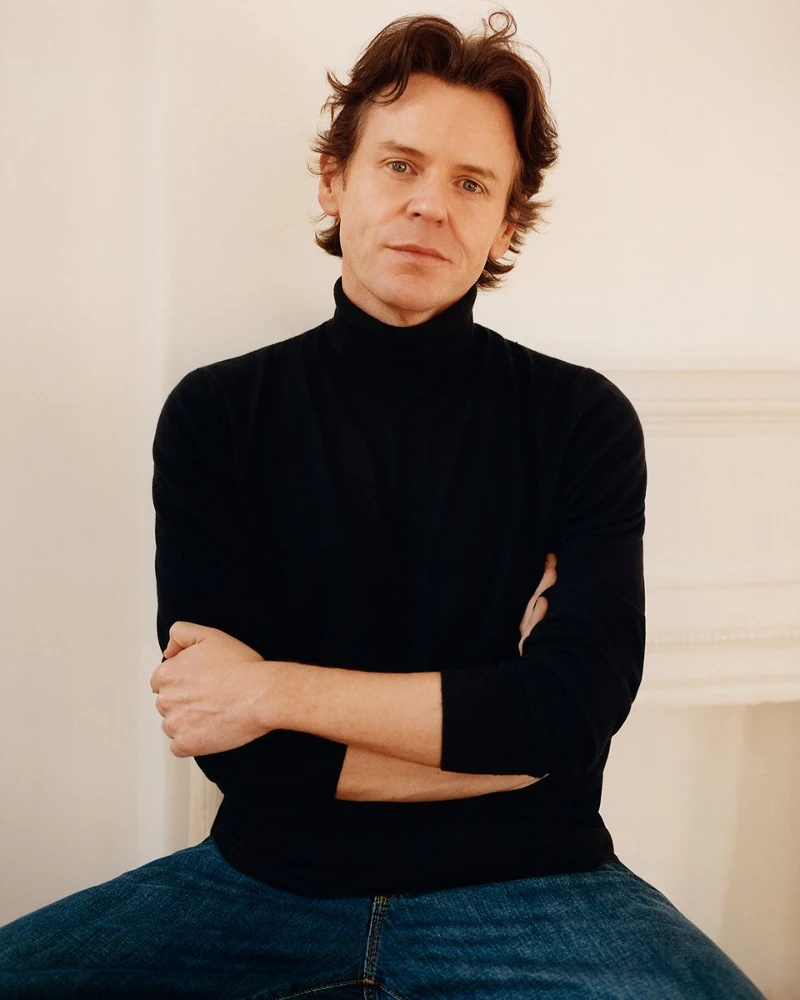
Kane & Able: How Christopher Kane Is Handing Mulberry Its Most Exciting Chapter Yet
There is a particular kind of quiet satisfaction that comes from watching a beloved brand find its footing again. For those of us who grew up aspiring to our first Bayswater, who studied the Mulberry lookbooks the way others pored over textbooks, the past few years have been a test of faith. But faith, it turns out, was the right response. In the opening months of 2026, Mulberry is delivering headline after headline that reads less like a corporate turnaround memo and more like a genuinely exciting fashion story.
The numbers, first: for the 13 weeks to December 27, 2025, Mulberry reported total group sales growth of 5.3 percent, with retail and digital like-for-like sales climbing 11 percent. Those are not incremental shuffles. Retail full-price sales jumped 19 percent during the festive period — a particularly striking figure given the promotional free-for-all that typically engulfs British retail in the run-up to Christmas. Mulberry resisted the discount frenzy, held its nerve, and was rewarded for it.
The geographic spread of that growth is equally encouraging. In the United States, total sales rose 12.7 percent. In Europe excluding the UK, like-for-like sales surged by an extraordinary 27.2 percent. Even Asia Pacific, where Mulberry has been deliberately rationalising its store footprint following a string of underperforming China closures, posted positive momentum. This is not a brand scraping by in its home market. This is a brand genuinely beginning to travel again.
“Back to the Mulberry Spirit” — and It’s Working
Much of the credit for this resurgence belongs to CEO Andrea Baldo, who arrived in September 2024 inheriting what he later characterised as the “combined effect of a very challenging macroeconomic environment, a moment of transition for the industry, and the brand’s previous strategy not performing.” His remedy was swift and surgical: close the underperforming stores (around twelve, mostly in China), slash the cost base, protect cash, and rebuild around a single, crystalline idea — “Back to the Mulberry Spirit.”
“We’re strengthening our margin and have improved our cash position through a greater focus on full-price sales and disciplined cost management, while our refreshed product offer and creative direction are reconnecting the brand with customers.” — Andrea Baldo, CEO of Mulberry
That strategy — focused on simplification, brand realignment, and deeper customer connection — is now yielding dividends visible not just in the trading figures but in the energy around the brand. Mulberry launched a campaign called “A Return to Somerset,” celebrating its heritage, English roots, and factory headquarters — a masterstroke of brand positioning that frames the Somerset mills not as a rustic curiosity but as a genuine luxury provenance story. Think: Hermès and saddle-making, but make it very, very British.
Spring 2026: The Icons Lead
On the product front, this season’s collection places Mulberry’s heritage families front and centre. Particularly strong demand has been reported for the Roxanne, the Hackney, and — perhaps inevitably — the Bayswater. That last name will forever be synonymous with the brand’s golden era, when Alexa Chung, Kate Moss, and Sienna Miller made it the most covetable bag in Britain. Two decades on, it remains the brand’s north star.
To celebrate the brand’s 55th anniversary, Mulberry has launched a very special limited-edition capsule collection featuring 55 one-of-one bags, composed of surplus and sample materials found in the Mulberry archives. It is the sort of proposition that speaks perfectly to the current cultural moment — sustainability meeting scarcity, heritage meeting desire. Each piece is, by definition, unique, and therein lies the exquisite tension: an accessible luxury brand producing something genuinely irreplaceable.
Mini bags are having a serious moment across the board, and Mulberry is riding that wave with conviction. The brand’s instinct here — to let the icons lead while layering in fresh, desirable silhouettes — mirrors exactly what has worked so well at Burberry under Jonathan Anderson: heritage not as a comfort blanket, but as creative fuel.
Wholesale orders for the spring 2026 collection are up in double digits compared with the corresponding period last year, an early indicator that multi-brand retailers are buying into the brand’s renewed direction. New stocking partnerships with Harvey Nichols, Liberty, John Lewis, and Flannels in the UK — alongside an expanding footprint at Nordstrom in the United States — are placing Mulberry in front of new audiences with genuine purchasing intent.
The Map to Modern Luxury
THE CURATED CALENDAR
Discover the world’s most prestigious gatherings & exhibitionsThe Appointment That Changed Everything
And then came the news that sent a genuine ripple through London’s fashion world. On 26 March 2026 — in what felt like the most perfectly timed announcement since the brand first put the Bayswater into the world — Mulberry confirmed that Christopher Kane would join the house as creative director of women’s ready-to-wear. Two beloved pillars of British fashion, reunited by purpose.
The move represents a significant step in Mulberry’s “Back to the Mulberry Spirit” strategy, which aims to reconnect the brand with its British heritage while expanding beyond its core accessories business. It is, in short, a declaration of intent. For six years, Mulberry has been a leather goods house. Come September 2026 — and more fully from January 2027, when Kane’s debut collection reaches stores — it will be something considerably more expansive.
“Christopher brings a rare combination of creativity, intellectual rigour and instinctive playfulness, alongside a deep respect for craft and materials.” — Andrea Baldo, on the Christopher Kane appointment
Kane first made a name for himself with his 2006 Central Saint Martins graduate collection, shown when he was just 23 — the clothes immediately catching the eye of industry heavyweights including Donatella Versace. In the years that followed, he won the Vogue Fashion Fund, collected four British Fashion Council Awards, dressed everyone from Kate Middleton to Rihanna to FKA Twigs, and proved, season after season, that deeply British creativity could be both intellectually rigorous and viscerally exciting. His label was closed in 2023 — a painful moment for the industry — but he has been making a gradual comeback since, including a guest residency at Self-Portrait in 2024.
Now, he is back. Properly back. His first collection for the brand will debut in September at London Fashion Week and enter stores starting January 2027. The prospect of Kane’s subversive, playful, beautifully constructed sensibility applied to Mulberry’s heritage is genuinely thrilling. Two brands that defined different facets of British fashion in the 2000s, finding each other at the precise moment both need a new chapter.
“It is an honour to join Mulberry,” Kane said in his statement, “a brand with such a rich British heritage and a deep commitment to craft.” It is, characteristically, understatement as eloquence.
A Brand in Motion
For all the momentum, it would be naïve to pretend the journey is complete. The ambitious targets — annual revenues exceeding £200 million and an EBIT margin of 15 percent — remain a significant climb from the £120 million reported in fiscal 2025. The luxury market broadly remains turbulent, squeezed between ultra-high-net-worth consumers who have never stopped spending and an aspirational middle tier that has grown more cautious, more thoughtful, more deliberate. Mulberry lives in that second world, and it must earn its place there afresh each season.
But here is what the numbers and the appointments together are saying: Mulberry under Baldo is a brand that has done the hard work — the painful cost-cutting, the honest introspection, the creative soul-searching — and has emerged with something rare in British fashion. Clarity. A clear vision of what it is, who it is for, and who it wants to be. The “Back to the Mulberry Spirit” strategy is not nostalgia in a trench coat. It is a full-throated reclamation of the brand’s power, dressed in the finest English leather and cut with a new generation’s eye.
With Christopher Kane poised to bring ready-to-wear back to Somerset’s most famous fashion house, Spring 2026 feels less like a quarter and more like a beginning. The Bayswater is back. The spirit is back. And if this opening chapter of 2026 is anything to go by, the best of Mulberry may be ahead of us, not behind.