There is a moment, somewhere between lowering yourself into a deep cast-iron bath and watching candlelight flicker across copper-warm walls, when the bathroom stops being a room and becomes something else entirely. A sanctuary. A ceremony. A place where time, however briefly, belongs only to you.
That is the experience Kohler and Richard Christiansen — the visionary founder of Flamingo Estate — set out to create for Milan Design Week 2026. The result is one of the most poetic and quietly radical installations the week has seen: the Flamingo Estate Bathhouse by Kohler, a multi-sensory celebration of bathing as ritual, of craft as care, and of design as a genuine act of reciprocity with the natural world.
From the California Hills to a Milanese Courtyard
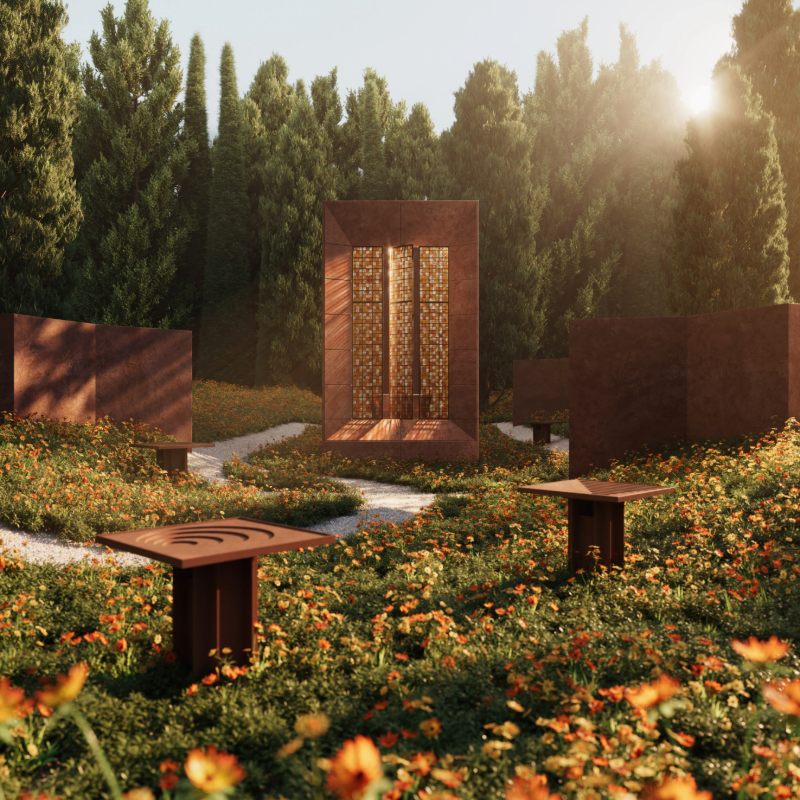
Set within the courtyard of the Padiglione d’Arte Contemporanea during Fuorisalone, the exhibition is anchored by a bold brutalist bathhouse that takes design cues from the prominent bathhouse nestled in the California hills of the Flamingo Estate property. The architectural language is deliberately elemental — raw, weighty, honest — drawing its palette from weathered metals and surfaces that look as though they surfaced from the earth rather than arrived from a factory. Surrounding the structure, a meadow of untamed wildflowers softens the brutalist edges and deepens the installation’s central argument: that true luxury is not about control over nature but conversation with it.
At a moment when thermal bathing and sauna culture are experiencing a global resurgence, and as the biennial Salone Internazionale del Bagno returns to Milan, the design world is awash with design-led bathing concepts. Among all of them, the Flamingo Estate Bathhouse stands apart — not because it is the most technologically advanced, but because it is the most deeply felt.
The Kohler Reverie: A Bath as an Object of Wonder
At the heart of the installation is the star of the show: the new Kohler Reverie enameled cast iron bath, presented here with a true metal copper shroud. This is not a bath that whispers. The warm copper surface catches daylight filtered through oversized stained-glass windows, transforming throughout the day as the light shifts — glowing amber in the afternoon, deepening to burnished gold by evening. It is, by design, the luminous heart of the space.
The copper-clad form is also a declaration. It embodies Kohler’s 153 years of genuine craftsmanship — the forming, the welding, the hand-finishing — while signalling something genuinely new in material innovation. Heritage technique and contemporary artistry meet in a single vessel, and the effect is of a bath that feels both ancient and entirely of this moment.
To complete the atmosphere, 200 Flamingo Estate candles line the bathhouse walls, their collective glow deepening the sense of stillness and turning what might otherwise be a product showroom into something closer to a chapel of calm. The sensory layering — copper warmth, candlelight, filtered sun, wildflowers beyond the windows — ensures that every element earns its place.
The Pollinator Baths: Design That Gives Back
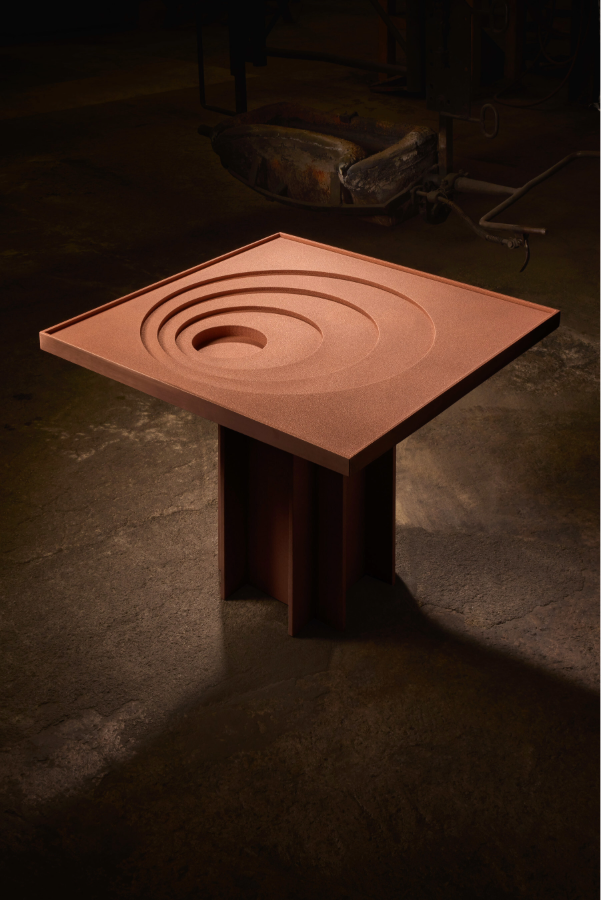
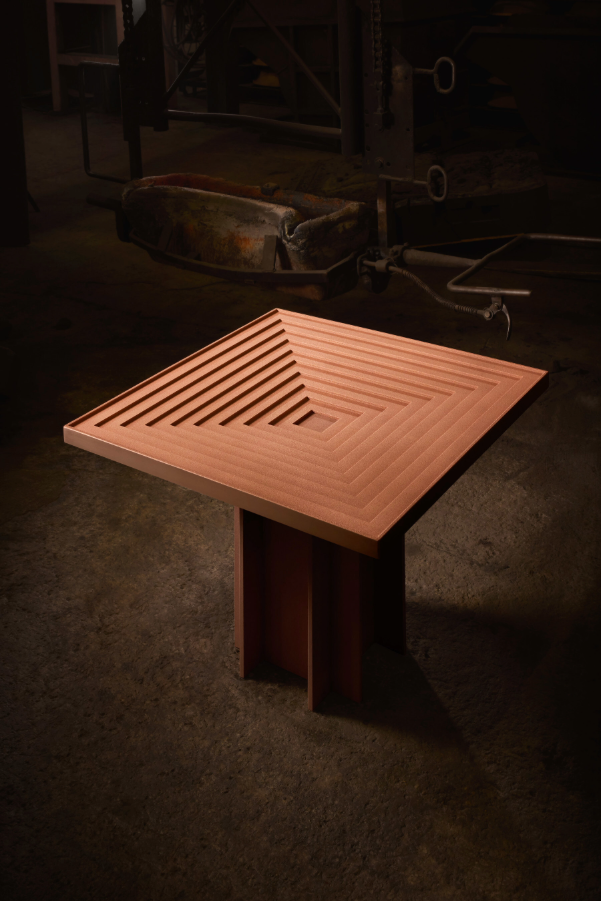
Perhaps the most quietly moving feature of the installation is also the one easiest to overlook: four one-of-a-kind pollinator baths, nestled throughout the wild garden surrounding the bathhouse. Conceived by Richard Christiansen and designed and cast by Kohler in its historic Wisconsin foundry, each vessel is entirely unique — formed in cast iron, shaped for purpose, and beautiful in the way that things designed with genuine care always are.

Je t’aime Paris: 2020 Be my Valentine by Guerlain
Find more hidden gems in our archiveTHE CURATED CALENDAR
Discover the world’s most prestigious gatherings & exhibitionsThese are not decorative garden ornaments. They are functional sanctuaries for birds, bees, and other pollinating species — living infrastructure for the ecosystems we depend on. The idea extends the installation’s core narrative of reciprocity outward into the natural world: if the bathhouse is a sanctuary for the human body and spirit, the pollinator baths are sanctuaries for the creatures whose quiet labour sustains the gardens, the wildflowers, the very palette of abundance that Flamingo Estate celebrates.
The installation illustrates the application of simple design elements and the intersection between nature and artistry. Through materials made to endure and gestures designed to support biodiversity, Kohler and Flamingo Estate make the case that sustainability is not a feature added to good design — it is what good design is made of.
Richard Christiansen and Flamingo Estate: A Philosophy of Pleasure and Purpose
Understanding the installation means understanding Flamingo Estate itself. Settled in the 1940s high atop the hills of Los Angeles, Flamingo Estate has throughout its history been a hedonistic enclave of sun-worship, folk mythologies, and psychedelic remedies — a secret haven for wild alchemy in the City of Angels. Under Richard Christiansen’s stewardship, it has evolved into something that defies easy categorisation: part lifestyle brand, part working farm, part radical argument that pleasure and sustainability are not opposites but natural allies.
That philosophy permeates every detail of the Milan installation. The wildflower meadow is not decoration — it is an ecosystem. The copper bath is not luxury for its own sake — it is an invitation to slow down, to inhabit the body, to remember that restoration is not indulgent but necessary. The candles, the stained glass, the pollinator vessels — each element is chosen not for spectacle but for meaning.
The Bigger Picture: Bathing Is Having a Cultural Moment
The timing of this installation is no accident. In 2026, homeowners are increasingly looking for personal wellness spaces in the bathroom, with features like home saunas, natural stone and wood-clad spaces, and deeper soaking tubs becoming mainstream as the bathroom evolves from functional room to private sanctuary.
People are increasingly creating highly personal, multi-sensory bathing experiences that are customizable, intuitive, and seamlessly integrated into the bathroom — turning everyday routines into restorative moments of wellness. The Flamingo Estate Bathhouse by Kohler is, in that sense, the physical embodiment of where the entire category is heading: away from clinical efficiency and toward something closer to ritual, ceremony, and genuine renewal.
Nearly three-quarters of design experts agree that homeowners are expanding the size of their primary bathrooms to accommodate wellness amenities, and the new wave of sensory and tech-driven bathroom design focuses on atmosphere — circadian lighting that shifts from energising cool tones to warm, evening hues, and innovations that create bathrooms feeling like fully immersive wellness environments. Kohler’s copper bath with its stained-glass light play achieves this without a single line of code: it is immersive design achieved through material intelligence rather than digital engineering.
In 2026, functional pieces are elevated to the status of fine art — tubs, sinks, and vanities ditching predictable forms for organic, flowing, monolithic shapes, and the Reverie bath fits squarely within this movement. It is as much sculpture as fixture — an object you live with rather than merely use.