Michael Jackson: On the Wall review – king of pop as the ultimate muse

This landmark exhibition explores the influence of Michael Jackson on some of the leading names in contemporary art.

“Michael Jackson is one of the most influential cultural figures to come out of the 20th century and his legacy continues into the 21st century. His significance is widely acknowledged when it comes to music, music videos, dance, choreography and fashion, but his considerable influence on contemporary art is an untold story,” notes London’s National Portrait Gallery.
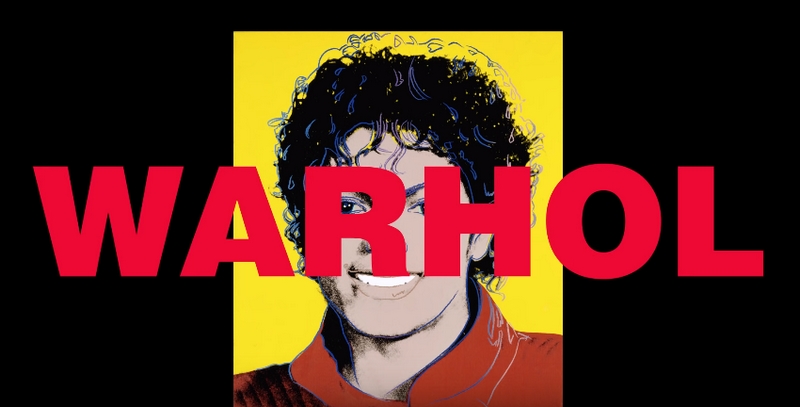
mjacksononthewallexhibition2018
image: London’s National Portrait Gallery You Tube


Powered by Guardian.co.ukThis article titled “Michael Jackson: On the Wall review – king of pop as the ultimate muse” was written by Adrian Searle, for The Guardian on Wednesday 27th June 2018 11.19 UTC

‘Ariel of the ghetto,” the writer Hilton Als called him. He has been compared to Baudelaire and Frankenstein’s monster; he played the Scarecrow in the Wiz, and transformed himself into a zombie in the Thriller video. He was both a global superstar and an enigma, almost universally feted, then prosecuted and vilified. Michael Jackson, now the subject of a large and surprising exhibition at London’s National Portrait Gallery, proves to be an enormously fertile figure for artists to have got their heads, as well as their art around, and often their hearts too.

Largely, Jackson passed me by, except as a kind of background music. The videos came and went on the screen and, as the news stories and TV footage became ever more puzzling and alarming, what interest I might have had in him became increasingly voyeuristic.

Equestrian Portrait of King Philip II (Michael Jackson) by Kehinde Wiley, 2010.
Equestrian Portrait of King Philip II (Michael Jackson), 2010, by Kehinde Wiley. Photograph: Jeurg Iseler/Kehinde Wiley, courtesy of Stephen Friedman Gallery, London and Sean Kelly Gallery, New York

And all the while Jackson kept cropping up in places I didn’t expect to find him. My dry cleaner on the Hackney Road dressed like him. Jeff Koons made a giant porcelain sculpture of Jackson and his pet chimp, Bubbles. And here he is in Andy Warhol portraits, and in a huge equestrian portrait by Kehinde Wiley, based on Rubens’ Philip II on Horseback. Jackson is on the cover of Rolling Stone and Ebony and, in a Catherine Opie photograph, framed and smiling on Elizabeth Taylor’s bedside table. He’s a pieta, the Archangel Michael defeating the devil and, in a Mark Flood collage, a four-eyed alien standing next to ET. There are gigantic Michaels, tiny Michaels, badly drawn Michaels. Here he is in a horrible painting by Maggie Hambling that makes you squirm and want to run away. It is the worst thing here.

Interview Magazine, September 2009 by KAWS 2009.
Interview magazine, September 2009 by KAWS. Photograph: Courtesy of KAWS

In Jordan Wolfson’s Neverland, Jackson is reduced to a tiny pair of hand-drawn eyes, blinking and swaying in a blank sea of emptiness on a big screen, to a gurgling sound reminiscent of a fish-tank aerator. Globbloboblob goes the sound, replacing whatever music Jackson might be swaying to. In Appau Junior Boakye-Yiadom’s PYT, Jackson is reduced to an overlarge pair of penny loafers, held on tiptoe (like his dance move “the freeze”) by a bunch of balloons. David Hammons has Jackson as one of a trio of microphone stands, the others standing for boxer Mike Tyson and basketball player Michael Jordan, in Which Mike Do You Want to Be Like…? The mic stands are too high for anyone to use, an image of unattainable ambitions and public expectations.

Neither hagiography nor reliquary – no pots of skin-whitener, no Swarovski-encrusted glove, no shades, nothing about the nose: this is not the Michael Jackson Story. A refracted portrait of Jackson through the eyes of 48 artists, On the Wall feels an entirely justified exhibition. It is not the last word. As Zadie Smith wrote in her novel Swing Time: “A great dancer has no time, no generation, he moves eternally through the world, so that any dancer in any age may recognise him. Picasso would be incomprehensible to Rembrandt, but Nijinsky would understand Michael Jackson.” The novel’s narrator also recalls a story that Fred Astaire begged Jackson to teach him the moonwalk. Fred, like Jackson’s nose, isn’t here. Instead we have Klara Lidén, moonwalking the streets of Manhattan at night, in a grainy video, and Spartacus (or do I mean Marvin Gaye, or is it now Monster) Chetwynd and her chums dancing to Thriller, with bawdy squirts of artificial smoke, in a strangely ritualised performance titled (according to the on-screen credits) Thiller. It looks like a covert recording of a bizarre ritual as much as a Jackson homage. Perhaps it is just that.

Michael by Gary Hume 2001.
Michael by Gary Hume 2001. Photograph: Gary Hume and DACS, London 2018

Everywhere in the show, Jackson’s voice and Quincy Jones’s arrangements leak from tinny headphones and drift from videos. When Jackson’s Dangerous world tour hit Bucharest in 1992, two years after the communist regime fell, the audience went utterly berserk. Jackson stood alone and static. Removing his glasses drew a roar. A single hand movement caused an outpouring of screams Ceausescu could never have engineered. Footage of the concert, focusing almost as much on the audience as the performer, is shown in a room alongside the Michael Jackson masks the tour’s promoters distributed, interspersed with newspaper images of the faces of Romanians, taken at the time of the concert. Faces and masks alike are illuminated, glowing from the gallery wall. Everyone, it seems, was illuminated by Jackson’s presence.

Lorraine O’Grady twinned Jackson’s image with photographs of Baudelaire, as the first and last modernists (the French poet and essayist emerging from Romanticism, Jackson morphing into the postmodern). Yet for all these attempts to fix him, Jackson remained slippery and perhaps unknowable, a screen on which to project hopes and fears, darkness and light, perversity and pleasure. In the last work in the show, Candice Breitz filmed Jackson fans from Germany and Austria, singing their way through the entire Thriller album. The 16 performers are shown side by side, awkward, ecstatic, out of tune, rapt in the songs and the performance. One was given a copy of Thriller while in prison in East Germany, and the album offered mental escape. Which one is she? What are their stories?

Big in East Germany … Candice Breitz’s film King (A Portrait of Michael Jackson) 2005.
Big in East Germany … Candice Breitz’s film King (A Portrait of Michael Jackson) 2005. Photograph: Candice Breitz

No wonder artists have been drawn to Jackson. You couldn’t make him up. His strange life at Neverland, his philanthropy, his attempt to – almost – become white, his androgeny, his consummate work ethic, his wealth, his vulnerability all seemed to conspire against him. I may never have owned a Jackson album, but he’s there on samples, mixed down and mixed-up, and still drifting on the air, and in and out of my life. He was an inspiration, a model, a tragedy. I have never thought about him so much as in the last 24 hours, and shall never think of him again as I did before. That is a measure of this exhibition.

guardian.co.uk © Guardian News & Media Limited 2010

Published via the Guardian News Feed plugin for WordPress.
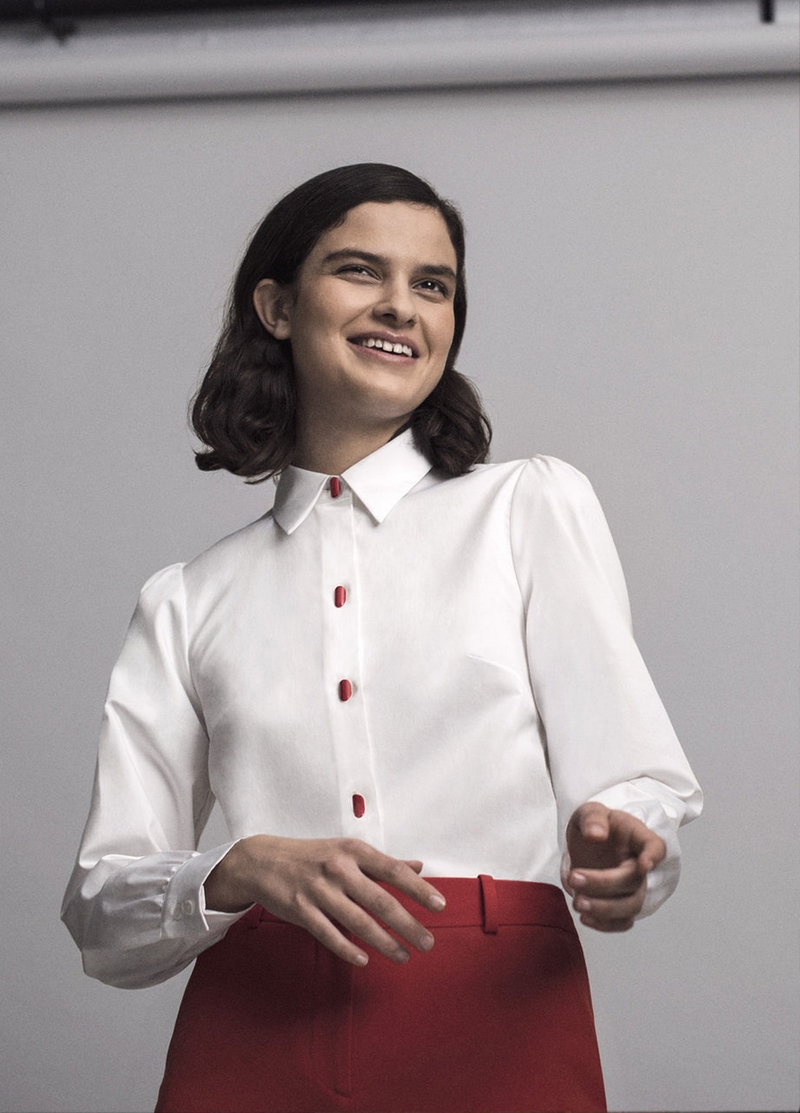
Every woman needs a classic white shirt – here’s how to wear it

The simplicity of the white shirt makes it a foolproof option when you just can’t decide what to wear. Just think Marilyn Monroe, Princess Diana – and the French

Asos pledge to ban mohair, cashmere and silk from 2019

The global online retail platform aims to be free from certain animal-derived products as of next year – in line with changing consumer attitudes towards animal welfare

Kim Jones makes Dior debut with Paris menswear show

The British designer’s first collection drew on the fashion house’s rich heritage

Galliano’s first couture menswear show for Margiela

The Maison Margiela ‘Artisanal’ Men’s Collection designed by John Galliano was shown at the House’s Parisian headquarters as part of Paris Men’s Fashion Week.

Reassessing the future of dressmaking in the men’s wardrobe, Maison Margiela presented its first full Artisanal menswear collection. The show signifies an unrestricted foray onto the territory of haute couture for men in a conversation with a new masculinity in motion.

Opening the doors to the deft skills of creative director John Galliano and the 163 rue Saint-Maur ateliers, the presentation was staged as the house works in view. The collection is exclusively bespoke and will be included in a co-ed Spring – Summer 2019 Défilé show in September.

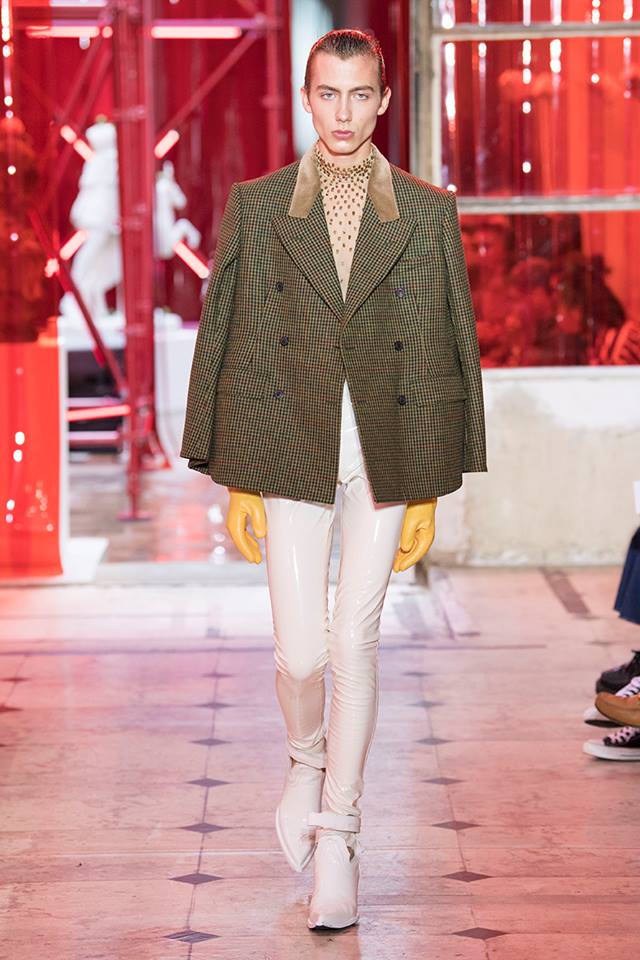
maison margiela menswear spring summer 2019 - Double-breasted cape-cut jacket in tweed with a velvet top collar
Double-breasted cape-cut jacket in tweed with a velvet top collar, worn over a nude chiffon top with embroidery and an off-white vinyl jean. Yellow gloves and decortiqué white patent leather Santiago boots. image source: maison margiela

Powered by Guardian.co.ukThis article titled “Galliano’s first couture menswear show for Margiela” was written by Scarlett Conlon in Paris, for theguardian.com on Friday 22nd June 2018 15.43 UTC

Paris Fashion Week has become a week of firsts. Virgil Abloh at Louis Vuitton yesterday, Kim Jones at Dior Homme tomorrow and, in the middle of them, John Galliano’s first couture menswear show for Maison Margiela.

Galliano doesn’t call it couture – speaking in a new Margiela podcast, released as the show started, he calls it “artisanal”. “We are trying to define what artisanal means for us,” he said. “It’s rooted in craftsmanship and is the highest form of dressmaking, but for men. Its backbone is in tailoring, but we are trying to further explore the bias cut.”

A model wearing a blazer walks the catwalk.
A model wearing a blazer walks the catwalk. Photograph: WWD/Rex/Shutterstock

The bias cut has been central to Galliano’s womenswear aesthetic since the mid-1980s and is something he has used in former roles at Givenchy, Christian Dior and his own-name label. It is not, however, often found in menswear. For those who don’t know what a bias cut is, Galliano went on to explain on the podcast. “If you had a napkin at home and you hold it like a square, and you pull the left and right sides simultaneously, that’s what is called straight of grain. Now turn that around to a diamond and pull the opposite corners – when you pull you will see what happens. There’s a natural elasticity in the fabric and that’s when you hit the true bias.”

For this spring/summer 2019 collection, which was staged at Margiela’s atelier in Paris, Galliano gave himself the task of cutting the bias not from his usual silk-backed crepe, like he would for women, but from English tweeds more in line with Savile Row suiting. They came in sculpted blazers, sweeping coats and satin suits.

“It’s a never-ending learning process with the bias, because each fabric reacts differently … a dialogue develops and you have to be attentive because it’s alive,” he said. “It teaches you, you can’t read about it from a book … you are not forcing it to do anything, it tells you what to do.”

Kimono jackets and acidic vinyl trousers.
A kimono jacket and acidic vinyl trousers. Photograph: WWD/Rex/Shutterstock

Embroidered kimono jackets, long red plastic macs, bejewelled corsets and acidic vinyl trousers were noteworthy pieces from the rest of the collection, as was the cowboy boot, which was present in his collections for autumn/winter 2018 too.

A model wears a bejewelled corset.
A model wears a bejewelled corset. Photograph: WWD/Rex/Shutterstock

The styling was significant. Jackets were nonchalantly thrown over the models’ shoulders to evoke “that spine-tingling moment of an early morning shrug after an after-party, where you don’t actually put the sleeves through your coat, you just put the coat on your shoulders”, said Galliano. Shoulder pads – which were used to give illusions of a cape and, in turn, heroism – evoked a confidence inspired by Humphrey Bogart. “You imagine those early pictures of [him] with the cigarette and with the coat on the shoulders … it’s an attitude, and I have tried to express that through a coat so that we can all have that attitude.”

Galliano also revealed on that podcast that he works with his year-long student placements to put the looks together. “Their view of the world is completely different,” he said. “Of course, one understands it, but you can’t put yourself in those shoes, can you? You can only be alive around these people. As much as they are obsessed with what I do, I am obsessed with what they are thinking, so it’s an ongoing exchange.”

The return of the cowboy boot.
The return of the cowboy boot. Photograph: WWD/Rex/Shutterstock

Galliano intended to address gender stereotypes with this collection, to show that cutting skills could help “discover a new sensuality, a new sexuality”. He also revealed that he intended to show his womenswear and menswear collections together as of October. The 34 looks shown today were versions of ready-to-wear pieces that will be shown in three months’ time.

Following his sacking from Dior in 2011 following an alleged antisemitic rant, there has been a lot of focus on Galliano’srehabilitation. Since his appointment at Margiela he has been welcomed back into the industry by many. His recent work for the brand has been well received too; in his first year in the job, revenues increased by 30%.

Combining womenswear and menswear, Galliano explaining himself on the podcast and opening the doors to the brand’s atelier (so attendees could see the in-house designers working away as they entered), it all signalled an evolution for the notoriously anonymous brand and very private designer; its deconstructed aesthetic code now infiltrates its processes too.

guardian.co.uk © Guardian News & Media Limited 2010

Published via the Guardian News Feed plugin for WordPress.