
First Space Lounge features Largest-ever Panoramic Windows to Be Flown to the Edge of Space – and There’s a Bar

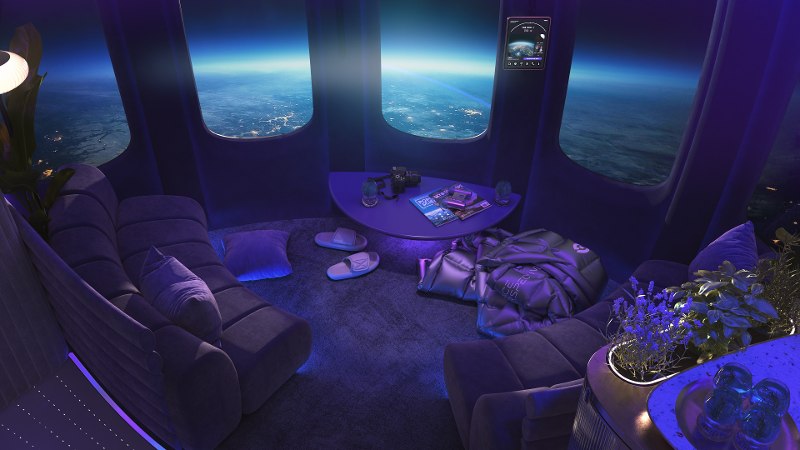
  The Space Lounge is a world away from the white, utilitarian environments you find in other spacecraft. Space Perspective Unveils World’s First Space Lounge. Hospitality & Entertainment Entrepreneur David Grutman Joins Space Perspective as Experience Curator. “The Space Lounge is a world away from the white, utilitarian environments you find in other spacecraft,” said … Read more

This experience is the most affordable, longest duration and most accessible space experience on Earth

  The leading stratospheric ballooning company is launching the first-of-its-kind, edge-of-space experience World View Enters Space Tourism and Exploration Market to Take Passengers to the Edge of Space World View, the leading stratospheric ballooning company, announced an expansion of services that includes the global launch of the first-of-its-kind, edge-of-space experience. World View’s mission is to … Read more

Space tourism: Spaceship Neptune luxury capsule will carry you on a journey to the edge of space


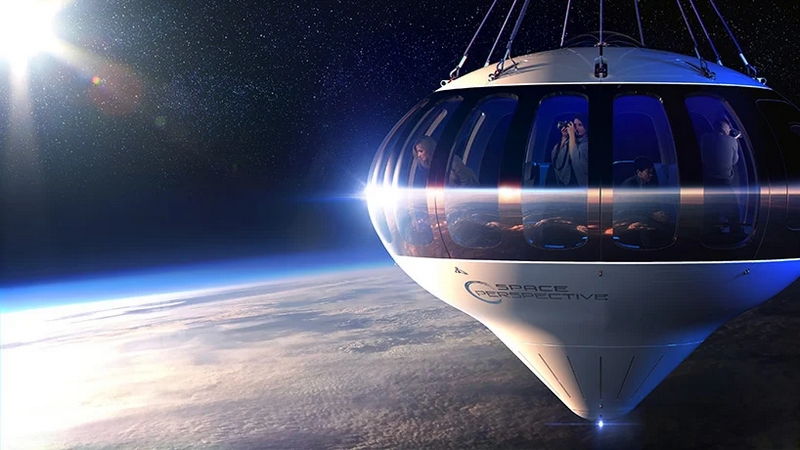
Spaceship Neptune luxury capsule suborbital flight; @thespaceperspective.com

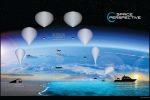
Space Perspective’s magnificent, safe suborbital flight via space balloon will smoothly fly you to the edge of space.

Space Perspective, founded in 2019, was created to provide more people, not just astronauts, the opportunity to see Earth as a planet from
space. Space Perspective’s balloon will safely and smoothly fly space travelers to the edge of space inside the revolutionary, near-zero
emissions Spaceship Neptune. The pressurized capsule affords a relaxed environment with plush reclining seats and a refreshments bar.
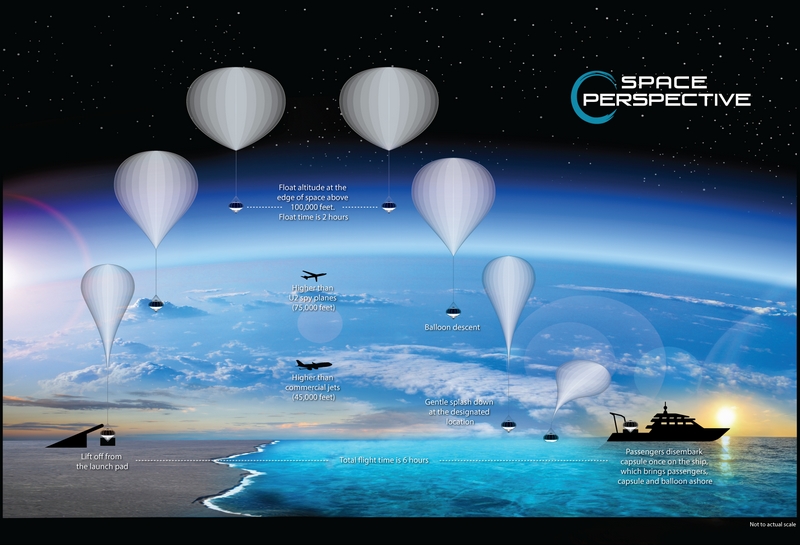
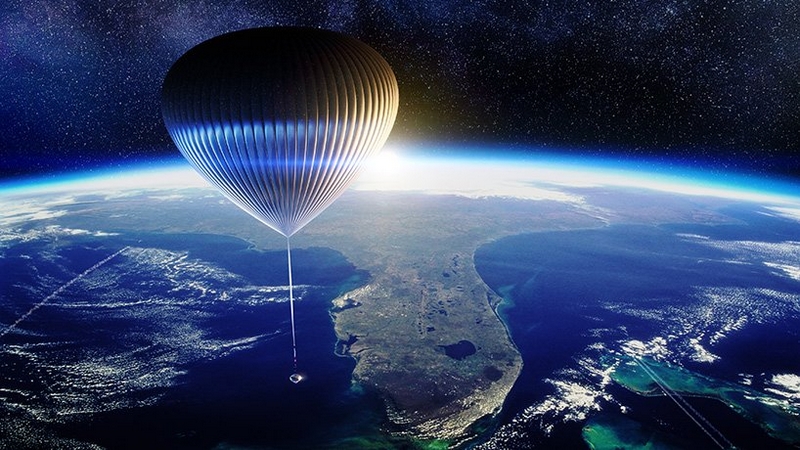
Spaceship Neptune will ascend for two hours while the sky is still dark and stars are visible. As Spaceship Neptune glides along the edge of
space, the passengers will watch the sun slowly rise over the curved limb of Earth—a view that has transfixed astronauts since the dawn of the space age. Neptune will then gently descend and two hours later splash down off the coast of Florida.

This once-in-a-lifetime opportunity is offered via the partnership between Exclusive Resorts, the premier Members-only vacation club, and Space Perspective.

Planned to launch at the end of 2024, the luxury capsule will carry eight Exclusive Resorts Members and a pilot on a journey to the edge of space. Club Members will enjoy a leisurely six-hour journey, which begins before sunrise from NASA’s Kennedy Space Center in Florida and soars above 99% of Earth’s atmosphere to an altitude of over 100,000 feet—three times higher than commercial airlines fly. The Club’s privately chartered flights aboard Spaceship Neptune are planned to be the pinnacle of The Club’s 2024 Once-in-a-Lifetime Journeys, a collection of itinerary-based bucket list trips in exotic locales, designed and vetted by Exclusive Resorts specifically for its Members. Exclusive Resorts, alongside Space Perspective, will be creating a custom flight experience for its Members to celebrate this momentous adventure.
Spaceship Neptune luxury capsule suborbital flight; @thespaceperspective.com

Once the FAA has licensed the vehicle for flight, Space Perspective will give Exclusive Resorts Members priority access, becoming the first privately chartered travel group to fly in Spaceship Neptune. “We agreed to partner with Exclusive Resorts because of the group’s  pioneering spirit, and we couldn’t be happier that they are now forging a pathway with us to a new travel destination: Space,” says Jane Poynter, Founder and Co-CEO of Space Perspective. “We are thrilled to be giving Exclusive Resorts Members an opportunity to be among the first to view the world in a way very few have done before. I can’t wait to hear Members’ stories about this unique and life-changing experience of seeing our Earth in space.”

Exclusive Resorts continuously provides once-in-a-lifetime opportunities for its Members to traverse all seven continents of the globe by way of its Residence and Experience Collections. Now, they are extending their reach beyond land and heading to the edge of space—the final frontier. The Club hopes to send at least five groups, or 40 Club Members, to space starting in late 2024.

It is anticipated that flights aboard Spaceship Neptune will be available for Exclusive Resorts Members to reserve on a first come, first served  basis beginning in October 2023.
Spaceship Neptune luxury capsule suborbital flight; @thespaceperspective.com

Fasten your seat belts and see what it’s like to soar above 76,000 feet pressure altitude


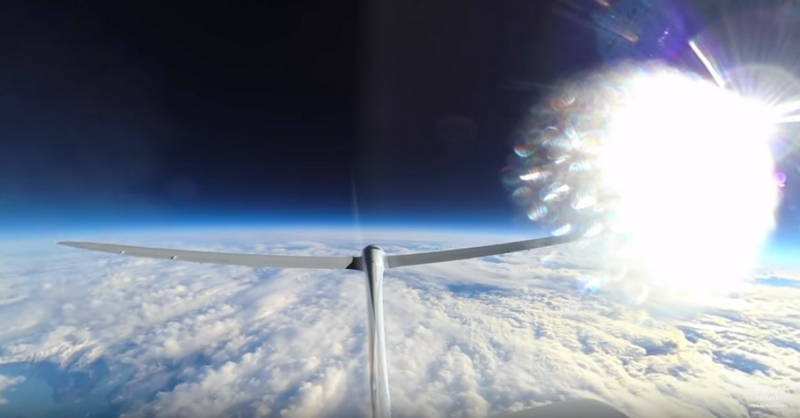
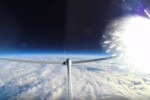
Airbus Perlan Mission II is making aviation history with a new gliding altitude world record. Perlan Project, the world’s first initiative to pilot an engineless aircraft to the edge of space, is setting second altitude world record and crossing Armstrong Line. This set a new gliding altitude world record, pending official validation.

Airbus Perlan Mission II is making aviation history 2018-
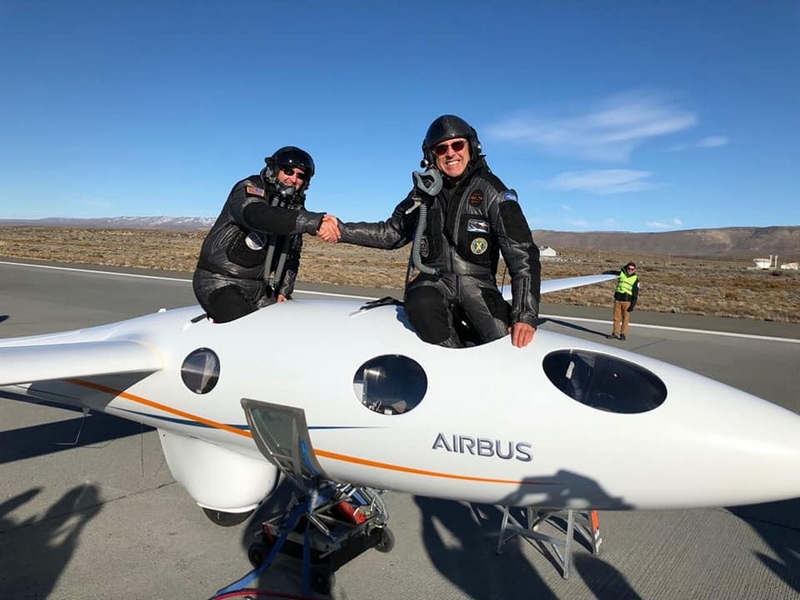
Airbus Perlan Mission II is making aviation history 2018; photos: PerlanProject

Airbus Perlan Mission II, the world’s first initiative to pilot an engineless aircraft to the edge of space, made aviation history last week in El Calafate, Argentina, by soaring in the stratosphere in the experimental Perlan 2 glider to a pressure altitude of over 62,000 feet. The milestone achieved this year is a testament to a pioneering spirit of exploration that runs through everyone on the project and through the organizations that support the project.

The pressurized Perlan 2 glider, which is designed to soar up to 90,000 feet, passed the Armstrong Line, the point in the atmosphere above which an unprotected human’s blood will boil if an aircraft loses pressurization.

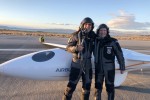
This marks a second glider altitude world record for Jim Payne and Morgan Sandercock, the same two Perlan Project pilots who soared the Perlan 2 to 52,221 feet GPS altitude on Sept. 3, 2017, in the same remote region of Argentine Patagonia. The 2017 record broke a previous record that was set in 2006, in the unpressurized Perlan 1, by Perlan Project founder Einar Enevoldson and Steve Fossett.

Airbus Perlan Mission II is making aviation history 2018
Airbus Perlan Mission II team; Photos: facebook.com/PerlanProject/

“Innovation is a buzzword in aerospace today, but Perlan truly embodies the kind of bold thinking and creativity that are core Airbus values,” said Tom Enders, Airbus CEO. “Perlan Project is achieving the seemingly impossible, and our support for this endeavor sends a message to our employees, suppliers and competitors that we will not settle for being anything less than extraordinary.”

Another first-of-its-kind achievement this year for the Perlan Project was the use of a special high-altitude tow plane rather than a conventional glider tow plane. During the record flight, Perlan 2 was towed to the base of the stratosphere by a Grob Egrett G520 turboprop, a high- altitude reconnaissance plane that was modified for the task earlier this summer. Operated by AV Experts, LLC, and flown by chief pilot Arne Vasenden, the Egrett released Perlan 2 at around 42,000 feet, the approximate service ceiling of an Airbus A380.

To soar into the highest areas of Earth’s atmosphere, Perlan 2 pilots catch a ride on stratospheric mountain waves, a weather phenomenon created when rising air currents behind mountain ranges are significantly strengthened by the polar vortex. The phenomenon occurs only for a brief period each year in just a few places on earth. Nestled within the Andes Mountains in Argentina, the area around El Calafate is one of those rare locations where these rising air currents can reach to 100,000 feet or more.

Built in Oregon and home-based in Minden, Nevada, the Perlan 2 glider incorporates a number of unique innovations like the carbon-fiber capsule with a unique high-efficiency, passive cabin pressurization system that eliminates the need for heavy, power-hungry compressors.

Perlan 2 features a unique closed-loop rebreather system, in which the only oxygen used is what the crew metabolizes. It is the lightest and most efficient system for a sealed cabin, and its design has applications for other high-altitude aircraft.

The aircraft is equipped with an onboard “wave visualization system” that graphically displays areas of rising and sinking air in cockpits. For commercial flights, following lines of rising air would allow faster climbs and save fuel, while also helping aircraft avoid dangerous phenomena such as wind shear and severe downdrafts.

Unlike powered research aircraft, Perlan 2 does not affect the temperature or chemistry of the air around it, making it an ideal platform to study the atmosphere. The experiments carried aloft in its instrument bay are yielding new discoveries related to high-altitude flight, weather and climate change. This season, Perlan 2 is flying with experiments developed by The Perlan Project’s science and research committee, as well as projects created in collaboration with organizations and schools in the U.S. and Argentina.

The Perlan 2 will continue to pursue higher altitude flights and conduct research in the stratosphere as weather and winds permit through the middle of September.

The Perlan Project 2018
Photos: facebook.com/PerlanProject/