The headline is easy to write: Hermès has overtaken Louis Vuitton as the world’s most valuable luxury brand. It is also, taken literally, a bit of a stretch, so let us look at the numbers before we get excited.
Interbrand, the brand consultancy whose Best Global Brands list has been ranking names by how much value they add to their companies since the early 2000s, published its 2026 edition this week. Apple is first, as usual. Hermès, the Paris house of the Birkin and the orange box, comes in at number 15 with a brand value of $45.2 billion. Louis Vuitton, the flagship of LVMH, is number 16 at $45.1 billion. It is the first time Hermès has finished ahead of its rival in Interbrand’s table.
The gap is about $100 million, or roughly 0.2 percent. In statistical terms that is a tie, and anyone who tells you otherwise has a press release to sell.
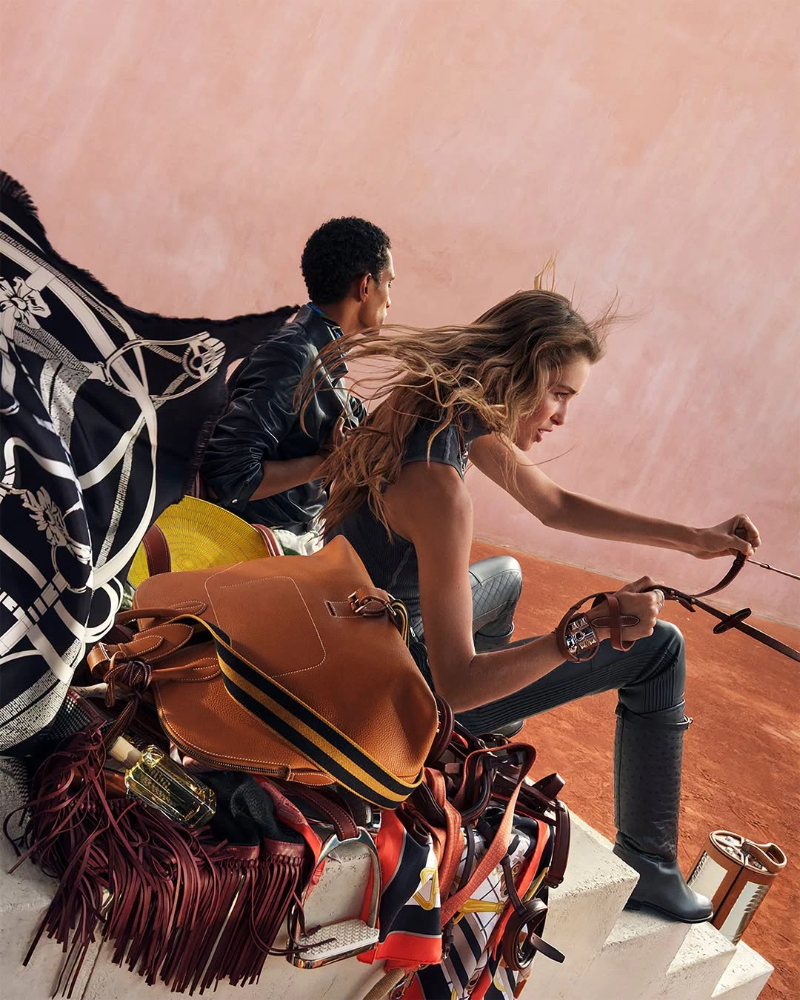
The direction matters more than the position
What does carry weight is the trajectory. Interbrand says Hermès grew its brand value by 10.6 percent over the year, while Louis Vuitton fell 6.9 percent. Two lines crossing is a story; two lines that happen to touch is not. Kantar’s BrandZ ranking, published in May with a different method and very different dollar figures, also put Hermès first in luxury and noted that Louis Vuitton was one of only two European brands in its global top 100 whose value declined. Two methods, two sets of numbers, the same ordering. That is more convincing than either on its own.
A word of caution about the dollars, too. Depending on which survey you open, Louis Vuitton is worth anything from roughly $45 billion to more than $100 billion. These figures are thermometers, not scales. They tell you who is warmer, not how many kilos of prestige there are.
Scarcity versus scale
Interbrand’s own explanation is worth reading carefully. For Hermès it points to craftsmanship, controlled scarcity and growing experiential programmes such as Hermès in the Making. For Louis Vuitton it notes the decline came despite heavy investment in partnerships and category expansion.
The media have written about a good deal of that expansion this autumn: a revived 1923 armchair for Paris Design Week, an Artycapucines retrospective at Art Basel Paris with a Keith Haring collection to follow, a full ski wardrobe. All of it clever, much of it beautiful. And yet the brand’s value fell. Meanwhile Hermès was busy opening a shop in Williamsburg after three years of testing the neighbourhood with a pop-up, launching a turntable, and designing a protective cover for a handbag.
It would be tidy to say that one house expands and the other holds back, but that is not quite true. Hermès has been adding objects for years, from table tennis sets to lacquered boxes. The difference may be in what each is selling. Louis Vuitton sells presence: it is everywhere, in every category, and every new category is another reason to meet it. Hermès sells refusal. You cannot always buy the thing you want, and that, rather inconveniently for economists, is exactly why you want it. The market appears to be rewarding the second approach at a time when people are spending more carefully.
The Map to Modern Luxury
THE CURATED CALENDAR
Discover the world’s most prestigious gatherings & exhibitionsThe risk for Hermès is the obvious one: scarcity only works while demand outruns supply. There is a limit to how much desire a brand can manufacture before it feels like a rationing system. But for now the maths favours restraint.


The rest of the table
Zoom out and the picture is less flattering to the sector. Interbrand’s list shows the combined value of the 15 biggest fashion brands down 6.5 percent over the year, while the 100 most valuable brands overall rose 8.1 percent. Zara rose 11 percent and Uniqlo climbed, while Nike and Gucci slipped. Luxury, in Interbrand’s phrase, is increasingly divided between brands gaining value and brands losing it.
The gainers include Chanel (number 24), Cartier (69) and Tiffany & Co. (91), all up. Notice the jewelry: two of the three are jewelers. It echoes what we saw when Kering reshuffled the leadership at Pomellato and DoDo, and when Gucci put its Horsebit into fine jewelry and watches. Objects that keep their value, or can be resold with confidence, are in demand. Audemars Piguet launching its own certified pre-owned platform last week is part of the same instinct: the second-hand price is now part of the brand’s story.
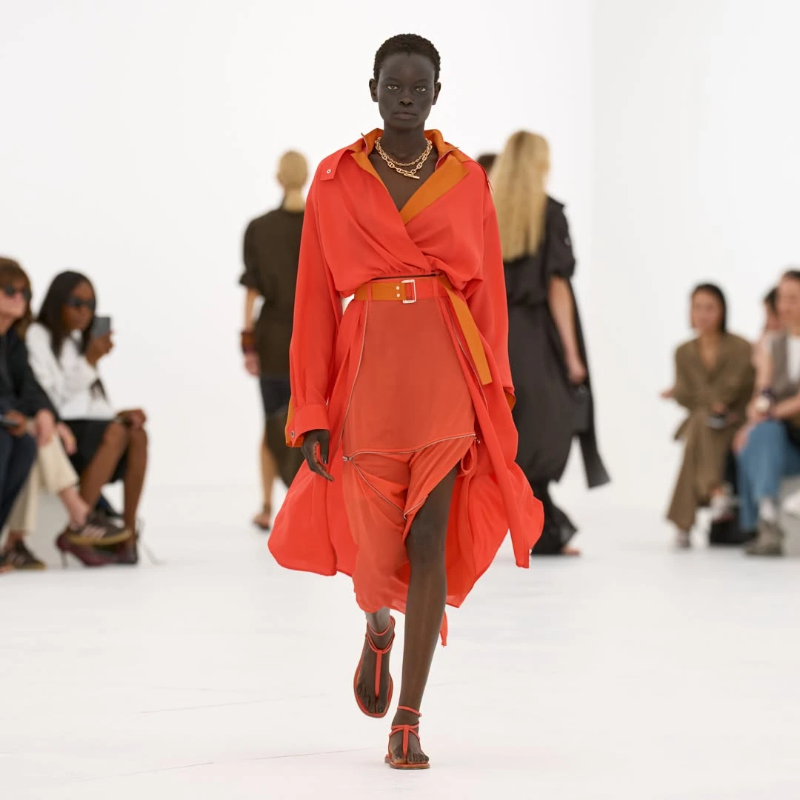
What to take from it
Three honest conclusions. First, do not read the rank, read the slope. Second, remember that each house will quote whichever ranking flatters it, and Hermès, which rarely comments on anything, will say nothing at all. Third, if you care about where luxury is heading, the lesson is the one the market keeps repeating: when budgets tighten, buyers stay loyal to things that feel hard to get and likely to last.
For those of us who enjoy this sector as spectators, there is something agreeable about the result. A company that sells patience has just been rewarded for it. Hermès, naturally, will have you wait to hear what it thinks.
