An armchair designed in 1923 for a Parisian couturier just became the star of Design Week. History has excellent taste.
While most of the fashion industry spends September obsessing over runway looks, Louis Vuitton quietly opened the doors of a private Paris townhouse to show off something with no hemline, no season, and no model required: a chair.
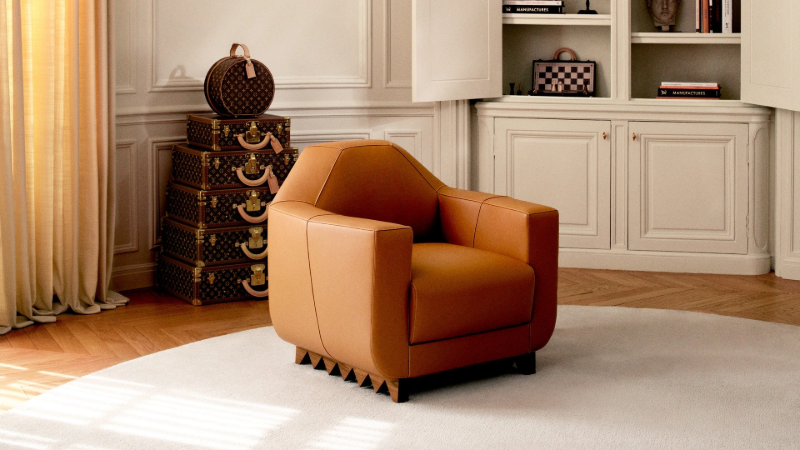
Louis Vuitton, the 1854-founded French trunk-maker turned fashion empire (part of LVMH), is expanding its Pierre Legrain Homage Collection — part of its long-running Objets Nomades furniture line — with the Kubic Armchair, debuting at Hôtel Particulier Louis Vuitton during Paris Design Week 2026 (September 10–13). The piece revives a design Pierre Legrain originally conceived in 1923 for Jacques Doucet, a legendary Parisian couturier and one of the era’s great art collectors. The armchair’s silhouette is unmistakably geometric — a trapezoidal backrest, faceted armrests, cubic construction — sitting at the exact crossroads of Art Deco and Cubism. Louis Vuitton’s version wraps the armrests in the house’s signature Nomade leather and pairs them with rosewood side legs, handled by the Maison’s own leatherworkers and cabinetmakers.
Legrain isn’t a random historical footnote here — he actually made Louis Vuitton’s very first piece of furniture, a dressing table, back in the 1920s, when Gaston-Louis Vuitton first pushed the house beyond luggage into decorative arts.
The Perspective
There’s a very specific flex happening here, and it’s worth naming: heritage fashion houses have realized that furniture archives are a competitive advantage almost nobody else has. Any luxury brand can hire a hot young furniture designer this season. Almost none of them can say “we actually collaborated with this specific Art Deco master a hundred years ago, and here’s the receipt.” Louis Vuitton isn’t just making a chair — it’s asserting a claim to design history that a newer luxury house simply cannot buy, no matter the marketing budget.
It’s also a smart hedge against fashion’s biggest structural problem: trend fatigue. Clothing collections are disposable by design — that’s the business model. But a century-old armchair reissued with contemporary leatherwork ages the opposite direction; it gets more credible with time, not less. Expect more heritage houses to go digging through their own 1920s archives over the next few seasons, because the ROI on “we’re reviving our own history” beats the ROI on “we hired someone trendy” almost every time, especially with a design-literate luxury audience that’s grown skeptical of pure trend-chasing.
The Map to Modern Luxury
THE CURATED CALENDAR
Discover the world’s most prestigious gatherings & exhibitions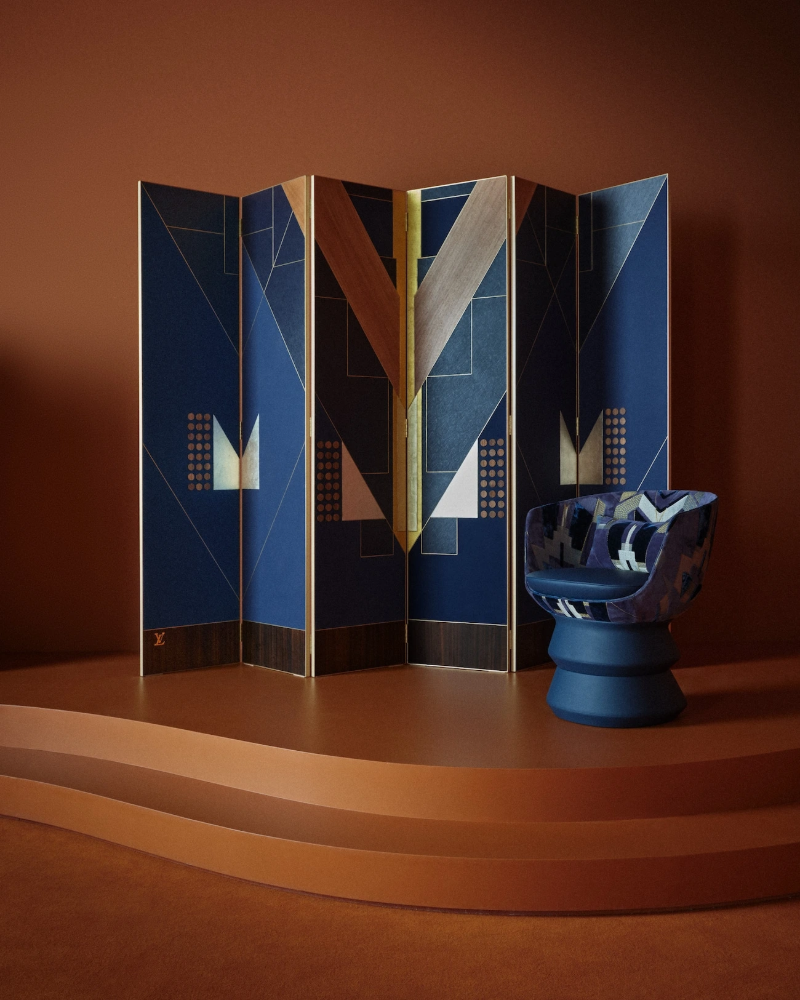
There’s a broader signal too: fashion houses moving deeper into “Collections Maison” — furniture, lighting, tableware, textiles — isn’t really about selling more chairs. It’s about claiming the entire domestic aesthetic of a customer’s life, not just their closet. The luxury house that used to sell you a handbag now wants to sell you the room the handbag sits in.
The takeaway: the next major luxury design trend might not come from a design school graduate — it might come from a fashion house’s own basement archive, dusted off and handed to master craftspeople a hundred years later.