McQueen directors: ‘Fashion creates icons, then isolates them’

McQueen - Trailer
McQueen. A Film by Ian Bonhôte and Peter Ettedgui. image: youtube LionsgateFilmsUK


Powered by Guardian.co.ukThis article titled “McQueen directors: ‘Fashion creates icons, then isolates them'” was written by Edward Helmore, for theguardian.com on Thursday 7th June 2018 09.26 UTC

Before there was Sarah Burton’s Alexander McQueen, the chic, highly finessed and now financially successful fashion label, there was the Alexander McQueen of its namesake that – as this touching new documentary tells it – could barely sustain the creative dysfunction its creator and his companions wrought upon it.

The man at its core, we know, killed himself aged just 40. What story is left to tell? McQueen left behind five distinct silhouettes, or reimaginings for the shape of clothing on a woman’s body: more than Givenchy, Dior, Chanel, Saint Laurent or any other designer, according to the film’s co-directors Ian Bonhôte and Peter Ettedgui.

The pair spent a year refashioning existing film of McQueen and his protector-antagonist Isabella Blow, and threading it through with new interviews with McQueen’s family and surviving, if somewhat shell-shocked, collaborators.

The result, in the opinion of Vogue international editor Suzy Menkes is “the most sensitive vision about a creative who never lost his rough edges, and who put his life – the bloody history of distant warriors in Scotland and childhood abuse within his family – on stage.”

Kate Moss Alexander McQueen
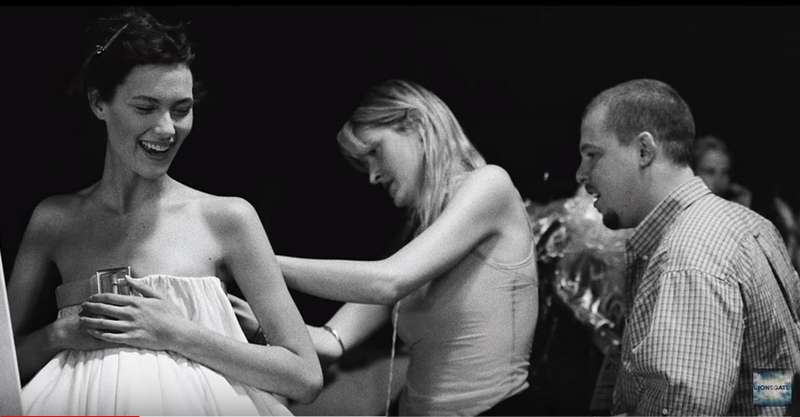
Frock stars … Kate Moss with Alexander McQueen. Photograph: Alan Davidson/Silverhub/REX/Shutterstock

On this journey, we learn that fashion is probably best admired as a playground for creative people to exercise restless and highly stimulated imaginations. McQueen thrilled and terrified his models and clients: a perspiring, huffing beast coming at them with giant tailors’ scissors, wildly cutting at fabric as they stood in the designs. That such people should also swing between intense highs and lows – often to the bewilderment of those around them – should come as no surprise.

“Lee [Alexander McQueen] and Lee’s quality of work needs a big canvas,” says Bonhôte. “This we hope is the first to emotionally inform people into Lee’s journey and his life.”

Ettedgui says there were two questions to answer: how did he become the golden boy of the fashion industry; and why, when he was at the top of his game, did he decide life was not worth living? “We were deeply moved by that story,” he says. “The emotions that he created in us – the exhilaration of the early part of the story, or the tragedy toward the end – are what we wanted to put up on the screen.”

It is not clear even that McQueen and Blow, who preceded him in death by mere months, should be mourned in the traditional sense; both are more successful and better understood from beyond the grave than they were ever this side of it. That is not to say they aren’t missed, intensely in some instances. In some ways, it may be a better way to enjoy the joyful, deluded follies of their adventures.

In New York City, when McQueen came to show off his bumster collection – one of his first to gain widespread attention – a model was directed to lurch, mad-cow like, down the aisle in a Lower East Side synagogue. The designer also directed the PRs to slow Vogue’s Anna Wintour and her then sidekick André Leon Talley’s entry to the show. Blow admonished her rebellious protege: “You’ve got to make an effort with her.” Nonetheless, Wintour would later become a champion for McQueen.

“As he said it himself, he loved having the opportunity to prick the bubble of the fashion world,” says Ettedgui.

Alexander McQueen Savage Beauty
Dress you up … a McQueen dress on display as part of the V&A’s Savage Beauty exhibition. Photograph: Rex

Nor is it hard to see why Blow so adored him, and why she was so devastated when he cast her off on signing with a more professional house, Givenchy, then under the direction of Tom Ford. It had, after all, been Blow’s wheeze to get Ford to buy McQueen for the Gucci Group. The deal financed McQueen but by then Blow was judged to be unsuitable and, aggrieved, reinvented herself elsewhere.

As it turned out, in some ways, McQueen wasn’t so suited to the fashion life. Or perhaps he was too well-suited. Either way, the documentary speeds up here, as it should, and speeds lightly over his drug problem, his decadence, his efforts to change himself and his appearance, his rages and problematic relationships. He drove himself to work harder. “The fashion industry’s need to reinvent is relentless,” says Bonhôte. “It creates icons, and then isolates them.”

McQueen, says Ettedgui, explained it himself. Asked by former Vogue contributing editor and novelist Plum Sykes why he conformed to the fashion system and its frenetic pace when he could, in his position, set his own agenda, the designer said simply “because I’m so fucking insecure”.

“The person who put the most pressure on McQueen was McQueen,” says Ettedgui. “We certainly picked up on a lot of finger-pointing but the answer is not as passive as ‘Lee was a victim of the fashion industry.’ It’s much more nuanced than that.”

Ultimately, his legacy must be the clothes. When you look at the impact of the V&A and Met’s Savage Beauty exhibitions, which were record-breaking on both sides of the Atlantic, people really started to analyse him technically, Bonhôte says. “The five silhouettes he left behind are potentially more than Saint Laurent or Coco Chanel, and that puts him right at the top.”

McQueen is in UK cinemas on 8 June

guardian.co.uk © Guardian News & Media Limited 2010

Published via the Guardian News Feed plugin for WordPress.
The Marvellous Mechanical Museum review – marvels ex machina

Compton Verney, Warwickshire
Four centuries of automata whir into wondrous life in a show that’s as much performance as it is exhibition

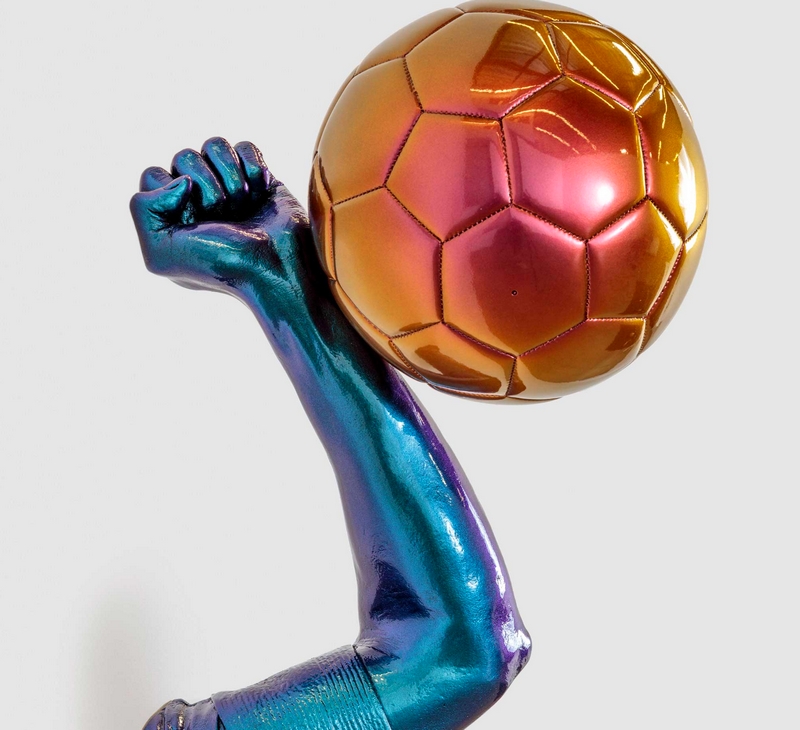
The art of football: an exhibition devoted to the beautiful game

At the Pérez Art Museum Miami, the intersection of art and football is being explored in an expansive new show featuring work from Andy Warhol and Kehinde Wiley

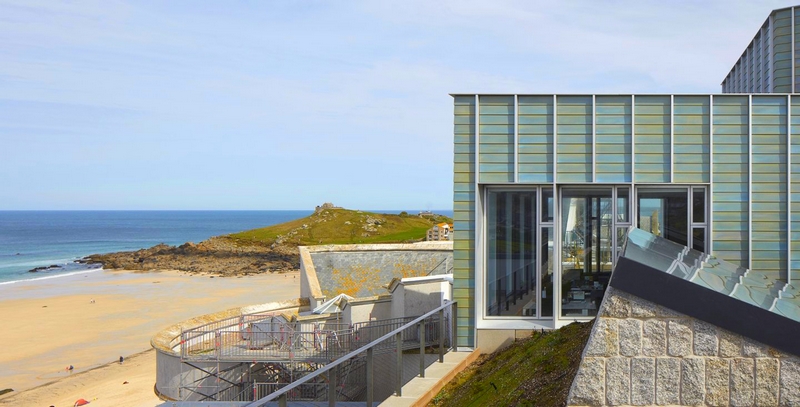
‘Breathtakingly beautiful’: Tate St Ives wins museum of the year award

Gallery beats Brooklands Museum, Weybridge, Glasgow Women’s Library and the Postal Museum in London to £100,000 prize

Paris honours savoir-faire of fashion favourite Sonia Rykiel

The 50th anniversary show distills the late designer’s style, artistic heir Julie de Libran says

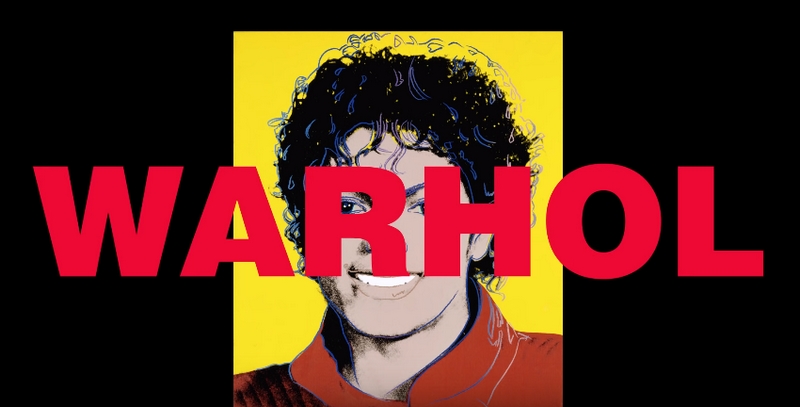
Michael Jackson: On the Wall review – king of pop as the ultimate muse

This landmark exhibition explores the influence of Michael Jackson on some of the leading names in contemporary art.

“Michael Jackson is one of the most influential cultural figures to come out of the 20th century and his legacy continues into the 21st century. His significance is widely acknowledged when it comes to music, music videos, dance, choreography and fashion, but his considerable influence on contemporary art is an untold story,” notes London’s National Portrait Gallery.

mjacksononthewallexhibition2018
image: London’s National Portrait Gallery You Tube


Powered by Guardian.co.ukThis article titled “Michael Jackson: On the Wall review – king of pop as the ultimate muse” was written by Adrian Searle, for The Guardian on Wednesday 27th June 2018 11.19 UTC

‘Ariel of the ghetto,” the writer Hilton Als called him. He has been compared to Baudelaire and Frankenstein’s monster; he played the Scarecrow in the Wiz, and transformed himself into a zombie in the Thriller video. He was both a global superstar and an enigma, almost universally feted, then prosecuted and vilified. Michael Jackson, now the subject of a large and surprising exhibition at London’s National Portrait Gallery, proves to be an enormously fertile figure for artists to have got their heads, as well as their art around, and often their hearts too.

Largely, Jackson passed me by, except as a kind of background music. The videos came and went on the screen and, as the news stories and TV footage became ever more puzzling and alarming, what interest I might have had in him became increasingly voyeuristic.

Equestrian Portrait of King Philip II (Michael Jackson) by Kehinde Wiley, 2010.
Equestrian Portrait of King Philip II (Michael Jackson), 2010, by Kehinde Wiley. Photograph: Jeurg Iseler/Kehinde Wiley, courtesy of Stephen Friedman Gallery, London and Sean Kelly Gallery, New York

And all the while Jackson kept cropping up in places I didn’t expect to find him. My dry cleaner on the Hackney Road dressed like him. Jeff Koons made a giant porcelain sculpture of Jackson and his pet chimp, Bubbles. And here he is in Andy Warhol portraits, and in a huge equestrian portrait by Kehinde Wiley, based on Rubens’ Philip II on Horseback. Jackson is on the cover of Rolling Stone and Ebony and, in a Catherine Opie photograph, framed and smiling on Elizabeth Taylor’s bedside table. He’s a pieta, the Archangel Michael defeating the devil and, in a Mark Flood collage, a four-eyed alien standing next to ET. There are gigantic Michaels, tiny Michaels, badly drawn Michaels. Here he is in a horrible painting by Maggie Hambling that makes you squirm and want to run away. It is the worst thing here.

Interview Magazine, September 2009 by KAWS 2009.
Interview magazine, September 2009 by KAWS. Photograph: Courtesy of KAWS

In Jordan Wolfson’s Neverland, Jackson is reduced to a tiny pair of hand-drawn eyes, blinking and swaying in a blank sea of emptiness on a big screen, to a gurgling sound reminiscent of a fish-tank aerator. Globbloboblob goes the sound, replacing whatever music Jackson might be swaying to. In Appau Junior Boakye-Yiadom’s PYT, Jackson is reduced to an overlarge pair of penny loafers, held on tiptoe (like his dance move “the freeze”) by a bunch of balloons. David Hammons has Jackson as one of a trio of microphone stands, the others standing for boxer Mike Tyson and basketball player Michael Jordan, in Which Mike Do You Want to Be Like…? The mic stands are too high for anyone to use, an image of unattainable ambitions and public expectations.

Neither hagiography nor reliquary – no pots of skin-whitener, no Swarovski-encrusted glove, no shades, nothing about the nose: this is not the Michael Jackson Story. A refracted portrait of Jackson through the eyes of 48 artists, On the Wall feels an entirely justified exhibition. It is not the last word. As Zadie Smith wrote in her novel Swing Time: “A great dancer has no time, no generation, he moves eternally through the world, so that any dancer in any age may recognise him. Picasso would be incomprehensible to Rembrandt, but Nijinsky would understand Michael Jackson.” The novel’s narrator also recalls a story that Fred Astaire begged Jackson to teach him the moonwalk. Fred, like Jackson’s nose, isn’t here. Instead we have Klara Lidén, moonwalking the streets of Manhattan at night, in a grainy video, and Spartacus (or do I mean Marvin Gaye, or is it now Monster) Chetwynd and her chums dancing to Thriller, with bawdy squirts of artificial smoke, in a strangely ritualised performance titled (according to the on-screen credits) Thiller. It looks like a covert recording of a bizarre ritual as much as a Jackson homage. Perhaps it is just that.

Michael by Gary Hume 2001.
Michael by Gary Hume 2001. Photograph: Gary Hume and DACS, London 2018

Everywhere in the show, Jackson’s voice and Quincy Jones’s arrangements leak from tinny headphones and drift from videos. When Jackson’s Dangerous world tour hit Bucharest in 1992, two years after the communist regime fell, the audience went utterly berserk. Jackson stood alone and static. Removing his glasses drew a roar. A single hand movement caused an outpouring of screams Ceausescu could never have engineered. Footage of the concert, focusing almost as much on the audience as the performer, is shown in a room alongside the Michael Jackson masks the tour’s promoters distributed, interspersed with newspaper images of the faces of Romanians, taken at the time of the concert. Faces and masks alike are illuminated, glowing from the gallery wall. Everyone, it seems, was illuminated by Jackson’s presence.

Lorraine O’Grady twinned Jackson’s image with photographs of Baudelaire, as the first and last modernists (the French poet and essayist emerging from Romanticism, Jackson morphing into the postmodern). Yet for all these attempts to fix him, Jackson remained slippery and perhaps unknowable, a screen on which to project hopes and fears, darkness and light, perversity and pleasure. In the last work in the show, Candice Breitz filmed Jackson fans from Germany and Austria, singing their way through the entire Thriller album. The 16 performers are shown side by side, awkward, ecstatic, out of tune, rapt in the songs and the performance. One was given a copy of Thriller while in prison in East Germany, and the album offered mental escape. Which one is she? What are their stories?

Big in East Germany … Candice Breitz’s film King (A Portrait of Michael Jackson) 2005.
Big in East Germany … Candice Breitz’s film King (A Portrait of Michael Jackson) 2005. Photograph: Candice Breitz

No wonder artists have been drawn to Jackson. You couldn’t make him up. His strange life at Neverland, his philanthropy, his attempt to – almost – become white, his androgeny, his consummate work ethic, his wealth, his vulnerability all seemed to conspire against him. I may never have owned a Jackson album, but he’s there on samples, mixed down and mixed-up, and still drifting on the air, and in and out of my life. He was an inspiration, a model, a tragedy. I have never thought about him so much as in the last 24 hours, and shall never think of him again as I did before. That is a measure of this exhibition.

guardian.co.uk © Guardian News & Media Limited 2010

Published via the Guardian News Feed plugin for WordPress.