The Puff Meets the Party: Loro Piana’s Evening Collection Decoded
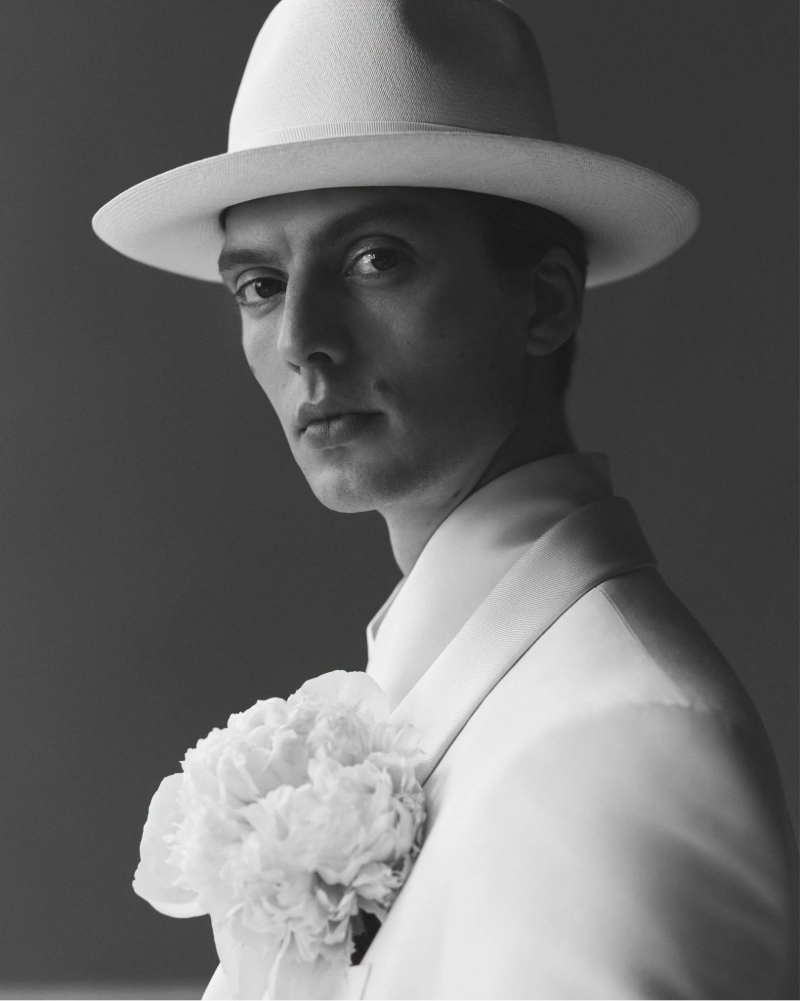
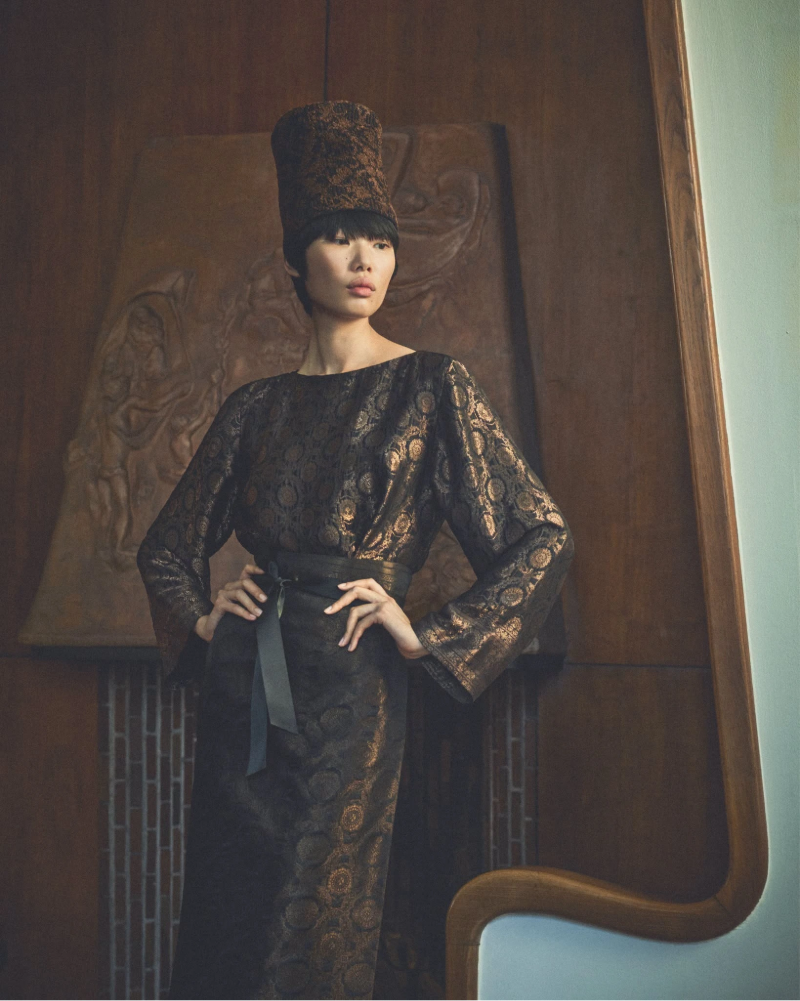
Loro Piana has just dropped its Evening Collection for Autumn/Winter 2026–2027, a 28-piece capsule that takes the house’s signature quiet-luxury DNA—Baby Cashmere, silk, understated tailoring—and points it squarely at the after-dark hours. Unveiled at Casa Borsani in Milan and shot by Annemarieke van Drimmelen with model Kayako Higuchi, the collection is Loro Piana’s most deliberate move yet into eveningwear, a category the house has historically only flirted with. It’s a signal worth decoding: quiet luxury is no longer content with daytime discretion—it wants a seat at the gala table too.
What’s Actually in the Collection
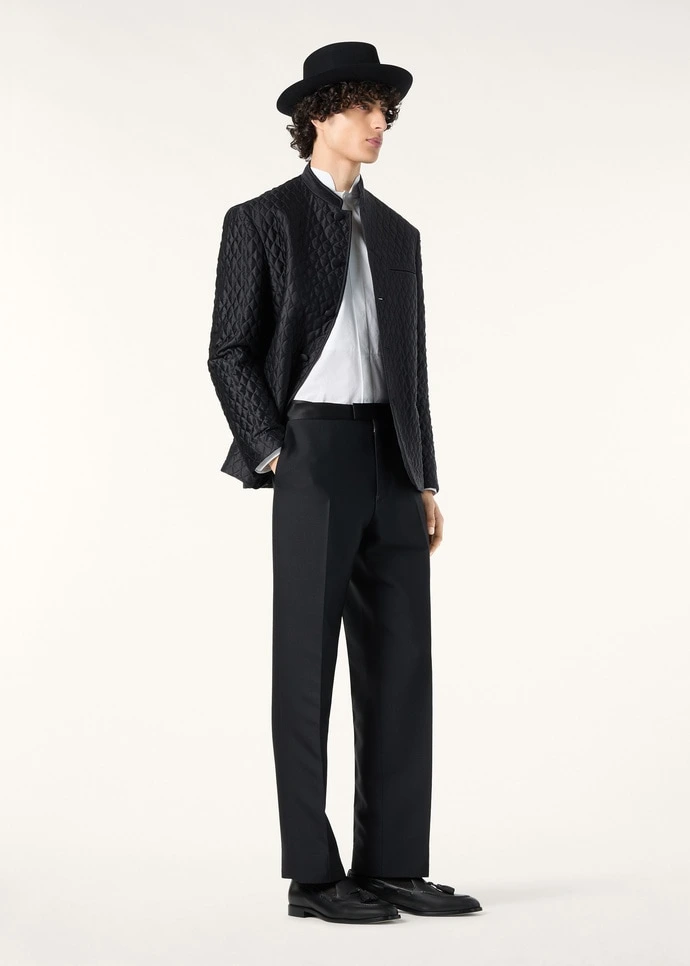
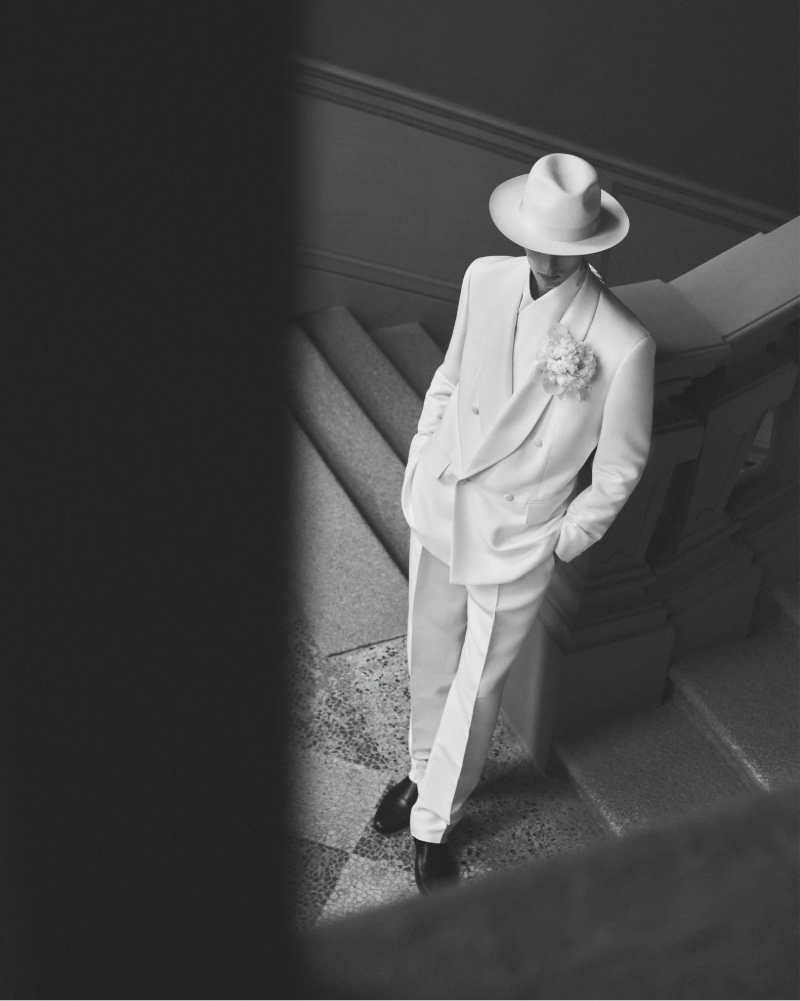
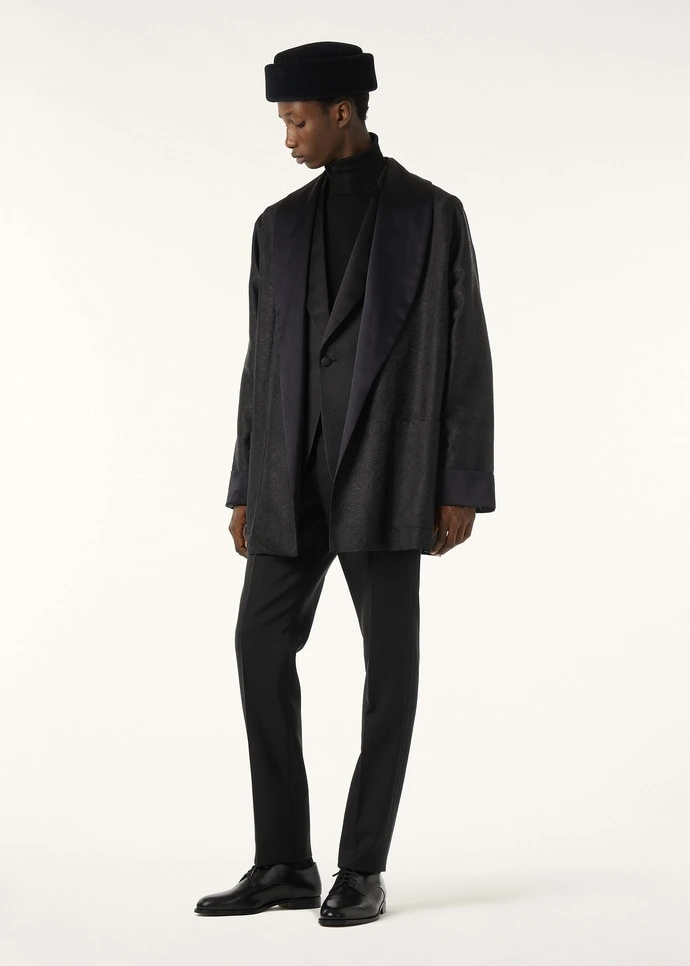
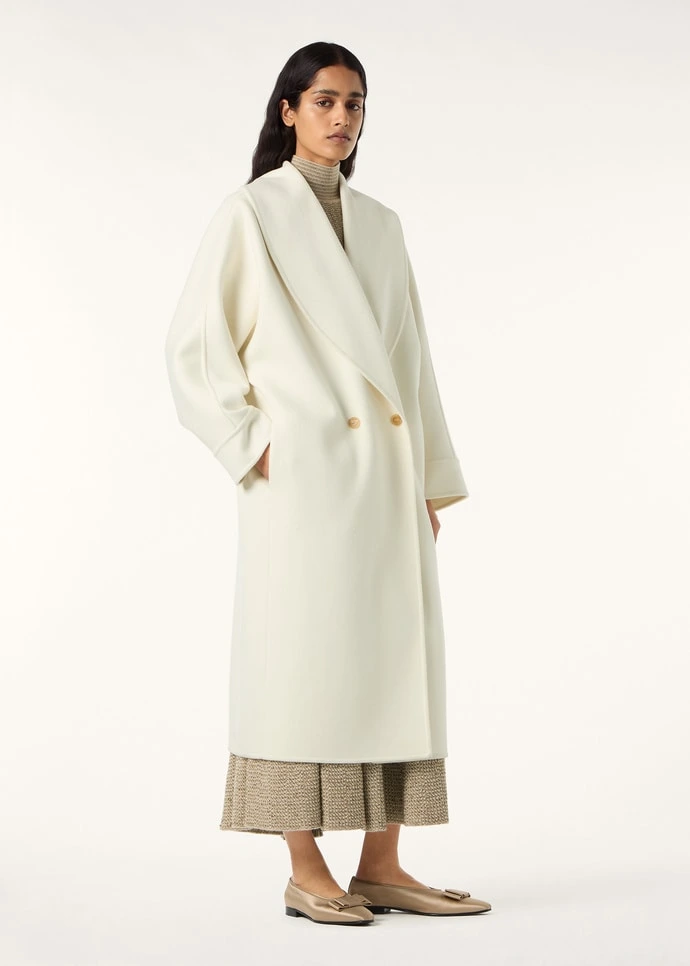
The women’s line leans on silk velvet, Baby Cashmere, and satin Mireille, with standout pieces like the Giles Coat, Vika Cape, and Maela Skirt hand-embroidered with roughly 30,000 glass beads and fine gold thread—making each garment effectively one-of-a-kind. The men’s offering reworks the tuxedo in wool and silk, pairing a grain-de-poudre shawl jacket with silk satin lapels and a baby-cashmere shawl coat, all anchored by a monochrome black-and-white palette. Price points run from a €600 Ladakh Beanie to a €16,800 Chatillon Coat in Baby Cashmere, with most core pieces sitting in the €2,000–€9,000 range. The through-line is sculptural volume, pleats, and drape—garments designed to move fluidly from cocktail hour to black-tie without losing their composure.
The Meaning: Quiet Luxury Gets a Dress Code
This collection is less a new product line than a strategic thesis statement. Loro Piana has built its empire on daytime discretion—the perfect cashmere sweater, the unassuming loafer—and Evening extends that language into a category where “quiet” is harder to pull off without tipping into either costume or invisibility. By keeping the palette monochrome and letting fabric, cut, and handwork do the talking, the house is arguing that eveningwear doesn’t need logos or sequins to command a room; it needs material intelligence. The 30,000 hand-placed glass beads per garment aren’t decoration for decoration’s sake—they’re a craftsmanship flex that says “we can do glamour without shouting,” which is precisely the tone the post-pandemic luxury consumer is craving: elevated ease, not earnest minimalism.
Unique Features: Where Craft Meets Concept
What sets this apart from a typical eveningwear drop is the material-first approach. Baby Cashmere—Loro Piana’s signature ultra-fine fiber—appears in capes, coats, and cardigans, bringing the house’s daytime softness into formal silhouettes that usually demand stiffer fabrics. Silk velvet catches light in soft folds rather than hard shine, and the gold-thread embroidery adds depth up close without overwhelming the silhouette from across the room. The campaign’s setting—Casa Borsani, a mid-century architectural landmark in Milan—reinforces the message: this is fashion in dialogue with design history, not a red-carpet spectacle. Even the photography favors quiet, intimate moments over staged glamour, letting texture and proportion carry the narrative. It’s a masterclass in tonal control: luxury expressed through material and craft, not spectacle.
The Map to Modern Luxury
THE CURATED CALENDAR
Discover the world’s most prestigious gatherings & exhibitionsTrends It’s Riding—and Setting
Loro Piana’s move lands squarely in three converging 2026 currents. First, the “elevated casual” blurring of day-to-night dressing: pieces designed to flex from dinner with friends to a gala, mirroring the post-pandemic collapse of rigid dress codes. Second, the craftsmanship-as-luxury narrative: with consumers increasingly viewing high-end goods as investments that hold value, hand-embroidery and rare fibers are becoming the new status symbols, not logos. Third, the broader “quiet luxury” consolidation: brands like Zegna (+12.7% Q3), Brunello Cucinelli (+13.5% Q3), and Loro Piana itself (“very strong growth” per LVMH’s CFO) are outpacing traditional leaders by doubling down on understated excellence rather than logo-driven hype. Loro Piana isn’t just riding this wave—it’s helping define it, proving that quiet can be loud in the right hands.
What It Signals for Luxury—and the Peers
For the wider luxury industry, this is a canary-in-the-coal-mine moment: the eveningwear category, long dominated by couture houses and red-carpet specialists, is being claimed by quiet-luxury players who bring a different value proposition—craft, material rarity, and versatility over spectacle. For Loro Piana’s peers—Zegna, Brunello Cucinelli, Hermès, The Row—the message is clear: the evening is no longer off-limits to the understated. Expect competitors to respond with their own “elevated evening” capsules, likely leaning harder into rare fibers, handwork, and architectural campaign settings to match. LVMH’s backing amplifies the stakes: with Loro Piana’s Ghemme knitwear center (8,000+ sqm, 300 jobs planned) and a new leather-goods facility in Barberino Tavarnelle, the house is industrializing its craftsmanship story, making this collection not just a fashion statement but a supply-chain flex. In a market where “premium” is struggling while “high-end” thrives, Loro Piana’s Evening Collection is a bet that the future of luxury is quiet, crafted, and—yes—still a little bit puffy.
Loro Piana’s Evening Collection isn’t just clothes for after dark—it’s a declaration that quiet luxury has officially graduated from daytime discretion to full-spectrum dominance. The puff has arrived at the party, and it brought its own dress code.