
Kering is quietly sketching out its next luxury chapter, and the latest announcements draw a clear picture: heavier bets on jewelry, deeper roots in sustainability and innovation, tighter control of the value chain, and sharper financial discipline on prime real estate. At the same time, there’s a sensitive leadership transition underway at Bottega Veneta. The common thread across all of this is a group trying to future‑proof itself: nurturing the next generation of ideas and makers, locking in strategic assets, and industrializing jewelry just as it did with leather goods.
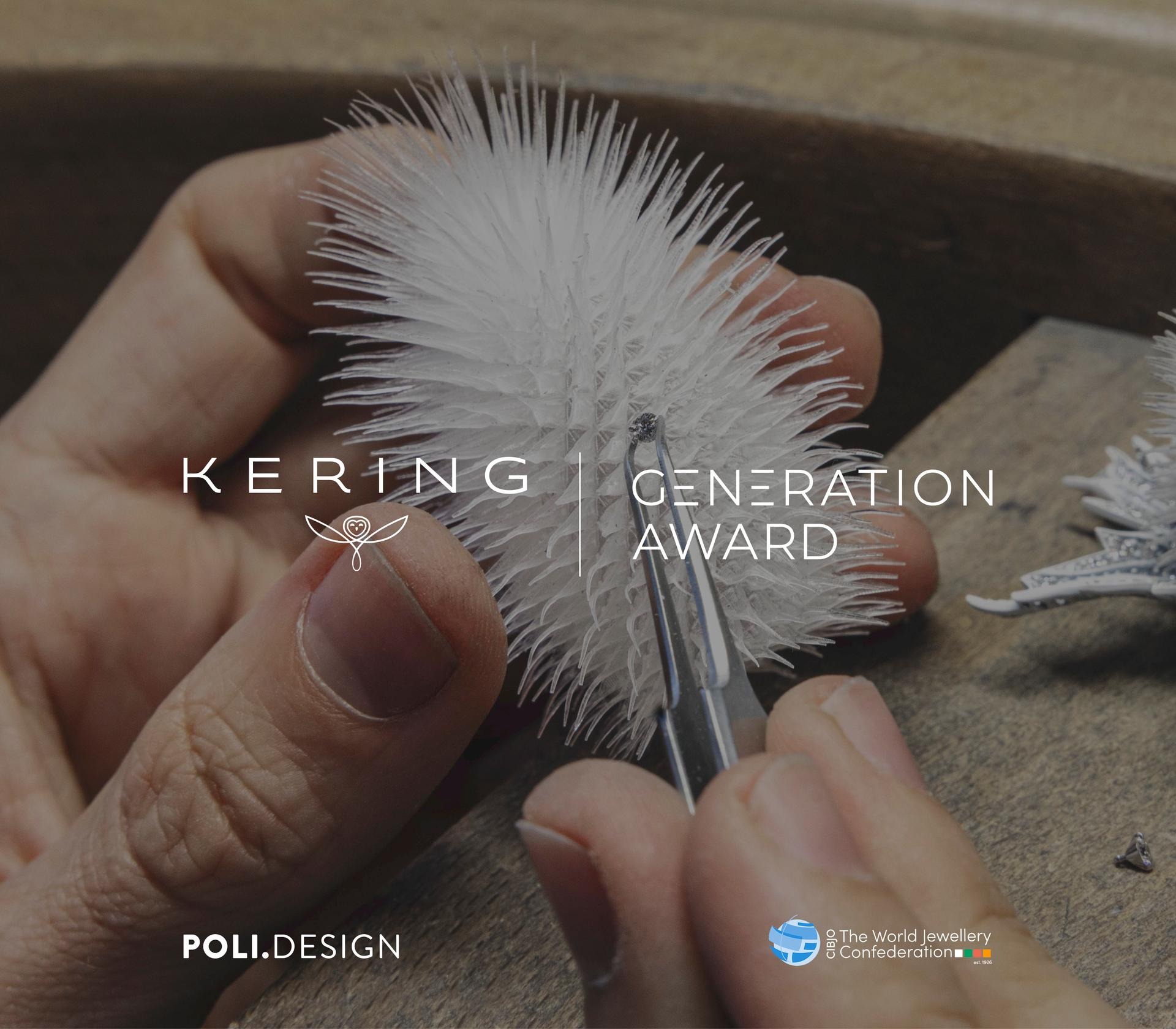
@Kering luxury group announces the second edition of its Kering Generation Award X Jewelry
Here’s a shorter breakdown of each move and the trends behind them.
1. Kering Generation Award X Jewelry
Kering is launching the second edition of its Generation Award X Jewelry, in partnership with CIBJO and POLI.design. After debuting at JCK Las Vegas 2025, the award returns with a theme that says it all: “Second Chance, First Choice.”
The focus is on:
New low‑impact and recycled materials
AI tools for design, sampling and production
Sustainable packaging
Retail tech that improves efficiency, circularity and customer experience
Ten leading universities will guide students to design jewelry that transforms discarded materials into highly desirable pieces, while startups enter with existing products or technologies. Finalists will pitch in Paris during Haute Couture Week in July 2026.
Prizes are deliberately practical: startups get mentorship from POLI.design; students receive internships at Kering’s jewelry houses (Boucheron, Pomellato, Dodo, Qeelin).
Trend signal:
Jewelry is no longer just about carats and logos—it’s about traceability, circularity and tech‑enabled design. Kering is clearly using its jewelry division as a test lab for sustainable innovation and AI, and doing so by plugging directly into academia and early‑stage founders.
2. Kering Generation Award X MENA
Alongside jewelry, Kering is scaling its Generation Award X MENA, run with the Saudi Fashion Commission. After a strong first edition in 2025 (500+ applications, 21 finalists, 3 winners), the 2026 program broadens its reach across the region.
The focus areas:
Regenerative materials and cleaner production
Circular design and new business models
Nature and animal welfare
Consumer education and cultural engagement
Selected MENA startups will receive:
- An immersive trip to Paris (Kering HQ, Plug and Play Paris, and the ChangeNOW summit)
- Three months of expert mentorship
- A six‑month residency at The Garage incubator in Riyadh
- Access to Plug and Play’s global network of brands, retailers and investors.
Trend signal:
Kering is using open innovation platforms to source sustainability solutions from fast‑growing regions, not just traditional fashion capitals. It positions the group as an early ally of MENA’s emerging fashion tech scene while seeding region‑specific innovation that can later be scaled globally.
3. Leadership change at Bottega Veneta
Kering announced that Bartolomeo (Leo) Rongone, CEO of Bottega Veneta, will leave the group as of March 31, 2026. A successor has not yet been named, and the search is underway.
Officially, Kering thanks him for six years of “significant contribution” and emphasizes that the current management team will continue to drive Bottega’s “positive momentum” during the transition.
Trend signal:
This fits a broader pattern at Kering of tightening leadership, especially in houses that are strategically important but under intense competitive pressure. Expect the next Bottega CEO to be chosen with a view to sharpening growth and brand coherence in a more demanding luxury market.
4. New York real-estate joint venture with Ardian
Kering has finalized a joint venture with Ardian for its property at 715–717 Fifth Avenue in New York—a prime, multi‑level luxury retail site of about 115,000 sq ft (10,700 sq m).
Key points:
A new JV holds the asset: Ardian owns 60%, Kering 40%
Kering’s stake is now equity‑accounted
Transaction value: USD 900 million (EUR 766 million)
Net proceeds for Kering: USD 690 million (EUR 587 million)
The message from Kering’s COO: secure long‑term flagship locations for its brands, but free up cash and “enhance financial flexibility” by partnering with an institutional investor—similar to a previous Paris real-estate deal with Ardian.
Trend signal:
The group is de‑risking brick‑and‑mortar ownership while still locking down iconic addresses. It’s a capital‑light approach that keeps storefront prestige without parking too much money in real estate at a time when Kering needs firepower for acquisitions and brand investment.
5. Staged acquisition of Raselli Franco Group
Kering has signed an agreement to acquire Raselli Franco Group, a major independent European jewelry manufacturer and long‑time partner to its brands.
Key features:
Initial 20% stake, with a clear path to full ownership by 2032
Raselli covers the full jewelry value chain: sourcing, R&D, design, casting, CNC machining, assembly, quality control
It specializes in both high jewelry and fine jewelry, with strong capabilities in precision machining and traceability
This bolsters the industrial backbone for Kering’s jewelry houses—Boucheron, Pomellato, Dodo and Qeelin—which are described as having “strong momentum” and resilient, recurring revenue.
Trend signal:
Kering is doing in jewelry what it previously did in leather and eyewear: vertically integrating high‑value manufacturing to secure quality, innovation and margins. The long staging to 2032 also suggests careful, long‑term planning in a segment it clearly sees as a major growth engine.
Big picture: what trends emerge?
Across all these announcements, a few clear directions stand out:
Jewelry as a strategic pillar
From the Raselli acquisition to the Generation Award X Jewelry, Kering is treating jewelry as a serious growth platform, not a side category. It’s locking in production (Raselli), nurturing future talent (students), and scouting disruptive tech (startups).
Sustainability and innovation as filters, not buzzwords
Both Generation awards (Jewelry and MENA) are tightly framed around measurable environmental impact, circularity, regenerative materials and AI. The message: sustainability and tech are core criteria for future partners and projects.
Capital-light luxury infrastructure
The Ardian JV shows Kering wants flagship real estate without tying up excess capital. That “asset‑light but still iconic” strategy leaves more room to invest in brands, M&A, and innovation.
Controlled, long-term integration
The staged takeover of Raselli Franco Group illustrates a slow, deliberate approach to vertical integration—building an industrial platform for jewelry over nearly a decade instead of a quick buy‑and‑flip.
Leadership and portfolio fine-tuning
The change at Bottega Veneta fits with a broader recalibration at Kering: refreshing leadership and tightening execution at key houses while the group reshapes its portfolio around stronger categories and future‑proofed capabilities.
In short, these moves show Kering acting less like a passive brand portfolio and more like a strategist: curating talent, tech, assets and manufacturing in ways that push luxury toward a more integrated, sustainable, and jewelry‑centric future.
