Jaeger-LeCoultre has launched The Valley of Inventions, an escape game that turns the Maison’s 190-year history of horological invention into an interactive puzzle world. Created by Indian game designer Zain Memon through the Maison’s Made of Makers programme, it invites players to step into the Manufacture-Atelier in 1881 as Elie LeCoultre, son of founder Antoine LeCoultre.
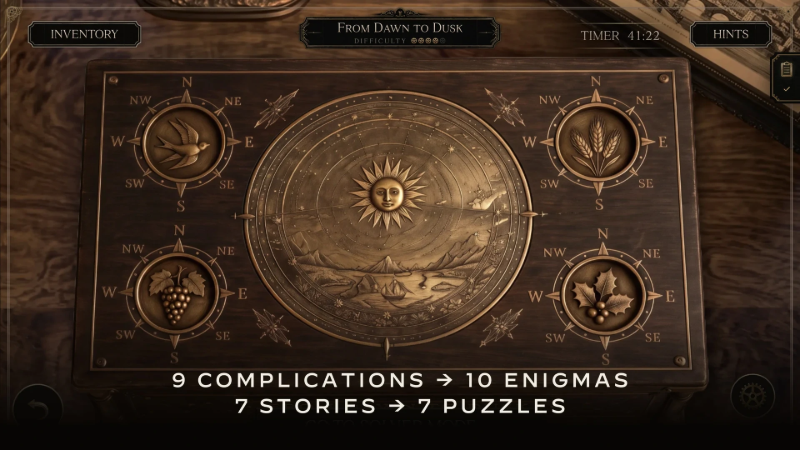
This is not another glossy brand film with a piano soundtrack and a close-up of a balance wheel. It is a game that asks the player to think, search, fail, retry and understand. In a luxury-watch industry often accused of treating heritage as a velvet rope, Jaeger-LeCoultre has chosen a more generous idea: let people enter the workshop.
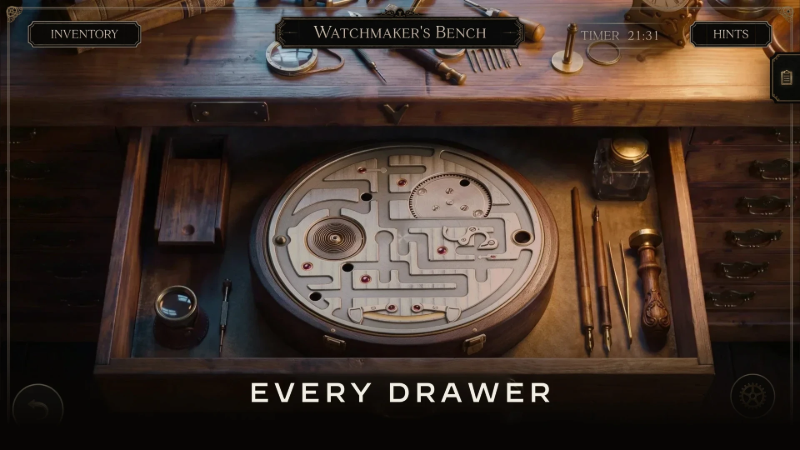
The Valley of Inventions is available as an app and through the official website, with a public launch on 20 November 2026. Players move through a snow-covered Manufacture-Atelier, beginning in a winter antechamber before entering a watchmaking workshop and Antoine’s study.
The Luxury Watch Brand Making You Solve Its History: What the Game Actually Does
The puzzles are built around nine of Jaeger-LeCoultre’s iconic complications and pioneering inventions. Rather than explaining horology through a lecture, the game translates its mechanics into play: a brass Manufacture-Atelier lock, a timer, an inventory and hints become the tools through which players encounter the Maison’s inventive spirit.
The luxury industry has spent years asking consumers to admire craftsmanship. Jaeger-LeCoultre is asking them to practise a little of it.
Why It Matters for Jaeger-LeCoultre
Jaeger-LeCoultre has long carried the industry nickname “the watchmaker of watchmakers,” a reputation built on its ability to develop movements, complications and technical expertise for other maisons. The game gives that reputation a new, accessible form: instead of merely displaying inventions behind glass, it lets a global audience experience the logic behind them.
It also strengthens the Maison’s 2026 brand theme, The Valley of Inventions, which connects the physical geography of the Vallée de Joux with its long history of innovation. The game follows a Shanghai exhibition featuring immersive displays, live enamelling, watchmaking workshops, vintage collectibles and a star-studded opening attended by ambassadors including IU, Kim Woo Bin, Zhang Ziyi and Jackson Yee.
For Jaeger-LeCoultre, the strategic value is clear. The brand is not simply selling a watch; it is selling entry into a culture of precision. The game makes that culture participatory, which is particularly valuable for younger audiences who may never visit the Vallée de Joux but can still understand why a complication matters.

Luxury Needs More Than a Beautiful Door
There is a risk that luxury brands treat gaming as a fashionable checkbox: create an app, add a few puzzles, sprinkle in heritage imagery and call it innovation. The difference here is intent. Memon’s game is explicitly designed to demand mental effort, echoing the patience and focus required of a watchmaker.
That is a refreshing correction to a common luxury problem: brands often want engagement without friction. But true appreciation of fine watchmaking requires friction. A complication is interesting precisely because it is difficult; a movement is beautiful because it solves a problem most people never notice.
Still, the challenge will be retention. A beautifully conceived escape game can attract attention, but it must offer enough depth to keep players returning after the initial novelty fades. If Jaeger-LeCoultre expands the world, adds new chapters or links the experience to physical events, it could become a genuine long-term brand platform rather than a one-season campaign.
The Map to Modern Luxury
THE CURATED CALENDAR
Discover the world’s most prestigious gatherings & exhibitions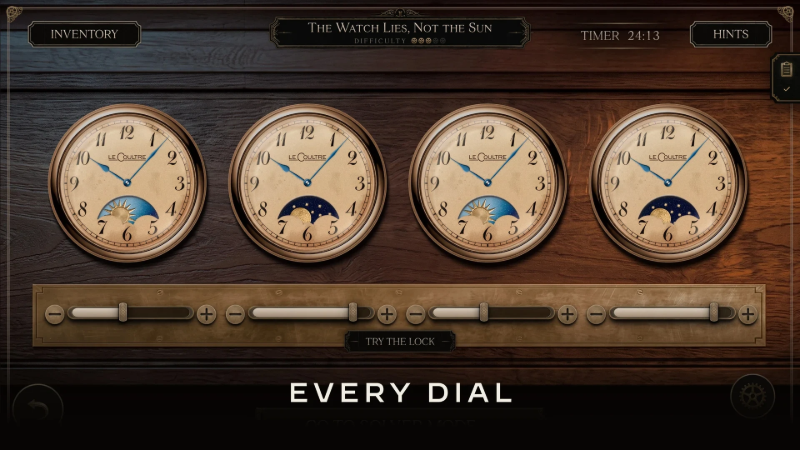
The Competitors Are Already Moving
Jaeger-LeCoultre is not operating in a vacuum. Luxury maisons have been experimenting with interactive storytelling for years, although most have approached gaming through fashion, collectibles or broad entertainment rather than technical education.
| Maison / brand | Digital experience | What it signals |
|---|---|---|
| Jaeger-LeCoultre | The Valley of Inventions escape game, built around nine complications and inventions | Craftsmanship as an interactive, educational experience. |
| Audemars Piguet | The House of Wonders, a phygital VR experience reimagining its manufacture and heritage | Immersive access to watchmaking culture. |
| Louis Vuitton | Louis: The Game, quests, digital collectibles and virtual worlds | Brand history delivered through gaming and rewards. |
| Gucci | Gucci Town, Roblox and Sandbox activations, quests and digital items | Community, play and cultural participation. |
| Burberry | Freedom to Go Beyond in Minecraft | Reaching younger audiences through familiar gaming worlds. |
| Bulgari | Virtual Rome, created with Unreal Engine 5 | Heritage as an immersive digital environment. |
| LVMH | Partnership with Epic Games for virtual fittings, AR, digital twins and immersive discovery | Group-level investment in interactive luxury experiences. |
Audemars Piguet is perhaps the closest watchmaking comparison. Its House of Wonders began as an immersive virtual-reality experience in Geneva before travelling to AP House locations in Milan and Shanghai, recreating the Jura landscape, workshops and milestones of the brand’s history. Like Jaeger-LeCoultre, it uses game-like technology to make a traditionally private world more accessible.
The difference is tone. Audemars Piguet’s experience is cinematic and immersive; Jaeger-LeCoultre’s is intellectual and puzzle-led. One invites you into a world; the other asks you to earn your way through it.
The Trend to Watch: From Exhibition to Playable Heritage
Luxury is moving from “look at our heritage” to “interact with our heritage.” Fashion has already tested this through Roblox, Minecraft, Fortnite and virtual showrooms; watchmaking is now adapting the idea to its own strengths: precision, mechanics, problem-solving and craftsmanship.
This matters because high watchmaking has an inherent advantage over fashion in gaming. Its products are already systems of moving parts, hidden logic and elegant constraints. A tourbillon, a chronograph, a perpetual calendar or a minute repeater is not merely an aesthetic object—it is a puzzle waiting to be understood.
The next phase may be playable manufacture tours, collector-only puzzle chapters, virtual calibre explorations and hybrid experiences that connect digital discovery with boutique appointments or manufacture visits. Jaeger-LeCoultre has already hinted at a phygital version for selected clients and collectors, suggesting that the game is intended as more than a public-relations experiment.
The Valley of Inventions is a small game with a large implication.
It suggests that the future of luxury watchmaking will not be decided only by new references, celebrity ambassadors or exhibition openings, but by whether a Maison can make its expertise feel alive, accessible and worth solving.
Jaeger-LeCoultre has not turned watchmaking into a video game. It has done something more intelligent: it has turned a video game into a doorway to watchmaking. And in an industry built on precision, that may be the most luxurious idea of all.