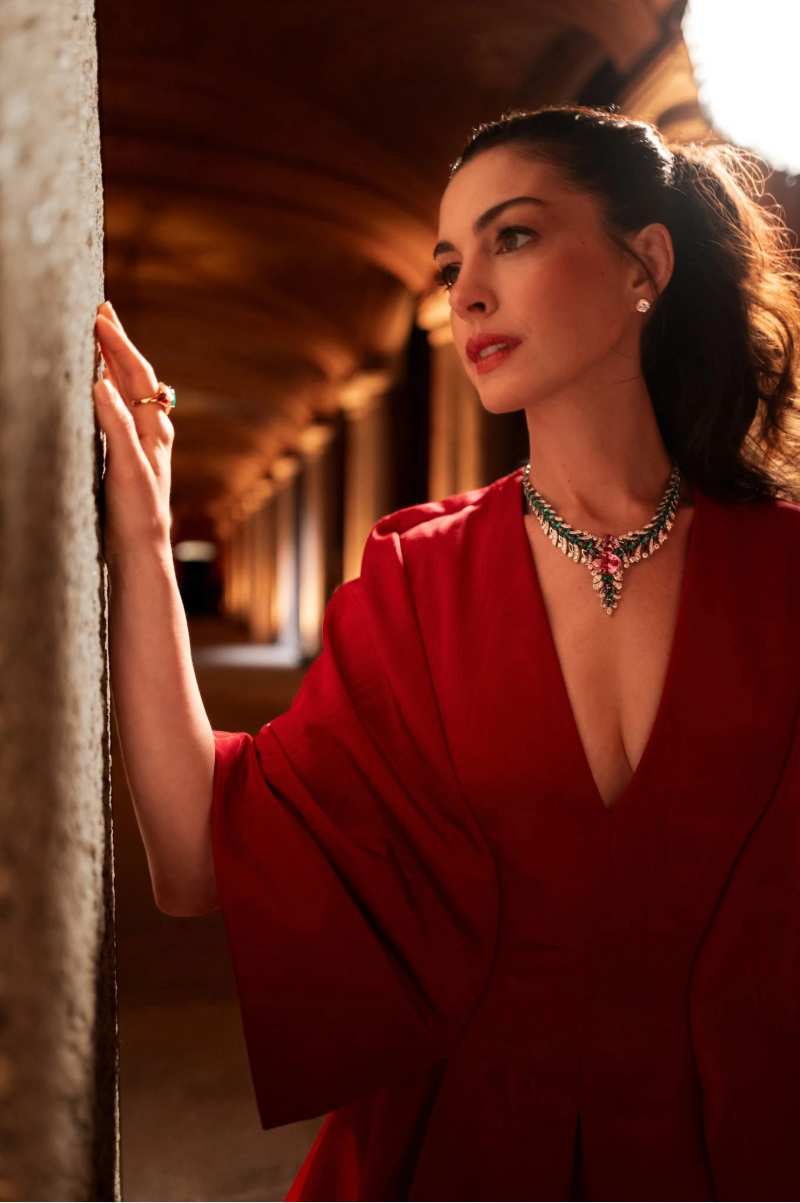
The death of Paolo Bulgari at 89 closes a defining chapter in modern jewellery. As chairman of the Bvlgari Group from 1984, he helped transform a Roman family maison into a global luxury powerhouse—while preserving the bold, sunlit, unapologetically Italian aesthetic that still distinguishes Bvlgari from its more restrained Parisian rivals.
His passing arrives at a striking moment for the maison. Bvlgari has unveiled Mediterranea, a High Jewellery collection framed as a journey through Mediterranean history, culture and craftsmanship, and earlier in 2026 introduced Eclettica, a 128-piece High Jewellery and high-end watch collection built around sculpture, architecture and painting.
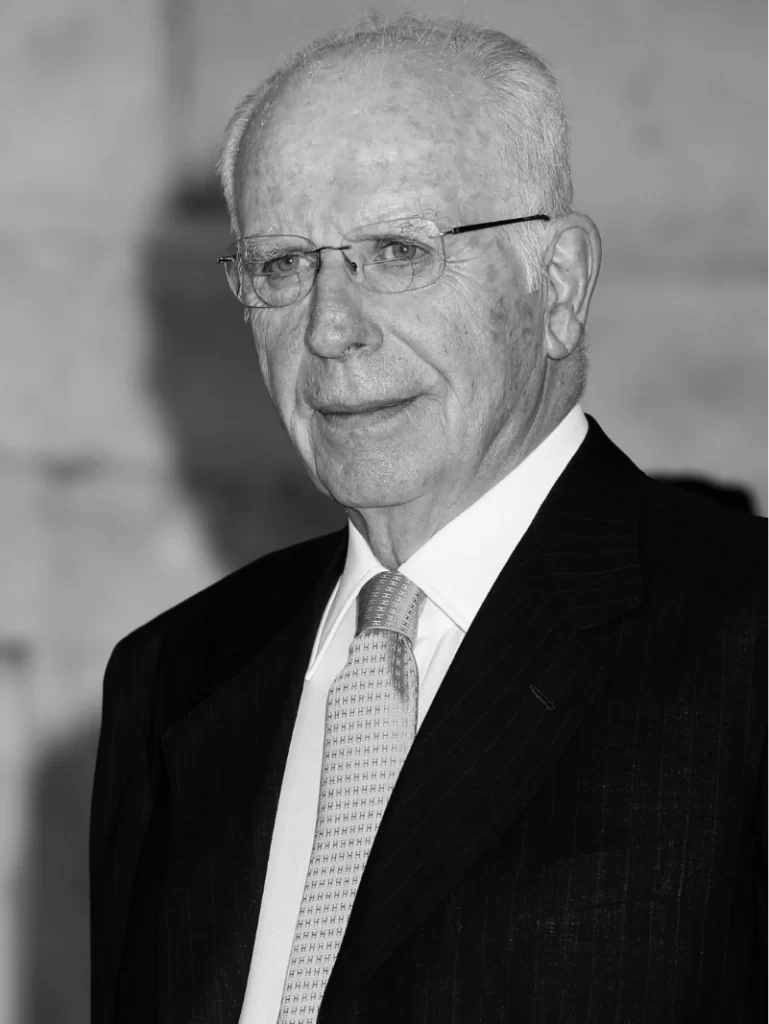
A Roman Rebel in a Parisian World
Paolo Bulgari joined the family business shortly after leaving school and became one of the world’s leading experts in precious stones. He helped define a jewellery language built on rich yellow gold, generous proportions, vivid gemstones and unexpected colour combinations—an aesthetic deliberately opposed to the delicate, understated codes traditionally associated with Parisian haute joaillerie.
That difference still matters. In an industry where discretion can become a uniform, Bvlgari’s instinct for colour and volume remains a form of creative rebellion. It is jewellery that does not whisper wealth; it celebrates vitality, architecture and the pleasure of wearing something unmistakably alive.
“Everything can be a source of inspiration. There are no rules in creativity. Never.”
—Paolo Bulgari
The Business Legacy: From Rome to LVMH
Bulgari was founded in Rome in the late 19th century by Paolo’s grandfather, the Greek silversmith Sotirios Voulgaris, who later Italianised his name to Bulgari. Under Paolo’s leadership, the company expanded from jewellery into watches, fragrance, leather goods and hotels, becoming a full luxury lifestyle maison.
In 2011, the family sold its controlling stake to LVMH in a transaction valued at about €3.7 billion, ending more than a century of direct family control. Yet Paolo Bulgari remained closely associated with the brand and continued designing jewellery late into his life.
His death therefore raises a question that goes beyond one maison: can a global luxury group preserve the intuition, eccentricity and emotional intelligence of a founding family? LVMH CEO Bernard Arnault has credited Paolo with playing a pivotal role in Bulgari’s success while embodying its Italian spirit and Roman heritage.
Bvlgari’s Latest Answer: Mediterranea
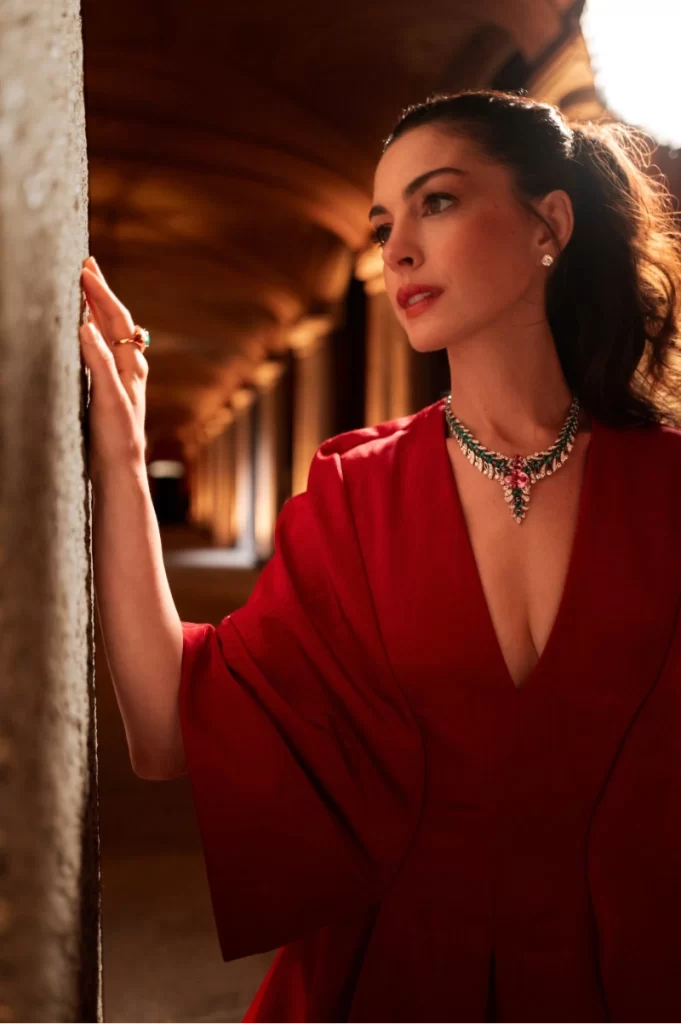
Bvlgari’s newest High Jewellery collection, Mediterranea, is an almost poetic response to that question. Presented by LVMH as a journey across the Mediterranean—the historic crossroads of civilisations, artistic traditions and craft—it positions the maison not merely as a seller of gems, but as a narrator of cultural memory.
The timing is powerful. At a moment when luxury consumers increasingly seek meaning, provenance and narrative rather than logos alone, Mediterranea turns geography into jewellery: a reminder that Bvlgari’s identity is rooted not simply in Rome, but in the wider Mediterranean world of colour, trade, myth and craftsmanship.
Eclettica: Jewellery as Contemporary Art
Earlier in 2026, Bvlgari unveiled Eclettica, described by the maison as a “new artistic frontier” in High Jewellery and high-end watchmaking. The collection includes 128 new High Jewellery designs, exceptional watch creations, High Jewellery bags and very high-end fragrances, placing jewellery in dialogue with architecture, sculpture and painting.
Its nine Capolavori—literally “masterpieces”—combine exceptional stones, sculptural forms and unconventional colour harmonies. The collection’s U.S. debut in Palm Beach included more than 50 pieces valued at $1 million or more and 15 transformable jewels, the largest number Bvlgari had presented in a single collection.
This is not traditional high jewellery as a quiet vault asset. It is jewellery as wearable architecture, designed to move between the body, the gallery and the social stage.
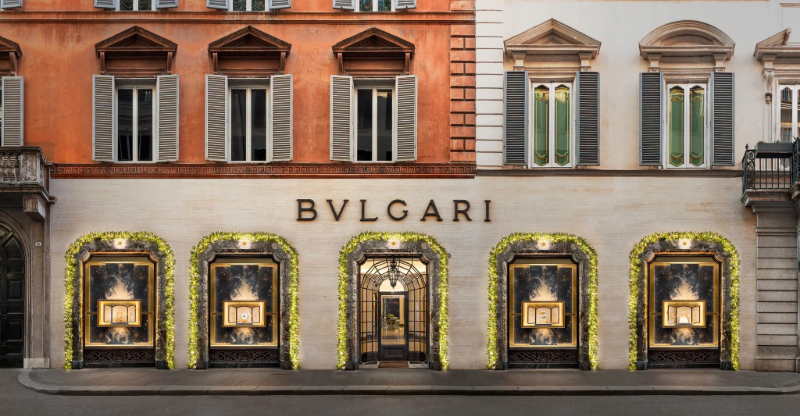
The Competitors: A New Arms Race in Meaning
Bvlgari is not alone in repositioning high jewellery as cultural storytelling. Its competitors are pursuing their own versions of emotional luxury, though with different accents.
| Maison | Creative direction | Strategic signal |
|---|---|---|
| Bvlgari | Mediterranean storytelling, colour, sculpture and transformability | Turning Roman heritage into a global artistic language. |
| Cartier | Parisian refinement, archival codes and horological prestige | Competing through timeless recognition and cultural authority. |
| Van Cleef & Arpels | Fairy-tale narratives, nature and poetic craftsmanship | Selling wonder, delicacy and emotional escapism. |
| Chopard | Ethical luxury, red-carpet glamour and independent family ownership | Positioning sustainability and cinema as differentiators. |
| Piaget | Artistic craft, exceptional dials and jewellery-watch hybrids | Blurring the boundary between watchmaking and high jewellery. |
| Graff | Extraordinary diamonds and rarity | Making the stone itself the ultimate luxury narrative. |
| Tiffany & Co. | American design heritage, diamonds and contemporary culture | Balancing iconic codes with younger cultural relevance. |
The competitive battleground is shifting. It is no longer enough to own the finest stones or the oldest archive. The winning maisons must create worlds: exhibitions, cinematic campaigns, collectible objects, cultural installations and experiences that make a jewel feel like a piece of living history. Bvlgari’s Serpenti Infinito installation on New York’s High Line, for example, extends the Serpenti symbol into contemporary art and includes five unique High Jewellery creations.
The Bigger Trend: Jewellery Becomes a Cultural Asset
The wider implication for the jewellery industry is clear: high jewellery is becoming less about ownership and more about participation. Collectors increasingly want pieces that can be worn, transformed, exhibited, discussed and passed on as stories—not merely stored in a safe.
Bvlgari’s emphasis on transformable pieces is especially telling. A jewel that changes form offers more than beauty; it offers versatility, performance and a sense of creative agency. In a market where ultra-wealthy clients have seen every diamond, every sapphire and every private-view invitation, transformation becomes the new form of exclusivity.
The Map to Modern Luxury
THE CURATED CALENDAR
Discover the world’s most prestigious gatherings & exhibitionsAt the same time, the industry faces a sharper test: authenticity. As luxury groups scale globally, clients will ask whether a maison’s creativity is genuinely alive or merely repackaged heritage. Paolo Bulgari’s life suggests the answer lies in curiosity—the willingness to let a gemstone, a Roman street, a painting or an unexpected colour combination change the rules.
A Dash of Inspiration: The Courage to Be Too Much
There is a lesson here for every luxury brand, whether it sells diamonds, watches, cars or experiences: restraint is not the same as refinement. Paolo Bulgari’s genius was not that he made jewellery louder for the sake of noise; it was that he understood colour, scale and confidence as forms of intelligence.
In an age of algorithmic sameness, that is a radical idea. The next generation of luxury clients will not necessarily remember the safest collection. They will remember the one that made them feel something—perhaps a Mediterranean sunset, a serpent’s movement, or the audacity of yellow gold against a stone that should not work but does.
Paolo Bulgari’s death is not simply the loss of a jeweller.
It is the loss of a kind of luxury leadership: intuitive, family-rooted, visually fearless and deeply connected to place.
Yet his influence may be more relevant now than ever. As Bvlgari moves deeper into art-led High Jewellery, cultural installations and Mediterranean storytelling, it is carrying forward the principle he embodied: that true luxury is not about following rules—it is about having the courage to create new ones.
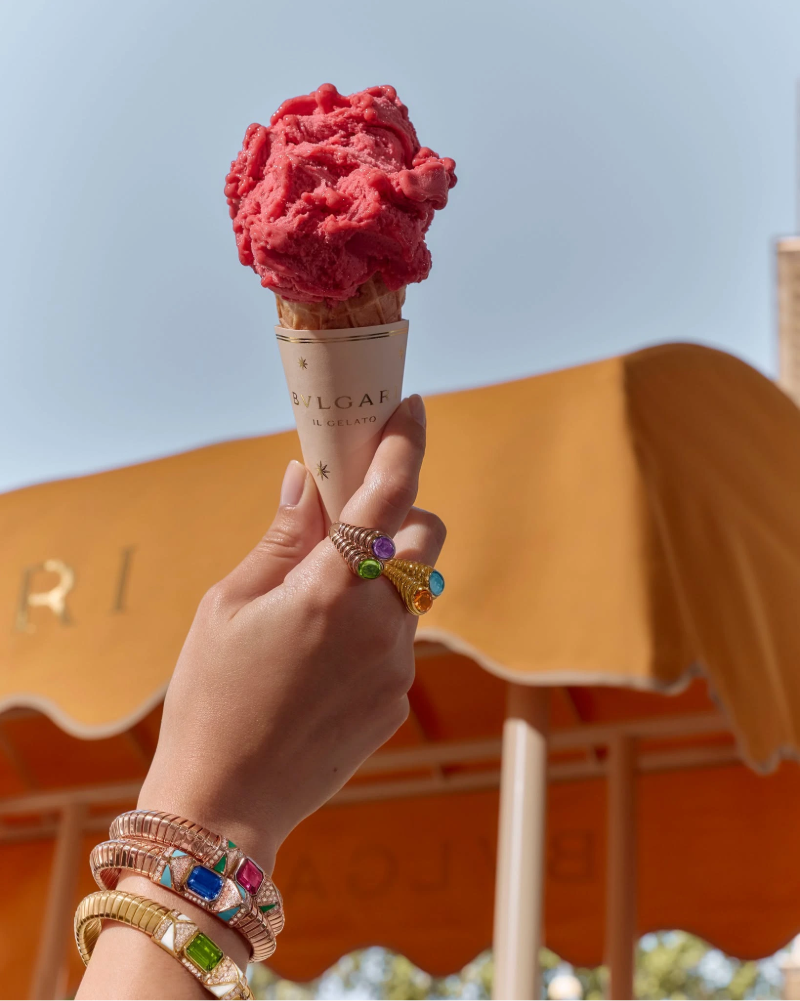
Which flavor would you choose? @Bulgari
Colour as a Language: Paolo Bulgari’s Revolutionary Gemstone Vision
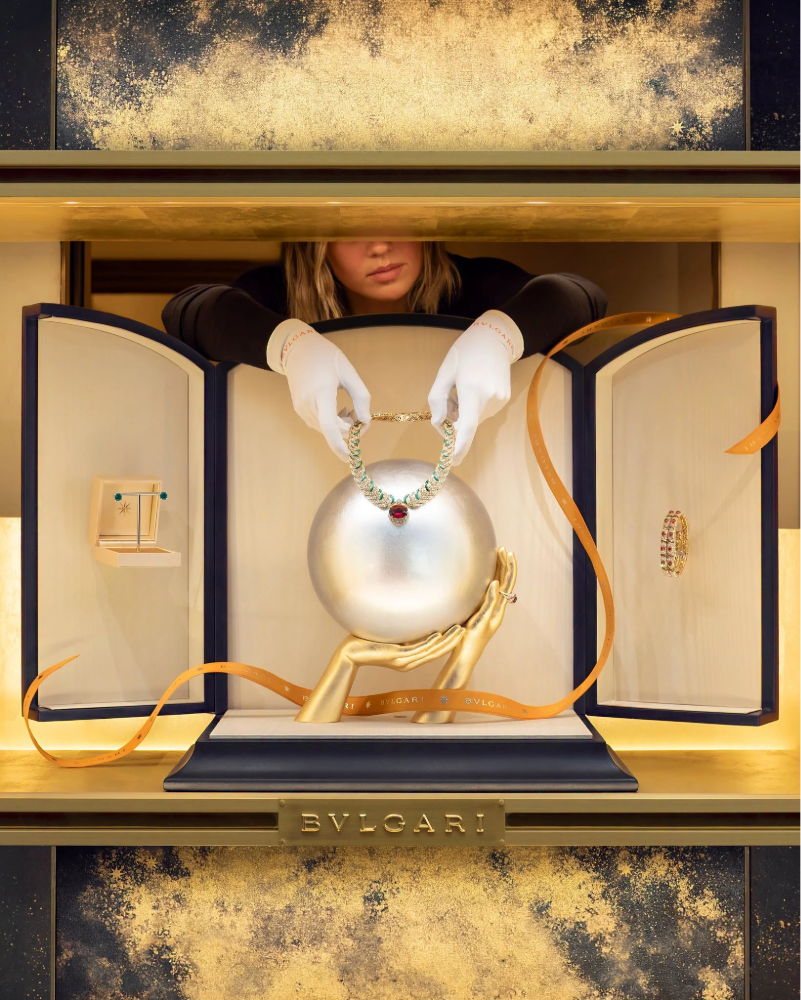
Paolo Bulgari’s most lasting contribution was not simply that he loved coloured stones; it was that he treated them as a design language rather than as individual objects of investment. Where many historic houses built their identity around a single diamond, a restrained setting or a recognisable silhouette, Bulgari made colour the emotional engine of the jewel—pairing emeralds with sapphires, rubies with diamonds, and unexpected tones in combinations that felt almost painterly.
This approach reflected a distinctly Roman confidence. Bulgari’s jewels were not designed to disappear into a wardrobe or flatter a conservative idea of elegance; they were meant to be seen, remembered and discussed. Large cabochon stones, bold yellow gold, sculptural volumes and chromatic contrasts gave the maison a visual signature that could be recognised from across a room.
That was revolutionary because it challenged the old hierarchy of high jewellery. For much of the 20th century, the diamond was often treated as the ultimate symbol of rarity and refinement, while coloured gemstones were admired but frequently positioned as supporting characters. Bulgari reversed that logic: an emerald, ruby, sapphire, topaz or tourmaline could become the protagonist, with diamonds serving as light rather than dominance.
A Different Philosophy from the Historic Maisons
The contrast with older jewellery houses is revealing. Cartier built its authority on Parisian refinement, archival motifs and a polished sense of order; Van Cleef & Arpels cultivated poetry, nature and delicate craftsmanship; Tiffany became synonymous with American diamond culture and a clean, luminous design language. Bulgari, by contrast, embraced a more sensual, sunlit and architectural vision—one rooted in Roman antiquity, Italian art and the Mediterranean’s instinct for colour.
Paolo Bulgari did not reject tradition; he made it more alive. He understood that heritage could become stagnant if it were treated only as a museum exercise, so he pushed the maison toward bold compositions, generous proportions and gemstones chosen for their emotional impact as much as their technical pedigree.
This is why Bulgari’s work still feels contemporary. Its jewels do not merely reproduce history; they reinterpret it through colour, movement and confidence. A Bulgari piece can evoke ancient Rome, modern architecture and a Mediterranean sunset at once—without becoming nostalgic or overly literal.
The Legacy in Today’s Collections
That philosophy is clearly visible in Bvlgari’s current creative direction. Mediterranea extends the maison’s relationship with colour, culture and place, while Eclettica treats jewellery as a meeting point between painting, sculpture and architecture. In both cases, the coloured gemstone is not an accessory to the design—it is the reason the design exists.
Paolo Bulgari’s lesson for the wider jewellery industry is enduring: a great jewel is not only a repository of value. It is a small act of courage, a composition of light and colour that gives its wearer a different way of entering the world.
