
Faraday Future, better known (and often side‑eyed) for its long‑promised luxury EVs, has just tried a hard rebrand in Las Vegas: from troubled car startup to embodied‑AI robotics player. At the NADA auto dealers show, the company launched three robots—two humanoids and one robot dog—plus a whole “EAI Robotics” ecosystem and opened paid preorders, claiming more than 1,200 paid B2B deposits already. If all goes to plan, they want to be the first U.S. company to deliver both humanoid and quadruped robots at the same time, with first units shipping as early as the end of February. Ambitious? Very. Risky? Also very.
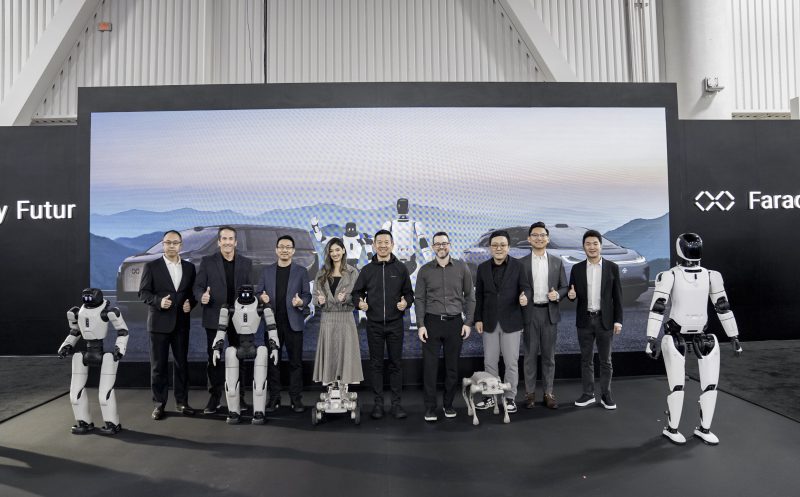
@Faraday Future Launches Three Series of Robot Products in Las Vegas at the Annual NADA Show
In classic Faraday fashion, the lineup is big on story and specs:
FF Futurist – full-size professional humanoid, pitched as a multilingual concierge, sales advisor, host, or research assistant.
From $34,990, plus a $5,000 “ecosystem skills package” for advanced capabilities.
28 high‑performance motors, up to 500 Nm torque, ~3 hours of runtime with hot‑swappable batteries.
NVIDIA Orin brain (up to 200 TOPS), 5G/Wi‑Fi, teleoperation, multi‑sensor perception, and support for natural interaction in up to 50 languages.
FF Master – more “athletic” humanoid, the extrovert of the family, aimed at events, education, and home assistance.
From $19,990, plus a $3,000 skills package.
30 degrees of freedom (excluding hands), positioned as the “cost‑effective” humanoid for the U.S. market.
FX Aegis – quadruped robot dog for security and companionship.
From $2,499, plus a $1,000 skills package.
Up to 48 Nm joint torque, can climb ~40° slopes and clear ~13‑inch obstacles, expandable with LiDAR, depth cameras, robotic arms, fire extinguishers and more.
Financing, leasing and rental are all on the table, and FF promises OTA updates and remote tech support—because if your $35K robot concierge freezes mid–welcome speech, you definitely don’t want to mail it in.
Chances of success: bold thesis, tough reality
From a strategic point of view, this move actually makes sense for FF. Robotics is lighter on regulation than cars, potentially faster to market, and—if they can really deliver hardware plus software—could generate cash faster than ultra‑niche EVs. Positioning robots and cars as “twin engines” sounds grand, but investors will be watching two very simple KPIs: real deliveries and recurring revenue.
The good signs:
Over 1,200 paid, non‑refundable B2B deposits is a solid signal there’s at least strong curiosity from businesses and “co‑creation” partners.
The pricing is aggressive versus many humanoid competitors; a sub‑$35K professional humanoid and a $2.5K robot dog land closer to premium hardware than science‑project prototypes.
The ecosystem pitch—devices + “EAI brain” platform + data infrastructure—gives them room to sell upgrades, skills packages and services, not just one‑off hardware.
The red flags:
FF’s track record in actually shipping what it announces is… mixed, at best. Moving from “concept video at a trade show” to thousands of deployed robots is a huge execution leap.
Launching three robots and an entire platform at once is very on‑brand for FF’s maximalist style—and exactly the kind of thing that can overstretch a company that’s still stabilizing its core EV business.
Humanoid robotics is a crowded hype zone; Tesla, Figure, Agility, Boston Dynamics and others are all chasing the same “factory/warehouse/hospitality” use cases. Being “first to deliver in North America” only matters if the robots are reliable, safe and actually reduce labor or security costs.
If FF can turn those 1,200 deposits into functioning deployments and not just expensive beta tests, this could be the first time their futuristic narrative and business reality finally line up. If not, the robots risk becoming very high‑tech showroom decorations.
Who are these robots really for?
Despite the glossy talk about “civilization evolution” and “human–machine symbiosis,” the target audiences are quite specific.
FF Futurist – the suit‑and‑tie humanoid
Ideal for:
High‑end hotels, casinos, auto showrooms and museums wanting a signature “wow” object that can greet, guide and entertain in multiple languages.
Flagship retailers and real estate developers who want a robot sales advisor that never needs coffee breaks.
Universities, labs and corporate R&D centers who need a flexible humanoid platform for research and demos.
This is essentially a B2B showpiece plus productivity assistant for organizations that care as much about optics as about ROI. Think luxury hospitality, big dealerships, “innovation hubs,” tech campuses.
FF Master – the extroverted all‑rounder
Ideal for:
Event agencies and experience spaces as a “Chief Interaction Officer”—on‑site, selfie‑friendly and endlessly programmable.
Schools, training centers and robotics programs that want a more dynamic, movement‑focused platform.
High‑income early adopters and tech‑obsessed families who were already considering a robot before they finished this sentence.
At ~$23K with the skills pack, FF Master is priced for wealthy hobbyists and institutional buyers, not the average household. The home‑companion talk is more aspirational than mass‑market—for now.
FX Aegis – the robot dog with a security badge
Ideal for:
Industrial sites, logistics hubs, energy facilities and campuses that need 24/7 patrols, asset monitoring and access to risky environments.
Security firms and law enforcement units that want a mobile, sensor‑rich platform for hazardous or hard‑to‑reach locations.
Tech enthusiasts and prosumers who’ve always wanted a robot dog but were scared off by Boston Dynamics–level pricing.
At around $3,499 with the skills package, Aegis is the most realistic crossover product. It’s still not cheap, but it’s within reach for well‑funded small businesses and high‑end hobbyists—and if FF can prove it saves on security labor or incident costs, it has the clearest business case of the three.
Faraday Future is betting that its “vehicle‑as‑robot” philosophy finally pays off—just not only on four wheels. The pricing is surprisingly aggressive, the feature list is impressive, and the early preorder numbers are encouraging. But for a company with a history of overpromising, the real measure of success will be far less glamorous: how many robots are actually installed, working reliably, and getting renewed software/skills contracts 12–24 months from now.
If they pull it off, auto dealers might really find themselves selling cars, humanoids and robot dogs from the same showroom. If they don’t, NADA 2026 will be remembered as the year Faraday Future brought Las Vegas its most expensive cosplay cast.
