Dior has placed Rihanna and her one-year-old daughter, Rocki Irish Mayers, at the centre of its Lady Dior 2027 campaign—an intimate, highly strategic moment for one of fashion’s most recognisable handbags. Photographed by Sam Rock under the creative direction of Jonathan Anderson, the campaign marks Rihanna’s first dedicated Lady Dior campaign and Rocki’s first appearance in Dior advertising.
It is more than a celebrity endorsement. It is Dior’s attempt to make the Lady Dior feel less like a fixed symbol of Parisian polish and more like a living object: carried by a global icon, passed between generations, and reframed through motherhood, tenderness and contemporary womanhood.
The Campaign: Softness Meets Attitude
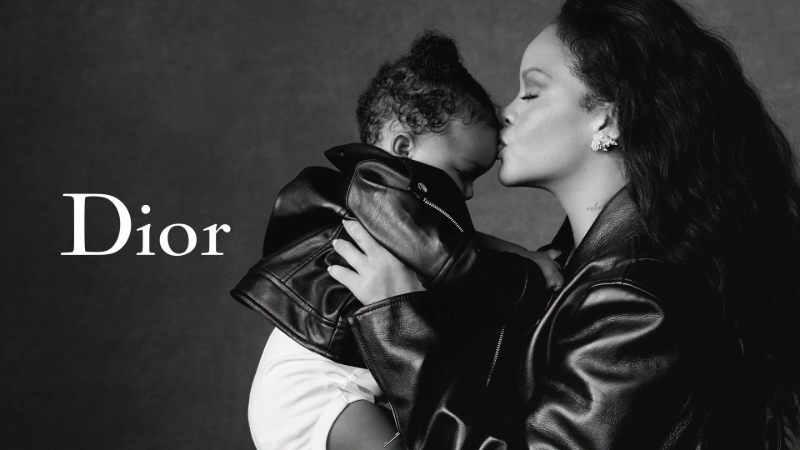
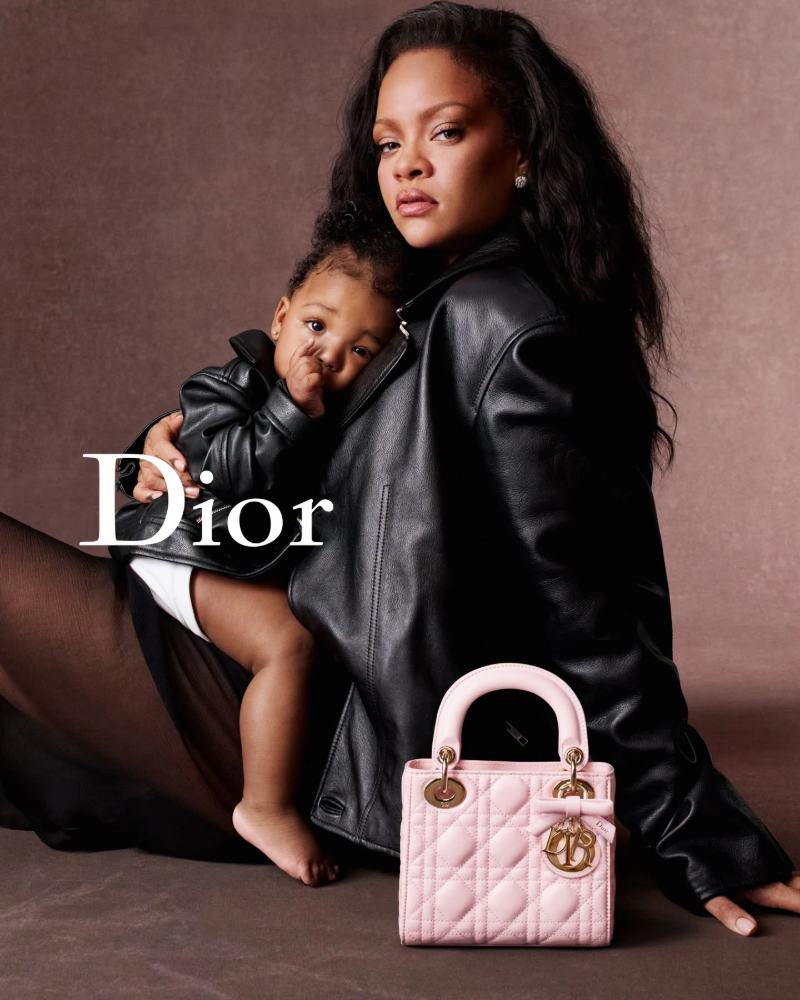
The imagery is deliberately intimate rather than overtly theatrical. Rihanna wears an oversized black leather jacket over a maroon slip dress, while Rocki sits on her lap in a miniature version of the same jacket; another portrait captures Rihanna kissing her daughter’s forehead.
The handbag at the centre is a pale pink Lady Dior in cannage lambskin, finished with metallic D.I.O.R. charms. The visual contrast is intentional: the structured, historically feminine bag meets Rihanna’s tougher, more contemporary styling, creating a dialogue between Dior’s heritage and Rihanna’s cultural edge.
The holiday campaign also includes a short film directed by Melina Matsoukas, with Fela Kuti’s 1972 track “Lady” as its soundtrack. That choice reinforces the campaign’s themes of multifaceted identity, womanhood and cultural confidence—far beyond a conventional handbag advertisement.
Rihanna’s Dior Story: A Long Relationship, Not a One-Off
Rihanna’s relationship with Dior did not begin with this campaign. She fronted her first Dior campaign in 2015 and has since appeared in dedicated campaigns for the house’s ready-to-wear, leather goods and eyewear.
In 2024, she became the official face of J’adore, Dior’s flagship fragrance, adding beauty to her fashion relationship with the Maison. The Lady Dior 2027 campaign is therefore not a random celebrity booking; it is the continuation of a long-term, multi-category partnership.
| Dior moment | What it established |
|---|---|
| 2015 campaign | Rihanna’s first formal Dior campaign and early proof of her fashion credibility. |
| Ready-to-wear, leather goods and eyewear campaigns | A relationship spanning more than accessories. |
| J’adore, 2024 | Rihanna became the face of one of Dior’s most commercially important fragrance franchises. |
| W magazine, April 2026 | Rihanna and Rocki appeared in Dior haute couture, with a custom couture diaper and floral headpiece by Anderson. |
| Lady Dior 2027 | Rihanna’s first dedicated Lady Dior campaign and Rocki’s Dior advertising debut. |
Why the Lady Dior Needed Rihanna
The Lady Dior was designed by Gianfranco Ferré in 1994 and originally named Chouchou. It has since become one of Dior’s most enduring handbag codes, associated with cannage quilting, structured elegance and the House’s couture heritage.
But heritage can become a constraint if it is only presented as nostalgia. By casting Rihanna, Dior gives the bag a new emotional context: not simply “Parisian elegance,” but global womanhood, creative independence and motherhood.
Rihanna is particularly effective because she does not look like she is borrowing Dior’s identity. She brings her own. Her presence makes the Lady Dior feel less like a museum piece and more like an object that can live in the real world—on tour, at home, in a car seat, in a private moment, and eventually in a daughter’s memory.
Rihanna’s Wider Luxury Portfolio
Rihanna has become one of the most valuable figures in modern luxury because she operates across fashion, beauty, fragrance and culture without appearing overly managed. Her commercial influence extends well beyond Dior.
The Map to Modern Luxury
THE CURATED CALENDAR
Discover the world’s most prestigious gatherings & exhibitions- Fenty Beauty: Founded with LVMH in 2017, Fenty Beauty reshaped the beauty industry through inclusive shade ranges and made Rihanna a founder as well as a face.
- Fenty Skin: Her skincare line extends the same accessible, culture-led beauty philosophy into daily routines.
- Savage X Fenty: The lingerie and loungewear brand made body inclusivity and spectacle central to its identity, turning runway shows into global entertainment events.
- Dior: Rihanna’s long-running relationship now spans fashion, accessories, eyewear and fragrance, with the Lady Dior campaign adding a new chapter.
- Cultural collaborations: Her ability to move between music, fashion, beauty and celebrity culture gives brands access to audiences that traditional luxury advertising often struggles to reach.
The key point is that Rihanna is not merely a luxury ambassador. She is a luxury ecosystem. A brand does not simply rent her image; it borrows her credibility as a founder, performer, mother, style icon and cultural connector.
What This Means for Dior
For Dior, the campaign helps solve a modern luxury problem: how to make an established icon feel relevant without dismantling its identity. The Lady Dior has history, but it also needs a future. Rihanna and Rocki provide both.
Jonathan Anderson’s involvement is equally important. As creative director, he is using Rihanna not as a conventional campaign face but as a creative partner in a broader vision of contemporary Dior femininity. The matching leather jackets, the intimate framing and the soft pink bag all suggest a Dior that is less rigid, more human and more culturally current.
The commercial implication is clear: a mother-and-daughter image can turn a handbag into a multi-generational object. It invites existing clients to see the Lady Dior as a legacy purchase, while introducing a younger audience to the Maison through a familiar cultural figure.
What It Means for Luxury
The wider industry is moving away from the old model of one celebrity, one product and one polished campaign. Luxury brands increasingly want ambassadors who bring story, community and cultural authority—not just visibility.
Rihanna and Rocki represent that shift perfectly. They make Dior’s message feel personal rather than corporate: a mother and child, a shared wardrobe, a handbag that may one day be inherited. In an era when consumers are sceptical of polished advertising, intimacy can be more persuasive than perfection.
The risk, however, is obvious. If every luxury house begins casting celebrity children, family campaigns could become another predictable formula. The challenge is to ensure that the emotion is genuine, the creative direction is strong and the product remains central—not merely a prop in a famous family’s photo album.
Dior has turned the Lady Dior 2027 campaign into a quiet masterclass in modern luxury positioning. It preserves the bag’s heritage, refreshes it through Rihanna’s cultural authority, and adds an emotional layer through Rocki’s debut.
For the wider luxury industry, the message is clear: the next era of brand ambassadors will not simply wear the product. They will help brands tell stories about identity, family, creativity and cultural relevance—stories that feel personal enough to be believed.