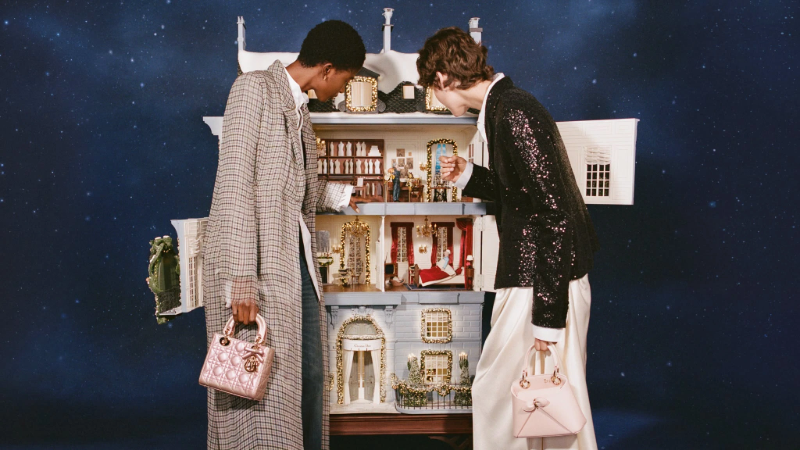
This season, luxury brands are no longer asking consumers to admire a flawless festive fantasy. They are inviting them into messier, more human stories: a hotel wrapped in British heritage, a party after the music stops, a snow-covered Paris, animated actors, a family dance party, literary essays and a mother-and-daughter moment between Rihanna and her daughter.
The message is clear: the new luxury holiday campaign is not about perfection. It is about atmosphere, intimacy and the emotional residue a brand leaves behind.
Burberry: Heritage Becomes a Hotel
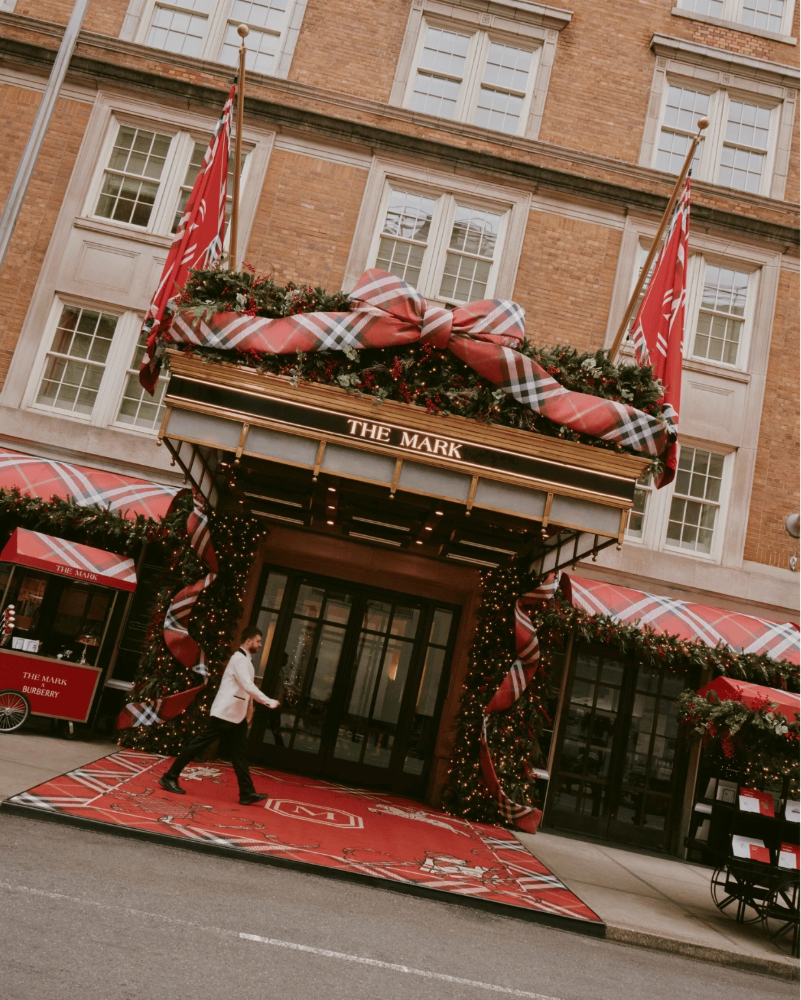
Burberry has taken over New York’s The Mark Hotel in a seasonal red House Check, covering the Upper East Side property with festive flags, illustrations and an oversized bow at its famous entrance. The activation includes a bespoke gingerbread replica of the hotel, complete with a Burberry Check scarf, alongside drink and card stations, branded interiors and a Christmas tree dressed in red check ribbons and baubles.
The most interesting element is the private shopping suite in the hotel’s Madison penthouse. Burberry is not merely decorating a landmark; it is turning a hospitality space into a high-conversion retail environment, where heritage patterns become part of the guest’s lived experience.
It is also a continuation of a strategy seen earlier in the year, when Burberry dressed Greece’s One&Only Aesthesis in turquoise House Check. The lesson is simple: the brand is no longer only selling outerwear—it is selling a recognisable world.
Valentino: The Beauty of the Morning After
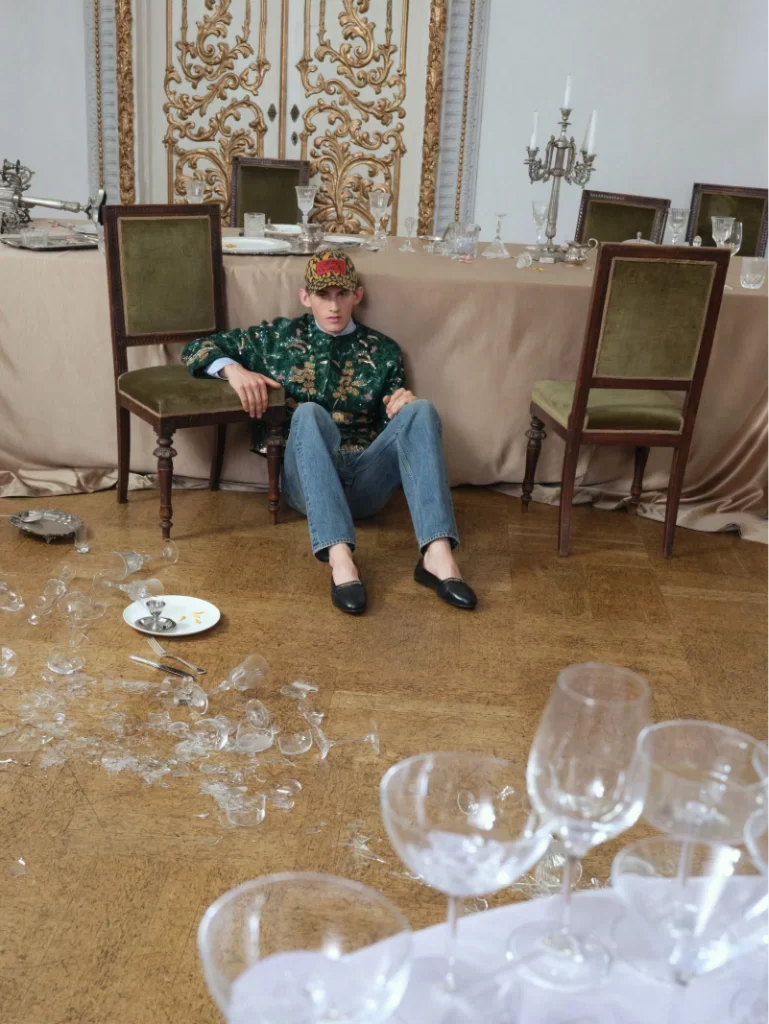
Valentino’s Cruise Holiday 2027 campaign takes the opposite approach: instead of staging a party, it captures the aftermath. Creative director Alessandro Michele and Dutch photographer Liv Liberg use shattered glasses and fallen chandeliers to create a scene that is glamorous, melancholic and slightly dangerous.
This is a smart emotional pivot. Holiday campaigns usually sell anticipation—the perfect gift, the perfect table, the perfect family. Valentino sells the more interesting part: the quiet after the noise, when glamour becomes memory and beauty becomes slightly imperfect.
Luxury used to sell the party. Now it is learning to sell the morning after.
Boucheron: Paris, Snow and Emotional Precision
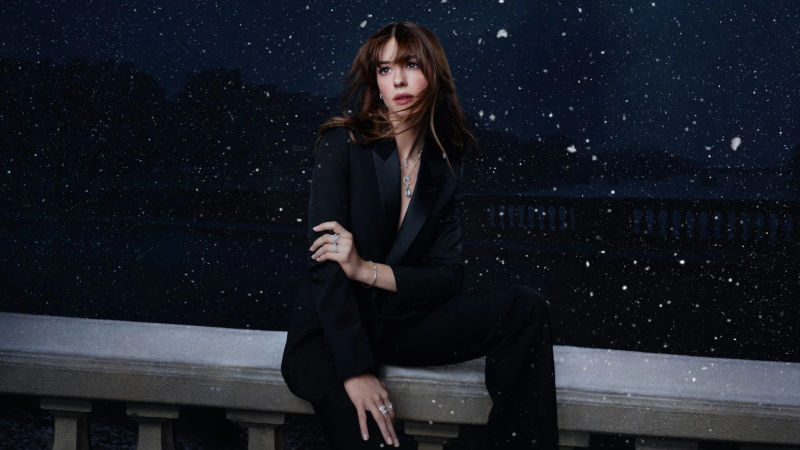
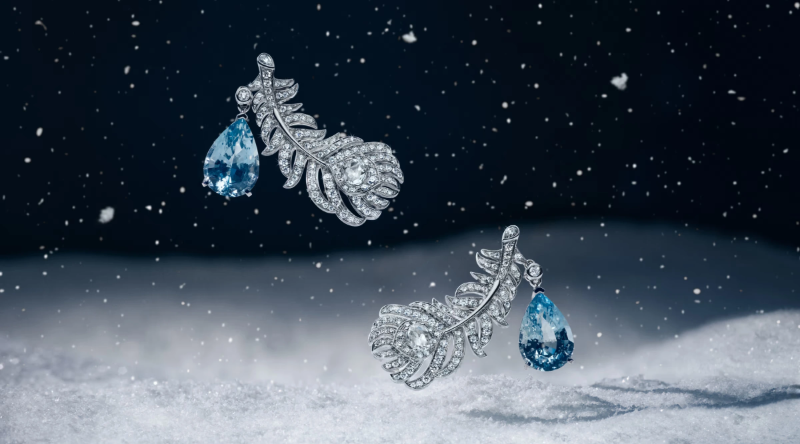
Boucheron’s “Winter in Paris” campaign stars Daisy Edgar-Jones, with brand ambassador Han So-hee and friend of the house Dilan Çiçek Deniz joining a wintry set to showcase the French jeweller’s signature collections.
The casting feels intentional. Rather than relying on one global celebrity, Boucheron creates a constellation of faces across markets and generations, using a snow-covered Paris as a shared emotional backdrop. It is a reminder that jewellery is not merely an object of value; it is a vessel for memory, intimacy and the small rituals of giving.
Prada: When Actors Meet Their Illustrated Selves
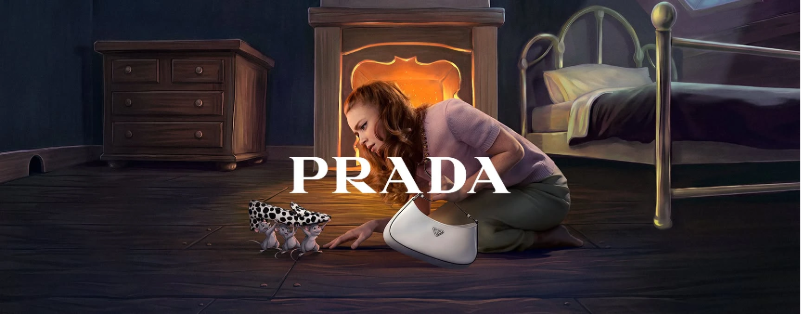
Prada’s “Drawing Prada” places actors Chen Haoyu, Luther Ford, Kelvin Harrison Jr., Maya Hawke and Sadie Sink inside hand-drawn winter scenes created by artist John Pomeroy. The campaign gives rising talent animated counterparts, blending live-action celebrity with the warmth and nostalgia of illustration.
It is a clever response to a saturated celebrity campaign market. Instead of another polished photograph, Prada makes its talent feel slightly unreal, storybook-like and collectible—an approach that suits a brand whose identity has always balanced intellectual cool with playful subversion.
The Map to Modern Luxury
THE CURATED CALENDAR
Discover the world’s most prestigious gatherings & exhibitions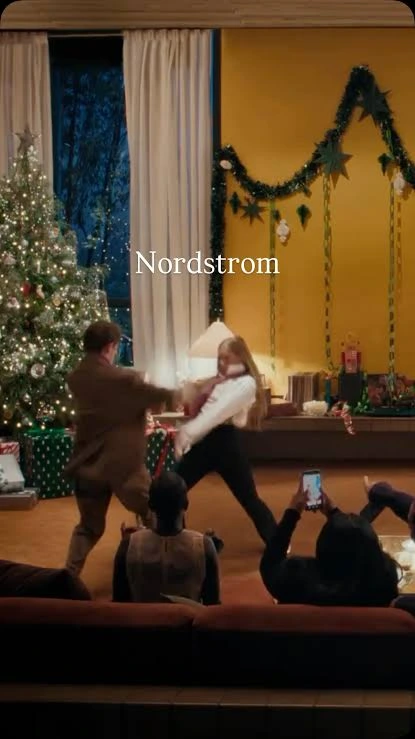
Nordstrom: The Department Store Learns to Dance
Nordstrom’s “Let’s Dance” holiday film sets a family gathering to David Bowie’s classic track, turning an ordinary domestic moment into a spontaneous performance. The choice is effective because it makes the department store feel less like a retail institution and more like a participant in real family life.
There is also a subtle strategic point: Nordstrom is selling not just products, but the permission to be joyful. In a season dominated by curated perfection, a little unpolished dancing may be more persuasive than another immaculate living room.
Balenciaga: A Handbag Becomes Literature
Balenciaga is marking 25 years of its Le City bag by commissioning essays through Substack and hosting a literary salon at New York private members’ club The Players, featuring live readings by writers. It is an unusually cerebral way to celebrate an accessory.
The strategy treats the Le City not simply as a fashion object, but as a cultural artefact with a narrative life. That is a sophisticated move for a brand often associated with provocation and digital-age spectacle: Balenciaga is asking its audience to read, reflect and perhaps reconsider what a handbag means beyond its silhouette.
Dior: The Ultimate Family Portrait
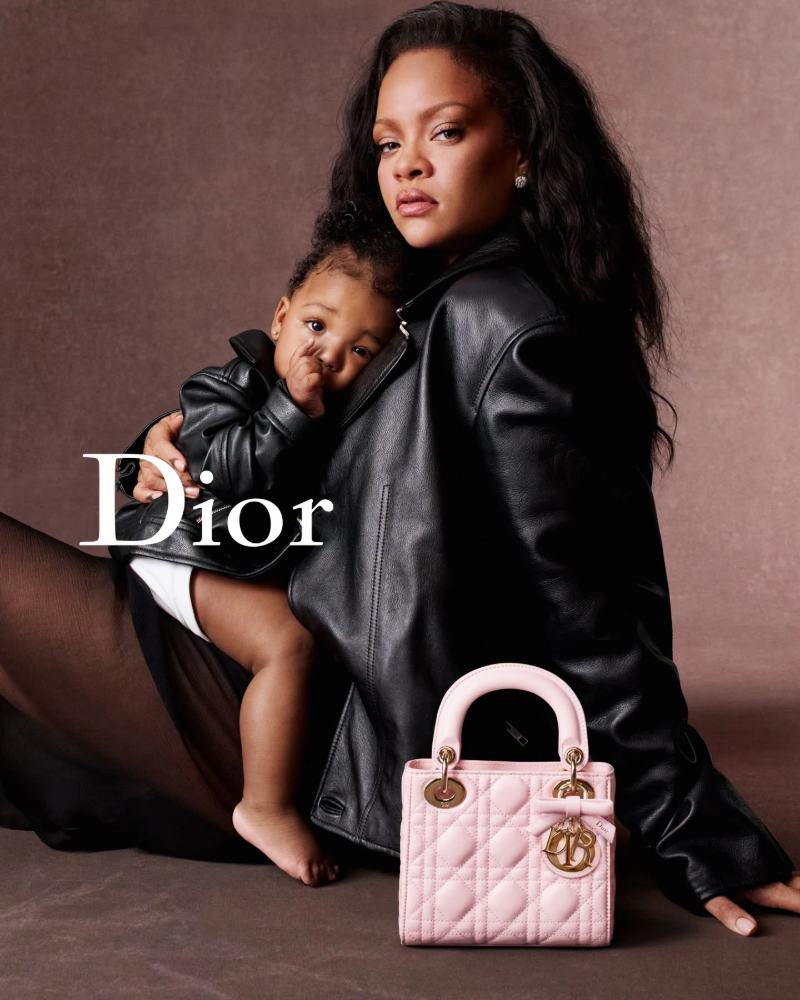
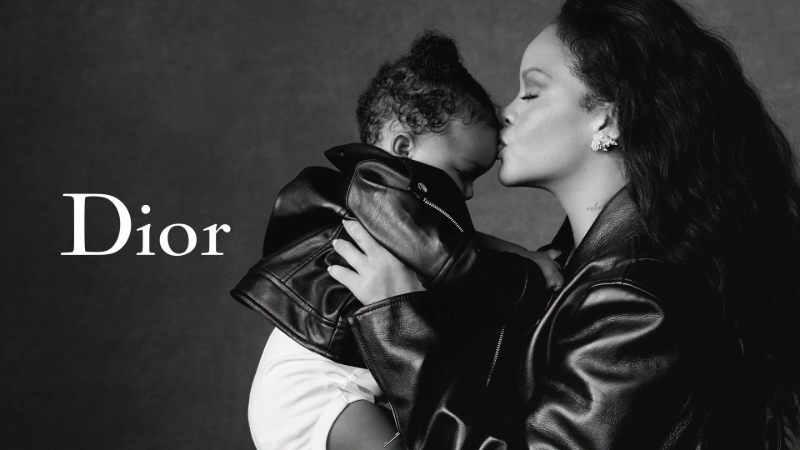
Dior’s new Lady Dior campaign casts Rihanna alongside her daughter, Rocki Irish Mayers, for the handbag’s 2027 imagery under creative director Jonathan Anderson. It is a powerful piece of brand casting because it moves beyond celebrity endorsement into something closer to lived experience.
Rihanna brings global cultural authority; Rocki brings immediacy, tenderness and a new generation of relevance. The Lady Dior becomes less a status object and more a family heirloom in the making—a bag that can be passed down, remembered and reinterpreted.
The Wider Trend: Luxury Becomes Emotional Infrastructure
Across these campaigns, several patterns emerge.
- Place matters again. Burberry turns a hotel into a brand world; Boucheron turns Paris into a winter dreamscape; Balenciaga turns a private club into a literary salon.
- Celebrity is becoming more intimate. Rihanna and Rocki, rising actors and multi-market ambassadors replace the single distant superstar.
- Imperfection is now desirable. Valentino’s post-party debris and Nordstrom’s spontaneous family dance reject sterile holiday perfection.
- Craft is returning to the foreground. Prada’s hand-drawn animation and Burberry’s gingerbread architecture make creativity visible rather than merely polished.
- Products are becoming cultural protagonists. Balenciaga’s Le City and Dior’s Lady Dior are treated as stories, not just accessories.
Emotion Must Not Become a Template
There is a risk that “emotional luxury” becomes the next uniform: every brand adds a gingerbread house, a celebrity child, a literary salon and a melancholy party scene. The result could be a season of beautifully produced sameness.
The brands that will stand out are those whose emotion feels earned. Burberry’s strength is heritage; Valentino’s is theatrical melancholy; Boucheron’s is Parisian romance; Prada’s is artistic play; Dior’s is family legacy. When a campaign grows from a maison’s real identity, it becomes culture. When it merely borrows the mood, it becomes content.
Holiday 2026 marks a shift from luxury as spectacle to luxury as feeling. The most compelling brands are not selling a perfect Christmas; they are selling the moments around it—the arrival, the aftermath, the dance, the gift, the family portrait and the story that remains once the decorations come down.