SENKU Purebred Wagyu has been named World’s Best Steak at the 2026 World Steak Challenge, taking the competition’s highest honour against 470 entries from 30 countries. The winning filet was judged blind by more than 60 international experts, with no brand, producer or country of origin revealed.
For a category often dominated by Japanese A5 mythology, celebrity butchers and increasingly theatrical steakhouse menus, this is more than a trophy. It is a reminder that the future of ultra-premium beef may be less about origin worship—and more about genetics, consistency, feeding programmes and the discipline to remain scarce.
A Win Without a Sales Pitch
SENKU’s victory came through the World Steak Challenge’s blind format: judges assessed both raw and cooked criteria under internationally agreed standards, unaware of what they were tasting. The Australian Purebred Wagyu tenderloin, bred by fourth-generation Central Queensland producers Adam and Hayley Rea, was finished on a purpose-built grain programme designed to develop marbling, flavour and eating quality.
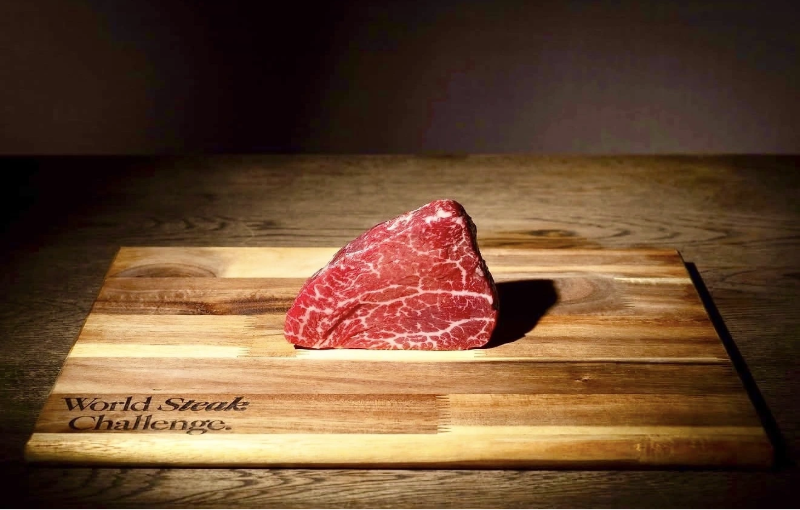
That last part matters. In luxury food, “craft” is often used as a synonym for a beautiful story. Here, the more persuasive story is technical: highly developed Purebred Wagyu genetics, a long-term feeding programme and deliberately limited production.
“Only the steak.”
—The quiet genius of blind judging, where marketing cannot butter the bread.
Why This Matters Beyond the Trophy
The 2026 World Steak Challenge featured 470 entries from 30 countries, with gold, silver and bronze medals awarded before the highest-scoring steaks competed for the overall title. SENKU’s win follows earlier recognition in 2026: Gold in the Purebred Wagyu class at the Australian Wagyu Association’s Branded Beef Competition and Gold in the Open Beef class at the Sydney Royal Fine Food Show.
In other words, this was not a one-night miracle. It was a carefully manufactured moment of validation.
| Trend | What it signals |
|---|---|
| Blind judging gains prestige | Luxury consumers increasingly want proof, not just provenance. |
| Australian Wagyu rises | Japan retains cultural prestige, but Australia is becoming a serious production and quality powerhouse. |
| Scarcity becomes strategy | Limited availability protects consistency—and makes allocation feel intentional rather than artificial. |
| Chefs become the real media | A steak’s reputation is built first in professional kitchens, then amplified by diners. |
| “Best” becomes measurable | Awards still matter, but transparent judging criteria give them more credibility than a vague “world-class” label. |
The Luxury Angle: Exclusivity, But Make It Edible
Standard Meat Club, SENKU’s U.S. representative, has pursued a deliberately controlled distribution model: chef tastings, selected hospitality partners, market visits and direct account development rather than mass retail expansion. Founder and CEO Bobby Conn has framed the strategy as putting the beef “in the right places, with the right chefs and the right distribution partners.”
It is a smart luxury playbook. The product is not merely expensive; it is selectively available. That distinction is crucial. True modern luxury is not a logo slapped onto a steak—it is the confidence to say no to scale, preserve quality and let scarcity do some of the storytelling.
Of course, there is a fine line between exclusivity and exclusion. A steak that is impossible to find can become less desirable than one that is simply difficult to obtain. The challenge for SENKU will be to expand awareness after the award without turning a rarefied product into another Instagram-friendly status symbol.
The Map to Modern Luxury
THE CURATED CALENDAR
Discover the world’s most prestigious gatherings & exhibitionsA Dash of Fun: The Steak Has Better PR Than Most People
Let us be honest: no one needs a steak to have a “world title.” Yet the beef world loves a coronation, and this one is unusually well earned. A blind panel, 60-plus judges, hundreds of entries and a tenderloin that apparently performed well enough to make the judges forget which country it came from—this is the culinary equivalent of winning an Oscar without telling anyone which film you made.
And unlike some luxury products, this one has a built-in advantage: it disappears. No shelf life anxiety, no resale market, no dusty bottle waiting for a “special occasion.” Just a perfectly marbled piece of beef, a hot pan, and the brief but glorious knowledge that you are participating in a global competition from the comfort of your own dining table.
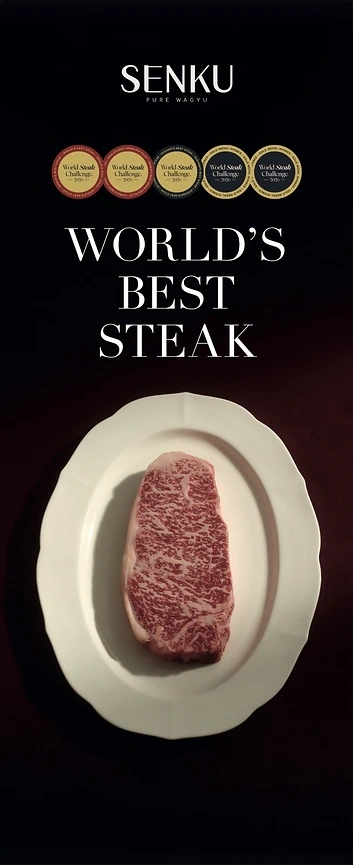
Awards Are Not a Menu
A World’s Best Steak title is powerful, but it should not become a substitute for judgement. A great steak still depends on the butcher, the ageing, the cut, the cooking method, the rest period and—perhaps most unforgivingly—the person holding the tongs.
SENKU has proven it can win under blind conditions. What it now has to prove commercially is that it can remain consistent as demand rises, that its distribution partners protect the experience, and that chefs can translate elite marbling into a memorable plate rather than simply charging more for the word “Wagyu.”
The real luxury test is not whether a steak can win a medal in Amsterdam. It is whether, six months later, a diner in New York, Dubai or London can order it and still taste the reason it won.
SENKU’s win marks a shift in premium beef: from origin as destiny to quality as evidence.
Australian Purebred Wagyu has entered the top tier, and the brands that endure will be those that treat scarcity as a responsibility—not merely a marketing tactic.
For luxury diners, the message is simple: the next great steak may not come with the most familiar flag beside it. It may come from Central Queensland, arrive with quiet confidence, and let the first bite do all the talking.
